Translate into numbers: future Moscow teachers will be taught how to work with neural networks
- Статьи
- Local news
- Translate into numbers: future Moscow teachers will be taught how to work with neural networks


A teacher in a modern school increasingly needs AI skills: it helps create lesson scenarios, can act as a simulator to consolidate the material, and then analyze the quality of the teacher's work. Therefore, the training of future teachers in digital technologies has become mandatory at the Moscow City Pedagogical University (MGPU). How teachers are helped to form "smart" digital spaces and what tools are needed for this, — in the material of Izvestia.
How future teachers master AI
Future teachers will be taught at Moscow City Pedagogical University to design a digital environment for a new generation of schools, navigate neural networks and effectively use artificial intelligence. Elena Gevorgyan, Acting Rector of the Moscow State Pedagogical University, told Izvestia about this.
"We teach them digital didactics, interactive lesson design, and gamify their studies to teach them how to apply these techniques in their future work," she said. — We teach big data analysis: in education, flexible learning systems are based on this, when each student is given tasks that are suitable for him.
In addition, the university also works with artificial intelligence: students try to enhance their lesson scenarios with the help of AI, work with digital assistants and create their own.
The Moscow City Pedagogical University is the main site where teachers are trained for the capital's secondary education system, the social complex of Moscow reminded Izvestia.
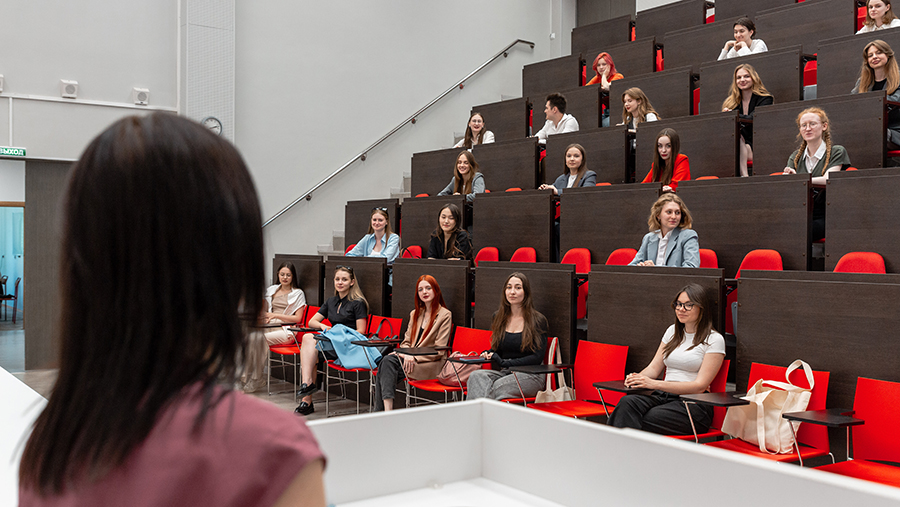
That is why MSPU considers digital and augmented reality as an effective teaching tool, said Ruslan Suleymanov, Vice-rector of MSPU.
"Digital technology is the reality of modern schools, and there is no escaping it," he said. — And in order to keep up with the times, in order to be competitive, our graduates must possess these technologies. I know that many of our colleagues are wary of using artificial intelligence in education, but the problem is not the AI itself, but what place it will occupy in the learning process."
According to Ruslan Suleymanov, the experience of the Moscow State Pedagogical University with digital teaching methods shows: The teacher can assign simple typical tasks to the AI, getting rid of the routine and directing the free time to work with the students.
How to use digital tools
The level of equipment of schools should help to maximize the convenience of digital tools. For example, the competence center "Internet of Things in Education", created by the Institute of Digital Education of the Moscow State Pedagogical University together with technological partners, hosts scientific, practical and educational events. They teach students how to work with sensor systems, "smart" devices, the digital environment, and technologies for building "smart" learning spaces where students can simulate real processes and conduct experiments.
The center explained that the task of teachers in this case is not to learn the principles of individual programs, but to form students' technological thinking, which will allow them to independently build their own teaching methods on a modern basis.
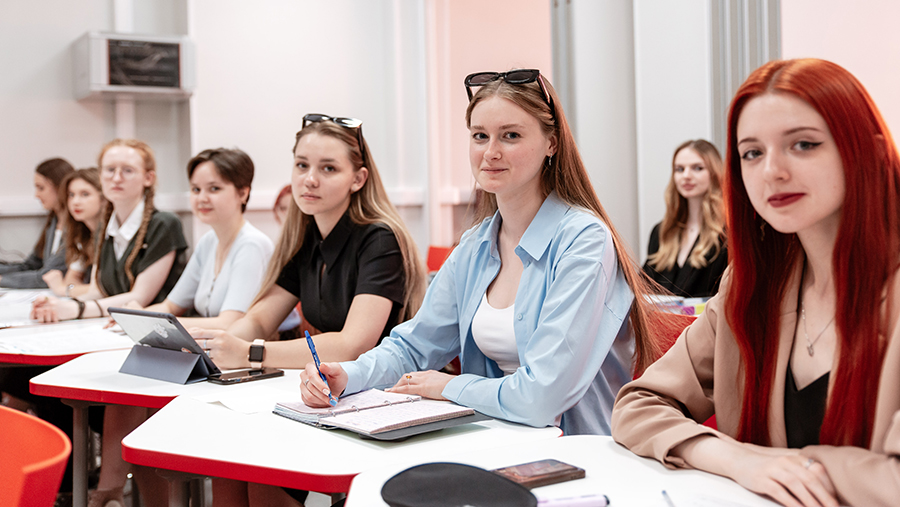
Working with information technologies is not limited to a separate course — it becomes an end-to-end component of the entire professional training of a future teacher, said Vladimir Abramov, Director of the Institute of Digital Education at Moscow State Pedagogical University.
"The skills of using modern digital technologies, including tools based on artificial intelligence, have become basic competencies that need to be mastered not only in technical but also humanitarian fields," he explained. — This is especially important in the training of future school teachers, since it depends on the teacher's own level of digital maturity to what extent his students will be ready to achieve the national goals of technological leadership.
Therefore, according to him, from the very first courses at the university, students are taught not just to use individual services, but to understand where and how technology enhances learning and apply it to real pedagogical tasks.
Future teachers use high-tech simulators in their studies. One of the university's developments is the "Digital Mirror of the classroom." This system provides students with detailed feedback after practice sessions with students. AI uses cameras and microphones installed in "smart classrooms" to analyze the facial expressions of students and teachers, the emotional background in the classroom, and the response to the teacher's explanations. After the lesson, the student receives information about how the class perceived the lesson. In addition, he is provided with an analysis of his own speech, including the speed of speaking and a list of parasitic words.
The Moscow State Pedagogical University also uses virtual pedagogical simulators that allow simulating various situations — conflicts in the classroom, communication with parents, and student motivation, Alexey Rytov, director of the Moscow State Pedagogical University Simulation Center, told Izvestia.
— In one day of working with the program, you can "live" several school years and see the consequences of your decisions in the long term, — he said.
Students learn to create AI-based training simulators on their own. For this purpose, the Neurolick platform, designed to create virtual AI assistants, operates at the Moscow State Pedagogical University. For example, students have created a "digital Shakespeare," which helps to study English literature, as well as a virtual student of Peking University to learn Chinese named Lin Wei. And Ekaterina Yarygina, a student at the Institute of Foreign Languages of Moscow State Pedagogical University, developed a simulator for teaching disgraphic schoolchildren French, its main character was the cybercote Confusion.
I am sure that this will be very useful for students with dysgraphy, as they will be able to identify their difficulties in a playful format and learn how to cope with them," Ekaterina Yarygina said.
What the teacher will need in the future
Modern teacher education is one of the most high—tech professional trajectories, since a teacher is the person who shapes the technological environment of tomorrow, the Moscow State Pedagogical University noted.
— According to our estimates, more than 80% of our graduates are employed during the first year after graduation. And judging by the feedback, they integrate very quickly into the educational environment, bring new competencies there, and become drivers of change, including in the field of digital technologies," explains Vladimir Abramov.
At the same time, applicants are in demand for more technological education than before. Last year, over 10,000 people applied to the Moscow State Pedagogical University in the first month of the admission campaign alone. As a result, the passing score at the university turned out to be quite high: for future teachers of Chinese, it reached 251, for teachers of Russian language and literature — 236.
In 2026, the Moscow State Pedagogical University for the first time announced a targeted recruitment for applicants from all over the country with guaranteed employment in Moscow. Anastasia Rakova, Deputy Mayor of Moscow for Social Development, noted that this is a new strategy for the main pedagogical University of the capital.
"We would like our schools to employ not just teachers, but people who possess not only fundamental knowledge of the relevant subject, but also the most modern teaching technologies," she told Izvestia. — We have relied only on motivated guys, and from all over the country, who really want to devote their lives to education. We guarantee high-quality education and work after graduation in the best educational institutions in the city.
A total of 1,150 budget places for the first year of bachelor's degree and basic higher education will be allocated at MSPU this year, 60% of which are targeted.
Переведено сервисом «Яндекс Переводчик»
