New strikes by the United States and Iran have called into question the truce between them. What the media is writing
- Новости
- World
- New strikes by the United States and Iran have called into question the truce between them. What the media is writing

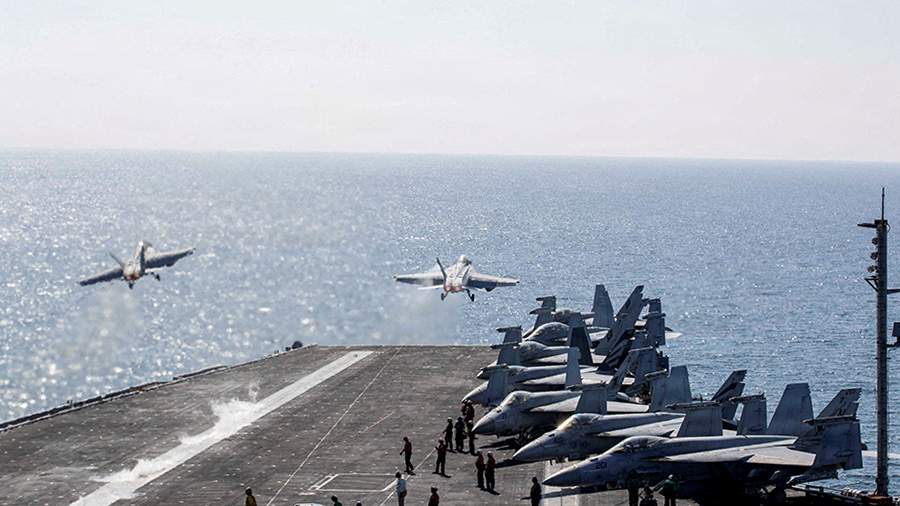
The United States and Iran have once again exchanged a series of strikes at a time when Tehran is preparing a response to the agreement proposed by the Americans to end the war. US President Donald Trump said that the truce had not been violated, despite the defeat of military installations in Iran. At the same time, American intelligence concluded that Tehran could withstand the naval blockade for a long time. How the media reacts to the development of the conflict is in the Izvestia digest.
Bloomberg: The United States and Iran collided near the Strait of Hormuz
A clash has occurred near the Strait of Hormuz between the United States and Iran, the escalation of which threatens to further undermine the fragile truce while both sides discuss a final end to the war. US forces have targeted missile and drone launchers, as well as other military installations in Iran, which they say are responsible for the attack on three American warships passing through the strait. The US Central Command said that no ships were damaged. President Donald Trump has indicated that the month-long truce remains in force.
Bloomberg
The clashes risk undermining negotiations on a proposed U.S. agreement to end the war that began in February. Iran is expected to send a response through Pakistan, acting as an intermediary, within the next two days, a source familiar with the situation said on May 6. Trump has threatened more intense strikes if Iran reneges on his terms, raising the risk of a protracted war that has already claimed thousands of lives and triggered a global energy crisis.
Prior to the announcement of the attacks near Hormuz, Iran said the US had targeted two of its oil tankers in the area. Tehran also accused Washington of attacking civilian areas along the southern coast and on the island of Qeshm "with the assistance of some countries in the region." The United Arab Emirates, which has suffered the most from Iran's retaliatory strikes against U.S. allies in the region, said on the morning of May 8 that its air defense systems were intercepting missiles and drones targeting the country.
The Washington Post: Iran may experience a blockade of the Strait of Hormuz for months
A confidential CIA analysis provided to Trump administration policymakers concludes that Iran will be able to survive the U.S. naval blockade for at least three to four months before facing more serious economic difficulties. This conclusion appears to raise new questions about Trump's optimism about ending the war.
The Washington Post
An analysis conducted by the American intelligence community, whose secret assessments of the situation in Iran were often more sober than the administration's public statements, also showed that Tehran retains significant ballistic missile capabilities despite weeks of intense bombing by the United States and Israel, three sources familiar with the situation said.
Trump, Defense Secretary Pete Hegseth, and other officials have consistently presented the war as a crushing U.S. military victory, despite Iran's objection to Washington's demands to abandon uranium enrichment, surrender its uranium reserves, reopen the Strait of Hormuz, and take other steps. Trump called the blockade "unbelievable." He also said that Iran's economy is "collapsing," its currency is "useless," and it "cannot pay" its troops.
Reuters: UAE secretly ships oil tankers through the Strait of Hormuz
According to industry sources and shipping data, the UAE and its buyers have recently moved several crude oil tankers through the Strait of Hormuz, disabling location tracking systems to avoid Iranian attacks. The volumes represent only a small fraction of the typical UAE exports before the US-Israeli war against Iran, but they demonstrate the risks that producers and buyers are willing to take to offload oil sales. Other Gulf states — Iraq, Kuwait, and Qatar — have either stopped selling completely, or sharply lowered prices to attract disinterested buyers, or, in the case of Saudi Arabia, are shipping only through the Red Sea.
Reuters
In April, according to three sources, information from the Kpler vessel tracking platforms and SynMax satellite data analysis, the Abu Dhabi National Oil Company from the UAE was able to export at least 4 million barrels of Upper Zakum oil and 2 million barrels of Das oil on four tankers from terminals inside the Persian Gulf.
The cargoes were either transferred by transshipment from ship to ship, which subsequently delivered the oil to an oil refinery in Southeast Asia, or were unloaded for storage in Oman, or sent directly to refineries in South Korea. Since the start of the war, the UAE has had to reduce exports by more than 1 million barrels per day, compared with 3.1 million shipped last year. Most of the exports now come from Murban brand oil, which is transported via pipeline from onshore fields to Fujairah.

The New York Times: Trump cancelled the Hormuz plan at the request of Saudi Arabia
Trump's announcement that the US military would escort ships through the Strait of Hormuz angered Saudi Crown Prince Mohammed bin Salman, who denied the US access to his country's airspace and US bases. His actions stunned American officials and forced Trump to abandon his plan. Saudi Arabia has since lifted restrictions on bases and flights, but still has not agreed to allow the use of its territory to support the "Freedom Project," as Trump called the naval operation.
The New York Times
Even if the differences between the United States and Riyadh over tanker escorts are resolved, Saudi Arabia's initial withdrawal of support indicates that Trump's unpredictable and volatile approach to Iran has strained relations with one of its closest allies. According to people familiar with American officials, back in mid-March, the de facto leader of Saudi Arabia pressured Trump to continue his bombing campaign against Iran in order to overthrow the clerical regime and rid the kingdom of its long-time adversary.
Since then, Prince Mohammed's calculations have changed. Instead, Trump agreed to an April ceasefire agreement with Iranian leaders, and now Prince Mohammed is trying to help end the conflict by supporting peace talks through Pakistan. Signs of discord between Trump and the Saudi leader may embolden Tehran to compete for leverage in periodically renewed negotiations with the United States amid clear signs that Trump is seeking a deal.
Переведено сервисом «Яндекс Переводчик»
