
Goals and means: what was the budget of Victory in 1941-1945

The USSR budget for 1941 was supposed to come down with a surplus of a symbolic 800 million rubles. However, the invasion of the Fascist army in June did not allow these plans to come true. The loss of control over a large part of the western territories, the deprivation of factories and fertile lands, coupled with sharply increased defense and army spending, led to a treasury deficit of 14.4 billion rubles in the first year of the war, and even 17.8 billion rubles in the second. The People's Commissariat of Finance fought on its financial front, inventing measures to fill the treasury that would not lead to hyperinflation and depreciation of the ruble. Among them are not only new taxes and increases in old ones, but also clothing lotteries, fees to the Army Relief Fund and military loans. How by 1944, before the end of hostilities, the state budget was brought into surplus — in the material of Izvestia.
1941: Budget shock and emergency measures
Despite the planned nature of the USSR economy, balancing the budget was an important part of the stability of the financial system — it reflected a balance between supply and demand with a stable ruble and without significant inflation. The responsibility for this lay with the People's Commissariat of Finance, whose head during the war was Arseniy Zverev.
By 1941, the USSR was approaching with a stable and balanced budget. According to the plan, revenues were expected to reach 216.2 billion rubles that year, and expenses — 215.4 billion, as a result of which the treasury would have reached a symbolic surplus. At the same time, spending on law enforcement agencies and the military—industrial complex was expected to be quite high: 58 billion to the People's Commissariat of Defense, 12.6 billion to the People's Commissariat of the Navy, 5.7 billion to the People's Commissariat of the Aviation Industry.
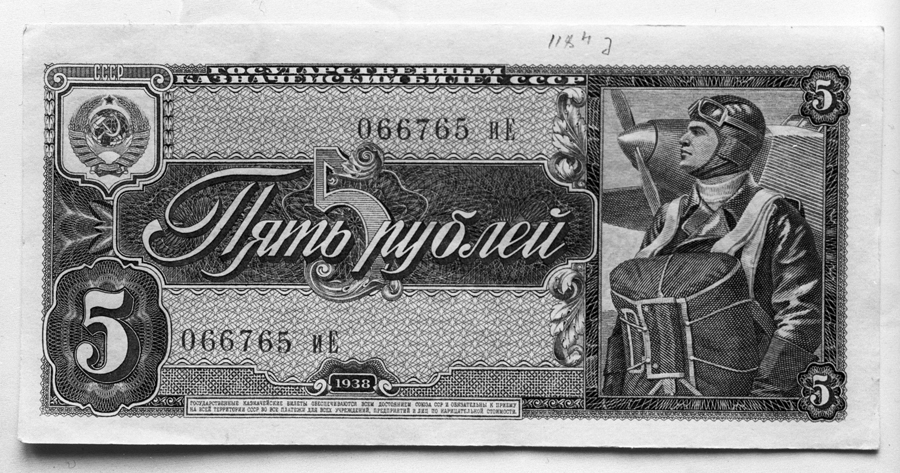
The country's budget in the pre-war years can be called stable, but with a mobilization character, says Associate Professor of Statistics at the State University of Management Lidiya Parshintseva. This stability was ensured not by the flexibility of the economy, but by the centralized control of the state over revenues (more than half came from taxes from organizations that were owned by the state), expenses, prices and the allocation of resources. Moreover, the main expenditures in 1939 and 1940 were on defense (22% and 34%, respectively), followed only by industry (18% each) and socio-cultural events (12% and 15%), the expert noted.
The outbreak of the Great Patriotic War in June 1941 cancelled plans to bring the treasury into surplus. The main blow to the revenue side was the loss of territories that brought the lion's share of turnover tax: industrial enterprises, agricultural resources, transport hubs and large cities were located in the western regions of the country. Since the outbreak of hostilities, some enterprises have been destroyed, some have been stopped or evacuated.
— In 1941, compared with the previous year, industrial production decreased by 2%, gross grain harvest — by 28%, potatoes — by 65%, the number of pigs decreased by 70%, and cattle — by 42%. This led to a decrease in revenues from the public sector," Lidiya Parshintseva said.
In addition, factories were transferred to military lines, ceasing to produce and sell civilian products, namely, the enterprise tax was one of the main income items earlier.

The year 1941
Expenses, on the contrary, have increased dramatically. On July 3, changes were made to the budget for the third quarter: defense spending was urgently raised from 46.6 billion to 60 billion rubles.
The main focus was the maintenance of the army. At the same time, it was necessary to finance the evacuation of factories and the population, the deployment of enterprises in the rear, the restoration of production chains and the supply of new industrial sites.

The People's Commissariat of Finance has taken emergency measures to keep the budget under control. The authorities have dramatically increased the tax burden. Firstly, starting from July 1, 1941, a temporary surcharge of 100% was established for the agricultural tax. And also for income tax: for monthly earnings of up to 500 rubles, plus 50% of the fee amount, and for monthly income of over 500 rubles, plus 100%.
Secondly, there are new fees for citizens. Since October 1941, a tax has been levied on bachelors, single and childless citizens. It affected men aged 20 to 50 and women aged 20 to 45, and the size depended on income.

Citizens walk along October 25th Avenue (now Nevsky Prospekt) in besieged Leningrad. October 9th, 1941
It was also decided to freeze funds: the issue of deposits in savings banks was limited to a limit of 200 rubles per month, effectively turning citizens' savings into a resource for the front. It was not only a profitable measure, but also a way to keep money circulation under control, Lidiya Parshintseva noted. This restrained excessive demand and helped to prevent even more drastic pressure on the goods market.
— The peace financial plan assumed a controlled distribution of funds between defense, industry, the social sphere and other areas. After the outbreak of the Great Patriotic War, the main task was to immediately secure the front and preserve the work of the rear. In fact, in the first year of hostilities, the People's Commissariat of Finance had to change not individual budget items, but the entire principle of its execution," the expert concluded.
Nevertheless, by the end of the year, the budget deficit reached 14.4 billion rubles.
1942: The era of the war tax and peak spending
The second year of the war was the most difficult ordeal. Due to the occupation of the southern regions, income from turnover tax fell to a minimum, while spending on the army continued to grow. To cover the deficit, the government has introduced a more streamlined collection system.
On January 1, 1942, temporary surcharges were replaced by a single levy — a military tax, which was differentiated depending on income and category of citizens and affected all those who did not participate directly in hostilities. Revenues from it amounted to about 14 billion rubles (about 70% of all income from the population), said Mikhail Yumaev, professor at the Department of Taxes and Tax Administration at the Financial University under the Government of the Russian Federation.

One of the Moscow factories. The year 1942
There were other tools launched back in 1941, but the real results began to bring in 1942. On a budget scale, they may not look significant, but they still played a role in meeting the needs of the army.
In particular, at the end of November 1941, money and clothing lotteries were approved, Lidia Parshintseva said. In total, four of them passed during the war years, lottery tickets were purchased for a total of 13 billion rubles.

Also, on August 1, 1941, the Defense Fund was established — a direct mobilization of public funds. Over the years of the war, more than 19 billion rubles were received there in monetary terms, of which platinum, gold, silver and jewelry totaled 1.7 billion rubles, said Ekaterina Golubtsova, Associate professor of the Department of State and Municipal Finance at Plekhanov Russian University of Economics.
In addition, the Government used an existing mechanism to attract public funds through government loans. During the Great Patriotic War, they accounted for more than 10% of budget revenues, Ekaterina Golubtsova estimated. In total, more than 80 billion rubles worth of military loans were placed.

Ticket of the second money and clothing lottery in 1942
Finally, the government raised the prices of goods, thus increasing the income of factories, and consequently their tax base. In total, due to the increase in the cost of production, the treasury received an additional more than 13 billion rubles.
This, in turn, accelerated inflation. However, in order to keep the price situation under control, a card system was introduced.
Despite all the measures taken, the budget was reduced to a deficit in 1942. Military expenditures of law enforcement agencies, expenditures on hospitals, pensions and benefits for military personnel and their families amounted to 121.9 billion rubles, or two thirds of all treasury expenditures. As a result, the shortage reached a record 17.8 billion rubles.
1943: turning point in the war and symbolic deficit
In 1943, the turning point in the war came — it affected all spheres of life, including the budget. The financial system has adapted to the new reality, and the industry has begun to work at the limit of efficiency.
Due to on-line production, the cost of a number of mass-produced weapons has decreased by an average of 30%. This allowed the government to save billions. Although the bulk of the funds — more than half of the budget, 125 billion rubles — went to the maintenance of the army and the purchase of weapons, the state continued to spend money on maintaining the rear.
In 1943, expenditures on the national economy began to gradually increase and amounted to 33 billion rubles, for social security — 15.8 billion, and for social and cultural events (including education) - 37.7 billion rubles.

Harvesting potatoes in the fields. September 10, 1943
The revenue side was gradually restored due to tax revenues from production. They also grew due to farming in the territories liberated by the troops, which increased the country's revenue potential, added Mikhail Yumaev from the University of Finance. In addition, the war tax remained an important source: in 1943, its revenues amounted to a record 17.1 billion rubles. Monetary and clothing lotteries remained stable sources of non-tax income.
In addition, the tax policy was also changing: the rates of agricultural and income taxes, as well as the military tax on collective farmers and individual farmers, were increased.
All this made it possible to increase treasury revenues to 204.4 billion rubles, and reduce the deficit to 5.6 billion rubles.
1944: victory of the surplus
1944 was a time of "fiscal recovery." For the first time since the war, revenues exceeded expenses, generating a surplus of almost 5 billion rubles. Mikhail Yumaev calls this a phenomenon made possible by the total mobilization of the resources of the liberated territories and the preservation of tax policy.
The factors that played against the budget in the first year of the war weakened in 1944. Enterprises of the western industrial and agricultural regions returned to Soviet control immediately began to pay fees, which dramatically increased the revenue base — the turnover tax became the main one. Revenues from the socialist economy jumped from 141 billion rubles in 1943 to 187.2 billion rubles in 1944.
In addition, military loans continued to be carried out, when people gave a significant part of their earnings "for tanks and airplanes" on the promise to return it after the victory, Mikhail Yumaev emphasized. The next military loan more than doubled the previous ones — 25 billion rubles against 12 billion a year earlier, and, as before, the plan was exceeded: as a result, the treasury managed to receive 28.7 billion rubles.

Production of T-34 and IS-2 tanks. December 1, 1944
As in previous years, over-planned tax receipts played an important role. On the issue of fees from citizens, the excess of the forecast was explained by an increase in the salary fund, mainly in the liberated areas, as well as an increase in the tax on bachelors and single people.
On the other hand, by 1944, the size of the Soviet army had reached its maximum, as the growth rate of spending on it slowed down, Mikhail Yumaev noted. To a greater extent, the money began to be used to restore the economy, destroyed cities, and the social sphere, and returned to the budget in the form of taxes. It was also necessary to raise the standard of living of the population — for example, state aid to pregnant, large and single mothers was increased, at the same time the honorary title "Mother Heroine" appeared.
Spending on the national economy and on social and cultural events jumped one and a half times and totaled more than 100 billion rubles, while 137 billion went to military needs (only 10% more than in 1943). The surplus this year amounted to 4.8 billion rubles.
1945: the budget of the world
The budget met the victorious year with a balanced one: according to the plan, revenues were supposed to amount to 303.7 billion rubles, and expenses — 303.2 billion rubles. The reality turned out to be close to the forecast: the financial plan was executed at almost the same level (302 and 298.6, respectively), and the surplus amounted to 3.4 billion rubles. That is, during the war years, budget volumes increased by one and a half times.

Victory Day Parade in Moscow. June 24, 1945
It was possible to achieve such indicators due to the fact that the territories returned to the control of the USSR and even multiplied, a number of enterprises switched from military to civilian rails, yesterday's veterans went to work in factories, cities were restored — all this increased the revenue side of the budget in terms of taxes from both legal entities and individuals. In particular, revenues from the socialist economy increased by 40% to 229.7 billion rubles.

The 1945 budget expenditures on the national economy increased one and a half times to 74.5 billion rubles. And for the first time during the war, military spending decreased, albeit slightly, to 128.2 billion rubles.
According to estimates by the People's Commissariat of Finance, during the entire war, direct defense spending exceeded 540 billion rubles, which is about 60% of all government spending in 1941-1945. Due to the need to issue and increase the prices of goods, the money supply in circulation increased 3.5 times. This forced the People's Commissariat of Finance to prepare monetary reform in 1945 to withdraw excess funds, in particular from speculators, and to stabilize the ruble in order to prevent hyperinflation.

Production of shells at the Leningrad plant. The year 1943
The main levers of economic regulation were in the hands of the State Planning Committee and other bodies that brought together the physical volumes of production and consumption of specific products through a complex system of material balances, said Ilya Voskoboinikov, director of the HSE Expert Institute.
— The availability of money did not guarantee the possibility of receiving goods. They were distributed separately in accordance with detailed regulations and without reference to cash flows. If a citizen wanted to buy bread or a pair of shoes, first of all he had to have the appropriate cards. Next, the product had to be available in the store, which was not always done. And only last of all there was the question of money. There were opportunities to use them for purchases in excess of the norms and cards only in commercial stores at very high prices or on the black market," he gave an example.
According to the expert, money in many ways played only a counting function. At the same time, the control of funds in circulation allowed the state to regulate consumer demand for goods. The excessive money supply accumulated by the population was frozen with the help of a well-developed system of internal loans, which were not always voluntary.
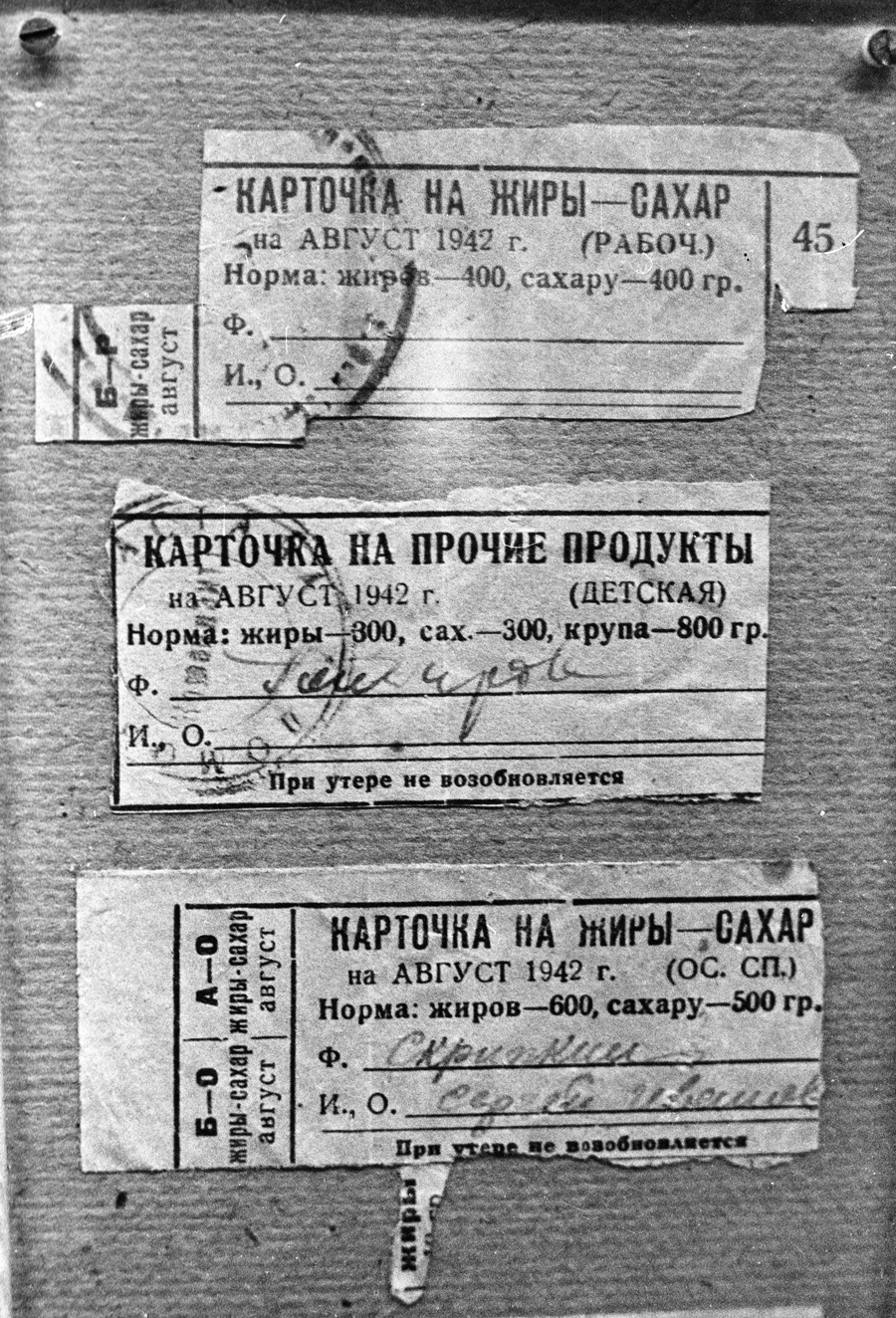
A full-fledged monetary reform was carried out only a year and a half later, at the end of 1947: at that time, money was denominated ten times, but the card system was abolished.
In preparing the article, we used figures from the collection "People's Commissariat of Finance of the USSR during the Great Patriotic War", prepared by the Ministry of Finance together with the Treasury and the National Research University HSE and the collection of Rosstat "Victory Figures", formed for the 80th anniversary of the end of the Great Patriotic War.
Переведено сервисом «Яндекс Переводчик»
