Admission to the master's program will be tightened: focus on profile and work experience
- Новости
- Local news
- Admission to the master's program will be tightened: focus on profile and work experience

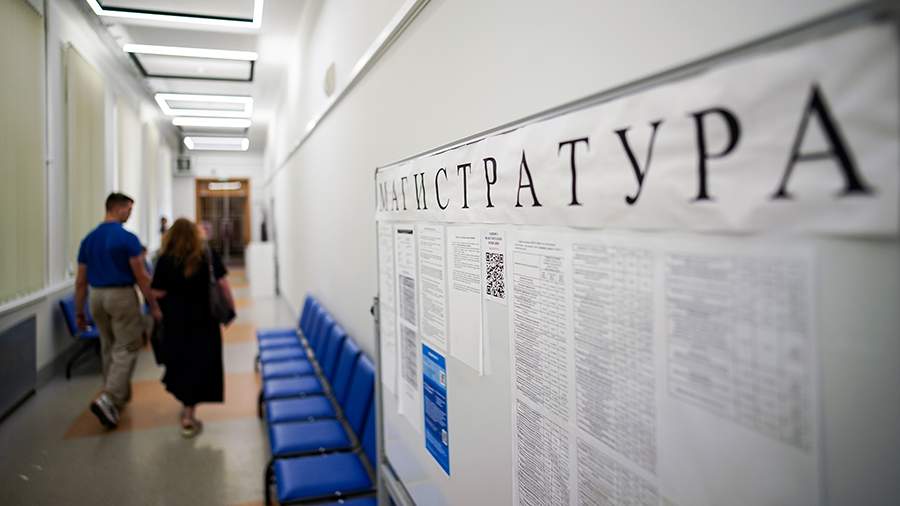
A draft amendment has been submitted to the State Duma to limit admission to master's degree programs in non-core specialties. The changes will affect individual areas. All the details are in the Izvestia article.
New admission rules
Alexander Tolmachev, Deputy Chairman of the State Duma Committee on Youth Policy (United Russia faction), told Izvestia that the initiative is aimed at returning the master's degree program to professional development and "completion" of competencies. The deputy noted that the system of education was disrupted when students switched from general humanitarian disciplines to highly specialized technical ones without a specialized base. This made it difficult to master the program and reduced the competence of graduates.
Ilya Rusyaev, a lawyer and founder of the Rusyaev Club business community, clarified that document No. 1220753-8 was submitted to the State Duma on April 29, 2026. The amendments change Article 69 of the federal law. According to the authors of the project, in 2025, about 20% of those who enrolled in chemical technology had degrees in economics or linguistics, and 24% of graduates of chemical and mathematical faculties enrolled in a law degree.
"The Constitution of the Russian Federation, in Article 43, establishes the competitive nature of free higher education and the right of the state to set federal standards. Article 55 of the Law on Education requires equal admission conditions, allowing for the selection of the most prepared to master the program. The profile filter will be legal if it is fixed in the Federal State Educational Standard and admission rules, published in advance, applied equally to all applicants, contains a clear list of work documents and the procedure for appealing. Signs of discrimination will appear when the university begins to interpret the profile selectively or change the criteria during the admission campaign," the specialist explained.
Impact on the quality of education
Irina Abakina, a researcher at the Institute for Educational Development of the Higher School of Economics (HSE), PhD in Economics, emphasized in an interview with Izvestia that such restrictions are justified, since graduate studies often require serious basic training. For those who want to radically change their profession, there are professional retraining programs. She noted that people often applied to graduate school for the sake of being released from the army or a dormitory, without planning to defend their diploma.

"The Master's degree is considered in many countries even as the first scientific degree. The next one is already recognized as actually a doctoral one. And in our country, a master's degree is really either an academic track, deepening scientific research, mastering modern scientific methods and defending a master's thesis," the expert said.
She stressed that the lack of basic training among some students makes it difficult to master master's degree programs, especially in engineering, technical and economic fields, where a strong fundamental base is required.
At the same time, Abakina stated that the transition to a more rigorous profile can improve the quality of training, reduce the number of formal receipts and increase the efficiency of using budget funds in education.
Tolmachev also said that there is no risk of reducing the quality of programs, and universities will have to make learning more interesting to attract motivated students.
Переведено сервисом «Яндекс Переводчик»
