Outdoor lessons can become part of the compulsory school curriculum. What is known

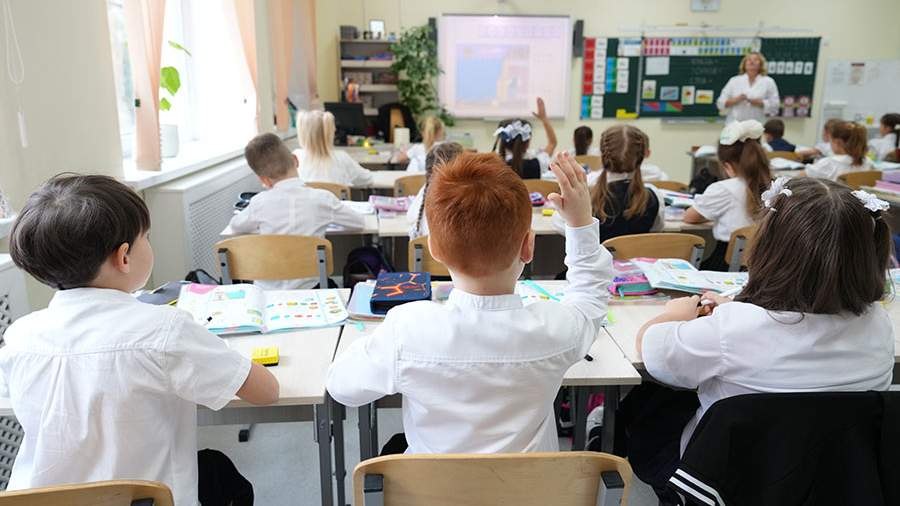
The Public Chamber has proposed to hold classes for elementary school students in the fresh air more often. Experts assessed the impact of this format on children's health. All the details are in the Izvestia article.
What lessons are offered on the street?
Alexander Tolmachev, Deputy chairman of the State Duma Committee on Youth Policy (United Russia faction), told Izvestia that outdoor activities have long been included in school curricula. According to him, we are talking about excursions, nature lessons and trips around his native land, which are traditionally held at the end of the school year.
He noted that such formats help students to better perceive the world around them and develop an interest in natural sciences and history. In addition, such activities contribute to the formation of curiosity and a more attentive attitude to nature.

Tolmachev stressed that outdoor lessons are good for children's health, especially in favorable weather. At the same time, he pointed out that it would be impractical to completely transfer the educational process to the street.
"It is optimal to hold one or two such classes in May and September. It can be about lessons from the outside world, history, or the basics of life safety. At the same time, the study of mathematics and the Russian language is more effective in the classroom," the deputy noted.
How does this affect learning and behavior?
Ekaterina Morozova, Senior pediatrician at JSC "Medicine" (Academician Roitberg Clinic), Candidate of Medical Sciences, noted in an interview with Izvestia that outdoor education can be useful, but only as an addition to classical lessons. According to her, such a format should not replace systematic classroom learning.
She pointed out that in young children, outdoor activities can improve concentration and reduce distraction. This is especially noticeable in a green environment, where cognitive overload decreases.
Morozova emphasized that for first-graders, such lessons can make it easier to adapt to school, reducing stress levels and helping them get used to the new regime faster. However, according to her, it is important to take into account the weather conditions and avoid hypothermia.
"Children are often better able to keep their attention outdoors, but discipline requires clearer organization. With clear rules and lesson structure, students can work even more actively than in the classroom," the doctor explained.

In addition, alternating indoor and outdoor activities is important for developing learning skills. According to the expert, a permanent "free" format can make it difficult to return to the classical education system and affect the motivation of individual children.
Morozova also pointed out that such a format may be more difficult for children with hypersensitivity, anxiety or difficulties in self-regulation. In these cases, external factors can increase fatigue and distraction.
At the same time, according to her, with proper organization, outdoor lessons can become an effective tool to support the attention, adaptation and emotional state of schoolchildren, especially in a limited format and while maintaining a balance with traditional classroom instruction.
Переведено сервисом «Яндекс Переводчик»
