- Статьи
- Science and technology
- Shamans, Maya and ancient signs: how Knorozov could read "unreadable" letters

Shamans, Maya and ancient signs: how Knorozov could read "unreadable" letters

Deciphering ancient writings is an exciting adventure into the world of mysteries and riddles. A key role in it was played by the legendary Yuri Knorozov, whose work was equated to Gagarin's flight and the discovery of DNA. He was the first in the world to decipher the Maya script, although he was never able to solve the mystery of the Easter Island writing system, and also studied the shamans of Central Asia. And few people know that the genius, being already at an advanced age, went to the edge of the world to solve the riddle of the most hairy people in the world. In an interview with Izvestia, his student, a leading researcher at the Kunstkamera (MAE RAS), Margarita Albedil, told about the "detective" surrounding the decryptions and about the secrets that the genius took with him.
Deciphered the incomprehensible "almost casually"
— Margarita Fedorovna, Yuri Knorozov was sometimes called the "Mayan man," but few people know the life context of his main discovery.
— Indeed, Yuri Valentinovich became famous all over the world as a decoder of the Maya script, and the life context of this discovery was very difficult. Yuri Knorozov, who brilliantly graduated from the Department of Ethnography of the Historical Faculty of Moscow State University in 1948, could not enter graduate school because his family found themselves in the occupied territory during the war. This left an indelible stain on his biography (in the Stalin years, such people were considered potential enemies — Knorozov himself perceived this philosophically). Knorozov's scientific supervisors helped him move to Leningrad and get a job at the State Museum of Ethnography of the Peoples of the USSR (now the Russian Ethnographic Museum). It was here that he made his brilliant discovery.
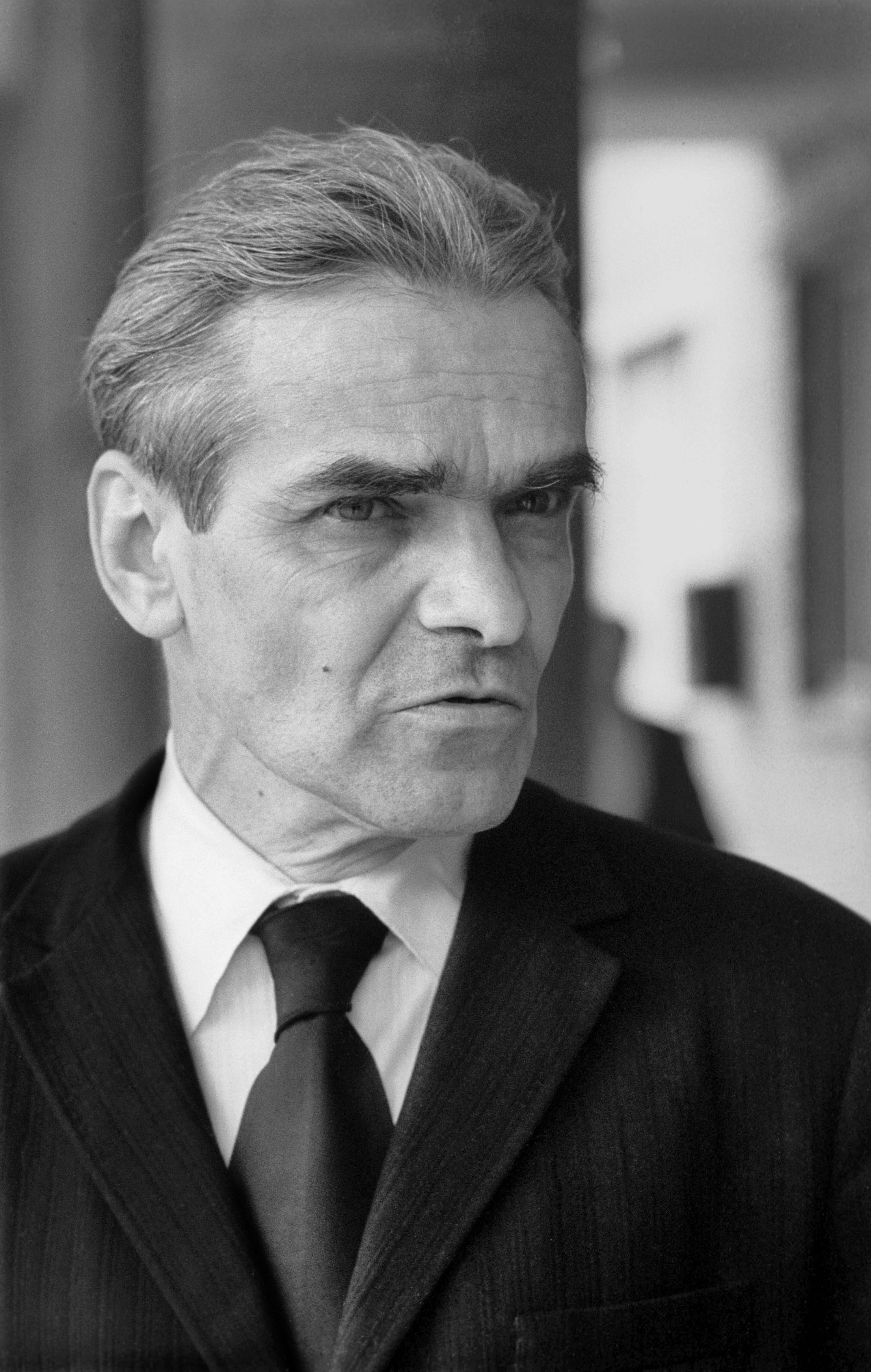
— How did the "museum curator" turn out to be a decoder of Mayan secrets that were beyond the control of many scientists around the world?
— The museum was severely damaged during the Great Patriotic War of 1941-1945. The building was destroyed, thousands of ethnographic items and negatives were damaged. They needed to be disassembled and put in order. This is what Yuri Valentinovich Knorozov has been doing since 1949. He also participated in the research work of the museum, in the creation of new exhibitions, the preparation and conduct of excursions and other activities.
It seems incomprehensible how, with such a huge workload, he managed to find the strength and opportunity to decipher the Maya script in his spare time, almost casually, while living here in the museum, in a narrow and cramped pencil case. Now it's hard to imagine how he managed without a computer or even a typewriter. Knorozov copied everything by hand. His work was truly titanic, and it is only fair that it was crowned with a triumphant success.
Knorozov was able to single-handedly refute the opinion of reputable Western scientists who believed that the Maya script could not be deciphered without a "key" like the Rosetta Stone.

Russian Ethnographic Museum
— Why did he take on what everyone considered an "unsolvable problem"?
— This is amazing, because numerous attempts at decryption, made before by scientists from different countries who had access to all the necessary materials, were unsuccessful. But Knorozov was not allowed to travel, and unlike Western scientists, he did not have the opportunity to see the original Maya inscriptions firsthand. In 1945, German scientist Paul Schelchas called deciphering the Maya script an "unsolvable problem." And it boosted his motivation. Yuri Knorozov, who turned 23 at the time, took it as a challenge. He was counting: "If one human mind has come up with something, then another mind is able to figure it out." These words became his motto, and he often repeated them later.
Maya writing has long been considered fundamentally incomprehensible. All scientists believed that the Maya signs were purely symbolic and could not be phonetically read. Knorozov doubted and separated the interpretation of symbols and linguistic reading, focusing specifically on language.
Already in 1952, the Soviet Ethnography magazine published an article entitled "The Ancient Writing of Central America," summarizing the enormous amount of work done. Contemporaries compared Knorozov's epochal discovery to Yuri Gagarin's space flight and the discovery of DNA. However, in the shadow of this unprecedented intellectual breakthrough, other scientific achievements of the brilliant scientist were somehow lost, and there were many of them.
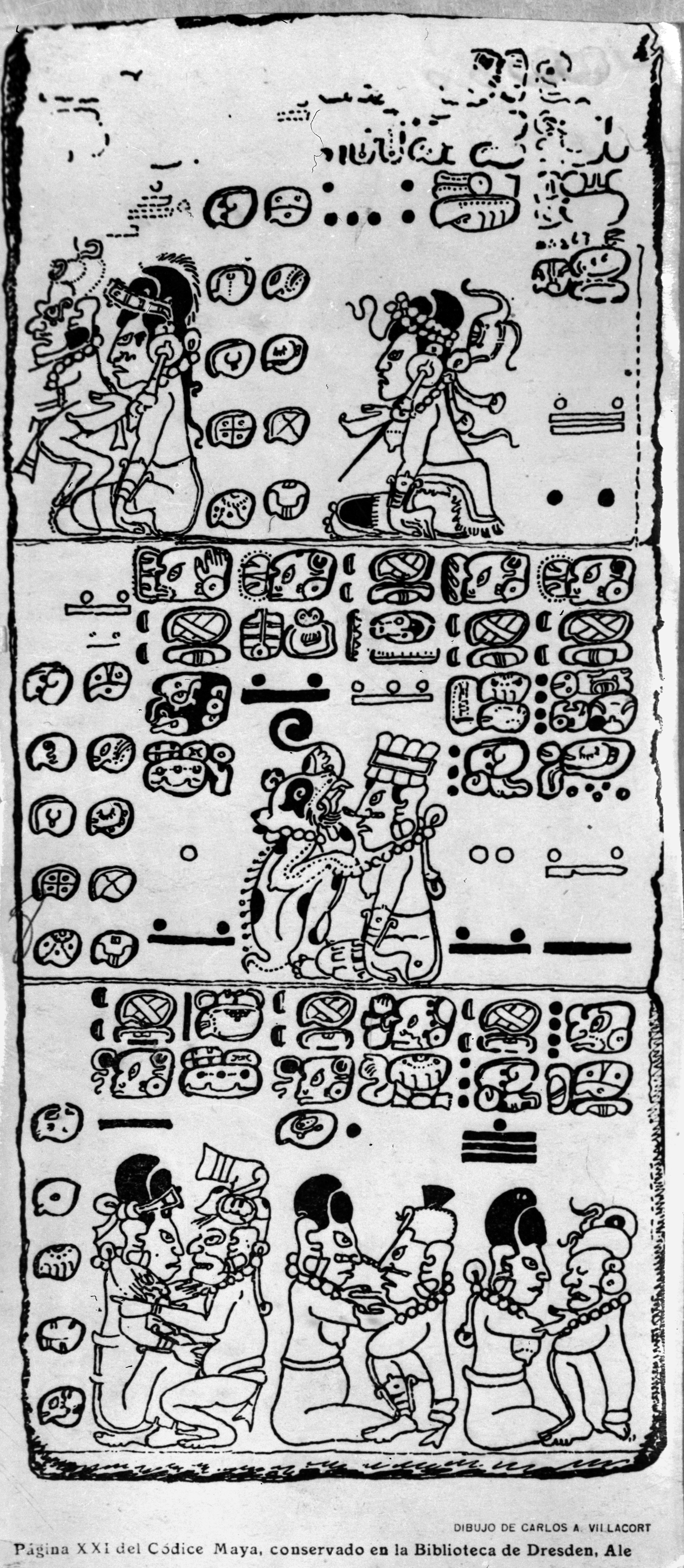
— What were the main obstacles in deciphering the Maya script — why was it not possible for all scientists, but it was given to him? And when did the research turn, a kind of "click"?
— Different scientists had different obstacles. In general, there are false initial postulates and an erroneous methodology in determining the type of writing and in other research problems. There was no click, there was titanic meticulous work, which Yuri Valentinovich himself called "boring accounting." Although we can recall the "Landa alphabet" of the XVI century, as a kind of key to decryption.
Diego de Landa Calderon is an extremely contrasting figure. On the one hand, he contributed to the study of Mayan culture: he wrote the work "Communication on affairs in Yucatan" (1566), developed the Latin alphabet for the Yucateca language. On the other hand, he established the Inquisition in Yucatan, burned Maya manuscripts at an auto—dafe, thereby destroying most of the Maya literature. As a monk, he sincerely believed that the pagan customs of the Maya were "the work of the devil." De Landa is considered one of the key figures of the "Black Legend". At the same time, it was his writings that served as the starting point for Yuri Knorozov's sensational discoveries.
— Is there anything left unsolved in the Maya script?
— Some hieroglyphs have not yet received an unambiguous interpretation, which is unanimously accepted by all researchers. The Maya Indians wrote the same hieroglyph in different versions, and not all variants have been studied. There are rare signs that are still difficult to decipher.
— A small human angle. Margarita Fyodorovna, what was Yuri Valentinovich like in informal communication? What did you love, what did you avoid?
— Yuri Valentinovich was not a simple and easy-going person. He was a deeply introverted introvert. Let's not forget that the Stalin era left its mark on him and taught him to be careful and prudent. But when he opened up, he became a very interesting conversationalist, with whom you could talk about any topic.

A fragment of a page from the Troan Cortesian Codex, also known as the Madrid Codex. One of the four surviving Maya codices compiled according to the 260-day ritual calendar, which was used throughout Mesoamerica for predictions.
He had his own, non-standard view of many things and a wonderful sense of irony, as well as self-irony, which is quite rare. He read a lot, knew literature well, recited many poems by heart, and wrote poetry himself. He also played the violin and painted beautifully. And it's not worth talking about personal life, especially since it was subordinated to science.
The descendants of Yuri Knorozov (1922-1999) live in St. Petersburg.‑St. Petersburg. After the death of his parents, Yuri Knorozov paid maximum attention to his family — his wife and daughter. His only daughter, Ekaterina Knorozova (born 1960), is an orientalist and specialist in traditional Vietnamese literature. She works in the Library of the Academy of Sciences and teaches at the Faculty of Oriental Studies of St. Petersburg State University.
The scientist's granddaughter is Anna Maslova (b. in 1984), political scientist, teacher of the Yu.V. Knorozov School No. 490 in the Krasnogvardeysky district of St. Petersburg, member of the Public Council under the administration of the Krasnogvardeysky district of St. Petersburg. She is the only heiress of Yuri Knorozov.
Biblical Footprints in the CIS: the Secrets of Mazar, Kamlaniya, and the Intermediary Shaman
— How are "shamans" and "Maya" related in Knorozov's life? How did his journey into ethnography begin?
— During his studies at the Faculty of History of Moscow State University, he completed an internship as part of the Khorezm expedition, examined the mazar of the local Muslim ascetic Shamun‑Nabi (Karakalpak Autonomous Soviet Socialist Republic). Based on the collected field material, he brilliantly defended his diploma in 1948 and later reworked it into a scientific article for the academic journal Soviet Ethnography.

The mazar of the Muslim ascetic Shamun‑Nabi
The young scientist, having thoroughly analyzed the legends associated with the mazar, the ritual practices of pilgrims and other materials, offered a reasoned interpretation of the legend of Shamun.‑Nabi as a local version of the biblical tale of Samson. He also attended the kamlaniyah of the Central Asian shamans and published important observations concerning the role of shamans, who acted as intermediaries between Muslim saints and the population.
— Why are Knorozov's works on shamans still in demand?
— Over time, the first article by a novice scientist has gained great value as an important ethnohistorical source, since Central Asian materials on shamanism have proved to be in high demand. In the post‑Soviet perestroika period, Knorozov returned to the topic of Central Asian shamanism in the article "Shamanic dhikr in the dungeon of Mazlumkhan-sulu." By the way, these articles by Knorozov remain relevant at the present time.

Knorozov's work in 1949-1953 at the State Museum of Ethnography of the Peoples of the USSR was also connected with Central Asia. In the Turkmen expedition, in the city of Tashauz (now Dashoguz. — Izvestia), where the majority of the population were Turkmen of the Yomud tribe, he collected a collection characterizing the life of the Tashauz Turkmen of the 1950s. Ethnographers consider it rare and of high scientific value.

Turkmen SSR, Tashauz
He also collected a photographic collection at the March 8 collective farm, which met the objectives of the expedition: the photographs show the exemplary streets of the village, collective farm lands, advanced workers of the collective farm, and their new way of life. These collections were supplemented by Knorozov's extensive expedition report. It provided unique information about the restructuring of the traditional economy and way of life of the Turkmen‑Yomud of the mid-20th century, as well as their neighbors — Kazakhs, Karakalpaks and others.
The value of the collected materials lies in their exceptional detail: Knorozov recorded the outgoing way of life and ritual practices that have practically disappeared today. His reports and collections serve not just as museum exhibits, but as the "genetic code" of the culture of the Central Asian peoples, allowing modern scientists to mathematically reconstruct the way of life, beliefs and social ties of the Central Asian tribes.
"Talking Tablets": Easter Island and "unreadable" letters
— After Maya, Knorozov took up other riddles. How did he "approach" deciphering the Easter Island letter?
— In 1953, Yuri Valentinovich joined the Leningrad Branch of the Institute of Ethnography of the USSR Academy of Sciences (now the Museum of Anthropology and Ethnography. Peter the Great (Kunstkamera) of the Russian Academy of Sciences). The interdisciplinary approach close to the scientist was the basis for the Ethnic Semiotics Group he created. This meant mastering an extensive and complex problematic research field, the main topic of which was historical writing systems.

Easter Island
These include Easter Island writing, Proto—Indian writing, and Ainu pictography. In their research, Knorozov relied on the methodological base he created in the process of deciphering the Maya script. It was based on the method of positional statistics developed by Knorozov, when the position of a sign in the text was determined and its absolute and relative frequency in this position was taken into account.
— What was interesting about the Rapanui plaques for Knorozov? How did Kohau rongo‑rongo's research develop?
Easter Island (Rapa Nui) is one of the most mysterious islands of Polynesia, which is part of Oceania. This tiny piece of land is the most remote place on earth. Unlike other Polynesian islands, there was its own writing system — the Kohau rongo‑Rongo Rapanui script — the so-called "talking tablets", which still remain an intriguing mystery. The inhabitants of the island scratched inscriptions on wooden plaques with the help of a sperm whale tooth.
Knorozov began writing in the 1950s. He was attracted by the opportunity to test with new material the correctness of the general theory and methodology he had developed in the field of studying and deciphering unknown writing systems.

The Rapanui Letter
Through the joint efforts of various scientists, all the basic materials necessary for studying and deciphering the Rapanui script were prepared. All available texts were processed, including those stored in other museums around the world, and their formal analysis was carried out. According to a preliminary assumption, the writing of Easter Island was based on the same principles as the ancient hieroglyphic writing systems, but represented an early stage of development.
The Easter Island script still remains undeciphered, although dozens of monographs and articles have been devoted to it, and the codebreakers themselves are convinced that these texts have been read and translated. Moreover, there is no complete certainty that kohau rongo‑rongo is really a letter, and not some kind of pre-written communication code.
Secret signs of the "userzhateley": about the unfinished Kuril mystery
— Margarita Fedorovna, tell us how and when did the large-scale stage of research related to the indigenous population of the Kuril Islands begin? What exactly made these people stand out in the eyes of scientists?
— In the 1980s, Knorozov became interested in pictography of the Ainu, the oldest and most mysterious aborigines of the Japanese islands. Until the middle of the 20th century, they occupied the southern tip of Kamchatka, the Kuril Islands and the south of Sakhalin. The Ainu stood out from other peoples of the Far East in many ways, primarily by their unusual physical appearance, culture, language, and way of life. And, being far from young, from 1979 to 1990, Knorozov made nine trips to the Kuril Islands of Iturup, Kunashir, and Shikotan as part of the Pacific Detachment of the Northern Expedition and the Kuril Expedition of the Institute of Ethnography of the USSR Academy of Sciences.

Ainu people in Hokkaido, Japan
— What material evidence of culture was it possible to study during these trips? What conclusions did the researcher come to analyzing their unique writing and symbol system, and what global task was he trying to solve?
— He studied all the available inscriptions: on stone slabs and on the so-called "drinking sticks", which the scientist called "holders", and in modern Ainu studies the double designation ikunisi/ikupasui is accepted. With such chopsticks, the Ainu, the hairiest people in the world, lifted their magnificent moustaches when drinking intoxicating drinks on special occasions, for example, during the bear festival.
According to Knorozov, these objects were imprinted with magical formulas designed to promote successful marine fishing, which, as the Ainu believed, depended on the host spirits. Yuri Valentinovich also studied the pictographic inscriptions on the tombstones (asni) of the Ainu. He established that the basic unit of Ainu pictography is a scene that conveys a particular situation. Images of objects in scenes are most often given in a simplified and schematized form — they were on the verge of turning into symbolic signs.
Studying the pictography of the Ainu, Knorozov tried to find traces of the pre-Jain culture, whose bearers could be related to the ancient migration to America and thereby solve the problem of contacts between the Old and New World in the pre-Columbian era. Unfortunately, the scientist did not have time to complete his research...

A fragment of a scroll depicting the Ainu family
— Can artificial intelligence solve what remained undeciphered after Knorozov? Is he able to reveal the secret of proto-Indian writing or the communicative code of Easter Island? Do you believe in the possibilities of this new "miracle machine"?
— I believe that the possibilities of AI are still limited, because it does not have critical thinking and intuition, and without them it is hardly possible to get full and reliable results. Accordingly, as it seems to me, it is impossible to predict what new knowledge humanity may acquire. But in any case, they will be connected with the historical memory of our culture, the roots of which are hidden in those ancient depths, which are reflected in proto-Indian texts.
Переведено сервисом «Яндекс Переводчик»
