The Chernobyl accident 40 years later. What you need to know

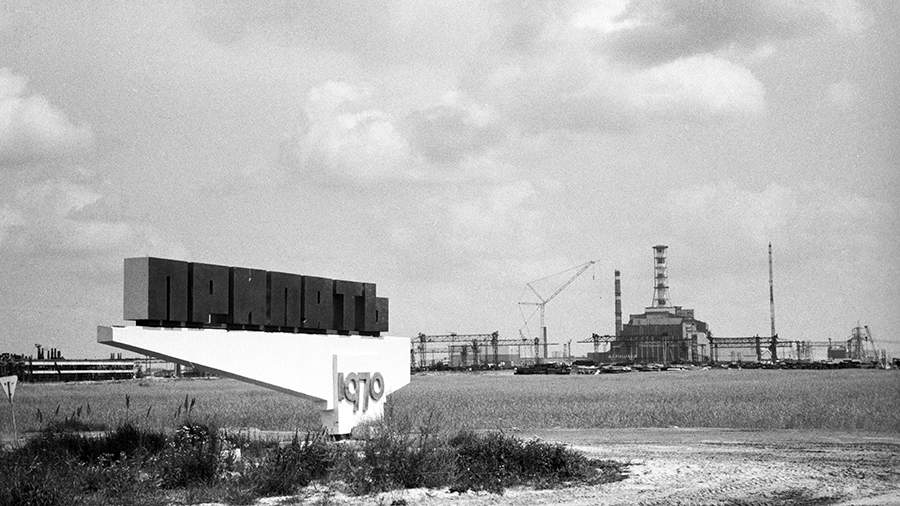
The Chernobyl accident became the largest nuclear disaster in the history of mankind and still remains a symbol of man-made danger. Radioactive contamination spread far beyond the borders of the USSR, affecting millions of people and vast territories. 40 years later, Chernobyl remains an important lesson about the cost of human error. What you need to know about this disaster is in the Izvestia article.
Causes of the accident
• The Chernobyl accident occurred at 01:23 on April 26, 1986, during testing at the fourth power unit. The staff checked how the turbine would generate electricity when the external power supply was turned off. To do this, they reduced the reactor's power, but the process got out of control, the power level dropped too much. The reactor entered an unstable state, and the processes inside the core began to develop chaotically.
• The situation was aggravated by the features of a high-power reactor. Its design led to the fact that when steam was formed, the power did not decrease, but increased. This made the reactor sensitive to any deviations. The control rods that were supposed to stop the reaction had the opposite effect in the first seconds. At the critical moment, the reaction began to accelerate even faster.

• The staff acted in a tense environment and did not see the full picture of what was happening. The staff continued the experiment with deviations from the normal parameters. They disabled some of the protective systems and reduced the reactor's stability margin.
• When the situation became dangerous, they tried to stop the process by pressing the emergency button. This led to a surge in power. In a few seconds, the reactor exploded and collapsed. Accumulated technical problems and lack of information played a crucial role in the development of the disaster.
Elimination of consequences
The radioactive cloud spread far beyond the borders of the USSR and reached Europe. The authorities hid the scale of the accident and did not inform the public about the real danger. Residents of Pripyat continued their normal lives, walking in the streets and breathing contaminated air. The evacuation of the city with a population of about 47.5 thousand people began only 36 hours later.

• Firefighters, 28 people, were the first to arrive at the accident site, and they worked without full protection and without information about radiation. Radiation levels in some places reached 20,000 X-rays per hour, and a lethal dose could be obtained in minutes. Many of them suffered severe injuries and died within a month.
• In total, about 600 thousand people participated in the elimination of the consequences. Radiation data was often underestimated, and some of the equipment showed inaccurate values. According to official data, by 2011, out of 195,000 liquidators in Russia, about 40,000 people had died.
The aftermath of the explosion
The explosion on April 26, 1986 was the largest nuclear disaster in history and affected millions of people. A huge amount of radiation has entered the atmosphere, which is estimated at about 50 million curies. About 8.4 million people were exposed to radiation, and about 350,000 residents fled their homes.
• The pollution affected vast territories, especially Belarus, which accounted for about 70% of the radioactive fallout. The border between the republics was located ten kilometers from the Chernobyl nuclear power plant, and the north-westerly wind that prevailed in the first days after the accident blew radioactive fallout towards Belarus. In May 1986, approximately 116 thousand people were evacuated from 188 settlements.
• The aftermath has become an example of international solidarity and dedication among professionals, including firefighters, scientists, and medics. For decades, the United Nations has been coordinating assistance to affected regions, developing international cooperation and implementing nuclear safety measures, including agreements on early notification of accidents. At the same time, special attention is now being paid to the risks to nuclear facilities in the context of military operations, including on the territory of Ukraine, since even accidental damage can lead to serious consequences.
Lessons from the Chernobyl disaster
• The Chernobyl accident led to a revision of the radiation protection system worldwide and a strengthening of the role of the International Atomic Energy Agency (IAEA). An international system for responding to nuclear and radiation accidents has been established, radiation safety principles and protocols for emergency personnel have been improved, and the emergency medical care system has been expanded. The experience of eliminating the Chernobyl disaster was applied in the elimination of the accident at the Fukushima nuclear power plant in 2011.
• In the USSR, after the 1986 accident, the production of small-sized household dosimeters began. RBMK's Chernobyl-type reactors were decommissioned at most Soviet nuclear power plants, but they were preserved and modernized at Kursk, Smolensk and Leningrad nuclear power plants: automation and protection were enhanced. The fuel itself was also improved — now the reaction absorber was contained not in the rods, but directly in the "fuel tablet". In 2019, tests of emergency nuclear fuel with a protective shell began in Russia.
• The Chernobyl accident gave rise to the development of VVER reactors, where water is a coolant, and when it is lost, the chain reaction decays, while in the Chernobyl reactor, the loss of coolant accelerated it. In addition, the VVER has a protective shell, which, even if the hull is destroyed, will not allow radiation to escape the nuclear power plant. The design features of the reactor did not allow RBMK to create such a protective hood.
• Chernobyl remains a global lesson that requires all countries to join forces to prevent new disasters. The consequences of the accident are still being felt, including an increase in cancer and environmental pollution. Chernobyl has become an example of the consequences of hiding information and ignoring the threat.
Переведено сервисом «Яндекс Переводчик»
