Moldova is withdrawing from the CIS. What you need to know

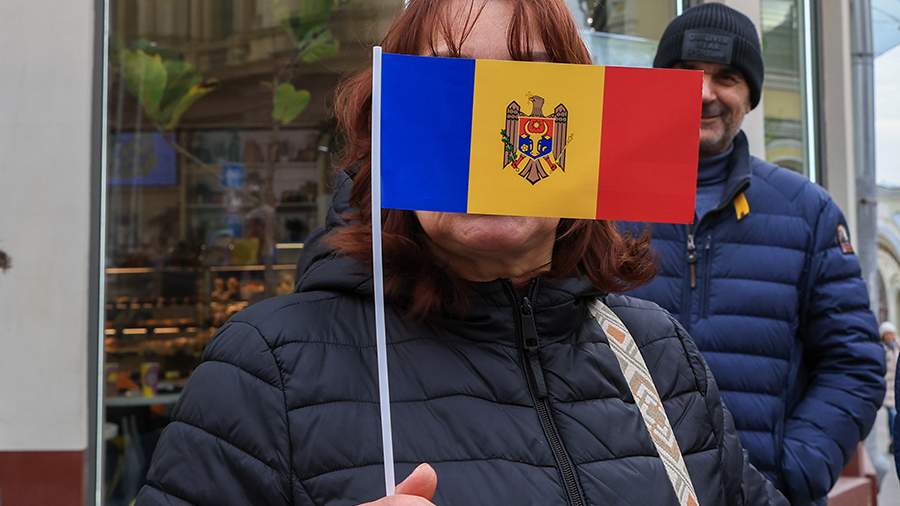
Moldova has made a final decision to withdraw from the Commonwealth of Independent States (CIS). The country's parliament denounced three key agreements that secured the country's membership in the organization. The release will officially end in one year. At the same time, Chisinau does not intend to withdraw from economically beneficial agreements concluded within the framework of the CIS. What you need to know about Moldova's withdrawal from the Commonwealth is in the Izvestia article.
How Moldova leaves the CIS
• The Moldovan Parliament adopted in the second and final reading a decision to denounce three fundamental agreements that were the basis of the country's membership in the Commonwealth of Independent States. These are the Agreement on the Establishment of the CIS, signed on December 8, 1991 (also known as the Belovezhskaya Agreements), the protocol to the Agreement on the Establishment of the CIS dated December 21, and the CIS Charter, adopted on January 22, 1993.
• 60 deputies out of 101 voted for the denunciation of the three agreements. The decision was approved by representatives of President Maia Sandu's Action and Solidarity party, the Democracy at Home party, as well as former Moldovan Prime Minister Ion Chicu, representing the Alternative faction. Deputies from the Socialist and Communist parties voted against it.

• The official withdrawal from the CIS will take place 12 months after Moldova notifies the Executive Committee of the Commonwealth of Independent States of its decision. After that, membership in the CIS, in accordance with Article 9 of the Charter, will be terminated. At the same time, Moldova will still have obligations that arose during the period of participation in the organization, which will have to be respected until they are fully fulfilled.
• In addition to the three fundamental agreements, Moldova has signed 280 more agreements with the CIS concerning certain areas. 71 of them have already been denounced, and 60 more are in the process of termination. Chisinau intends to keep some agreements if they bring economic benefits to the country and do not contradict future accession to the European Union.
Why Moldova is leaving the CIS
• Moldova announced plans to leave the CIS back in March 2022 after applying to join the European Union. Since then, the authorities of the republic no longer participated in the events of the Commonwealth, and also ignored the meetings of the Eurasian Economic Union (EAEU), in which Chisinau has observer status.
• The country started taking real steps to exit the CIS in early 2026. The initiator of the denunciation of three key agreements was the Ministry of Foreign Affairs of Moldova. In its justification, it stated that the fundamental values and principles of the CIS were not respected, and also explicitly pointed out that membership in the Commonwealth contradicts the goal of joining the EU. In March, before the parliamentary vote, the denunciation was approved by the Moldovan government.
• Another reason for leaving the CIS was the unwillingness to pay membership fees to the organization's budget. Moldova annually allocated 3.1 million lei ($176.5 thousand) for these purposes. At the same time, the country's authorities intend to continue interstate communication and cooperation with CIS members on bilateral and multilateral platforms.
What will Moldova's withdrawal from the CIS lead to?
• Moldova's withdrawal from the CIS will lead to the loss of some of the economic ties it has maintained with the countries of the former USSR over the past 30 years. Chisinau refuses customs agreements that provided the country with duty-free trade in countries to which Moldovan products were familiar and where they were in demand.
• Also, membership in the CIS provided Moldova with the purchase of raw materials necessary for the normal functioning of the economy at reasonable prices. The share of imports from the CIS for a number of goods is in the tens of percent, which indicates Moldova's critical dependence on trade with the countries of the former USSR.
• Agreements concluded within the framework of the CIS allowed Moldovan citizens to study and work in other CIS countries and provided the opportunity to travel within the framework of a visa-free regime. The country's residents also used a simplified mechanism for mutual recognition of documents, which ensured strong ties with other CIS members.
How the composition of the CIS changed
• Initially, Russia, Ukraine and Belarus announced the formation of the CIS in accordance with the Belovezhskaya Agreements. Over the next two weeks, most of the other republics of the disintegrating USSR agreed to join them. Azerbaijan, Armenia, Kazakhstan, Kyrgyzstan, Moldova, Tajikistan, Turkmenistan and Uzbekistan. Together they signed the Alma Ata Declaration, which confirmed the formation of the CIS, and the protocol to the Agreement on its Creation. At that time, only Georgia, Latvia, Lithuania and Estonia refused to join. Subsequently, Georgia joined the CIS, and Turkmenistan's participation was downgraded to the status of an associate observer member.

• Over the next three years, the states of the former USSR ratified the Agreement on the Formation of the CIS. Moldova was the last to do so in January 1994. By that time, in January 1993, the CIS Charter had also been signed. It outlines the procedure for joining and leaving the CIS, areas for cooperation, and organizational structure. The CIS Charter was signed by ten countries — Ukraine and Turkmenistan refused to do this, although they had previously ratified the Agreement on the Formation of the CIS and were considered its founders.
• In 2008, Georgia decided to withdraw from the CIS. This happened immediately after the end of the August conflict in South Ossetia and Abkhazia. The Georgian Parliament adopted the decision to denounce the CIS treaties unanimously. Georgia's withdrawal was formalized with the consent of other CIS members already in October 2008, before the expiration of the 12-month period.
• Subsequently, Ukraine announced its withdrawal from the CIS. Although it did not sign the CIS Charter, it continued to participate in the work of the Commonwealth as a de facto member and concluded joint treaties and agreements in various fields. In 2018, President of Ukraine Petro Poroshenko signed a decree on termination of participation in the statutory bodies of the CIS. Since that time, Kiev has gradually withdrawn from other agreements signed within the framework of the CIS.
Переведено сервисом «Яндекс Переводчик»
