"Conversations about important things" on March 23rd — topic and lesson program


On Monday, March 23, Russian schools and colleges will host another lesson from the "Talking about the important" series. It will be held on the eve of the anniversaries of two of the most important institutions of Russian culture: the 250th anniversary of the State Academic Bolshoi Theater of Russia and the 150th anniversary of the Union of Theatrical Figures of the Russian Federation. The lesson is designed to introduce students to the history of the main theater of the country, as well as to the variety of theatrical professions. Izvestia tells us how the lesson will go in different classes.
"Talking about important things" on March 23rd — the topic of the lesson
The next lesson in the series "Conversations about important things" is dedicated to the unique world of theater and is timed to coincide with two significant dates: the 250th anniversary of the Bolshoi Theater and the 150th anniversary of the Union of Theatrical Figures of the Russian Federation. Students will learn why the theater is called "living art" and "the mirror of life", as well as what role it plays in preserving the cultural code of the nation.
The history of the Bolshoi Theatre, inextricably linked with the history of Russia, is full of dramatic events: it survived three devastating fires, wars and revolutions, but each time it was restored, becoming only more magnificent. Architect Albert Kavos, restoring the building after the fire of 1853, designed the auditorium based on the principle of a huge musical instrument, the violin, which provided unique acoustics. The building, crowned with the Apollo quadriga, has become not only a symbol of Moscow, but also a visiting card of the whole country, appearing on a hundred-ruble bill.
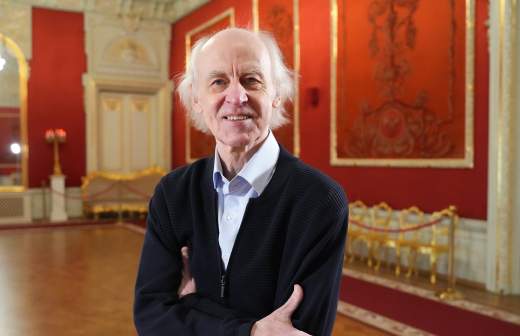
At the same time, students will learn about the importance of the professional theater community. 150 years ago, in 1876, the Russian Artists Mutual Aid Society was established in St. Petersburg, founded by Ivan Turgenev, Alexei Pleshcheyev and other cultural figures. Today it is the Union of Theatrical Figures of the Russian Federation, uniting about 30 thousand people — from actors and directors to costumers and lighting designers.
The lesson will take the form of an educational conversation using presentations, video materials and interactive elements. The recommended duration of the lesson is 30 minutes. Methodological recommendations and other materials for the lesson can be found on the website of the Conversations about Important project.
"Conversations about important things" March 23 — lesson program
For the youngest viewers, students in grades 1-4, the lesson will begin with reflections on why people go to the theater and what emotions they get there. The teacher will tell the children about how the theater helps to escape from everyday life and take a fresh look at friendship, kindness and justice. The children will also learn about the difficult fate of the Bolshoi Theater. With the help of the interactive task "Theatrical professions", students will get acquainted with the huge team working on the performance: from the director and conductor to props, make-up artists and ushers. Special attention will be paid to the rules of theatrical etiquette and the role of the audience. In a playful way, performing the tasks "Musical Guessing game" and "Rules of the Theater", children will be taught that attending a performance is not just entertainment, but an opportunity to develop spiritually, learn empathy and fantasy.
Students in grades 5-7 will immerse themselves in the history and architecture of the Bolshoi Theatre. The children will learn about the emergence of the "Russian school" of ballet, the triumph of Pyotr Tchaikovsky's ballets and how Konstantin Stanislavsky's system changed the world's understanding of opera, requiring convincing acting from the singer. With the help of the interactive task "Dancing dolls", students will be able to better understand the specifics of ballet art. A variety of theatrical genres and professions will also be discussed with students, and the practical lesson "Theatergoer" will help students learn the rules of theatrical etiquette.

Students in grades 8-9 will start the conversation by asking why theater is called "living art" and how it differs from cinema. Looking at the history of the Bolshoi Theatre, which has risen from the ashes more than once, high school students will discuss which character traits helped people not to give up in the face of adversity. They will learn about the role of the Union of Theatrical Figures, which has been supporting stage professionals for a century and a half, and how today this organization unites thousands of artists across the country.
An important topic will be Russia's contribution to world culture: schoolchildren will be reminded of the achievements of Pyotr Tchaikovsky, Maya Plisetskaya, Galina Ulanova and other Russian figures who changed the world of performing arts. During the practical task "Animated paintings", the children will try themselves as actors, creating mini-skits based on famous paintings. At the end of the lesson, they will reflect on how theater helps people grow spiritually, become wiser and more human, and whether theaters are needed in small towns.
Students of grades 10-11 will discuss why the great Russian classics — Alexander Pushkin, Nikolai Gogol, Alexander Ostrovsky, Anton Chekhov — considered theater the best way to convey their ideas to the audience. Considering the history of the creation of the "Society for Mutual Assistance of Russian Artists", high school students will come out on the topic of generational continuity and the importance of professional association. Students will also have to complete the interactive task "Theater Team", consolidating knowledge about theater specialists. At the end of the lesson, the high school students will discuss the nature of "theatrical magic", which allows the audience not only to live someone else's life, but also to enrich their own spiritually.
"Conversations about important things" on March 23 — about the project
"Conversations about important things" is a cycle of extracurricular activities launched by the Ministry of Education of the Russian Federation in 2022. It touches on significant topics related to Russian culture, history, and geography, as well as highlights topical issues of students' daily lives (relationships with peers, choosing a future profession, finding their place in life, etc.). Classes are held every Monday in all schools and colleges in the country.
The previous lesson, which took place on March 16, was dedicated to the Russian industry. The students learned about key enterprises and industries of the Russian Federation, as well as the role of engineers, workers and technologists in the development of the country.
Переведено сервисом «Яндекс Переводчик»
