Filter with life: a new sorbent will purify water and oil from dangerous nanoplastics
- Статьи
- Science and technology
- Filter with life: a new sorbent will purify water and oil from dangerous nanoplastics


For the first time in Russia, a material has been created that simultaneously extracts heavy metal ions and micro‑ and nanoplastics particles from water. Polymer sorbent can be used as a filler in domestic and industrial cleaning systems, including in the food industry — in the production of beverages and vegetable oils. Experts note that many studies are currently being conducted on the effects of microplastics on the human body, but their conclusions need to be clarified. Therefore, first of all, the development will be in demand in areas where the purity of water is strictly regulated by law or directly affects the sales and reputation of the manufacturer.
How to purify water from harmful particles
Researchers from Rosbiotech University have created Russia's first polymer sorbent, which is simultaneously capable of trapping both heavy metals and micro- and nanoplastics particles. The material works in water, vegetable oils and a number of other liquids. The technology can become the basis for a new generation of cost-effective cleaning systems.
The scientists tested the effectiveness of the material in the laboratory. Experiments have shown that one gram of the substance absorbs up to 9.3 mg of copper ions, 8.6 mg of nickel, 8.3 mg of cobalt, and also completely traps plastic particles of the order of 50 nm and larger.

According to the developers, the resulting double-acting material has no analogues in Russia and probably in the world. At the same time, it is easy to obtain it in industrial conditions.
— The sorbent is synthesized from four available components — ED-20 epoxy resin, ortho-phenylenediamine, formalin and ethylenediamine. The technology does not require complex equipment — a powerful magnetic stirrer with heating is sufficient. This means that production can be easily scaled," said Kirill Kornilov, one of the authors of the project, associate professor of Chemistry, Polymer Technology and Packaging Solutions at the University.
The material has a porous structure with thin, sinuous channels, which makes it suitable for use as a filler in both household and industrial filters. The liquid passing through such a sorbent is safe for consumption without restrictions. One cartridge is designed to last at least three months.
— Probably, the properties of the sorbent can be restored. For example, immersion in a weak acid solution will eliminate heavy metal ions accumulated in the sorbent. Microplastics require more complex solutions. However, if they are found, the filler will be suitable for repeated use," Kirill Kornilov added.
Research by Russian scientists has shown that microplastics do not disappear without a trace. In particular, in a recent review article, experts summarized more than 250 scientific papers published worldwide and concluded that these particles, once in the human body, damage almost all vital systems — the heart, brain, intestines, reproductive organs, and others.
Fragments of less than 100 nm are particularly dangerous. They accumulate in organs, penetrate cell membranes and provoke oxidative stress and inflammation in cells. For example, neurodegenerative diseases occur in the brain, and fibrosis develops in the heart. As a result, plastic pollution is becoming a medical problem. They require the development of strategies to protect public health, the experts concluded.
What is the danger of microplastics?
— Microplastics are made from everything from car tires to grocery packaging. Therefore, these particles have different effects on the environment they find themselves in. Their impact also depends on their shape, size and other factors," Philip Sapozhnikov, a leading researcher at the Laboratory of Ecology of Coastal Bottom Communities at the P.P. Shirshov Institute of Oceanology of the Russian Academy of Sciences, told Izvestia.
The decomposition of microplastics produces substances, many of which are toxic. For example, polypropylene used for disposable tableware releases more than 200 compounds, while about half of them are poorly understood by science. In addition, plastic particles serve as the basis for the formation of biofilms — colonies of microorganisms — and can carry bacteria, including pathogenic ones. Once in the nutrient medium of the human body, these microbes are able to multiply, the expert noted.
Plastic particles can also injure tissues, the expert added. In particular, some microfibers can damage the surface of the epithelium of the gastrointestinal tract. Nevertheless, people have long consumed such particles with food, drink and when breathing. Therefore, our bodies are adapted to microplastics to a certain extent. But the degree of adaptation to the pathogenic microflora that travels on it is different for everyone and depends on the human immune system.
— Today, scientists cannot name the exact safe doses of microplastics in water. This is due to the inconsistency of counting methods, the heterogeneity of particles and, most importantly, the lack of reliable data on their impact on human health. Therefore, the honest answer sounds like this: most likely, the current level of microplastics in bottled and tap water does not pose a serious risk, but there is no complete certainty. Especially when it comes to nanoparticles and their accumulation in the body for years," said Sergey Kharitonov, a molecular biologist and researcher at Lomonosov Moscow State University.
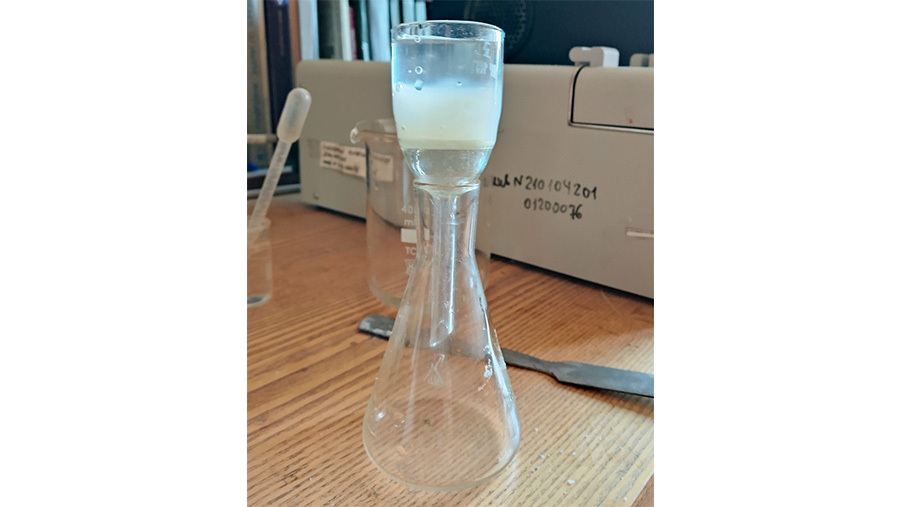
Currently, the proposed purification systems will be in demand primarily in areas where water purity is regulated by law or where its quality affects product sales and business reputation, he explained. In particular, in water supply systems, as well as among manufacturers of bottled water and beverages and in the food industry.
— The effects of microplastics in laboratories are often studied using high concentrations at which harmful effects can actually be observed. However, the natural content of these particles is low and has no harmful effects. Urban residents receive more harmful effects from other sources, such as exhaust fumes, unhealthy diets, etc.," said Egor Zadereev, a leading researcher and head of the scientific communications group at the Institute of Biophysics of the Siberian Branch of the Russian Academy of Sciences.
According to him, microplastic cleaning systems are in demand where ultrapure liquids are required. For example, when conducting accurate chemical analyses, when water is repeatedly purified from all impurities.
— According to the results of the study, the sorbent obtained can be used in the purification of liquids for various purposes. The question remains how durable it is and how many regeneration cycles it can withstand. It is also important to test the material under different temperature conditions and different wastewater composition," said Vladimir Pinaev, member of the Public Council of the Basic Organization of the CIS Member States for Environmental Education, associate Professor at the Patrice Lumumba Institute of Ecology at the RUDN University and editor—in-chief of the online scientific journal Waste and Resources.
If the project reaches practical application, it is important how the pollutants deposited after sorbent regeneration will be used and disposed of, he added.
Переведено сервисом «Яндекс Переводчик»
