The health of the nation: how Russian medical developments are becoming a real practice
- Статьи
- Local news
- The health of the nation: how Russian medical developments are becoming a real practice


On the Day of Russian Science, Moscow hosted a large-scale press conference dedicated to current achievements in the field of medicine. The event "The main thing in life sciences: from discoveries to the implementation of the national strategy" brought together leading experts who presented concrete results demonstrating the transition of Russian medicine from the stage of basic research to the creation of finished products and technologies. Details can be found in the Izvestia article
From idea to mass production
Veronika Skvortsova, Head of the Federal Biomedical Agency (FMBA) of Russia, Corresponding Member of the Russian Academy of Sciences, opened the press conference with her speech and elaborated on how the work of the agency, which provides a full cycle from scientific ideas to mass industrial production, has changed. A system of accompanying science has been built in all the main areas of the agency's activities, production sites have been created at each scientific center in the structure of the FMBA, and there are strong industrial partners for individual projects. This approach has dramatically improved work efficiency.
The key result, according to Skvortsova, is that innovation is now 2.5-3 times faster. She cited the fulfillment of a special order for law enforcement agencies as a striking example.
— For two and a half years, we have provided the Ministry of Defense and other law enforcement agencies with a whole range of detectors and alarms, identifiers of biopathogens — more than 200 devices. In addition, we have developed new PCR diagnostic methods, antidotes against toxic substances, and much more," Skvortsova cited specific figures.
Separately, the head of the FMBA highlighted the civilian area of work - the creation of more than 40 new medicines. Special expectations are associated with the original vaccines against cancer.
"In the second quarter, we will be ready to apply for permission to use vaccines against glioblastoma and, at the end of the year, against melanoma," she announced.
Speed matters
Alexander Rumyantsev, President of the National Medical Research Center for Pediatric Hematology, Oncology and Immunology, focused on the problem of early implementation of scientific achievements in clinical practice. He stated that one of the most important system tasks today is to bring the latest developments to patients as soon as possible.
In his speech, Rumyantsev spoke in detail about the center's best practices in the field of cancer immunology. Since 2018, CAR-T cell therapy has been successfully used there, which is one of the most modern methods of treating certain types of cancer.
— We are moving on: as a target cell working as a drug, not only T cells can be used, but also, for example, macrophage cells. This is a completely new direction. Now we are waiting for the results of the research," the scientist noted.
The academician called prevention an equally important area of work. He noted the unprecedented expansion of the neonatal screening program, which now makes it possible to detect a whole range of severe hereditary diseases in newborns at the earliest stage, and it is critically important to start treatment immediately, bypassing the justification stage.
Readiness for challenges and the role of AI
Academician of the Russian Academy of Sciences Vitaly Zverev, speaking on the topic of combating infections, expressed confidence in the capabilities of Russian science. He stated that Russian scientists have the most modern platforms for creating new vaccines. The only thing that is sometimes missing is the connection of scientific organizations with the direct manufacturer.
Nevertheless, he stressed that the Russian healthcare system is ready for global biological risks.
"Despite the fact that now people travel all over the world and can bring infections from different parts of the world, we are ready for this,— Zverev concluded.
Academician and member of the Presidium of the Russian Academy of Sciences Vladimir Starodubov told reporters that new technological standards, in particular artificial intelligence, are being introduced into healthcare at an accelerated pace, while requiring more funding. According to him, AI is already demonstrating real practical benefits.
— We can already say that artificial intelligence makes it possible to make a more accurate diagnosis. Relevant studies in Europe have confirmed this," Starodubov said.
The driver of technological leadership
Dmitry Kudlay, Vice President of Generium JSC and Corresponding Member of the Russian Academy of Sciences, gave a detailed analysis of the state and prospects of the industry. The scientist noted the importance of well-established cooperation between different departments and laboratories in the development of vital drugs for patients.
He recalled the words of President Vladimir Putin, who listed at the Forum of Advanced Technologies in 2024 the principles that are the key to technological success: the first is self—sufficiency, the second is technological leadership, and the third is that we will never abandon international cooperation with foreign colleagues.
Dmitry Kudlay outlined a general trend: about 90% of all global biotech platforms are currently in the hands of Russian research institutes, universities and companies. In his opinion, this creates a solid foundation for solving the problems of both import substitution and technological leadership. As an example of achieving self-sufficiency in the pharmaceutical industry, Dmitry Kudlay cited the world's first biosimilars of tocilizumab, ustekinumab in rheumatology, an analog of natalizumab for the treatment of multiple sclerosis, and domestic nusinersen from the class of antisense oligonucleotides for the treatment of spinal muscular atrophy created in the Russian Federation by Generium.
The scientist also emphasized full-cycle diagnostic solutions for neonatal screening.
International recognition
Dmitry Kudlay also spoke about Russian developments that are at the top of foreign scientific conferences, and about the prospects for the transition of domestic products to the "export" category. As examples, he cited China's active interest in the Russian experience of neonatal screening and a drug for the treatment of Hunter syndrome, created and registered in Russia.
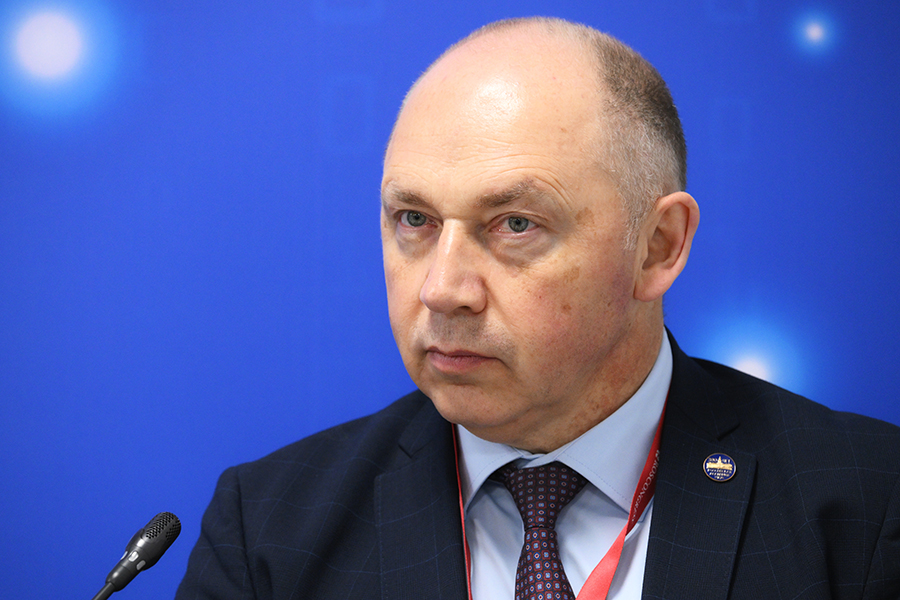
"The enzyme replacement therapy drug verenafusp alpha, developed by our scientists, solves one of the main tasks in the treatment of type II mucopolysaccharidosis — it can penetrate the blood-brain barrier and positively affect cognitive function. This gives children the opportunity to develop on an equal basis with their peers. A Russian academic group presented the original drug at a conference in San Diego, where its registration aroused great interest among the global scientific community."
The expert cited the integration of science, industry and education as an important success factor, which makes it possible to train new personnel and create effective teams. In his opinion, the financial support of the Ministry of Education's programs, such as Priority 2030, World-class Campuses, Youth Laboratories, and Advanced Engineering Schools, provides serious financial resources for the development of the research infrastructure of leading universities.
Переведено сервисом «Яндекс Переводчик»
