- Статьи
- Science and technology
- Tasks and stars: scientists have compiled an X-ray map of the universe and created a "superhero patch"

Tasks and stars: scientists have compiled an X-ray map of the universe and created a "superhero patch"

Scientists have discovered microscopic "hairpins" in E. coli, created an innovative remedy for the treatment of extensive wounds with micro chambers, and identified molecules that allow solar cells to self-heal. The Spektr-RG space Observatory has helped develop a complete X-ray map of the universe, and a new domestic development by nuclear scientists makes it possible to "shine through" rocks and accurately determine their chemical composition. On the Day of Russian Science, Izvestia gathered the most striking discoveries of scientists in various fields — from medicine and ecology to space research and nuclear technology.
X-ray map of the Universe
Eight sky surveys and the most complete map of the universe in the hard X-ray range, as well as unique quasars, pulsars, supernova remnants and the rarest astrophysical objects — these are the main results of the work of the Russian space observatory Spektr-RG. She worked for 6.5 years, completing the basic research program.
Based on the data received by the station, a catalog of X-ray sources is being prepared. It contains more than 2.2 thousand objects. These are neutron stars, black holes, white dwarfs (remnants of deceased luminaries), and other exotic phenomena, the scientists said. It is expected that hundreds of them will turn out to be previously unknown to science.
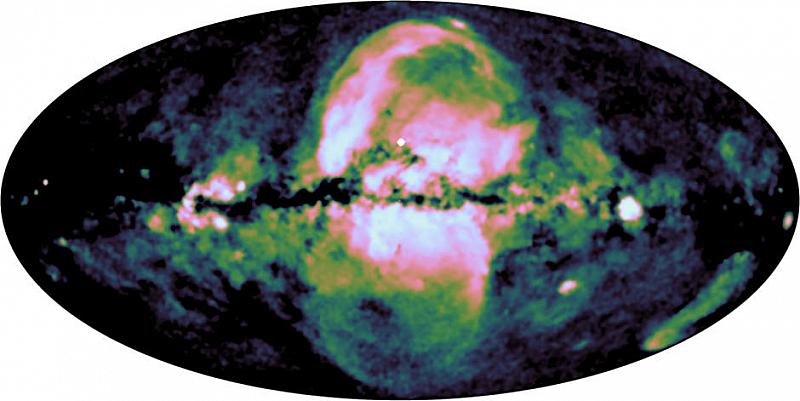
— Spektr-RG has provided information that will become a reference for astrophysicists for many years to come. Now, having completed the mandatory program, he is moving on to an arbitrary one, which is often more interesting and more difficult," said Alexander Lutovinov, Deputy Director of the Space Research Institute of the Russian Academy of Sciences.

At the moment, based on the applications of scientists, an observation program has been formed for the next six months, he added. It is planned to follow the same approach in the future.
"Superhero Band-aid" for the treatment of extensive wounds
Scientists at the I.M. Sechenov First Moscow State Medical University have created a unique wound treatment material based on a system of polymer micro-chambers. Such structures slowly release the biologically active substances contained in them into the damaged tissue, thereby accelerating its healing and reducing the volume of the scar.

Microimage of connective tissue cells on the surface of a micro-chamber material
As the developers told Izvestia, micro-chambers embedded in the biomaterial ensure the controlled release of therapeutic substances, which allows optimizing their concentration and duration of action. The technology can be used in the treatment of tissue damage, including extensive wounds and chronic ulcers, including diabetes mellitus, as well as to accelerate postoperative healing and repair of nervous tissue. The use of technology can shorten the regeneration time, reduce the risk of repeated surgical interventions and improve the functional results of therapy. In addition, the technique can be used to prevent pathological scarring, which often leads to organ dysfunction and a decrease in the quality of life of patients.
—The controlled delivery of antimetabolites and other substances that promote regeneration minimizes the formation of scar tissue, which is especially important during healing, for example, of the spinal cord and cornea of the eye, where maintaining functionality is critically important," Alexey Ermakov, head of the Laboratory for Targeted Drug Transport at Sechenov University, a grant recipient of the Russian National Research Foundation, told Izvestia.
"Sanitation molecules" for solar panels
Scientists from the Federal Research Center for Problems of Chemical Physics and Medical Chemistry of the Russian Academy of Sciences have proposed a way to increase the efficiency and stability of perovskite solar cells. The researchers added so-called sanitation molecules to the standard layer of positive charge transfer, which repair defects in the perovskite layer, prevent the formation of aggregations and ensure an even distribution of the material over the surface. As a result, the cells work faster and more stable, and the efficiency of converting solar energy into electrical energy reaches 25%.

— Thin—film and tandem solar panels of the new generation are the main field of application of cells with self-organizing molecular layers. Our atomistic modeling has shown that the key factor is the suppression of aggregation of molecules at the interface and the formation of a homogeneous, stable contact layer. It is the control of the structure and packaging of such layers that determines the quality of perovskite growth and the durability of the device," Lavrenty Gutsev, senior researcher at the Laboratory of Structural Chemistry at the Research Center and a grant recipient at the Russian National Research Foundation, told Izvestia.

Anti-ice technology
Young scientists of the Amur State University named after Sholom Aleichem have brought a development to combat ice and snowfall to the stage of real production. The first batch of equipment is already being tested on the streets of Birobidzhan. The device is mounted on a wheeled tractor as an attachment module. With relatively low energy consumption, it can effectively destroy ice up to 14 cm thick. Unlike traditional snow plows, the working elements do not come into contact with the asphalt surface, which reduces its wear and speeds up the cleaning process. The dimensions of the installation allow you to work in cramped courtyards and parking lots.

The key advantage of the technology is the use of shear deformations, in which parallel layers are displaced relative to each other, but the distance between them remains unchanged. It has already attracted the attention of industrial partners, and field tests on roads in the northern regions of Siberia are planned in the near future.
"Our goal was to create not only an efficient, but also the most reliable and easy—to-use device," said Vitaly Zemlyak, project manager, Head of the PSU Youth Scientific Laboratory of Ice Engineering.
The project is being implemented within the framework of the Priority 2030 program and the initiatives of the Decade of Science and Technology.
Laboratory animals cured of cancer
Researchers at the Krestov Institute of Solution Chemistry of the Russian Academy of Sciences have developed a method for producing a new water-soluble monocationic chloride photosensitizer for photodynamic therapy of oncological diseases and studied its properties. This was reported to Izvestia by the Ministry of Education and Science. This is an innovative cancer treatment method that allows you to destroy malignant cells and stop the blood supply to tumor tissues without surgery. A photosensitizer is a drug that is injected into the patient's body. It accumulates in pathologically altered tissues, and after activation by light of a certain wavelength, reactive oxygen species are generated that damage cancer cells containing the substance.

Researchers at the G.A. Krestov Institute of Solution Chemistry of the Russian Academy of Sciences
Preclinical studies of a new drug capable of efficiently generating high—energy oxygen were conducted both in vitro on tumor cell cultures and in vivo using laboratory animals. A fragment of a model tumor (sarcoma) was transplanted into healthy rats, and a week later, when the neoplasm reached about 1 cm in diameter, one session of photodynamic therapy was performed using a new photosensitizer. 21 days after the procedure, 75% of the animals showed complete tumor regression. During the subsequent follow-up period of 90 days (which is equivalent to about five years in humans), this indicator remained stable, indicating the high therapeutic potential of the developed photosensitizer.
In the future, the authors plan to investigate the effectiveness of combination therapy against other types of tumors.

E. coli "hairpins" will help fight superbugs
When studying the spatial organization of the E.coli genome, scientists at the Institute of Gene Biology of the Russian Academy of Sciences have identified special hairpin structures that affect the activity of certain genes in this bacterium, some of whose strains are antibiotic-resistant. Bacteria without this "ability" can acquire the property of resistance as a result of the so-called horizontal transfer of resistance genes from superbugs present in the slice.
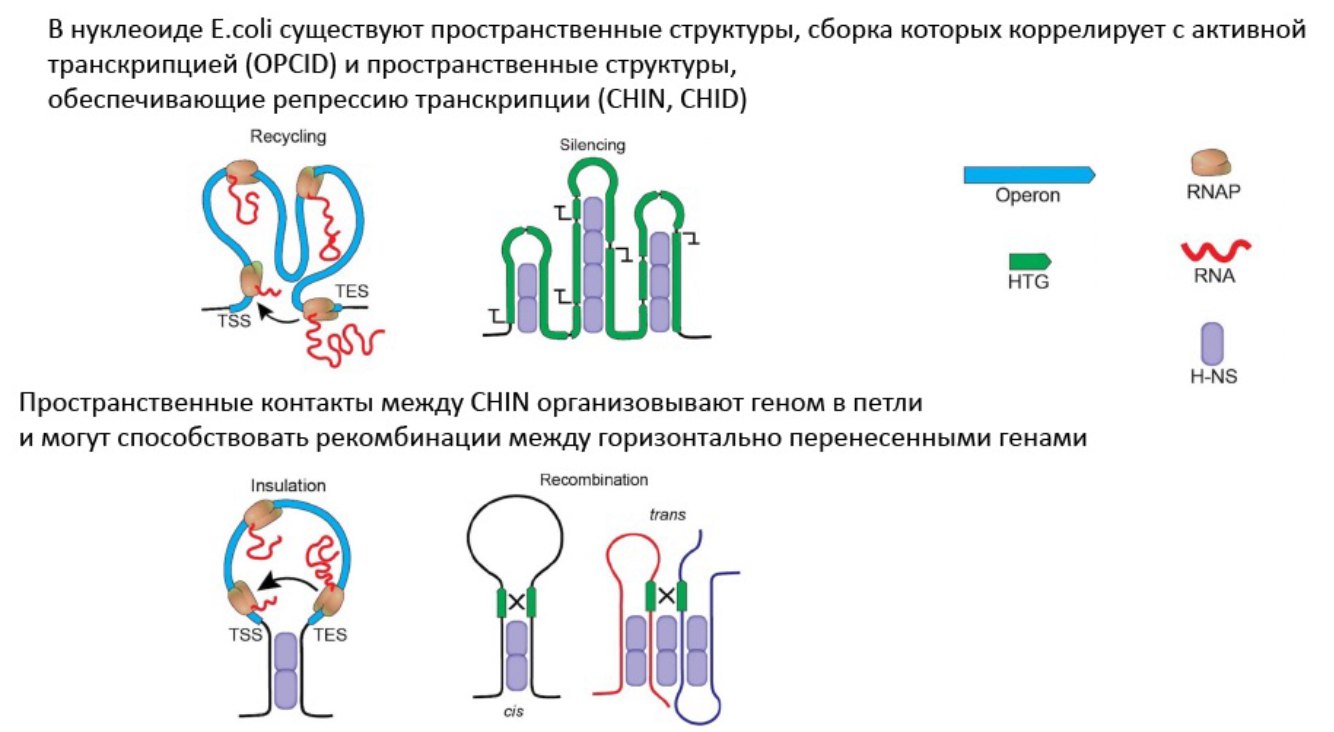
"The mechanism that we have uncovered indicates possible ways to transfer antibiotic resistance genes from one bacteria to another, including from non—pathogenic bacteria to pathogenic ones," Sergey Razin, Doctor of Biological Sciences, head of the Department of Cellular Genomics and head of the Laboratory of Structural and Functional Organization of Chromosomes at the Institute, a grant recipient of the Russian National Science Foundation, told Izvestia.
Understanding this mechanism will contribute to the development of new strategies to prevent such transfer, the scientist explained.
The new device will find unprecedented reserves of minerals
Rosatom scientists have developed and implemented an instrument complex for pulsed neutron logging of oil wells. The technology allows, like an X-ray, to "shine through" rocks and accurately determine their chemical composition. The equipment is equipped with generators that "bombard" the rock with pulses of fast neutrons. In response, the atoms of the elements emit gamma radiation, which is detected by ultra-sensitive detectors.

As representatives of the state corporation noted, the power of the developed generators reaches 300 million neutrons per second, which is a world record for devices of this class. The complex is designed for exploration of hard-to-recover mineral reserves, as well as for conducting research on the shelf.
The use of equipment can increase annual oil and gas production by expanding the resource base. The need in our country for hard-to-recover reserves alone is estimated at about 10,000 such studies per year, the scientists added.
Переведено сервисом «Яндекс Переводчик»
