Folk signs for February 9th: what can and cannot be done

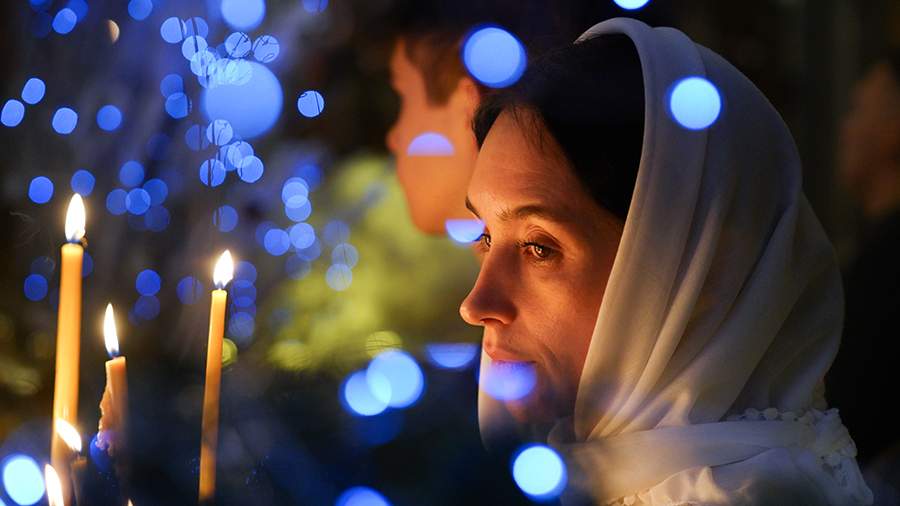
In Russia, omens have been given special importance since ancient times. They were used to judge the weather, when to sow and harvest, and what to expect in the future. Therefore, every day of the national calendar was full of rituals and superstitions. Izvestia tells about the popular signs of Monday, February 9th, and which church holidays are celebrated on this day.
Folk signs for February 9th
According to the national calendar, Zlatoust Day, or Zlatoust Fire, is celebrated on February 9. The holiday was closely connected with the veneration of the hearth and the fire, which in the long winter evenings replaced sunlight and gave warmth. It was believed that on this day, fire, especially stove fire, acquires a special power capable of healing and attracting prosperity.
In the morning, according to tradition, they visited the temple, and after morning prayers they started lighting the stove. The hearth was heated in a special way, using dry, well-dried firewood. They tried to keep the fire burning all day, not letting it go out, and in the evening the whole family gathered around the living flame, telling stories and planning future work.
It was believed that such a pastime by the fire cements family ties. If someone in the family was sick, they brought him closer to the warmth, believing that the Chrysostom fire could drive away the disease and restore health.
Observations of natural phenomena on February 9 were considered extremely important for making weather forecasts for the coming days and months. So, if the sky seemed low and heavy on that day, it foreshadowed increased frosts. Another harbinger of cold weather was the bright, dazzling white moon, which promised a sharp cold snap.
Other signs of the day:
- clouds move quickly and in the direction of the wind, leading to clear weather without precipitation.;
- Clouds are moving against the direction of the wind, leading to snowfall in the coming days.;
- The windows in the house fog up a lot, leading to severe frosts.;
- The reddish hue of the moon refers to snowstorms and windy weather.;
- There are waves of snow in the fields, leading to a rich harvest in summer.
What not to do on February 9th
Strict prohibitions were followed on Chrysostom Day. According to beliefs, violating these rules could bring trouble, losses, or illness to the family. They were especially wary of disturbing the good energy of the hearth. For example, on a holiday, it was strictly forbidden to clean the stove or rake out the ashes. The ancestors feared that this way they could extinguish the miraculous Chrysostom fire and lose their well-being.

What else can not be done on February 9th:
- using raw or wet firewood for the furnace promises tears, sorrows and strife in the family for the whole year.;
- to give and receive gifts is to attract troubles and misfortunes into life;
- Washing your hair is believed to "wash away" your memory.;
- taking off or twirling an engagement ring on your finger is cheating on your spouse;
- to swear, to sort things out — the day was meant for family unity, any conflicts, according to beliefs, could lead to a long-term discord.
What is the church holiday on February 9th?
On February 9 (January 27, Old Style), the Orthodox Church celebrates the transfer of the relics of St. John Chrysostom. This event took place in 438, three decades after his death. The incorruptible relics were transferred with honors from the place of their original burial to Constantinople.
St. John Chrysostom was born in Antioch around the year 347 in the family of a military commander and received a brilliant secular education. Having lost his parents early, he chose the path of asceticism and took monastic vows. Due to his extraordinary gift of words in the interpretation of Holy Scripture, he received the nickname Chrysostom, which means "golden mouth".
In 397, John was appointed Archbishop of Constantinople. In a high position, he proved himself to be a zealous pastor and an implacable denouncer of vice. His sermons also affected the imperial court, which led to a conflict with Empress Eudoxia.
Despite popular love and support, the saint was sent into a long exile. Exhausted by illness and hardship, he died on September 14, 407 in Comanche. Today it is one of the oldest and most revered holy places in modern Abkhazia. It was there that he was buried.
John Chrysostom is revered by the church as one of the three Ecumenical hierarchs and teachers, along with Saints Basil the Great and Gregory the Theologian. He left behind a huge number of theological works. Among them are sermons, the interpretation of Holy Scripture, and the rite of the Divine Liturgy, known to Christians as the "Liturgy of John Chrysostom."
After being baptized, his works were among the first to be translated into Russia, becoming the spiritual foundation for Russian Orthodoxy.

Prayers on February 9th
John Chrysostom is considered the patron saint of all those whose work is connected with the word: preachers, teachers, lecturers, journalists and writers. Traditionally, he is prayed for the gift of wisdom, eloquence and the ability to express his thoughts clearly. He also provides special assistance in spiritual enlightenment, the study of sciences and the search for his life purpose.
Prayer to John Chrysostom (the first)
"O great Saint John Chrysostom! You have accepted many and various gifts from the Lord, and, as a good and faithful servant, you have multiplied all the talents given to you, for this you have truly been a universal teacher, for every age and every rank learns from you. You are the image of obedience to the youth, the luminary of chastity to the young, the mentor of diligence to the husband, the teacher of kindness to the old, the rule of abstinence to the monk, the leader inspired by God to those who pray, the enlightener of wisdom to those who seek wisdom, the source of inexhaustible life to the well—spoken, the star of mercy to those who do good, the wise image to those who rule, You are a zealot for truth, an inspirer of boldness, and a mentor of patience to the persecuted. You were everything to everyone, that you might save everyone. <...> But we sinners <...> fall down to you, holy one of God, overcome with strife, and in contrition of heart we ask: through your prayers, banish all pride and envy from our hearts. O you who separate us, may there be one church body in many, may we love one another according to your prayerful word and with one mind experience the Father, the Son, and the Holy Spirit, the Trinity Consubstantial and Indivisible, now and ever and unto the ages of ages. Amen to that."
Prayer to John Chrysostom (second)
"O great Saint John Chrysostom! You have accepted many and various gifts from the Lord, and, as a good and faithful servant, you have multiplied all the talents given to you in a good way, for this you have truly been a universal teacher, for every age and every rank learns from you. But we sinners (names), according to one thing, each having his own gift, the unity of the spirit in the union of peace, are not imams, but we are vain, irritating each other, envying each other; therefore, for the sake of our gift, our divided ones do not appear to us in peace and salvation, but in enmity and condemnation. All the more, we fall down to you, holy one of God, overwhelmed by strife, and in contrition of heart we ask: through your prayers, drive out from our hearts all the malice, ill-will, pride and envy that divide us, so that we may remain in one body of the church, undisturbed, so that, according to your prayerful word, we may love each other and experience the Father and the Son with one mind. and of the Holy Spirit, the Trinity Consubstantial and Indivisible, now and ever, and unto the ages of ages. Amen to that."
Earlier, Izvestia told what they pray to St. Theodore the Studite.
All important news is on the Izvestia channel in the MAX messenger.
Переведено сервисом «Яндекс Переводчик»
