
Men ate meat: fauns and Musketeers on Moscow stages

It would be naive to expect that the capital's theaters would celebrate the beginning of the new year exclusively with masterpieces. Of course, January did not bring outstanding works to the theater-goers, but several interesting, albeit indisputable productions nevertheless appeared on the stages of Moscow. The most interesting of them are in the traditional Izvestia review.
"Joseph and his brothers"
The Theater named after Vakhtangov

Looking at the poster of this performance, how can you not remember: "The main thing is the greatness of the idea." That's exactly what another Joseph, the poet Brodsky, said. In this case, the idea may seem almost unbearable: it's no joke to include a four—volume epic novel by Nobel laureate Thomas Mann in three hours of stage action. But Yuri Titov's play, according to those who mastered this complex and not intended for the stage book, does not connect much with the novel. The director translated into the language of the theater several motley and multi—layered Old Testament stories retold by the German classic about Joseph the Beautiful and his relatives - about betrayal, repentance and forgiveness, about spiritual rebirth, about love and passion.
The multi-figure mise en scene staged by Titov can be considered as paintings by old masters. The parable performance was an excellent chance to prove themselves, first of all, for young actors, yesterday's students. And not only Nikita Shamanov as Joseph, but each of his eleven brothers plays excitedly, creating memorable images.

"Son"
Ermolova Theater

The main trump card of the play is 17—year-old actor and singer Leon Kemstach in the role of the title character, his peer Nicolas. He became famous after the TV series "The Word of a kid. Blood on the asphalt", Leon is confidently and organically making his debut on the theater stage. Director Georgy Surkov took an uncomplicated play about teenage depression after the parents' divorce by the fashionable French playwright Florian Zeller, part of his trilogy about the crisis of family relations and adapted by the author himself in 2022.
In Russia, there is a successful example of Yuri Butusov's production of this text in RAMTA, where the role of the son was given to the most adult member of the acting ensemble. In this case, the plot is solved realistically, the director did not aim to find an unusual and complex artistic language. This is an eternal tragic conflict between fathers and children, even if they are Western European. The universal story of the guilt that destroys parents is understandable and close to the Russian audience.

"The Fawn"
театр.doc
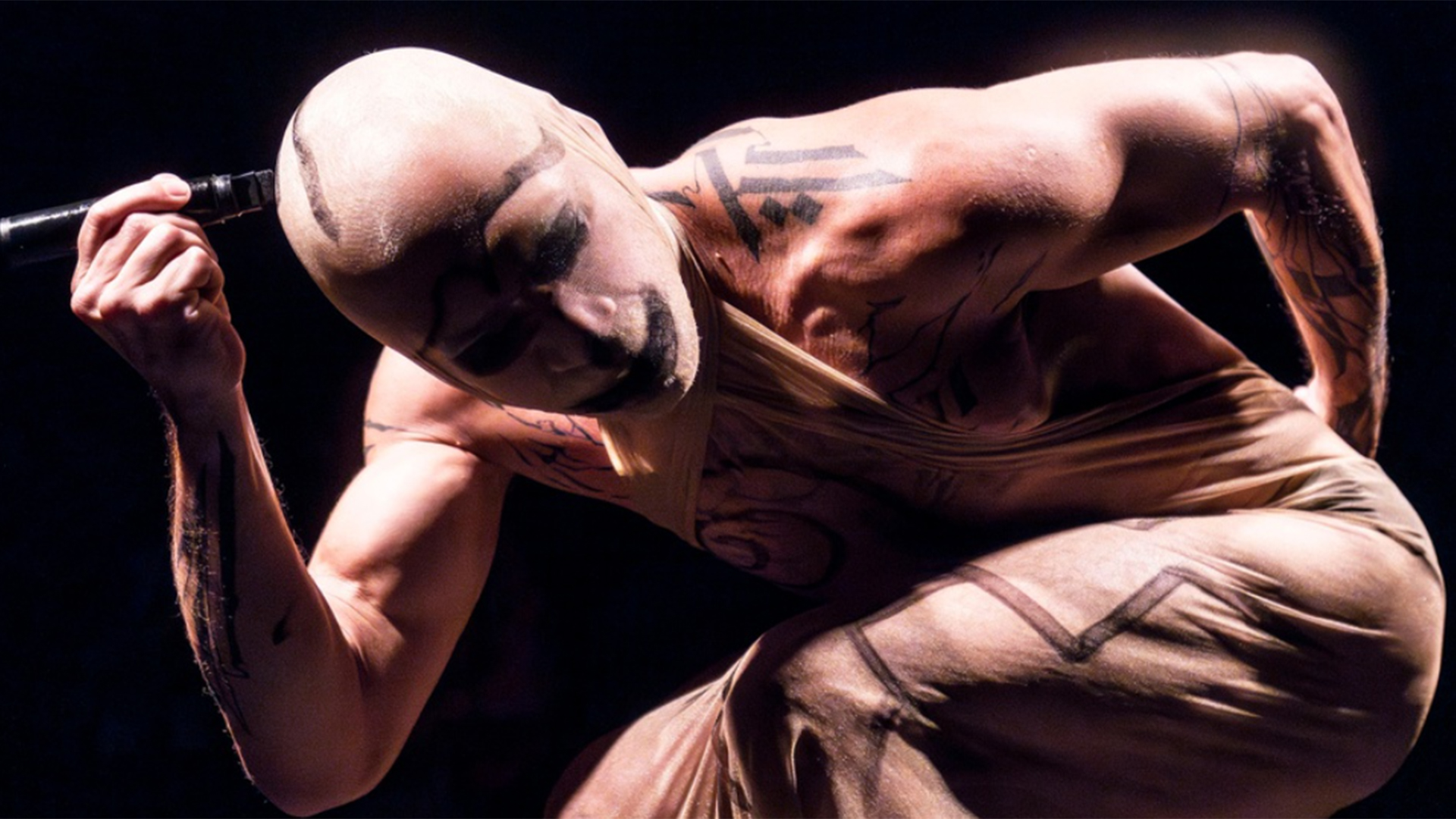
Many performances can be described as "a strange concoction", and this one is "a strange concoction". You can't do without a spoiler: they really roast meat on stage! Everything is real: at first it is marinated for a short time — in beer, sauce, salt and pepper, and then put on a frying pan heated on an electric stove. The audience in the front rows will eventually get a piece.
43-year-old Artur Astman, presented in the program as an Israeli artist, was born and studied choreography in Voronezh, and has recently been living and working in Moscow. He also has experience of studying and creating in the Promised Land. And Arthur talks about all this in an hour-long one-man performance, which combines dance, storytelling, close communication with the public, a culinary master class and (another spoiler) auction. The name of the multigenre spectacle does not accidentally refer to Vaclav Nijinsky's "Afternoon Rest of the Fawn". Astman bravely enters into a dialogue with the famous eight-minute ballet of 1912, which violated classical canons.
"Our everything... Voznesensky. Almond blossoms"
Theater of Nations

Andrei Andreevich Voznesensky would probably be surprised to read that the best thing about the play dedicated to him is the set design by Maria Rogozhina. But, on the other hand, the outstanding poet of the sixties is an architect by training and during his life from time to time switched from poetry to visual projects: from a joint monument with Zurab Tsereteli on Tishinskaya Square to an installation in the form of a giant Easter egg. He would appreciate the scenery — these are transformer modules that also change with the help of video projection.
But the text, although it is composed mainly of poetry and prose by Voznesensky himself, has more questions: the non—linear scenario leaves the feeling of a random collection of optional facts and does not give an idea of what the uniqueness of the hero of the play is.
In addition to Voznesensky, who is represented by Pavel Artemyev, an artist and musician, ex-soloist of the Korni group, there are several other historical figures — Pasternak, Akhmadulina, Lorka, Khrushchev, Eluard, and even Pushkin. And, of course, Zoya Boguslavskaya, the poet's long-term companion and muse. It is clear that neither the actors nor the director Roman Chaliapin sought portrait similarity, and it is not required in documentaries about famous writers from the cycle "Our Everything", of which there are already several in the repertoire of the Theater of Nations, but there is no internal similarity. And in Voznesensky's character, behind his gentleness, restraint, and even naivety, there was intellectual fearlessness.

"The Three Musketeers"
Mossovet Theater

The cunning of director Eugene Marcelli could have been envied by Cardinal Richelieu himself: the director of The Three Musketeers designated the genre of the play as a "dramatic concert" and thus secured himself from all claims in advance. There are many things to find fault with in this enchanting spectacle, ranging from a ragged plot and variety direction, but what normal critic would seriously analyze a concert whose purpose is to "it's time-it's time-to please" the audience?
Probably, the director, who is also a playwright, expected that if the audience had not read the novel by Alexander Dumas, they probably watched the film by George Yunvald-Khilkevich and certainly heard the songs from it by Yuri Ryashentsev and Maxim Dunaevsky more than once. Two dozen hit musical numbers and a solved problem with the queen's pendants without much difficulty and delay are the basis of the performance. The stellar cast (it's easier to say which of the leading artists of the theater is not engaged in the concert, and the best is Alexander Yatsko in the role of cardinal), ingeniously provocative costumes by Evgenia Panfilova, a wide multi—stage staircase by Anastasia Bugaeva, successfully adapted for mass dances staged by Egor Druzhinin, and a live orchestra in the pit — what else is needed for Happiness?! It's snowing outside, and we're having a concert!
Переведено сервисом «Яндекс Переводчик»
