
The eternal story of the Seven Corners: what Russian thinkers thought about

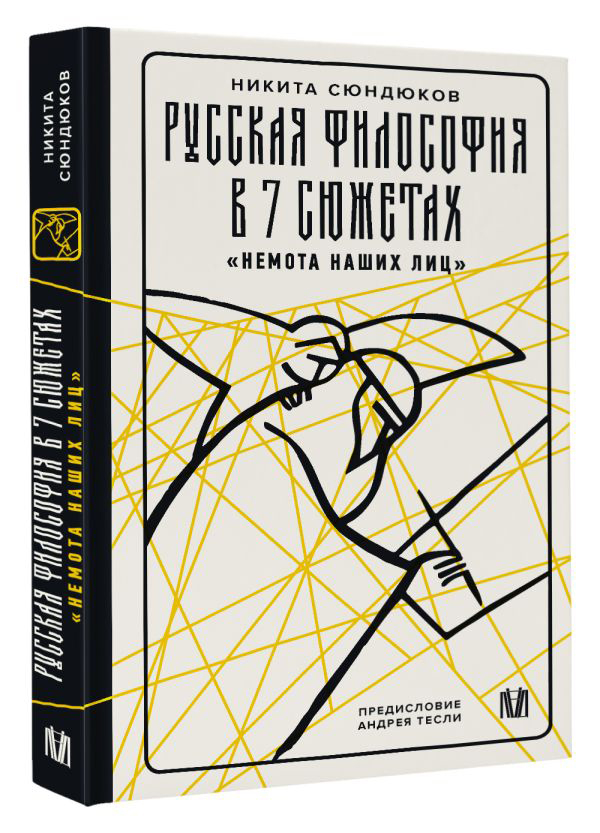
The book by philosopher Nikita Syundyukov is based on a course of lectures delivered to a wide audience at the St. Petersburg Mayakovsky Library, offering a "personal history of Russian philosophy" permeated with an exciting "end-to-end intellectual plot." This plot develops and acquires new features and shades as the researcher moves from one thinker to another. For a well-read person with a liberal arts education, this particular company is primarily associated with Russian philosophy: Chaadaev, Dostoevsky, Solovyov, Merezhkovsky, Berdyaev, Shestov, Bulgakov, Florensky. Critic Lidia Maslova presents the book of the week specifically for Izvestia.
Nikita Syundyukov
"Russian Philosophy in 7 plots"
Moscow, AST Publishing House, 2025 — preface by A.A. Tesli. 320 p.
Russian Russian philosophy has seven main themes in the title of the book, but all of them, as the author notes, can be reduced to one, repeating the same eternal plot, "the corners of which have been shattered by the minds of more than one generation of Russian people." To make this painful question clearer, Syundyukov refers to Turgenev's memoirs, who tells how he went to visit Belinsky to argue himself hoarse: "... after talking for two or three hours, I weakened, the frivolity of youth took its toll, I wanted to relax, I thought about a walk, about dinner, myself Belinsky's wife begged both her husband and me to at least wait a bit, at least temporarily interrupt these debates, and reminded him of the doctor's prescription... but it was not easy to get along with Belinsky. "We have not yet solved the question of the existence of God," he once told me with bitter reproach, "and you want to eat!.."
As is often the case in Russia, the formulation of the essence is best given not to professional amateurs, but to fiction writers or poets who approach this very essence in a roundabout imaginative way, or, as in the case of Turgenev, it manifests itself in a semi-ironic memoir. Russian Russians are self-confident precisely because they don't know anything and don't want to know, because they don't believe that it is possible to know anything completely." The epigraph of the Shundyuk book, taken from War and Peace, briefly but exhaustively outlines the quintessence of the ever-doubting Russian consciousness.
Lev Nikolaevich himself, unlike Fyodor Mikhailovich, did not receive a separate lecture chapter. But, of course, Syundyukov recognizes Tolstoy as a Russian religious philosopher, prefers him to Dostoevsky as a prose writer, and even arranges for them a failed virtual meeting: in 1878, both giants of thought went to the famous "Readings on God-manhood," with which Vladimir Solovyov spoke in the St. Petersburg Salt Town, but missed the only chance to cross paths.
In a sense, Tolstoy's epigraph echoes the considerations outlined in the last chapter, "The Names of Sofia" (dedicated to the sophology of Vladimir Solovyov, Sergei Bulgakov and Pavel Florensky), where Syundyukov discusses that the most valuable and exciting thing in philosophy is the unspeakable and not fully cognizable: "... all the most interesting things in philosophy are philosophy begins when thinking cracks, when it seems that you are hitting your head against a stone wall. This is the source of all philosophizing: you encounter something hitherto unfamiliar, indistinct, unclear."

Consequently, the most vivid insights and discoveries await a thinker who has chosen the path of "philosophizing through paradox," such as Heraclitus of Ephesus, who impressed himself into the mass consciousness with the aphorism about a river that cannot be entered twice. Contemporaries called Heraclitus dark — not in the sense of ignorance, but in the sense of the vagueness of his speech, which inevitably arises when trying to formulate something fundamentally not grasped by language, but only felt intuitively.

Heraclitus of Ephesus
Side by side with Heraclitus, Syundyukov mentions Lev Shestov, one of the heroes (along with Nikolai Berdyaev) of the sixth plot of the book, "The Land of Victorious Existentialism." Shestov, like Heraclitus, sought to talk about things that could not be said, "tried to use philosophical language to reason about things that philosophy itself could not grasp, and rushed into battle against reason with the help of tools that were developed in the depths of reason." The limitations of rational reason are also confirmed by the fact that Heraclitus and Shestov are best connected not through scientific reasoning, but through a poetic metaphor belonging to A.S. Pushkin.: "This is how the prophets begin to speak when an angel tears out their sinful tongue, and in return puts in the sting of a wise snake."
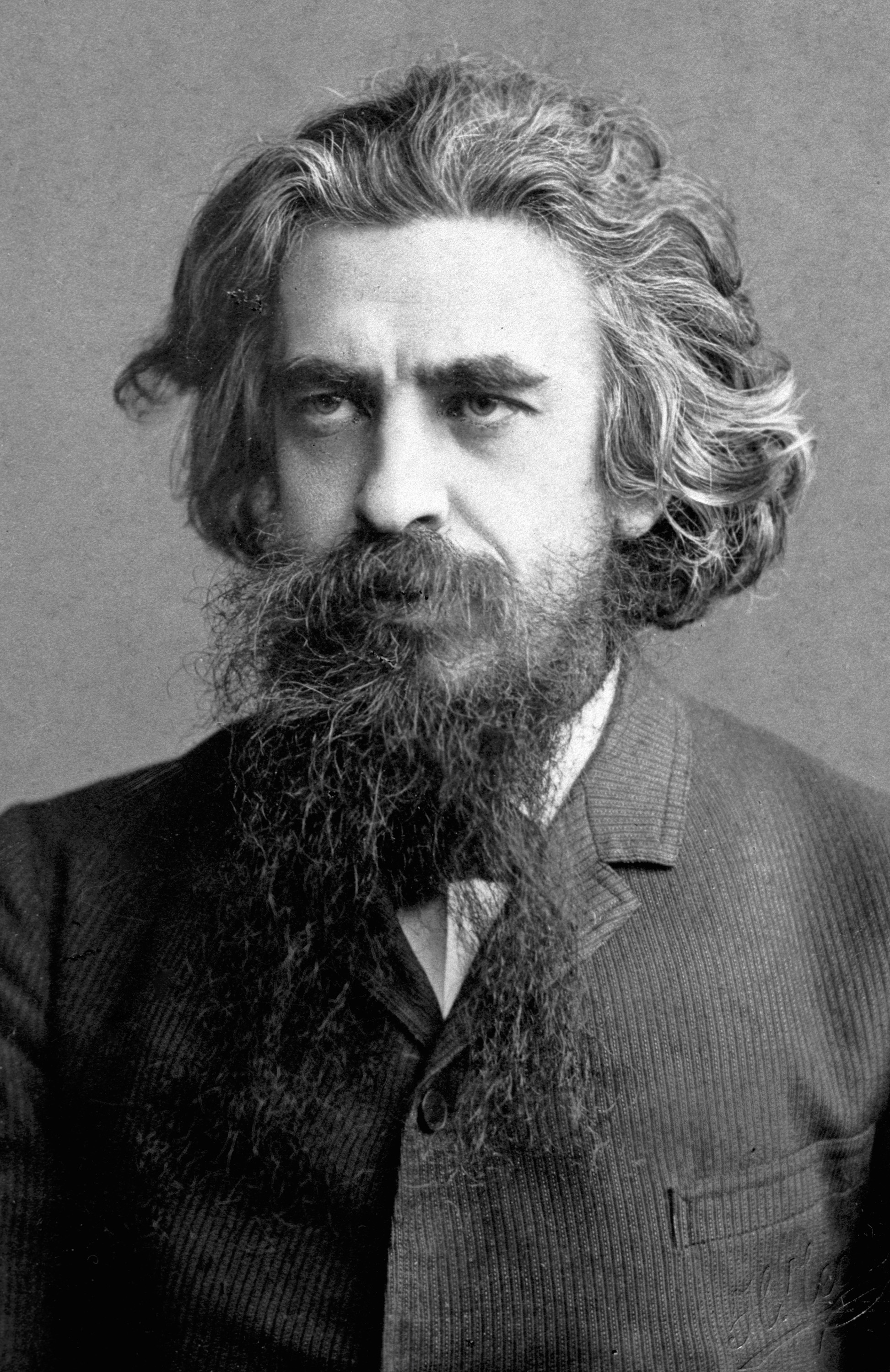
And Vladimir Solovyov, the pioneer of Russian sophiology, an important character in the last chapter, but also awarded a separate, fourth, albeit with an ambiguous title ("The Collapse of Vladimir Solovyov"), somehow looks more clearly and convincingly in his philosophical lyrics than in scientific research, where he was engaged, according to Syundyukov"a kind of inventory" as the first systematizer of Russian thought. This allows us to speak of Solovyov as the same landmark figure who divides Russian philosophy into "before" and "after", like Dostoevsky, the title of the chapter about which is also a bit provocative.: "Dostoevsky is not a philosopher." According to Syundyukov, "Dostoevsky's philosophy is more present as intuition, at the stage of the idea, which the writer subsequently begins to develop by artistic means." Moreover, the final thought-out in an artistic form can sometimes lead to unexpected results, as in the case of the novel "Idiot", conceived as a story about a "positively beautiful man" who eventually turned out to be some kind of "geek" (in the words of the existentialist Shestov). Dostoevsky's contribution to Russian thought is seen by Syundyukov in the fact that it was the author of The Brothers Karamazov who pointed out the inescapable beginning of evil in a person in whose heart the devil is fighting with God.
In addition to the eternal question of the existence of God and how to relate the divine Absolute to the extremely imperfect human world, Syundyukov's book traces an important topic that the author tries to deal with once and for all at the very beginning, so as not to return to it again, but it, even if invisibly, still shines through between those or other lines. Russian Russian philosophy Although the philosopher insists in the preface that "the question of the relationship between Russia and Europe serves here as nothing more than a background," his book clearly identifies the innate complexes of Russian philosophy, which has always felt a certain inferiority and secondary importance in relation to European philosophy, which makes us wonder even today, "Does Russian philosophy exist at all?"

Syundyukov's book leaves no doubt about the affirmative answer, but we must understand that our philosophy is often more effective in other formats than the Western European classical one. Unlike the latter, which is logocentric through and through, Russian love of wisdom is stronger not only in poetic, but also in completely non-verbal manifestations, such as painting. Russian Russian Orthodox church in figurative form expresses the idea of the Russian people about the whole universe, about the cosmos. In confirmation, Syundyukov recalls Evgeny Trubetskoy's essay "Speculation in Colors" (1918), where iconography is proclaimed as the main form of Russian philosophy: "... an icon is a temple laid on a plane, and a Russian Orthodox church in figurative form expresses the idea of the Russian people about the whole universe, about the cosmos." And the most radical and concise development of this idea belongs to Father Pavel Florensky with his famous proof of the existence of God: "There is a Trinity of Rublev, therefore there is God."
Переведено сервисом «Яндекс Переводчик»
