Smart City: how Moscow is responding to modern challenges


Moscow is demonstrating a rapid pace of development, responding to modern challenges, increasing infrastructural sustainability and, step by step, becoming one of the most modern and efficient megacities in the world. The city invests in updating the transport system, accelerates the implementation of the renovation program, creates new points of attraction outside the center, comprehensively transforms former industrial zones and increases the efficiency of construction processes. Modern architectural approaches and digital technologies applied during the transformations in the capital contribute to the creation of a high-quality and convenient urban environment. Izvestia reports on the key areas of Moscow's development.
The roads we choose
The growth of the Russian capital makes the development of transport infrastructure one of the most pressing issues of urban development. The city is making a lot of efforts to ensure that Moscow traffic, which is increasing every year, does not create problems on the roads, and that traffic in the city remains free. The Moscow authorities are adequately responding to this challenge by implementing one of the largest and most complex road construction programs in history.
"Today, when the largest area of Moscow's territories has already been built up and there is no goal to increase the volume of square meters at a record pace, our main task is the harmonious development of the urban environment and providing residents with all the necessary infrastructure. In 2026-2028 alone, it is planned to build over a thousand urban facilities — almost 3 trillion rubles have been allocated for this, or 47% of the expenditure part of the city budget. Together with investors, we will build 195 buildings for educational institutions, 52 facilities for medical organizations, more than 280 kilometers of roads and 13 metro stations. We focus on implementing the concept of a "15-minute city" so that schools, kindergartens, clinics and other necessary infrastructure are within walking distance of residential buildings," says Vladimir Yefimov, Deputy Mayor of Moscow for Urban Planning and Construction.
According to him, among the facilities that specialists have already started working on, there are large—scale ones not only for Moscow, but also for Russia as a whole, for example, the new complex of the N.V. Sklifosovsky Research Institute of Emergency Medicine, the Stankin MSTU campus, the Central Moscow Hippodrome and others..
One of the fundamental approaches to road construction used in Moscow is to ensure the connectivity of urban highways and thus the possibility of traveling from one area to another by alternative routes. For this purpose, in particular, it is planned to build a section of the highway that will connect the Moscow High-speed Diameter with Kurgan Street. As part of the project, 6.5 km of roads will be built and reconstructed, and three overpasses will be built.
City Ring
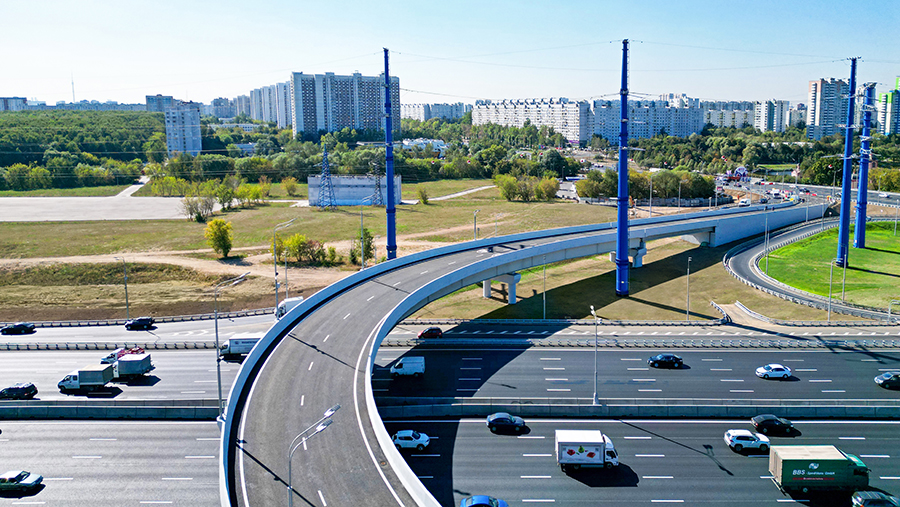
One of the most important road construction projects in the capital was the reconstruction of interchanges of Moscow's most important transport highway, the Moscow Ring Road. Since 2012, 22 MKAD interchanges with a total length of over 180 kilometers have been reconstructed and built in the capital.
Interchanges on the MKAD are the basis for the connectivity of urban highways with highways used by residents of New Moscow and the Moscow region for trips to work and to the countryside, which daily deliver a variety of goods to the capital. By ensuring this connectivity, the city authorities not only made urban traffic more efficient, but also solved the problems of entry into and exit from the city for hundreds of thousands of people. According to Vladimir Platonov, President of the Moscow Chamber of Commerce and Industry, it is an integrated and systematic approach to the development of the capital that ensures the success of the urban planning plans of the city authorities.
"Today's Moscow is confidently pursuing the course of forming a comfortable and modern metropolis: The city simultaneously builds, renews, saves, and makes the environment comfortable for living and working. It is important that this is not a set of individual solutions, but an interconnected system. Roads and interchanges increase the transport accessibility of the districts," Platonov said.
Walking distance
"The work on improving the city's infrastructure demonstrates Moscow's comprehensive and systematic approach to addressing the key challenges of the modern metropolis. Large-scale investments in road transport infrastructure, including the construction of highways and interchanges, are aimed not only at eliminating "bottlenecks", but also at advancing development, creating a foundation for the future growth of the city. The record pace of the renovation program increases the comfort of the living environment. It is important to note the emphasis on economic efficiency, where the introduction of digital tools and strict expert control of estimates make it possible to optimize budget expenditures without loss of quality," says Alexey Kanevsky, Chairman of the Economics Committee of the Moscow branch of Opora Russia.
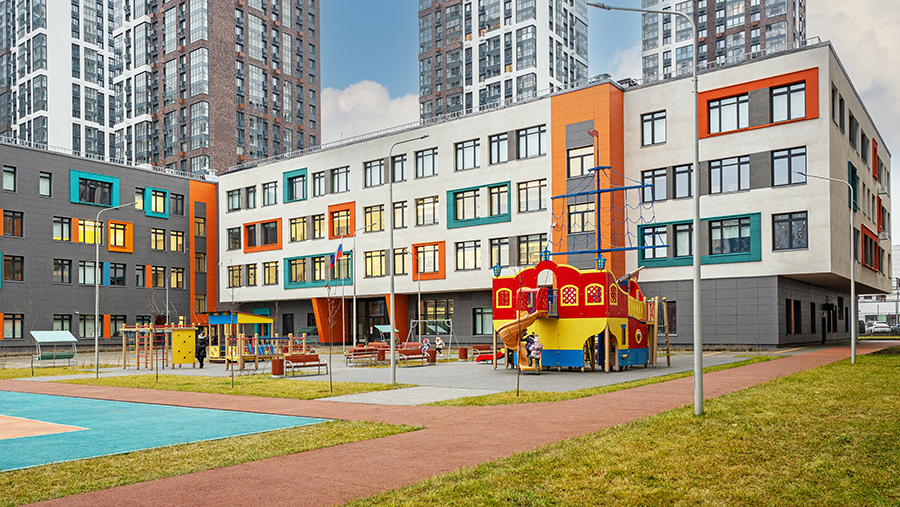
Indeed, the capital's development plans are characterized by a desire to identify possible problems ahead of time and avoid them in time. One of the successful solutions in this direction is the principle of polycentricity, which has become a key priority of Moscow's new urban planning policy. The formation of new centers of economic activity and clusters outside the central part of the city makes it possible to reduce excessive pendulum migration and evenly distribute urban functions, creating a comfortable environment for residents.
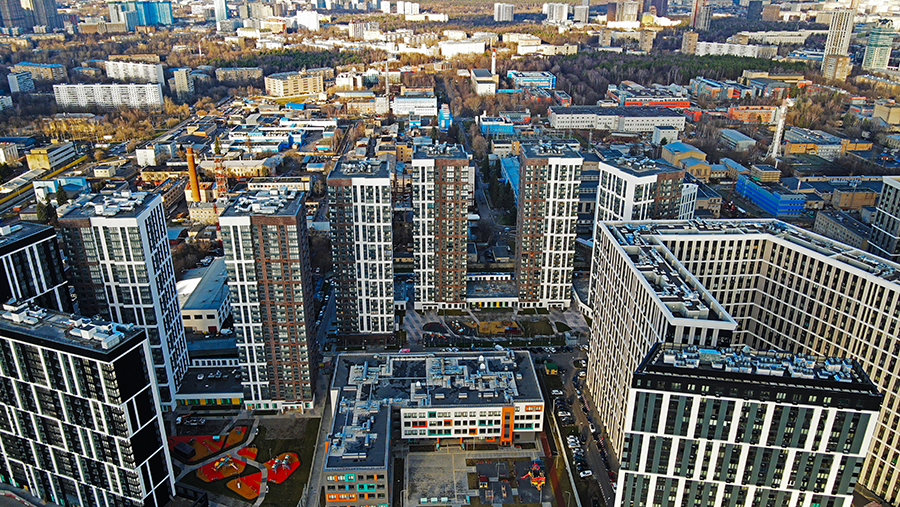
Another important tool that allows you to quickly respond to social and economic challenges is the integrated territorial development program. It allows us to transform depressed territories, which are becoming new growth points, attract private investment into the economy, update the real estate fund, and increase the architectural attractiveness of the districts. The KRT program can be called a driver of Moscow's development for years to come. Today, the city has 336 CDT projects for more than 4.2 thousand hectares under development and implementation. Their urban development potential is over 68.3 million square meters. This is 38.9 million square meters. m of housing, of which 9.8 million square meters. m is intended for the implementation of the Renovation Program and about 30 million square meters. m of public, business and industrial facilities. Thanks to them, it is planned to create a total of over 954,000 additional jobs in the city. In addition, the new mechanism systematizes the work on the timely construction of necessary socially significant facilities near a new residential development.
Building for people
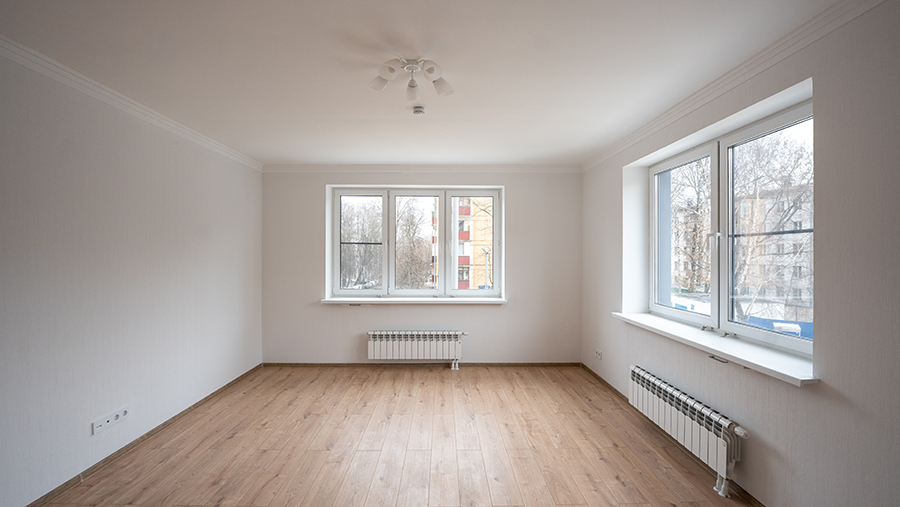
The housing renovation program in Moscow started on August 1, 2017. It includes 5,176 houses — about 350,000 apartments with a total area of 16.4 million square meters, in which about one million citizens live. As of today, more than 6.8 million square meters have already been commissioned under the program. m of housing, which will allow to settle about 1,400 old houses.

During the implementation of the program, more than 235,000 citizens have already moved into new housing or are preparing to move. According to preliminary estimates, 2025 will be a record year: it is planned to introduce about 2 million square meters. housing renovation department. In total, about 10.5 million square meters are currently being designed and built. m residential real estate. The plans for 2026-2028 are even bigger. It is planned to build another 8.7 million square meters. Among the housing renovation projects, more than 215,000 Muscovites will move or begin moving. All housing will be provided with social and transport infrastructure.
"People are moving into modern apartments, staying in their social environment. Kindergartens, schools, clinics, landscaped courtyards and a "ground-floor business" are appearing nearby. This approach removes unnecessary travel, supports the local economy and makes the districts self—sufficient," commented Vladimir Platonov.
As a result of this economically sound approach, the capital was able not to slow down the pace of housing commissioning, despite changing external factors. So, in 2024, despite the abolition of preferential mortgages, the rate of real estate commissioning amounted to almost 14.2 million square meters, of which more than 6.5 million square meters. m — residential areas. At the same time, about 5 million square meters. One million housing units per year is the amount that allows for development and provides for the needs of citizens in terms of improving living conditions.
"The strength of the Moscow model lies in the synergistic effect of programs and tools for infrastructure development. The renovation program, CRT, transport and digital services work as a single mechanism. Business feels this directly: companies have a steady stream of orders for years to come — from design and construction to supply, service and operation. Small and medium-sized businesses get a clear job market. Every school, kindergarten, or clinic provides jobs and new opportunities for local entrepreneurs. As a result, the tax base is growing, which means that the city can continue to invest in the quality of life," says Vladimir Platonov.
Smart City
The economics of change is one of the most important components, which, not least, determines its outcome. "The success of any project is based on the assessment of the economic efficiency of design solutions. And a real entrepreneur knows that the greatest effect lies precisely in projects that are technologically new, but in which all the risks and costs are well calculated. And here, the quality of the evaluation of project documentation, the results of engineering surveys, and ensuring compliance with standards and norms in the field of safety is important. In Moscow, they know how to do this professionally and without red tape. Which, of course, attracts investors and ensures the rapid development of a large modern city," commented Alexey Repik, Chairman of the Board of Directors of Delovaya Rossiya.
The metropolitan authorities are fulfilling the task set by Mayor Sergei Sobyanin to carefully evaluate the economic efficiency of the project decisions taken. For this purpose, a number of regulatory measures are being taken in the field of estimated rationing and pricing. Specialists of the Moscow City Committee on Pricing Policy in Construction and State Expertise of Projects (Moskomexpertiza) check the design documentation and the results of engineering surveys for specific facilities — in construction, overhaul, reconstruction and infrastructure development. This makes it possible to ensure compliance with state standards and regulations in the field of safety, while reducing project implementation costs. The measures carried out within the framework of the state expertise made it possible in January — September 2025 to reduce the initially announced cost of construction projects financed from the city budget by a total of 12.2%. Thus, in 9 months, the capital has saved 51.9 billion rubles, which is 78% more than in the same period last year.
To obtain architectural and urban planning solutions (AGR), applicants are required to provide a detailed 3D model of the projected object or territory. To make it easier for developers, the city is developing digital solutions. The most detailed architectural concept with a 3D model can be integrated into the digital twin of the city. This approach avoids the appearance of objects that do not fit into the urban environment. In addition, now, upon receipt of the AGR certificate, developers must include a landscaping section in the project. This is done in order to consider it comprehensively, as part of the fabric of the city, and to lay public spaces in it in advance for the comfort of citizens. Representatives of Russian regions have already become interested in this innovative approach.
"The capital's experience in many areas, including urban planning, can be considered as a showcase of best practices for the regions," says Alexey Repik. Thus, in the implementation of large-scale transformations, the capital today remains the flagship not only for Russia, but also for the whole world.
Переведено сервисом «Яндекс Переводчик»
