
Digital memory: how cemeteries are digitized in Russia and why it is needed

Digitization of cemeteries turns the memory of ancestors into a part of the global digital environment — now you can search for graves, restore family ties and preserve cultural heritage online. This technology is already working in many countries where interactive databases and virtual memorials are being created, but in Russia the process is still developing mainly thanks to enthusiasts and private projects. At the same time, digital memory faces legal and ethical barriers. About what digitization of cemeteries is and how it is done in the world — in the material of Izvestia.
Why do we need to digitize cemeteries?
The interest in digitizing cemeteries is directly related to the global changes of recent decades. Mass migration, wars, urbanization, and the breakdown of generational ties have led to the loss of physical access to burial sites for many families. Descendants live in other countries and regions, and information about the graves of relatives is gradually disappearing along with archives and eyewitnesses.
Digitalization solves this problem by creating databases that record the names of the deceased, dates of life, epitaphs, photographs of tombstones and the exact coordinates of graves. The search, which used to take days or was impossible at all, is now carried out in a matter of minutes. In this sense, the cemetery is turning from a local memory space into an element of the global digital infrastructure.

In addition, technology is increasingly being introduced into ritual practice. Interested family members can not only get information about the current state of the grave, but also discuss plans for its care, as well as use digital ways of commemoration, for example, create virtual memorial pages or participate in online ceremonies.
At the same time, the digitization of cemeteries is a complex process involving legal, ethical and practical issues. It simplifies the search for graves, preserves cultural heritage and creates virtual memorial pages, but it faces obstacles: imperfect legal regulation, the need for relatives' consent to process personal data of the deceased, as well as philosophical and religious differences.

The first stages of digitalization of cemeteries in Russia
The origins of cemetery digitalization in Russia go back to the practice of photographing funerals and burial sites, which appeared at the beginning of the 20th century. Since 1918, photography has become part of the funeral rite: cameras recorded the farewell ceremony and images of the deceased in the coffin.
In the 1920s, funeral participants often posed for pictures, but over time, such openness began to be perceived as inappropriate. By the end of the 20th century, mass funeral photography had almost disappeared, although some families continued to preserve this tradition.

A special interest in cemeteries as an object of photography manifested itself during the Civil War of 1918-1922. During this period, albums dedicated to the fallen heroes were released, and photographs of graves became an important way to preserve their memory. Back then, the exact location of the graves was often determined thanks to eyewitnesses of the funeral, who could indicate a specific burial.
The modern stage of cemetery digitization in Russia began only in the late 2000s. Its key task is to create electronic databases that include information about the deceased, photographs of tombstones and the exact coordinates of graves.
Legal regulation of cemetery digitalization
Digitization of cemeteries is developing slowly, primarily due to legal restrictions, experts say. The key barrier remains the legislation on personal data, which also applies to information about the deceased — surnames, names, dates of life and burial places. Obtaining the consent of relatives necessary for processing such data is often impossible, especially when it comes to old graves.
It is worth noting that the information from the tombstones is publicly available and does not relate to confidential information. At the same time, the Federal Law "On Personal Data" No. 152-FZ does not contain direct rules on the processing of personal data after death, therefore, when distributing such data in digital burial databases, it is advisable to take into account the will of the deceased during his lifetime or obtain the consent of his close relatives, which reduces legal risks and reflects existing legal uncertainty.

Additional difficulties are associated with the lack of special regulations governing the digital storage and publication of grave data. The Federal Law "On Burial and Funeral Business" No. 8-FZ does not cover digitization issues, and information about burials is stored in disparate archives: municipal, church and private.
— The Federal Law "On Cultural Heritage Objects" No. 73-FZ also imposes restrictions. If a cemetery has the status of a historical or cultural monument, its large—scale photofixation and cataloging require coordination with the monument protection authorities," Sergey Martunovich, a lawyer at Zartsyn and Partners, said in an interview with Izvestia.

Currently, the digitalization of cemeteries remains in the zone of legal risk: public interest in preserving memory is faced with the priority of protecting privacy. Without separate rules for data on the deceased, the development of this area will continue to be limited, lawyers say.
Legal practice: consent of relatives and legal risks
The digitalization of old graves is currently at high legal risk due to the inconsistency of current personal data standards with the objectives of preserving historical memory. Without making specific but fundamental changes to federal legislation, primarily on Personal Data, large-scale digitization projects will remain at high legal risk, says lawyer Martunovich.
In turn, the situation is aggravated by conflicts between the heirs. In the absence of a consensus, even the formal consent of some of the relatives does not protect the project from challenge, since the legislation does not establish mechanisms for resolving such conflicts.

He calls the possible disclosure of information concerning the privacy of private life, which may be contained in archival records and perceived by posterity as sensitive or defamatory, a separate risk. As a partial solution, it is proposed to limit the amount of open data and introduce graduated access, leaving only minimal information in free search.
Judicial practice confirms a strict approach. So, in the Kaluga region, the courts declared illegal the publication of burial data on the Internet without the consent of relatives: a local historian posted photos of graves, full names of the deceased, dates of life and burial places on the website, after which a relative of one of the deceased contacted Roskomnadzor.
The Obninsk City Court found that the site administrator had not proven consent to the processing of personal data of the deceased, and a link to "publicly available sources" does not exempt from compliance with the law on personal data, since such information falls under its scope (case No. 2-1238/2020). The court ordered to restrict access to the pages and add them to the register of violators, emphasizing the priority of protecting privacy.

Further, the court of Appeal (Kaluga Regional Court) upheld the decision of the court of first instance (Obninsk City Court of Kaluga Region), confirming that even information from tombstones cannot be published without the consent of the heirs, and freedom of information dissemination is limited by the right to privacy (case No. 33-797/2021).
This precedent has shown that projects to digitize cemeteries and publish data on the deceased are possible only with strict compliance with the law, despite the public interest and research value of such initiatives.
International practices of cemetery digitalization
The experience of other countries shows that a systematic approach gives results. Israel is a world leader in cemetery digitization, implementing this process at the national level for modern and historical burials. The country has created centralized online databases with detailed information about the deceased: full names, dates of birth and death, photographs of tombstones, epitaphs and accurate GPS coordinates of graves.
The technical side of the project includes 3D scanning and the use of drones for accurate mapping and data updates, which provides convenient search and monitoring of the condition of graves.
For example, the Jewish cemetery on Mount of Olives in Jerusalem with more than 150 thousand Grave Graves has its own website, where complete information about each burial is available, including the occupation of the deceased, grave parameters, epitaphs and navigation instructions for them.
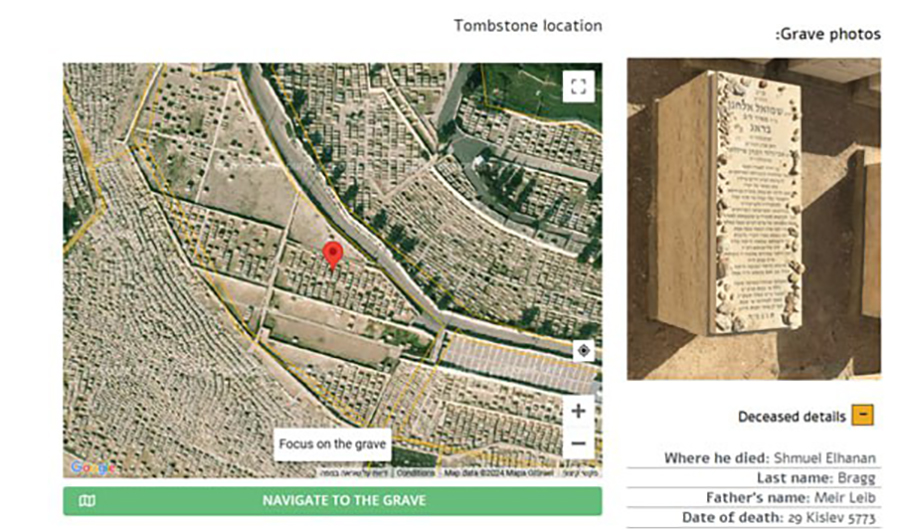
For the convenience of users, mobile applications have been developed, such as the Cemeteries App and the MyHeritage platform, which allow you to search for graves using GPS, view biographical information, and also enable users to add information about relatives.
In the United States, burial data is stored and disseminated through various platforms, including major portals and genealogical forums. One of the most famous projects is Find A Grave, launched in 1995, which is one of the world's largest databases with millions of records from the United States and other countries.
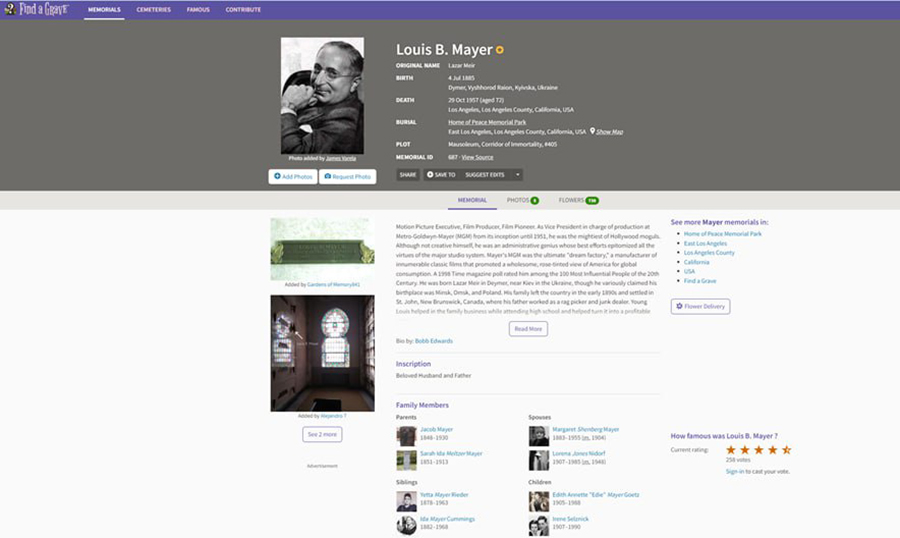
The platform allows you to search for graves, add photos and biographies of the deceased, leave comments and virtual flowers, which makes it an important tool for genealogical research.
Another successful project is BillionGraves, which uses crowdsourcing to collect data on cemeteries around the world. Through the mobile app, users can photograph gravestones with GPS coordinates and upload them to the database, ensuring fast and accurate digitization. Both projects demonstrate how technology and the active participation of the community help preserve the memory of the deceased and facilitate the search for graves.
In Belarus, the Mitzvat Emet project unites efforts to maintain the graves of relatives around the world. Today, the initiative has opened lists of cemeteries in 12 countries, including Azerbaijan, Israel, India, Kazakhstan, Kyrgyzstan, Lithuania, Moldova, Poland, Russia, Serbia and Ukraine. These lists, compiled with the participation of cemetery administrations, include detailed information about burials, and most of the entries are accompanied by close-up and general photographs.
How is the digitization of cemeteries developing in Russia?
In Russia, the digitization of cemeteries is developing mainly due to the initiatives of volunteers, funeral organizations and private projects. Notable initiatives include the "Remember Online" project, which covers Russia, Belarus and Kazakhstan, with the ability to search for graves, view photos, biographies and GPS coordinates, as well as order burial care.
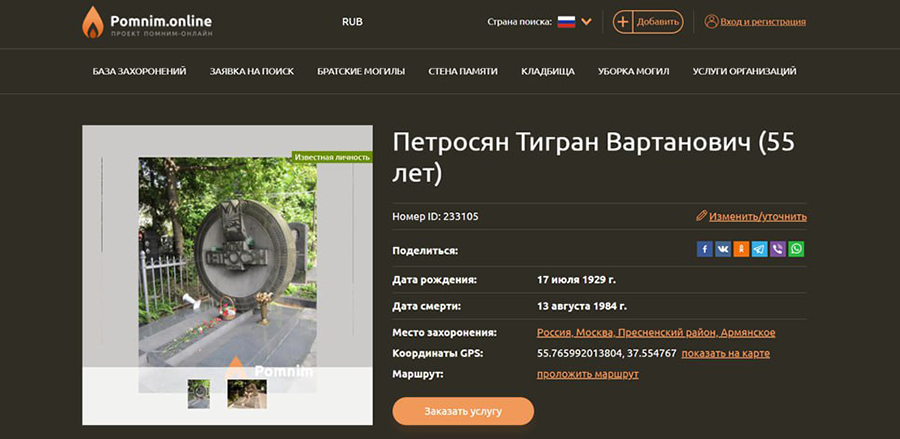
Similar projects include "Ancestral Graves" and gravlov.com in St. Petersburg, toldot.com with databases of Jewish cemeteries, Moscow services GBU "Ritual", E-poisk and Moscow-tombs, platforms "Ritual archive", "Memorial. Burial Map" and a variety of thematic sites and forums (for example, Eternal Cemeteries and the All-Russian Family Tree Genealogical Forum) that combine the crowdsourcing efforts of volunteers. These projects make it possible to preserve the memory of the deceased, systematize data and provide access to descendants and researchers.
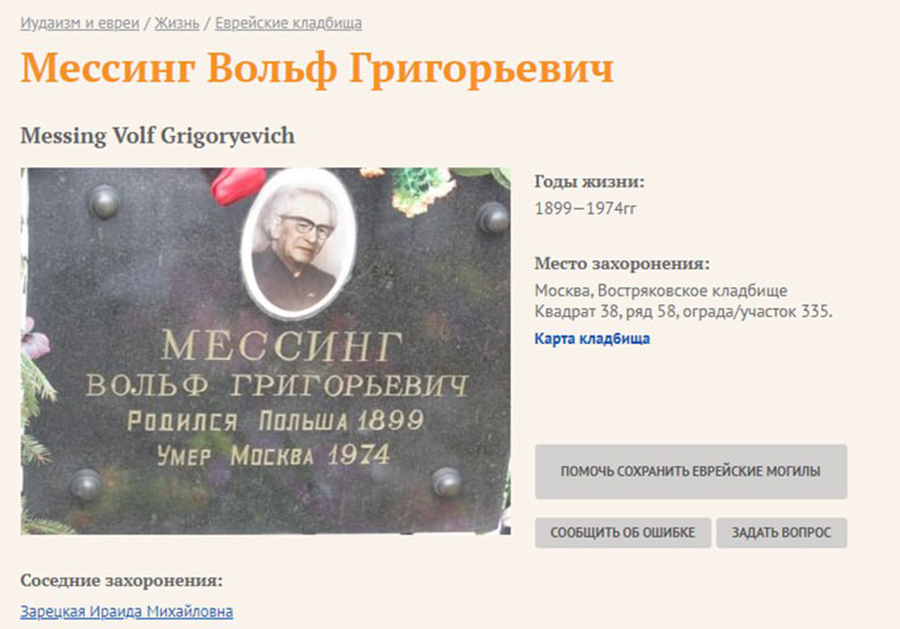
There are also projects of the Center for Judaism "Sefer" and "Siberian Islands. Kansk", where volunteers create virtual cemetery maps, decipher epitaphs and collect family stories. In general, the digitization of cemeteries in Russia remains a promising area that requires an integrated approach, taking into account legal and religious aspects and the development of common legal norms to balance access to information and the protection of citizens' privacy.
Переведено сервисом «Яндекс Переводчик»
