And we want to fly: The Aviator has appeared on the screens


On November 20, one of the most anticipated film adaptations of recent years, The Aviator, based on the novel of the same name by Evgeny Vodolazkin, was released in Russia. This is a grandiose cinematic journey spanning a century, where a person's personal drama turns out to be inextricably linked with the history of an entire country. Director Egor Mikhalkov-Konchalovsky offers the viewer a bold and visually impressive interpretation of the book. Departing from the letter of the original, he carefully preserves its soul, main themes and philosophical depth. Details can be found in the Izvestia article.
What the movie is about: A man from the past in the world of the future, where everything is alien
The action takes us to 2026. The spouses of biological scientists Konstantin (Konstantin Khabensky) and Anastasia Geiger (Daria Kukarskikh), on the instructions of billionaire Viktor Zheltkov (Evgeny Stychkin), discover a secret laboratory of the 1920s on the Solovetsky Islands. Inside, in the century—old permafrost, 13 bodies are buried - participants of the ambitious and frightening LAZARUS human cryonics project. The characters learn about him from the surviving diary of Professor Bryantsev (Sergey Barkovsky), who was the founder of these monstrous experiments. Miraculously, only one survives and comes back to life — a man named Innokenty Platonov (Alexander Gorbatov).
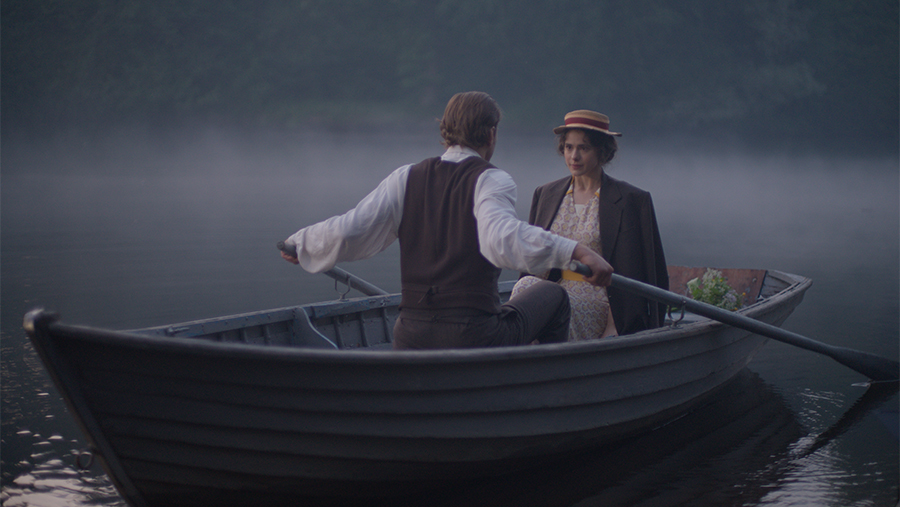
After 100 years, the world he knew and loved was gone forever. His memory comes back to him in fragments, like flashes of light: an idyllic pre-revolutionary childhood in Finnish Kuokkala (now Repino), his first pure and ardent love for Anastasia (Daria Kukarskikh again), the horror of the Stalinist repressions gaining momentum, and a fatal fight with a sneaky neighbor, the informer Zaretsky (Anton Shagin), which sent him to the camp forever. hell on Solovki.
While Geiger is desperately trying to unravel the mystery of the unique formula that allowed Platonov to survive the age-old freeze, Innokenty himself keeps notes and uses his diary to try to piece together the fragments of his disintegrated identity. His touching and increasingly deep connection with Anastasia Geiger, like an echo from the past, becomes a source of jealousy and conflict for her husband. And his long-standing, unfulfilled dream of the sky suddenly gets a second chance, becoming an airplane, which he begins to rebuild with his own hands, as if trying to literally "soar" above the chaos of modern times.
Why it's worth seeing on the Big Screen: A dialogue of Epochs that you'll Feel
"Aviator" is, first of all, a visual statement. The main language here is not the word, but the image. The viewer looks at the digital and slightly sterile world of 2026 through the eyes of Innokenty, feeling his stunned loss, longing and amazement. Familiar views of modern St. Petersburg, the shore of the Gulf of Finland, Elagin Island — all this becomes a living bridge between epochs, a place where time layers are bizarrely layered on top of each other, frozen in a tense "between the past and the future."
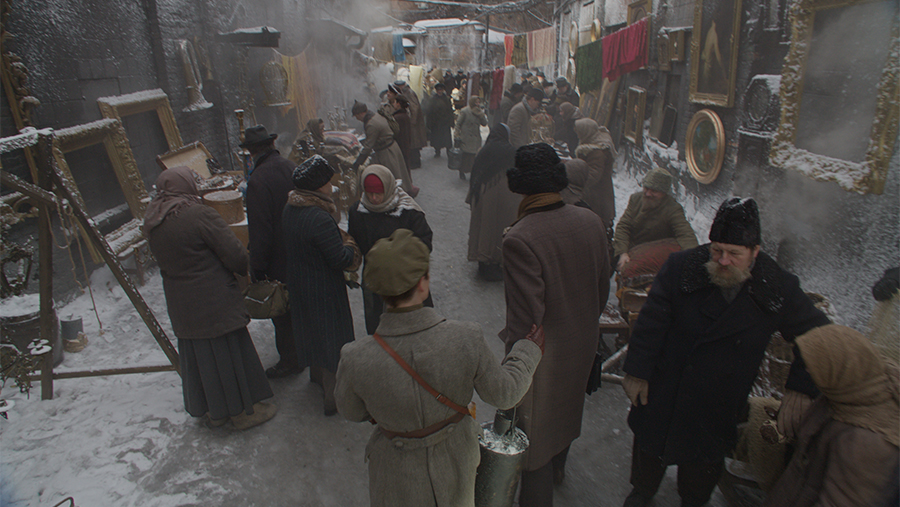
The filmmakers deliberately move the action from 1999 (as in the novel) to 2026. The world that Platonov finds himself in is not just a "different time", it is a different civilization with different values and speeds, which makes his existential loneliness even more acute, and his mystical, almost fatal connection with Nastya is even more mysterious and disturbing. We can confidently say that the book and the film adaptation are two independent works that are united by the main characters, but the accents are placed somewhat differently.
Yuri Arabov worked on the adaptation script. His student Oleg Sirotkin helped the classic. The Aviator was directed by Egor Mikhalkov-Konchalovsky, known for the crime thriller Antikiller and the adventure family comedy My Dad is the Leader. All stages of the film adaptation were closely monitored by Evgeny Vodolazkin, who approved the changes and himself, repeating the phrase "only an author can qualitatively destroy his novel," worked on the script.
The burden of time
One of the important themes of the novel, as well as the paintings, is, of course, time, and in the broadest sense. This is a poignant story about how the burden of the past, guilt and the memory of true love are an integral part of the human soul, even if its owner has been transported a hundred years ahead. This is a deep conversation about the possibility of repentance, about the timeless value of one human life, and about whether it is even possible to find happiness when everything that made up your world is forever in the past.
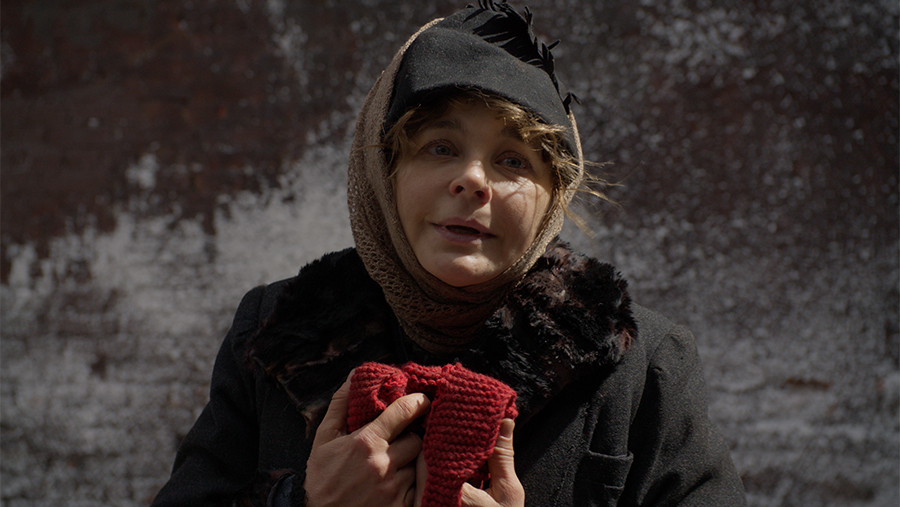
Vodolazkin largely builds the narrative on the opposition of Platonov and his era, the man of modernity finds himself in a postmodern time. Innokenty talks a lot about the difference between Russians and Germans, and in many ways considers Geiger an outsider, watching freedom fall on the citizens' heads and their reaction to democracy.
In the film, Platonov wakes up in a reality that even the audience finds unfamiliar, so the audience is partly imbued with the feelings of the protagonist, who finds himself in unusual conditions, abandoned in a new world.
What would you like to compare it with
More recently, Guillermo del Toro spoke about immortality and man's attempts to get on the same level with God in Frankenstein. The entourage of The Aviator and the film adaptation of Mary Shelley's novel is noticeably different, but there are enough similarities between the films. Platonov partly perceives Geiger as a creator or father, because if it were not for him, the frozen one would have continued to lie in the ice.
The biologist gave Innokenty a new life, a second one. Frankenstein's monster also treats Victor as a creator, a father, but remembers not only his own fate, but several dead people at once, parts of which made up a new being. In The Aviator, Platonov repeatedly calls himself an experimental subject, a living result of the experiment, but the relationship with Geiger in the film and the book is strikingly different. On the screen, the scientist and the unfrozen man, as in del Toro's Frankenstein, become rivals. Only some are fighting for Elizabeth, others for Nastya. There is a melodramatic element in both works.
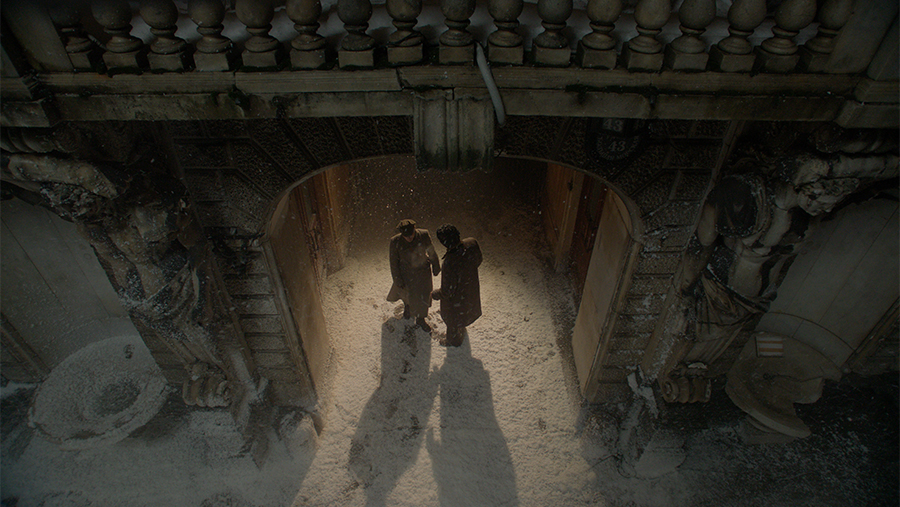
In the context of The Aviator, it's hard not to recall Dostoevsky's Crime and Punishment. The characters of Raskolnikov and Platonov are strikingly different. No wonder the hero was given the name Innocent — innocent. However, the character in both the novel and the film feels guilty, overt or not so obvious from the outside. At the Smolensky cemetery, Innocent visits not only his mother's grave, but also the place where Zaretsky lies. Both Raskolnikov and Platonov come to repentance, without which salvation of the soul is impossible. It is quite possible that the professor of cryonics or God gave Innokenty a second chance to regain his mental balance and deal with the gnawing feeling of guilt from within.
Professor Bryantsev's laboratory in the book is the LAZARUS project (Laboratory for Freezing and Regeneration). "Lazarists" are participants in the experiment who overeat for several months, wear decent clothes and walk around, preparing for death. However, a miracle of resurrection happens to Platonov. He is the true Lazarus, who has returned from oblivion to the world of the living. Only the biblical character died after all, and his body rotted for four days. Innokenty was preserved in ice. However, Vodolazkin's titles have no coincidences, so the fantastic plot moves into the space of philosophy and religion. The awakening in modern times forces Platonov to turn to the meaning of the miracle that happened, to his own destiny, to search for answers to the existential questions that torment every thinking person.
"Aviator" is a rare and courageous example of smart, stylish and truly spectacular Russian fiction, where a large—scale visual picture serves not as a background, but as a full participant in a deep philosophical statement. This is a movie that doesn't chew out the answers for the viewer, but makes them empathize, think, feel, and argue. It's a journey worth taking on the big screen.
Переведено сервисом «Яндекс Переводчик»
