
In the hands of God: a legend of world football and beautiful warriors

A manual about the architecture of female energy, a dystopian novel about the past and the future, and non-fiction about the legend of world football. As well as "the daughters of Ares", they are the Amazons who did not exist, and two current Japanese publications: one about the real role of money in our lives, the second about the national cuisine as it is. Ekaterina Pisareva, the editor-in-chief of the Litres Group of companies, chose six interesting books in November especially for Izvestia.
Oleg Ivik "Daughters of Ares" (Alpina non-fiction)
Oleg Ivik's name is already familiar to readers — more than ten years ago, a book on a similar topic was published under his authorship: "Women Warriors. From Amazons to Kunoichi." The female question has always worried the researcher, so this time Ivik decided to thoroughly study the "daughters of Ares" — mythological warrior Amazons and their origin. Anyone who was interested in the history of Ancient Greece and mythology will be curious to read the author's research, suggesting (and arguing!) that most likely the real Amazons, burning their breasts and conquering most of Europe, simply did not exist.

By the way, Oleg Ivik is a pseudonym used by journalist Olga Kolobova and archaeologist Valery Ivanov.

Ksenia Burzhskaya "Ways of communication" ("Alpina. Prose")
In the publishing house "Alpina. Prose", which turned five years old this year, has released a reprint of Ksenia Burzhskaya's dystopia "Ways of Communication", supplemented with a new chapter.
"Ways of Communication" is one of Burzhskaya's best novels, a fantasy on the theme of our past and future. The first part takes place in 1936, and the second in 2045, in the world of the digital future, where people are "under the supervision" of home voice assistants. Smart machines work for the system and inform at lightning speed if they witness something seditious. Any expression of will other than the protocol one can lead to severe punishment — they just come for the person. But everything changes when Nina's voice assistant gets a soul.
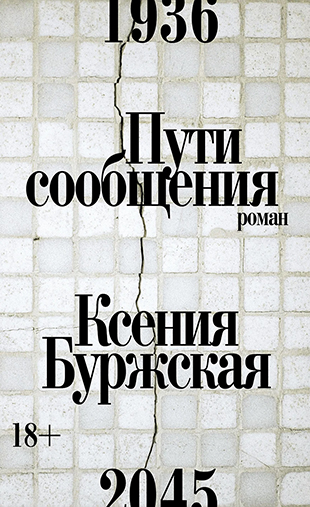
Burzhskaya, an AI specialist, an evangelist for Alice's virtual voice assistant, and a poet, knows like no one else how to interact with artificial intelligence and what it is capable of. Her poetic novel "Ways of Communication" invites the reader to first go back in time, where the heroines Nina and Gania find themselves on the verge of disaster. And then he takes them to the future, where completely different people appear, but their problems, although in different settings, are the same — the lack of freedom and the vulnerability of love.
The new chapter, "What's Next?" turns out to be a hopeful, poignant afterword. Those who have long since sunk into Oblivion return to it, those who love remain alive in it, and there is a chance to "live fully", and make up for everything, and escape, and save.
Alexey Sitnikov "Karmawoman" ("Bombora")
A new book from the creator of the legendary Karmalogic project. Psychotherapist, NLP coach and coach Alexey Sitnikov has written non-fiction about the architecture of female energy, a topic that is extremely popular today. Sitnikov talks about how important it is not to lose touch with your female unconscious, how to use role intelligence, and why women sometimes need to review their feelings, actions, and habits. Each chapter of Karmawoman is supplemented with a list of questions and a practical assignment, it is a text—based training without frills - simple, understandable and uncomplicated. If you are wondering how to deconstruct fatal patterns of behavior and not lose the "feminine" in the race for success and career achievements, then the novelty from Sitnikov will help you slow down, listen to yourself and realize what you really need and what ways to achieve it.

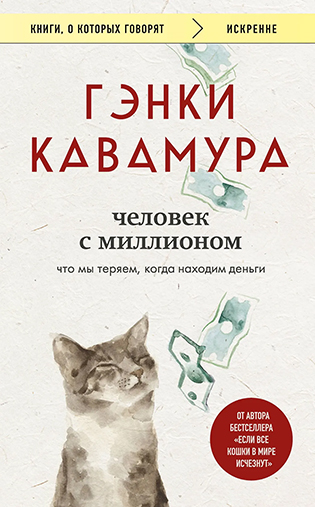
Genki Kawamura "The Man with a million. What do we lose when we find money" ("Bombora")
A new book from the author of the filmed bestseller "If all the cats in the world disappear." Japanese Genki Kawamura is a well—known figure in his homeland. He's a writer, producer, and director, and he's a very creative person. His cinematic and atmospheric books raise important questions: about purpose, about the meaning of life, about happiness, about the passage of time, about conventions. In the acclaimed novel "If All the Cats in the World Disappear," Kawamura's character made a deal with the Devil. In "The Man with a Million," Kawamura once again enters the territory of philosophy and invites the reader to think about what happens when wealth falls on an ordinary person. The main character of the novel, Kazuki, wins a lot of money in the lottery. It would seem that life should radically change for the better. But winning brings with it betrayal of loved ones, loss and disappointment. It turned out to be an Asian parable that the main thing in life is not material at all.
Ito Ogawa "Snail Restaurant" ("Polyandria NoAge")
The debut novel by the author of the bestsellers "Tsubaki Stationery" and "Republic of Happiness". Japanese writer Ito Ogawa is special, she knows how to see magic and beauty in everyday life. There was a lot of tenderness and awe in her dilogy about Hatoko, the hereditary yuhitsu (professional calligrapher), although nothing really happened in the plot. Hatoko cooked meals, wrote letters, and tried to find family happiness. The Snail Restaurant also pays tribute to the art of cooking. The main character Rinko is robbed by a young man with whom she lived. Having lost all her savings, she returns to her hometown after a long absence. In order to heal his soul, Rinko opens a restaurant in which he puts all of himself. Ogawa's gastronomic descriptions are very meditative and vivid — this is the most "delicious" text in every sense of the word.

Vadim Vernik "Pele. Brazilian Samba" ("AST")
Perhaps the most unusual book on the list. Not a biography in its purest form and not a study, but a dedication to the legend of Brazilian football, Pele. Such a journey through the waves of memory from their first meeting on January 21, 1997, when Vadim Vernik was filming a documentary about Pele. The case is amazing and significant, because Wernick is not a sports journalist at all, but a theater critic and showman.
"Our conversation is not about goals scored and sporting achievements, which the sophisticated public knows by heart, but about emotional experiences, inner struggles, and a life full of happy moments and dramatic situations," the author writes in the preface. And indeed, it is clear that for Wernick Pele (whose real name is Edson Arantes do Nascimento) is not a superman, but a living, real and vulnerable one. A few days spent with him helped Wernick to understand him a little and become fascinated by him.

The book will be interesting not only for football fans and professional readers. She exposes, first of all, the journalistic kitchen — how a person who doesn't really understand football begins to immerse himself in a topic, eventually falls in love with it and then falls in love with others. There are various characters on the pages who are related to sports in one way or another: Igor Shalimov, Pavel Bure, Fedor Cherenkov, Irina Rodnina, Nikita Simonyan, Alexander Ovechkin, Zurab Sotkilava and even Dmitry Hvorostovsky.
This is not only about Brazilian national football, but primarily about people and events. It's about what happens when you retire from big-time sports at the age of 31 and remain a legend for the rest of your life. A life in the rhythm of samba, where the main character was able to reset, but not reset, and become a father of seven children, a businessman, a film actor, a musician and a writer.
Переведено сервисом «Яндекс Переводчик»
