Bargain with the locals: Gergiev returned "Dead souls" to the poster of the Bolshoi


After almost half a century, Rodion Shchedrin's opera Dead Souls returned to the Bolshoi Theater's repertoire. Boris Pokrovsky's legendary 1977 production was resurrected by director Ksenia Shostakovich and musical director Valery Gergiev. The premiere of the opera became part of a large-scale festival in memory of Maya Plisetskaya and Rodion Shchedrin, which started on November 20, the day of the 100th anniversary of the birth of the great ballerina, and will end on December 16, the composer's birthday. Izvestia attended the premiere of Dead Souls.
Pokrovsky's return to the Bolshoi
Valery Gergiev continues to bring landmark productions back to the Bolshoi Theatre's repertoire. Following the operas Ruslan and Lyudmila, Semyon Kotko, the ballets The Hunchback Horse and Scheherazade, Dead Souls appeared on the playbill. Rodion Shchedrin's opera based on Gogol's poem of the same name was first presented to the audience on June 7, 1977. The composer wrote his grandiose composition for ten years. This is Shchedrin's first opera, to which he also wrote the libretto himself.
The composer then assembled the production team himself. The director was Boris Pokrovsky, the artist was Valery Leventhal, and Yuri Temirkanov, at that time the head of the Kirov Theater (now the Mariinsky Theater. Valery Gergiev, 24, was Yuri Khatuevich's assistant at the time. The opera "Dead Souls" was in a sense a revolutionary performance, but then it left the stage. Now Gergiev has decided to return it to the repertoire.
Director Ksenia Shostakovich worked on the resumption of the legendary performance. Gergiev took up the musical part of the production. Valery Leventhal's sets were restored by set designer Alona Pikalova. The artist and director tried to repeat the original as accurately as possible — costumes, props, decorations. The team literally conducted an investigation. Of the 19 scenes of the 1977 play, only four have been preserved on video. It's only 50 minutes from Pokrovsky's "Dead Souls". And the performance goes on for more than three hours. The design was recreated from photographs, sketches, and notes from the vaults of the Bakhrushinsky Museum, the Tretyakov Gallery, the Museum of Music, and the Russian State Museum of Fine Arts.
It was not by chance that director Ksenia Shostakovich found herself in Valery Gergiev's team. She already brought Pokrovsky's "Sorochinsky Fair" (musical version by Vissarion Shebalin) back to the stage a year ago. The performance edited by Ksenia Shostakovich was seen by the audience on the New stage of the GABT.

Chichikov and company
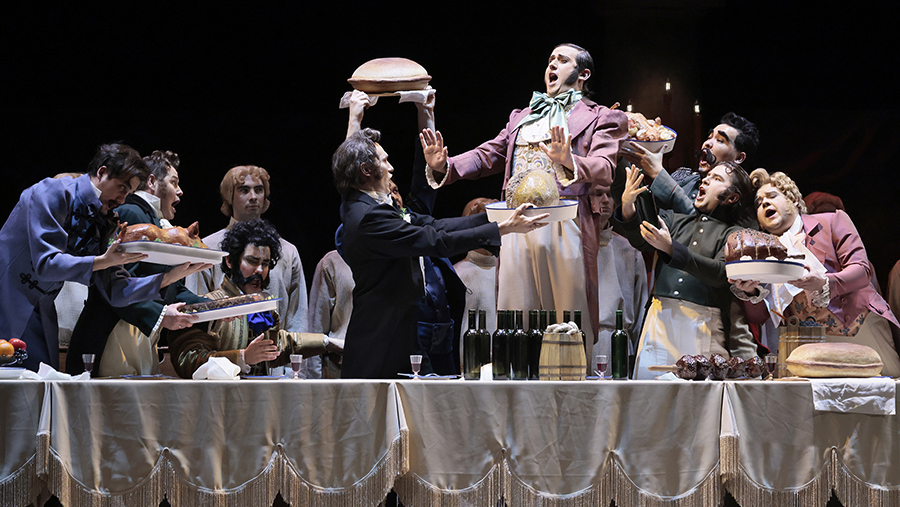
The story of Chichikov's adventures and the residents of the county town of N begins with a lavish feast at the prosecutor's (Andrei Bulgakov) in honor of the adventurer. "Vivat, Pavel Ivanovich!" sings all those who will later bargain with him for the souls of the deceased. Among the invited guests are Manilov (Tikhon Goryachev), Sobakevich (Vladislav Popov), Nozdryov (Igor Onishchenko), Mizhuev (Demyan Onufrak), the governor (Danil Knyazev), Chairman of the Chamber (Zakhar Kovalev), police chief (Genghis Bairov), Postmaster (Alexander Chernov).
There are all kinds of pickles at the reception — sturgeon, suckling pigs, jelly, pies, fruit bowls. And, of course, wine. They don't have time to bring the bottles. Famous residents of the city take turns treating Chichikov, confessing their love to him. Chichikov, in turn, lavishes compliments on the "fathers of the city."
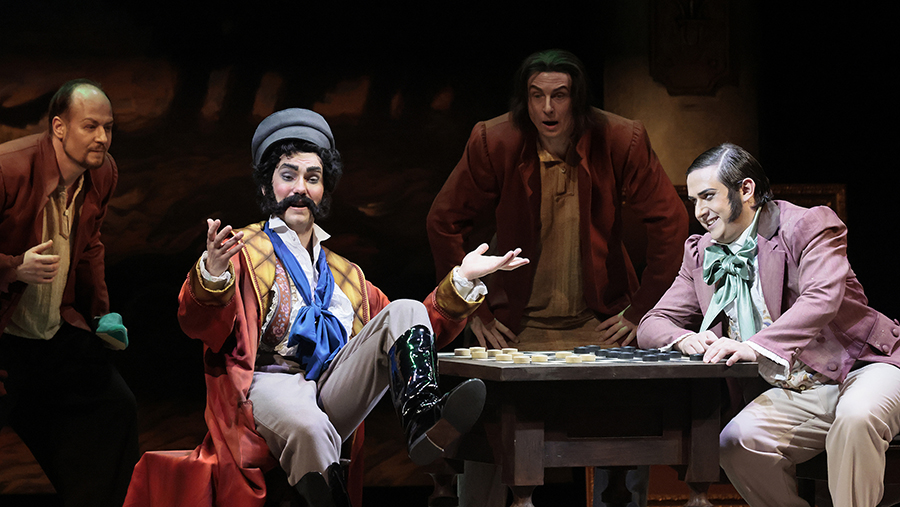
Boris Pokrovsky's part of Chichikov was sung by the People's Artist of the RSFSR, the baritone Alexander Voroshilo. Valery Gergiev has Vasily Sokolov, a soloist of the GABT opera company. The appearance of the young baritone on the Historical Stage of the Bolshoi became possible after the Pokrovsky Chamber Music Theater was joined to the main theater of the country. Now it is a Chamber stage of the GABT on Nikolskaya Street.
There are a total of 32 solo parts in the performance. Everything is complicated. And it was necessary to find a strong performer for each one. As the composer said, the main task is to vocally rethink prose.
The composer assigned an important role to the choir. According to Rodion Shchedrin, he is in the orchestra pit. The singers took the places of the stringed instruments. In addition to classical vocalists, Shchedrin allowed narodniks to participate there. Their voices are an important color for the performance. While working on Gogol's text, Rodion Konstantinovich found in "Dead Souls" a reference to the folk song "The Snows are not White." This, by the way, is the only mention of music in Gogol's two volumes. Shchedrin found the lyrics of the song and wrote his own music on it. A long-drawn-out song, reminiscent of a cabbie's chant. "The snows are not white" in the opera symbolizes the road along which Chichikov is traveling. It is performed by the Komon ensemble under the direction of Ilya Sharov. This team is in the wings.
Will he get to Moscow?
The road even visually becomes an important component of the performance. Set designer Valery Leventhal made two-tiered decorations. He built a road on the upper level. As in the movies, Chichikov in a britzka with coachman Selifan (Andrey Zorin) are driving through endless fields. And the background is watercolor sketches of the Russian countryside by Valery Leventhal. The projected images move along with Chichikov's cart. Along the way, they encounter leaning fences, men and women. The road is a philosophical and mystical component of the play.
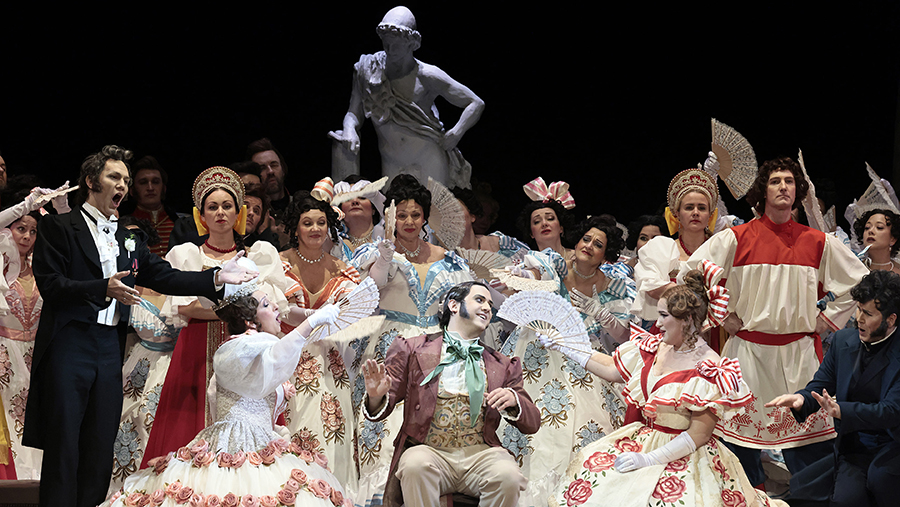
The stage space is intentionally reduced by the grates in order to focus attention on what is happening in the foreground. And there, on the foreground, the interiors of the manors and houses of those visited by Chichikov appear from the blackness.
It's not so easy to sing or even just learn this music by Rodion Shchedrin. But vocal technique is moving forward, and what seemed impossible in 1977 is amenable to young performers. The artists seem to be bathed in music. Soprano Anna Aglatova performs the role of Lizanka Manilova, Ramil Minikhanov sings for a Lady who is beautiful in all respects, mezzo-soprano Daria Belozerova for Sofya Ivanovna, a lady who is simply pleasant, and Irina Berezina sings for the governor. Bass-baritone Nikolai Kazansky appeared in the role of Borodaty, and tenor Marat Gali — Sysoy Paphnutievich.

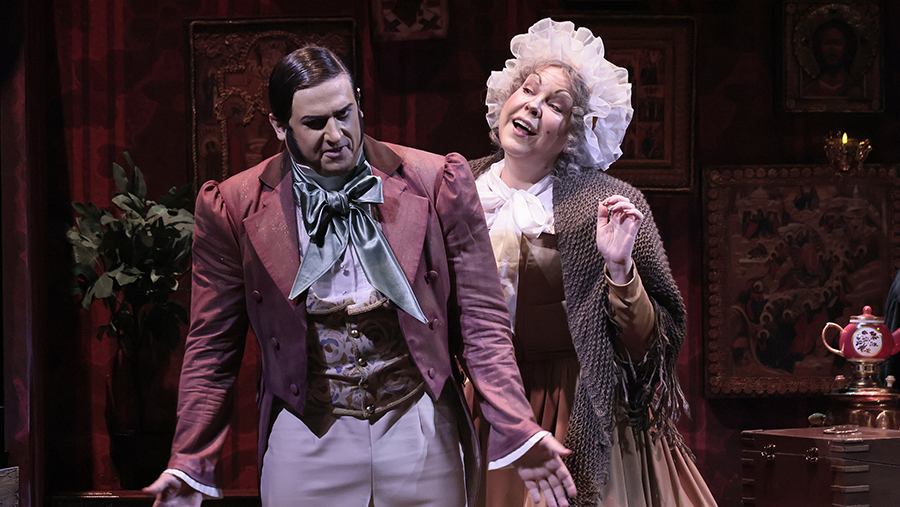
One of the most difficult roles is Plyushkin. The mumbling and lisping old man is none other than the mezzo—soprano Evgenia Segenyuk. There are no discrepancies with the original source. Gogol describes his character as an old housekeeper. Once in Plyushkin's house, littered with junk and covered with cobwebs, Chichikov turns to the old woman who met him.: "Listen, mother, is the master at home?" But the housekeeper with the thin beard is not a servant in an old robe with patches, but the master himself.
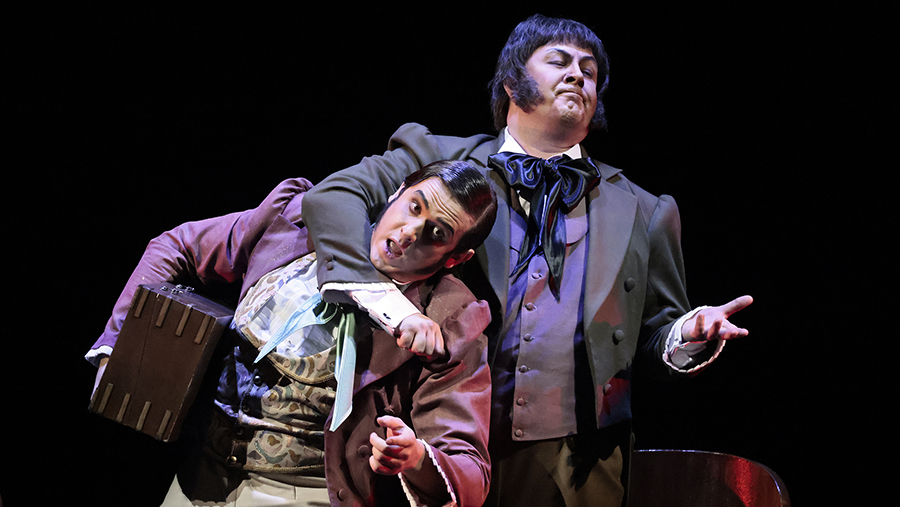
Evgenia Segenyuk, portraying an old man, performs her arias in a half-bent state. It is especially difficult to sing high notes bent over. And you also need to age your voice, make it hoarse, whistling and whispering. Plyushkin's part does not shine with melodism, but the artist's task is to sing so that the audience does not doubt.: this is Gogol's hero. And the actress's performance made the image vivid and memorable, as did the audience's spectacular scene in which Chichikov soars into the gazebo with the governor's daughter.
Rodion Shchedrin ends his opera with the funeral of the prosecutor, who died of horror that Chichikov might be sent by Captain Kopeikin, or maybe even Napoleon. And the involuntary culprit of the official's death, Chichikov, set off on the road again. The britzka is driving along it again, and the men who meet it are saying, "Look at that wheel! What do you think, would that wheel, if it happened, reach Moscow or not? "He'll get there." — And I don't think he'll make it to Kazan?.. "He won't get to Kazan."
For fans of Rodion Shchedrin's work, the Bolshoi Theater conducted a live broadcast from the premiere performance on November 23 on the VK Video platform in its official VKontakte community. In addition, the opera could be seen in the cinemas of the country. The next screenings of the opera "Dead Souls" will take place from December 9th to 11th.
Переведено сервисом «Яндекс Переводчик»
