Forward and upward: how Russian elevator builders respond to the industry crisis


The elevator construction market in Russia is stagnating. In the three quarters of 2025, the industry showed meager growth of 0.5%, a figure comparable to the statistical error. In fact, production is standing still. At the same time, the need to upgrade the country's elevator fleet is enormous. Against this background, the Shcherbinsky Elevator Plant (part of the DOM.RF Group) is launching new lines, scaling up production. Experts discuss the problems of the industry and their solutions in the Izvestia article
The context of the crisis
The situation in the industry this year is not easy. Information on public procurement shows that if 11,649 elevators were purchased in the first nine months of last year, then only 6,552 were purchased in the same period of 2025. Such a drop indicates problems in the program of major repairs and renovation of the housing stock. The new building market is also going through a difficult period, which does not add to optimism: the commissioning of new facilities is decreasing, and the utilization of elevator plants in the industry does not exceed 60-70%. If problems are not solved promptly, this will lead to higher costs, further increase in the cost of products and exacerbate the shortage.
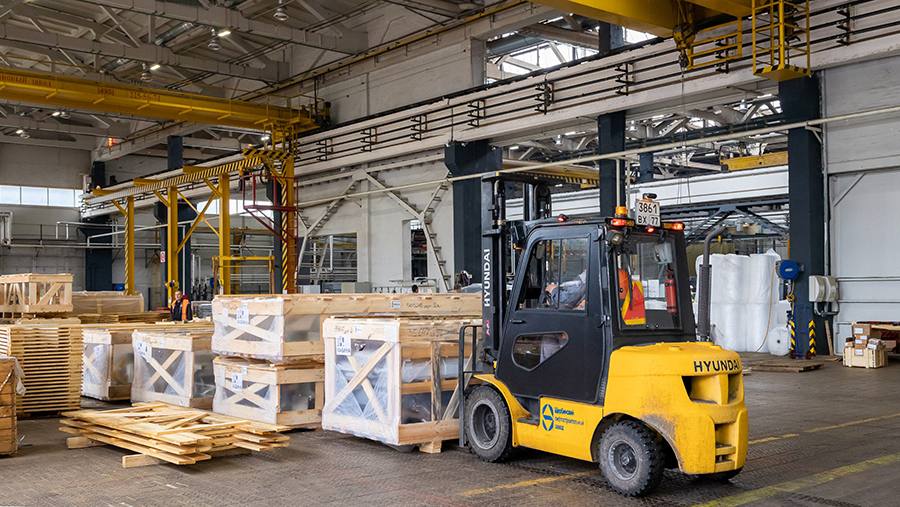
— We assess this trend as alarming, but not critical for the position of SchLZ in the market — today we are provided with long-term contracts that were concluded earlier. In the first nine months of 2025, SCHLZ produced 5,983 elevators, which is 8% more than the same period in 2024," explained Sergey Firstov, Chief Financial Officer of JSC SchLZ.
Scaling as a necessity
In Russia, about 100,000 units of equipment will have to be replaced by 2030 alone. The launch of new lines and the deep localization of key components at the refinery is not just a growth strategy, but a response to a systemic challenge that can cover the growing shortage.
— We are not reducing production capacity — on the contrary, we continue to modernize production, expand lines and hire new employees. Nevertheless, a reduction in workload may threaten those manufacturers whose market was initially focused on narrow segments and whose localization level leaves much to be desired," notes Firstov.
The Russian "heart" of the elevator
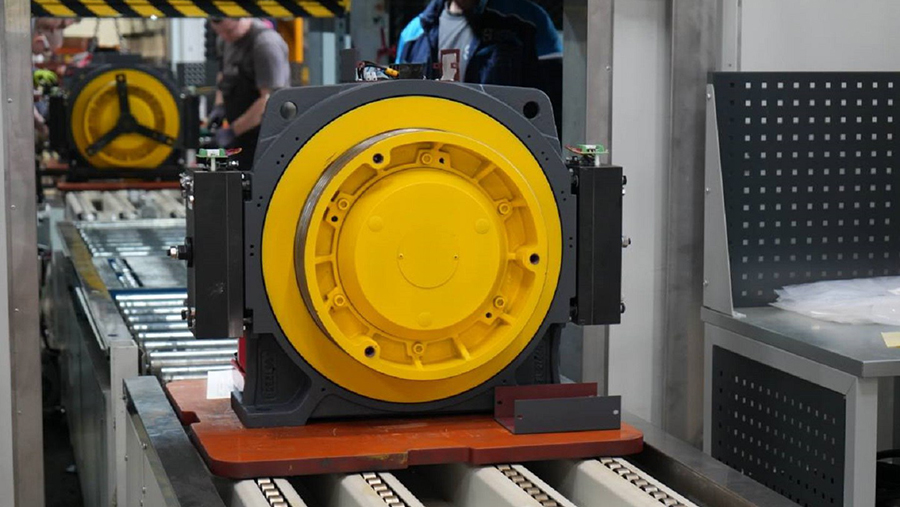
The main technological achievement of recent times has been the launch of mass production of its own gearless winches. Such winches are lighter, more compact, significantly quieter and more energy efficient than traditional gearboxes. For developers, who care about every penny today, this is a direct saving on reducing technical space, lightening structures and reducing operating costs.
By the end of 2025, the plant plans to produce about 1,400 such units, of which 500 have already been shipped to customers.
— The new line has allowed to increase output and reduce costs. We see high interest from developers," confirms Yan Mikhailov, Sales Director of SCHLZ.
Competitors, Meteor Lift and Karacharovsky Mechanical Plant (KMZ), also announced plans to produce gearless winches. In 2024, Meteor Elevator announced that it had launched the production of such units at a site in the Saratov region. By 2025, the company planned to reach a volume of more than five thousand products, which would be the first large—scale production in the Russian Federation.
KMZ has developed and produced prototypes of gearless winches under an offset contract with the Moscow government. Serial production, designed for passenger elevators with a lifting capacity of 400 kg and a speed of 1.6 m/s, is scheduled to start this year.
"The government pays priority attention to the development of the elevator industry. According to the requirements of the Technical Regulations of the Customs Union on Elevator Safety, more than 96 thousand elevators must be replaced by February 15, 2030, including about 43.4 thousand elevators located in apartment buildings forming a capital repair fund on special accounts (53.2 thousand elevators on the account of the regional operator)," Izvestia explained. The Ministry of Construction of the Russian Federation.
Scaling as the norm
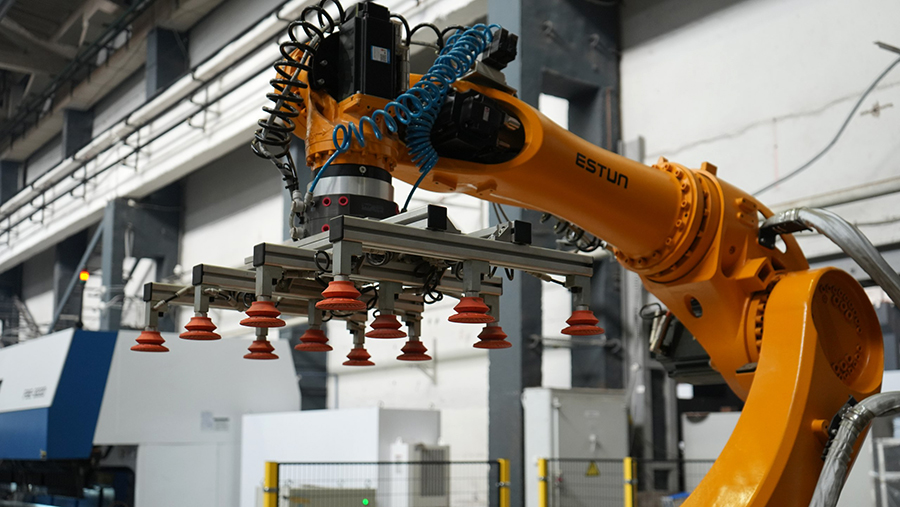
The launch of winch production is only part of a large modernization program carried out with the support of DOM.Russia, and an increase in production capacity. Four new automated lines have already been launched. This step will take the plant to a fundamentally new level, providing the potential to produce up to 15,000 elevators per year at rated load.
This is a direct response to the existing and projected deficit. The SCHLZ's capacity, even in its current configuration, is enough to produce a third of all elevators in the country and cover a significant part of the decline in industry-wide indicators. And after the launch of the new lines, the plant will be able to simultaneously fulfill a significant share of the state order for the replacement of elevators and the needs of the dynamic new building market when it recovers. But, of course, this requires systematic assistance from the state. And she's already coming.
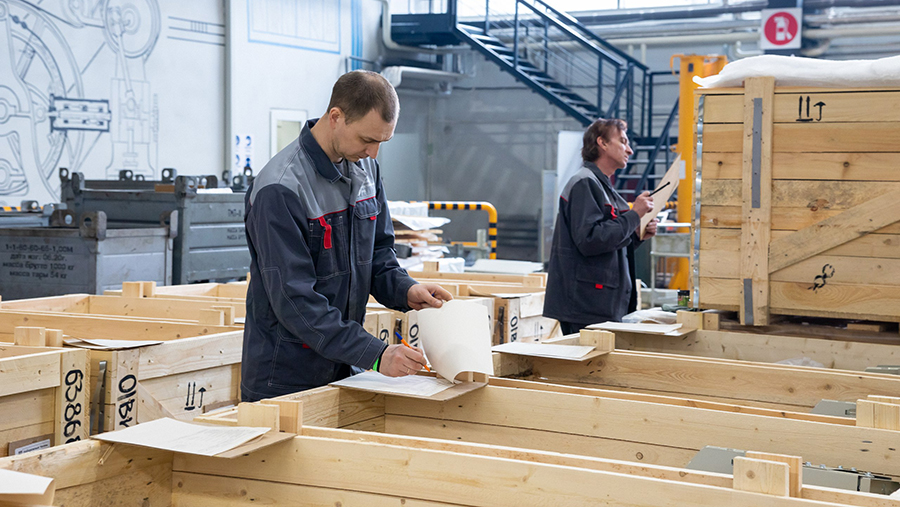
— Manufacturers of elevators and other lifting equipment can apply for a loan from the Industrial Development Fund in the amount of up to 1 billion rubles under our flagship Development Projects program. In 2024, FRP provided Shcherbinsky Elevator Construction Plant with a preferential loan of 900 million rubles at a rate of 1% per annum. Thanks to the Fund's loan, the company is launching an automated production facility that will increase production and start manufacturing new elevator models," said Roman Petrutsa, director of the FRP.
At the same time, the plant is strengthening its engineering potential. Updating the machine park, introducing digital quality control systems and obtaining a certificate for the production of high-speed elevators with speeds up to 8 m/s prove that scaling does not come at the expense of quality and technological complexity.
— Certification of an elevator with a speed of 8 m/s is not just a technological step, but a confirmation of the engineering competencies of the enterprise. We see this as the basis for a new stage in the development of the Russian industry," emphasizes Yan Mikhailov.
Diversification and export
The volatility of the main market dictates to elevator builders the need to explore new niches for themselves. So, this year at the exhibition in Kazakhstan, a specialized elevator for servicing wind turbines was presented. The conclusion of a contract for the supply of such lifts confirms the export potential and the demand for technologies beyond the traditional sphere.
In the autumn of 2025, the plant also presented an award-winning conveyor line at the CeMAT Russia exhibition. This step into logistics and warehouse automation logically continues the development of competencies in the field of vertical and horizontal transport. Partnership with large retailers opens up a serious market for the plant, reducing dependence on cyclical fluctuations in construction.
A look into the future
Sustainable growth of the industry is impossible without systematic government support. SHLZ together with DOM.The Russian Federation and the Ministry of Industry and Trade are actively lobbying for a key decision — the introduction of a preferential factoring mechanism. This tool will allow regions to purchase elevators without downtime disrupting the production cycles of factories.
— About 100 thousand elevators will have to be replaced in Russia by 2030. To accomplish this task, systemic financing tools are needed. Preferential factoring is one of them," Sergey Firstov is sure.
The complexity of the problem is confirmed by the Ministry of Construction.
"To date, 79 regions in which elevators in apartment buildings require replacement have developed and approved five-year action plans for the replacement of elevators that have completed their intended service life. Such plans contain information about the number of elevators and sources of financing for replacement, including elevators in apartment buildings on special accounts. The adoption by the subjects of the Russian Federation of all recommended measures to implement plans for the replacement of elevators and the use of a set of existing mechanisms will ensure the replacement of the entire fleet of equipment that has completed its assigned service life on time," the Ministry of Construction told Izvestia.
For example, in the Nizhny Novgorod region, an accelerated replacement of elevators was organized in 2024-2025 (about 2.4 thousand elevators) with installment payments until 2030 at the expense of the regional budget, the ministry noted.
Thus, the working strategy of elevator builders is a multi—level system of actions. This includes scaling up production to directly cover the deficit, technological localization to reduce costs and import dependence, and diversification to reduce risks. In conditions of stagnation, as it turned out, it is possible not only to survive, but also to create a new reality for the entire industry.
Переведено сервисом «Яндекс Переводчик»
