They always do good: they forced Mephistopheles to dance at the Obraztsov Theater


The premiere of the experimental production "Pictures from the Life of Dr. Faust" took place on the stage of the Obraztsov Puppet Theater, which director Elena Bulukova recently left: she will now reanimate the Gorky Moscow Art Theater, and her deputy Ilya Morozov took her place. But the old course of experimentation continues. Choreographer Egor Druzhinin created a plastic performance in which professional dancers work together with theater artists and puppets. There are no words in the statement.
Dolls out of a box
Getting to the premiere at the Sergei Obraztsov Puppet Theater is now considered fashionable and cool. And, by the way, not necessarily childish. There is an active search going on within these walls, and the stars want to collaborate with this troupe. Composer Alexander Zatsepin gives his musicals to this theater to stage. Actor Evgeny Tsyganov receives the Golden Mask (for the role of Sergei Obraztsov, and this is still one of the most fashionable performances in Moscow), Larisa Rubalskaya writes poetry, and Alexander Adabashyan, a film director and screenwriter, directs.
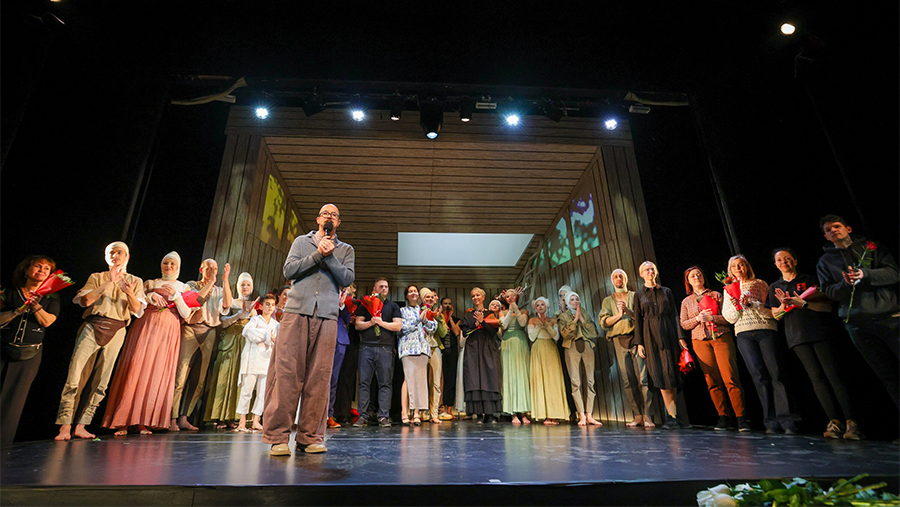
The playbill of the theater has been replenished with another star name. Choreographer Egor Druzhinin, also known for his role in the multi-part film about Petrov and Vasechkin, staged "Pictures from the Life of Dr. Faust." It turned out to be a performance without words for dolls and people.
For this purpose, artist Viktor Nikonenko and director Maxim Kustov created a chamber space in the form of a cube, devoid of decorations, on the already small stage of the theater. Just a window to the sky and a trapdoor to the underworld. The walls and ceiling are made of old whitewashed boards. In the center is a rack on which stands a horned monster. The main role of Mephistopheles is performed in turn by dancers Ildar Gainutdinov and Kolya Baghdasaryan. They are completely different. It is all the more interesting to watch the performance in two compositions.
Ildar Gainutdinov has an experience of being transformed into a devilish image. In 2023, he made his debut on the stage of the Bolshoi Theater in the ballet The Master and Margarita, where he played Woland. The nugget dancer, having no classical choreographic education, conquered the audience and divided the camp of critics. Some did not understand how it was possible to perform the main roles on the main stage of the country without seniority and a career ladder. Others supported the unconventional choice of choreographer Edward Kluge.
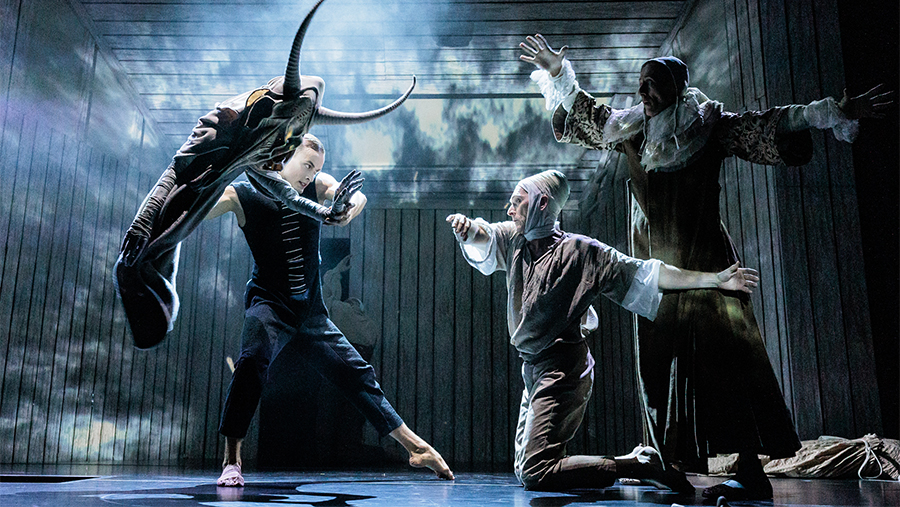
In the Obraztsov Theater, Ildar is just as charismatic, handsome, and professional. His Mephistopheles is an impressive demonic tempter.
The image created by Kolya Baghdasaryan is even intimidating in some scenes. The actor, like Ildar, was one of the best participants in the Dancing on TNT show, where he gained popularity. They only danced in different seasons. Kolya's specialty is contemporary, jazz, kramp, experimental. In 2024, Baghdasaryan became a guest artist in the laboratory of Yegor Druzhinin, which he conducted at the Obraztsov Theater. The lab was called Dolls and Plastics. It was there that the play "Pictures from the Life of Dr. Faust" originated, which was presented to the audience a year and a half later.

They came out from behind the screen
The choreographer Yegor Druzhinin wrote the play to stage it in a puppet theater. According to the director, the actors tell the story of Dr. Faust in the language of plastics. The uniqueness of Druzhinin's production is that he brought the actors, who are usually behind the screen, to the fore. Viewers can memorize their faces and be surprised at how plastic they are. The cast includes Dmitry Islamov, Ksenia Salnikova, Khalisia Bogdanova, Alexander Gorodisky, Alyona Kovalchuk, Marina Dunaeva, Aliya Gattarova, Andrey Abeltsev, Anna Suvorova, Artur Arutyunov, Victoria Arutyunova, Vasily Anikeev, Ruslan Vasiliev. Mikhail Evchenko, Mila Kim and others.
Artyom Balikhin plays the Lord and dances like a god. Alexandra Bogdanova is the soul of Margarita.
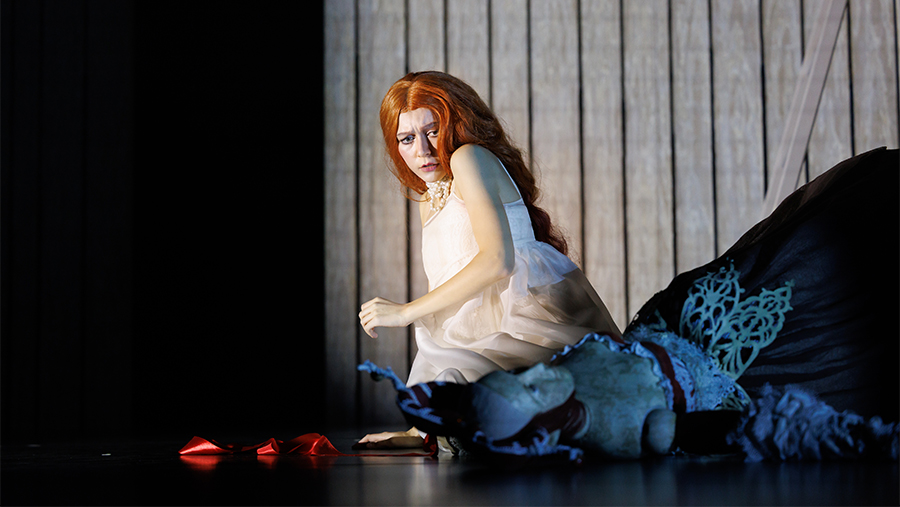
The puppeteer artists have learned complex choreography and do not lose in the "dialogue" with Mephistopheles (a professional dancer). In addition, they also control the puppets, which also play the main roles in the play.
Dr. Faust (Andrey Nechaev) is an alchemist, astrologer and magician. People need him, but evil spirits are fighting for his soul. Mephistopheles finds an approach to the scientist, tempts him with the red-haired Margarita (Evelina Islamova). Faust loses his head from the unearthly beauty and purity of the girl. And while the doctor strives for his goal, Mephistopheles seduces others by offering illusory benefits. It's enough to lure someone with shiny balls, someone with a bottle of intoxicating wine, to put a club in the hands of a drugged person.
Mephistopheles feels no remorse, he knows no sympathy. He doesn't even spare babies, who are given poison instead of medicine. He turns his victims into dolls. And then he easily takes away their soul. The artist of the play Viktor Nikonenko presented this ephemeral concept in the form of a small doll. Mephistopheles puts each new soul in a wicker basket, and the bodies of the victims are sent to the underworld. It gets creepy. The main characters appear in front of the audience in the form of wooden life-size dolls. Each one is led by two or three actors.
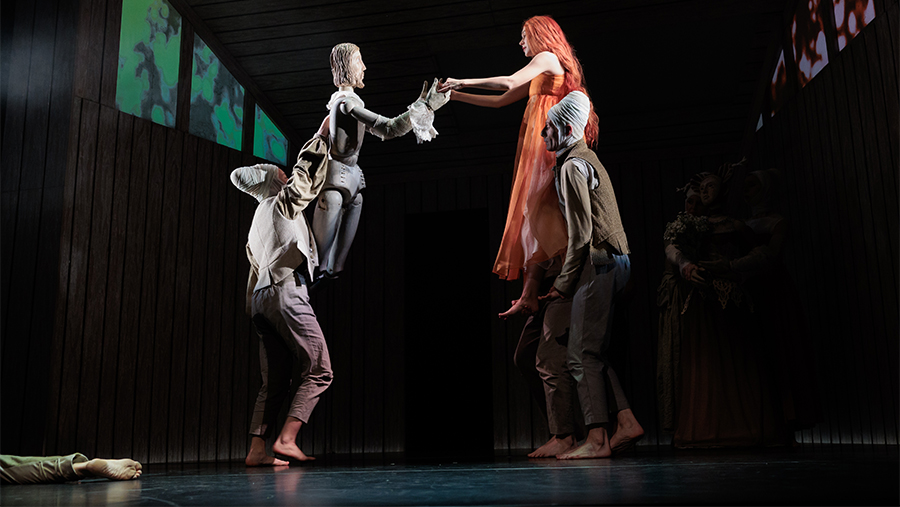
— The performance features dolls of different systems with a variety of tricks and devices that allow you to create the illusion of freedom from humans, — says the artist of the performance Viktor Nikonenko. — Dolls change, die, and move before our eyes. They have good plastic.
What's really scary is the incarnation of the devil's servants. From the very beginning of the story, Mephistopheles is courting, seducing, caressing and dancing with a horned skull. He doesn't rattle his bones. The unclean is plastic. The empty eye sockets of other dolls from Mephistopheles' retinue will be dreamed of by the particularly impressionable for a long time, as well as the rattling bones of skeletons. The performance has an age limit of 12+: teenagers are not scared by skulls. But the staging is very effective on the nerves of adults.

It's terribly beautiful
The costumes of the actors are an allusion to the Middle Ages. Headdresses like from paintings by Vermeer. The color scheme is close to pastel shades. Only the main characters have bright dresses. The costumes are decorated with handmade sewing, without the use of machinery. There is not a single machine stitch: every loop of the corset, every detail of the women's and men's dresses is created by the hands of seamstresses of the workshops of the theater. Cambric, tarlatan, canvas, and perforated leather were used.
The characters are moving on stage to the Baroque classics. Handel's "Passacaglia", church cantatas and Bach's Piano Concerto No. 1 in D Minor are played. And also Beethoven, Gounod. The Walpurgisnacht scene is accompanied by original music by Lyudmila Kim, an actress of the Obraztsov Puppet Theater. Johann Sebastian Bach's Chorale Prelude in F Minor is a win—win choice for meditating on the frailty of existence. The moviegoer recognizes her instantly, this is the main theme in Andrei Tarkovsky's "Solaris".
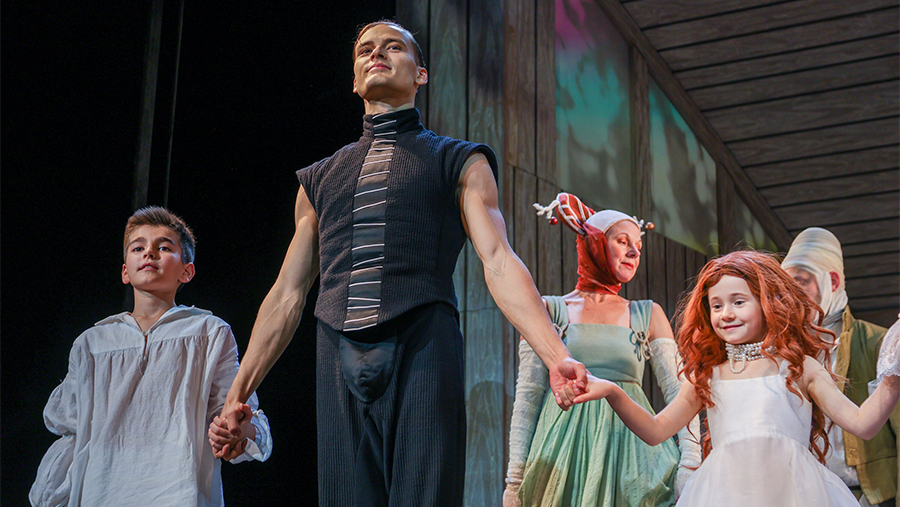
Dr. Faust and Margarita will find salvation in love. Mephistopheles couldn't kill her. In the finale, the children come on stage — a boy and a red-haired girl. Apparently, as a metaphor for the infinity of life.
— The performance may seem gloomy, it has serious emotional triggers, and this gloom may even seem deliberate, — says director-choreographer Egor Druzhinin. — But in the finale, the story still leads the viewer to light, to hope. It can be perceived as a fairy tale: there is a struggle between good and evil, but there are also moments of joyful ecstasy, hope and love.
The next screenings of "Paintings from the Life of Dr. Faust" on the stage of the Obraztsov Puppet Theater will take place on December 11 and 12.
Переведено сервисом «Яндекс Переводчик»
