Taken from the screen: a play was made about the life of Oleg Tabakov at the Moscow Art Theater
- Статьи
- Culture
- Taken from the screen: a play was made about the life of Oleg Tabakov at the Moscow Art Theater


Premiere of the documentary play "Oleg Tabakov. In Search of Joy" took place on the birthday of the Moscow Art Theater. Artistic director Konstantin Khabensky personally took over the production. The premiere is timed to coincide with the 90th anniversary of Oleg Tabakov, who led the Moscow Art Theater for 18 years. Among the first audience of the performance were Marina Zudina, Yuri Stoyanov, Nikolai Tsiskaridze, Alexander Adabashyan, Sergey Shakurov and other stars. About how the play came out and whether it can become a repertoire is in the material of Izvestia.
A "seagull" for loyalty
The 127th birthday of the Art Theater began to be celebrated on Sunday morning. The "centenarians" were traditionally awarded in the Portrait Green Foyer. Dedicated employees of the Chekhov Moscow Art Theater were presented with commemorative "Chaika" signs.
— Oleg Tabakov introduced this award in 2001, — said Konstantin Khabensky, artistic director of the theater. — Oleg Yefremov received letters of commendation for his 15 years of service at the Moscow Art Theater. And Tabakov decided to celebrate further: for 25 years and beyond with a gap of five years.
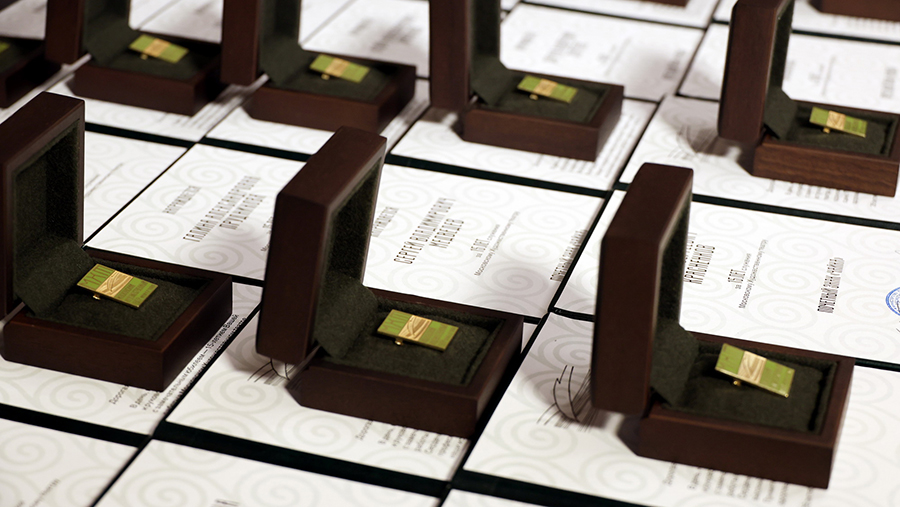
In fact, the tradition of thanking artists originated in the Art Theater back under Stanislavsky and Nemirovich-Danchenko. Oleg Tabakov introduced the division of badges into bronze, silver, and gold, indicating the importance of contribution to the common cause.
For example, for 15 years of service in the Moscow Art Theater, they are awarded bronze "Seagulls". They were awarded to: Armen Arushanyan, Artyom Volobuyev, Nadezhda Zharycheva, Alexey Kirsanov, Yulia Kovaleva, Alexey Krasnenkov, Sergey Medvedev, Nikolai Salnikov, Igor Khripunov. For 25 years, the silver "Seagull" was awarded to actor Kirill Trubetskoy, professor of the Acting Department at the Moscow Art Theater Studio School, artistic director of the Pushkin Theater Evgeny Pisarev, specialist in working with the library fund of the Moscow Art Theater Museum, Innokenty Smoktunovsky's daughter Maria Smoktunovskaya.
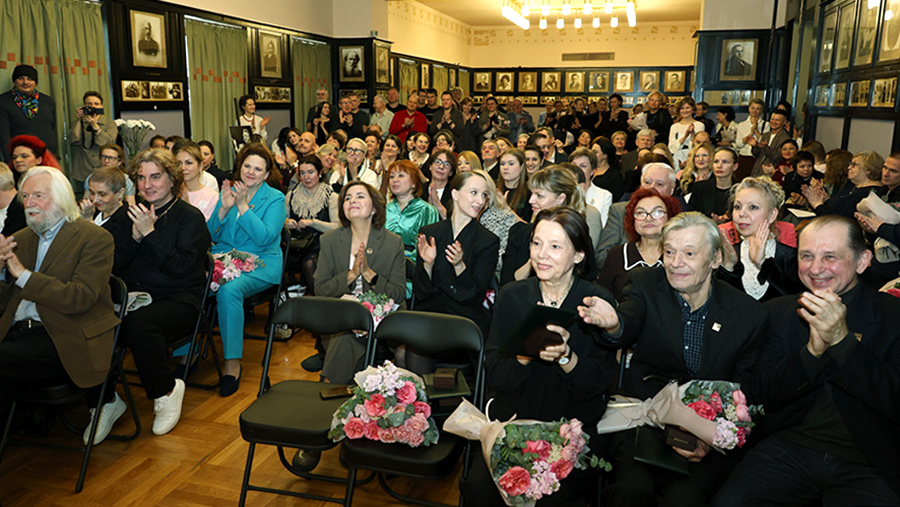
For 30 years, the gilded "Seagull" has been awarded to artists Natalia Rogozhkina and Oleg Topolyansky, professors of the Moscow Art Theater School Olga Egoshina and Sergei Zemtsov. For 35 years — the artist Alena Khovanskaya. Golden Seagulls with emeralds were awarded for 45 years to actors Boris and Rimma Korostelev, and Anatoly Smelyansky, advisor to the Rector for International Programs at the Moscow Art Theater Studio School. Stanislav Lyubshin also received a badge decorated with precious stones.: He has also served 45 years in the Moscow Art Theater.
Natalia Vinogradova, the theater's deputy director for Audience Relations, was awarded a commemorative badge made of white gold with a diamond for 50 years of service in the theater. And for 55 years, Vyacheslav Zholobov, People's Artist of the Russian Federation, received a "Seagull" made of white gold with four diamonds.

An interview to help
The celebration continued in the evening on the Main Stage of the Moscow Art Theater, where the documentary play "Oleg Tabakov. In search of joy." Oleg Pavlovich's friends, colleagues and students are among the invited guests. The orchestra seats were filled with theater and film stars: Nikolai Tsiskaridze, Marina Neelova, Sergei Shakurov, Alexandra Zakharova, Konstantin Bogomolov, Evgeny Kindinov, Yuri Stoyanov, Philip Yankovsky, Konstantin Ernst, Kirill Krok, Vladimir Urin, Natalia Egorova, Stanislav Lyubshin, Alexander Adabashyan, Leonid Yarmolnik and many others. The family is in the place of honor — Marina Zudina with her children Pavel and Maria Tabakov.
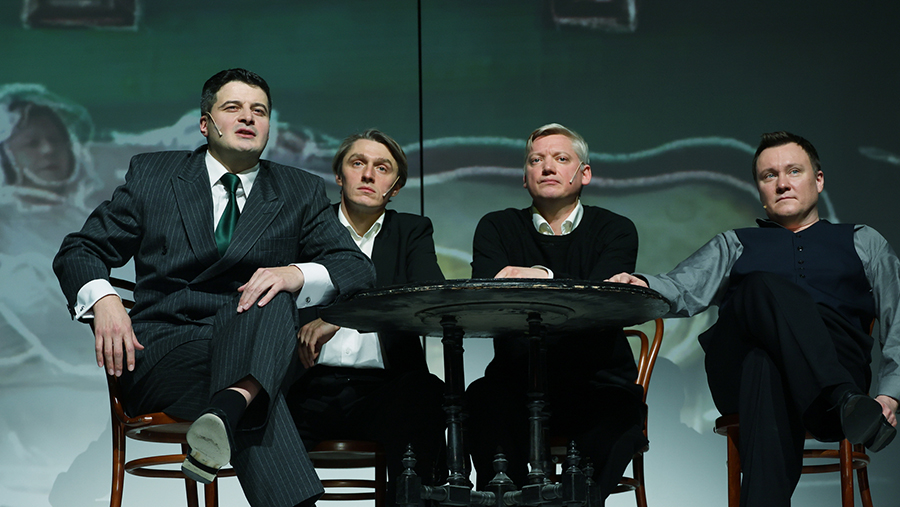
Konstantin Khabensky took over the production of the play. It is based on a big conversation-Oleg Pavlovich's interview with Anatoly Smelyansky. This recording was released on TV screens under the title "Oleg Tabakov. In search of joy." This, in turn, was the name of the 1957 production of Sovremennik based on the play of the same name by Viktor Rozov. Tabakov played a teenager Oleg Savin in it, and three years later the film "Noisy Day" by Georgy Natanson and Anatoly Efros based on this work appeared. Playwrights Rinat Tashimov and Karina Besolti wrote a play based on the materials of this interview. The name remained the same.
— These are not memoirs that are being edited. There are documentary materials here that are recorded on video and have not been corrected," Konstantin Khabensky noted. — Oleg Pavlovich's reflections, sometimes incorrectly put together, rough, but spoken from the heart, we took into the play. They didn't add anything of their own.
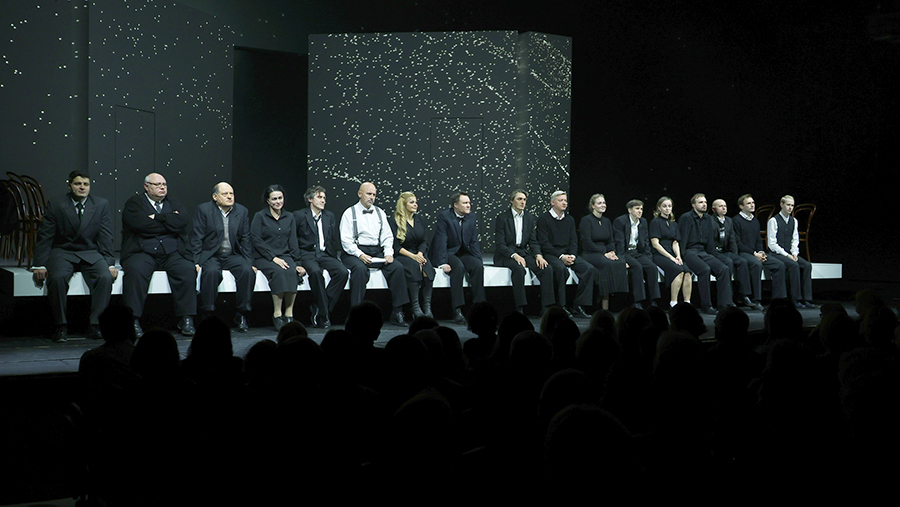
Twenty actors are employed in the performance. Among them are Irina Pegova, Olga Litvinova, Armen Arushanyan, Artyom Volobuyev, Ilya Kozyrev, Yanina Kolesnichenko, Alexey Krasnenkov, Rostislav Lavrentiev, Valery Troshin. As Khabensky says, they are all lucky because they had the opportunity to communicate with Oleg Pavlovich. Khabensky himself is one of the lucky ones. He, along with Mikhail Porechenkov and Mikhail Trukhin, was once lured away by Tabakov from the Leningrad Soviet Theater. Having accepted the Moscow Art Theater after Oleg Yefremov passed away in 2000, he decided to restore his fame as the best theater in the country. He attracted actors, playwrights, directors, and set designers. I spent a million dollars to equip the stage.
One in a hundred persons
The performance was created in the monologue format. Oleg Pavlovich's memoirs are spoken by both actors and actresses. The many-faced Tabakov appears before the viewer, starting from childhood, ending with his last days in the hospital. The actors in the play did not have the task of playing famous people, parodying, imitating. Rather, it is a slice of time along with its characters. The viewer sees the history of the country through their story.
"I have more than one image in the play, there are several of them," admits actress Svetlana Kolpakova. — At the beginning, where we talk about childhood in a communal apartment, I play Tabakov's half-sister Mirra. Then Galina Borisovna Volchek, Mikhail Gorbachev and many others.
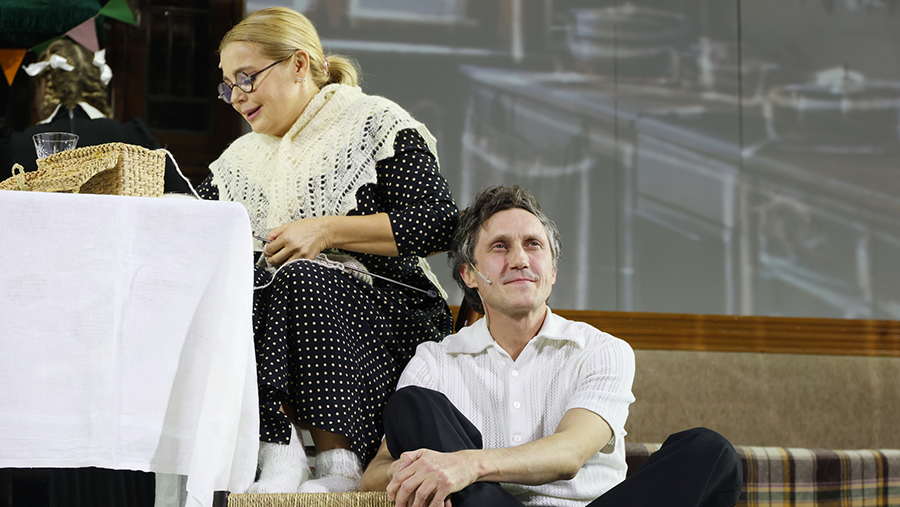
20 years ago, Svetlana Kolpakova joined the Moscow Art Theater. Tabakov took her into the troupe and loaded her with work.
"Although there was a prejudice that I would only play in extras or nothing at all," Kolpakova recalls. — And I had several premieres in the season. This is a gift for young artists to learn their profession and learn. I have nothing but tenderness, love and gratitude for Oleg Pavlovich.
As actor Pavel Vorozhtsov says, Tabakov's uniqueness lies in the fact that it is impossible to say a few sentences about him. Even this performance is not enough — it still does not correspond to the scale of this personality.

"Oleg Tabakov has always moved forward and upward, starting with the theater club in Saratov, where he was a star," admits Pavel Vorozhtsov. — He was inaccessible to everyone, but he was also accessible. It was worth asking for something, and he immediately responded and solved the most unsolvable issues. I was lucky to rehearse, play, and go on stage with him. I found him still in good shape, when he wasn't sick yet. Although this did not prevent him from running the theater.
Helping, fussing, the People's Artist of the USSR never flaunted his regalia. "Good afternoon. The actor Oleg Tabakov is bothering you," he introduced himself. And that was enough.
Forward and upward
The theme of the disease was highlighted separately in the play. Oleg Pavlovich had health problems from a young age. At the age of 28, during the formation of Sovremennik, he had his first heart attack. He was the youngest in the ward, and gradually his neighbors began to die there. But Tabakov realized that his main medicine was optimism, the desire to live. After all, he was engaged in theater, and this is a fun business, as Oleg Tabakov liked to say.
"In Search of Joy" is not just the name of the play. It's his lifestyle. A life in which love occupied an important place. Tabakov grew up in the adoration of his grandmothers, mother, and sister. Later, beloved women and, of course, children appeared. He also associated the future of the theater with the younger generation. It is important to educate them and pass on everything that the teachers and the founders of the Art put into it. That's why he was burning to create his own troupe, and he waited seven years for them to let him open a theater.
The coal cellar on Chaplygin Street was transformed by the hands of his students into a theater, which was called the "Snuffbox". Then there was a college for gifted children. Tabakov, along with his students, began to look for talents around the country. And when he found them, he arranged their life in the capital under the roof of the Theater School named after himself.
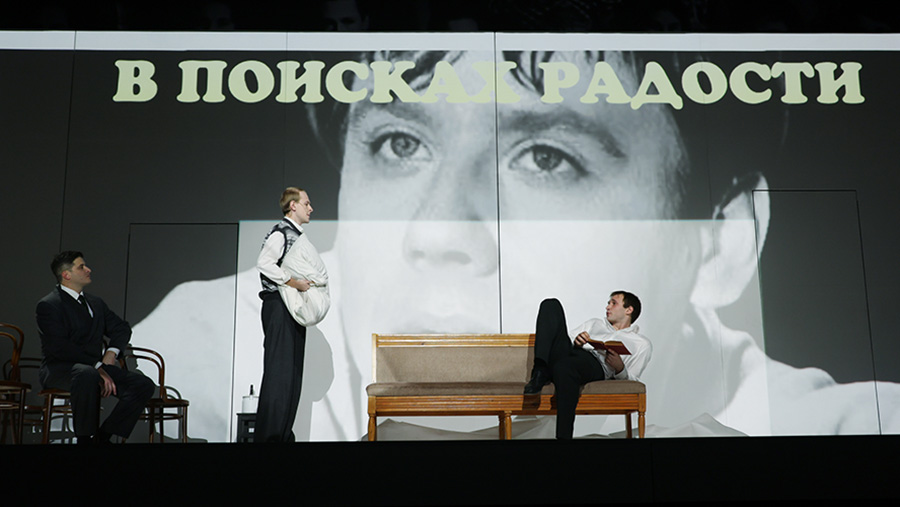
At the end of the performance, black-and-white footage of the very interview with Anatoly Smelyansky was shown on the screen. At the end, he asked Oleg Pavlovich how he would be able to justify himself, having appeared in the next world in the face of departed friends and comrades. He answered without hesitation: "I will justify myself! He supported me. He helped. Helped out. He was burying her. I got it. Shared it."
The audience at this place exploded with an ovation. Marina Zudina's widow was wiping away tears, and other onlookers were crying.
No one knows for sure yet whether the performance will be a repertory one. But there are precedents. Performance dedicated to the 125th anniversary of the Moscow Art Theater "9th row. 10th, 11th place" by Denis Azarov adorns the poster of the theater to this day. The anniversary production dedicated to the 100th anniversary of the birth of the great Russian artist Innokenty Smoktunovsky, "I love. Kiss. Kesha" by Pavel Vashchilin. And this new play has every right to take its place among them.
Переведено сервисом «Яндекс Переводчик»
