
Artillery with training: the defense received long-range self-propelled guns

The Malva and Hyacinth self-propelled artillery units began to be used by the BARS territorial defense units. Volunteers are already mastering new weapons systems. The task of artillery units is to provide fire support to motorized infantry units and destroy important targets. They will be indispensable in repelling aggression against border regions, experts say.
How artillery will strengthen territorial defense units
Territorial defense units began receiving heavy artillery, sources familiar with the situation told Izvestia. Volunteers are mastering self-propelled artillery installations "Malva" and "Hyacinth". They have already successfully used new weapons during recent maneuvers at training grounds.
The task of artillery units is to provide fire support to motorized rifle units, destroy enemy command posts, long-term fortifications, communications centers, and defeat enemy infantry groups and equipment.

Self-propelled artillery gun "Malva" during the International Military-Technical Forum "Army-2023"
Malva is a 152 mm self—propelled artillery system. The chassis is a four—axle off-road vehicle BAZ-6910. The mass of the combat vehicle is 32 tons. The installation uses a type 2A64 howitzer, the same as in the Msta self-propelled gun. The carried ammunition is 30 rounds. The range is 800-1000 km. The rate of fire is more than seven rounds per minute. These self-propelled guns can be transported by IL-76 aircraft, which allows them to be quickly transferred to where they are needed. The main objectives of the system are enemy command and strong points, warehouses, fortifications, artillery and rocket batteries, areas of concentration of enemy equipment and personnel.
152-mm Hyacinth-S self-propelled artillery units are capable of hitting targets at a distance of 30 km. The system on the tracked chassis has armor protection. The gun has high maneuverability and can fire direct fire or from closed positions.

Hyacinth-S self-propelled artillery installation in the free zone
Fire support is necessary for any combined arms unit — assault, mechanized or motorized, military expert Alexei Leonkov told Izvestia.

"During the special military operation, a tactical formation called the reconnaissance firing contour (ROC) was formed,— he noted. — When using it, the UAV identifies targets and gives accurate coordinates, and heavy firepower hits them. When conducting attacking or defensive actions, ROCK cannot be dispensed with. The artillery that will enter the units guarding our borders will greatly strengthen them. From now on, they will not request additional fire support, but will immediately go into battle with their regular artillery and mortar systems. And they will lead it until the main forces arrive.

The calculation of the self-propelled guns "Malva" is firing at the firing range
Such interaction should be worked out in advance, the expert noted.
"Now such units will be able to create a firing rampart or a mobile firing zone," the expert noted. — With this tactic, artillery destroys all detected targets in front of defensive positions or in front of attacking units. When creating a firing zone, it is important to support UAVs that will find targets, give their coordinates and adjust the fire so that it causes maximum damage to the enemy and does not cover our units. This is the only way to move forward in modern realities. To apply these tactics, combat coordination is necessary, which is what our reservists will have to do now. As a result, this will make it possible to more effectively conduct both defensive and offensive operations on our borders, if necessary.
Right now, infantry units really need artillery support, military expert Yuri Lyamin told Izvestia.

Soldiers of the group "Center" are firing from the artillery gun "Hyacinth-S" in the area of their
— During the first serious battle, they cannot do without artillery support, — he noted. — Ideally, they should request it from the artillery units, but this is not always possible. Our own artillery, which is ready to go into battle immediately, will strengthen the units of our reservists. The delay in artillery support can be costly — first of all, for our fighters, they will pay in blood for its absence.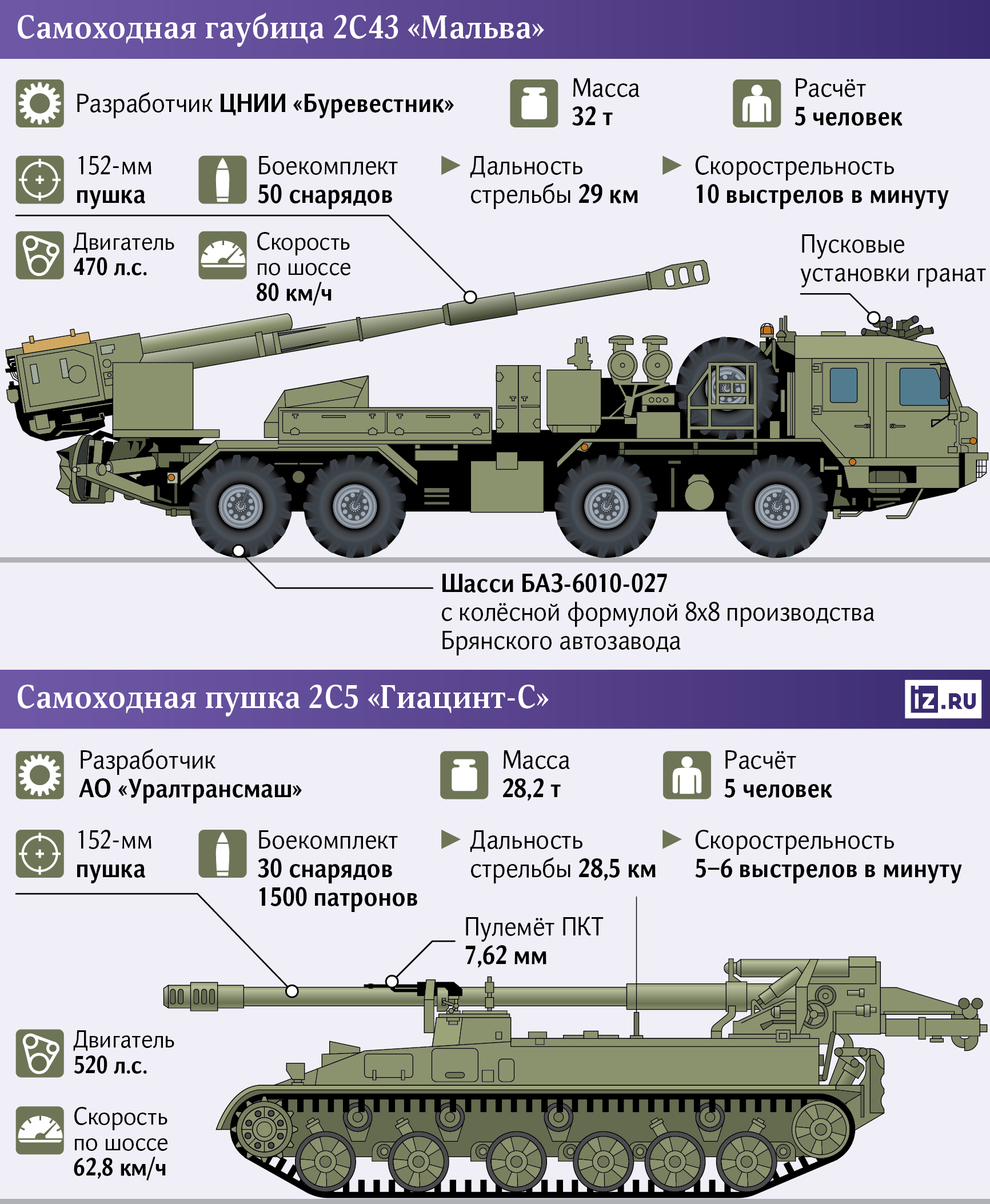
The expert recalled that the border in the Belgorod, Bryansk and Kursk regions is practically a section of the front.
"We need to be prepared for any scenario here," he said. — Artillery will improve the reaction to possible actions from the enemy, strengthen the protection of our borders in the border regions.

What are volunteer formations?
The BARS detachments (stands for "The country's Combat Army Reserve") were created in 2021 to train and train reservists for the Russian army. They are formed on a voluntary basis. Initially, the LEOPARDS were provided with small arms, 82- and 120-millimeter mortars, anti-tank missile systems (ATGMs), heavy machine guns and automatic grenade launchers. More than three dozen LEOPARD units took part in the special military operation, which proved themselves well during the fighting.

Military personnel of the BARS-13 volunteer unit are undergoing exercises to coordinate the work of groups of attack aircraft at a training ground in the DPR
Last year, volunteer territorial defense units "BARS" were created in the Belgorod, Bryansk and Kursk regions bordering Ukraine, as well as in the Crimea. Unlike other detachments, they are formed according to the territorial principle of recruitment, and volunteers serve only in their regions. The most important role was played by a detachment in the Kursk region, from which Russian troops were knocking out units of the Armed Forces of Ukraine. Its tasks include the protection and defense of life support facilities and infrastructure, the fight against drones, the identification and fight against enemy sabotage and reconnaissance groups, ensuring the evacuation of civilians, and ensuring the regime of counter-terrorism operations (CTO).
Переведено сервисом «Яндекс Переводчик»
