Director of fate: the stars congratulated Mikhalkov on his anniversary


With one meeting, he was able to change the fate of Vladimir Khotinenko, who was going to become an architect, but now he is known as a director. He could have pulled Sergei Garmash aside and talked tales so that he could play a tragic monologue without rehearsals. And the great guests at Mikhalkov's table — Tabakov, Artemyev, Bondarchuk — became educators for Yegor Konchalovsky. Who is Mikhalkov? Nikita Sergeevich's friends, family and colleagues told Izvestia on the eve of his 80th birthday.
Egor Konchalovsky, director, Nikita Mikhalkov's nephew:
Nikita Sergeevich, it seems to me, has orchestrated his fate. It is very difficult and given to few. Everyone in our family is immersed in creativity. Family history is like the history of a country. How it was, what happened, what friends did the great-grandfather, the artist Vasily Surikov, have, what enemies did the grandfather, the artist Pyotr Konchalovsky, who, by the way, was friends with Picasso, have. Once, when he was vacationing in the south of France, the owner told him in a hotel: "You are bad people, artists. He was alone, didn't pay, and ran away. He left some kind of daub." He brings a painting by Van Gogh. Konchalovsky did not know about the greatness of the artist. There was a hole in the painting, Peter Petrovich patched it up, tinted it, and said, "He's not a bad artist." And he gave it to the owner.

I remember Nikita very well in my childhood, and all these memories are related to work. My childhood and adolescence were marked by a period when Nikita was shooting incredibly intensively. First, I shot "My Own among Strangers", then "Slave of Love", "Unfinished piece for a mechanical piano"… And we kids were hanging around. There was no systematic education. He did not pamper or demand. But the very presence of him, his friends, and colleagues, and these are Sasha Adabashian, Eduard Artemyev, Yura Bogatyrev, Lucy Gurchenko, and dozens of great ones, that was education. I didn't realize as a child that my real privilege was to come home from the river for lunch in the summer, and Oleg Tabakov, Chingiz Aitmatov and Sergey Bondarchuk were sitting at the table. That's probably why we've all been drawn into the film industry.
Karen Shakhnazarov, Director, General Director of Mosfilm:
We have been friends for several decades. I don't even remember when it all started. He has a powerful energy that affects everyone who comes into contact with him. If several people enter the room, everyone will look at Nikita, and he has this from a young age. He's a real passionator. He has a phenomenal working capacity. He's interested in a million things. He is not afraid to take on a lot of tasks and brings them to the end.
Nikita Sergeevich is an outstanding director. A huge number of people are filming, tens of thousands, but there are few directors in world history who have a unique style. Nikita is such an artist. Style is something elusive. But if you cut off the credits, you will still recognize the handwriting, you will understand that Nikita Mikhalkov shot this film. His paintings went down in the history of cinema. They learn from them. His know-how is light. He's an extraordinary guy. No one has that.

Once we went to a festival in San Sebastian together. We went to a Spanish restaurant, walked, talked a lot. And this is one of the best memories of my life. Nikita is a superbly erudite, educated man. He understands many things: music, painting, literature, cinema.
Nikita Sergeyevich is a truly Orthodox man, a deeply religious man. It is very important. He has that core that is important for understanding his personality and what he does. He is a great artist, truly devoted to his homeland. His patriotism is not ostentatious, not speculative. This is its internal content. His "Besogon" is a program that has become a very important part of shaping the worldview of Russians. People feel that what he says is sincere. It attracts you to him.
First of all, I wish Nikita good health. So that he would delight us with his works for a long time, and we could enjoy the fruits of his energy.
Sergey Garmash, artist:
For me, Nikita Sergeevich's age today does not correspond to the figure of 80. And that's a good thing. He is full of energy, full of desires. And the proof of this is Nikita Mikhalkov's Workshop 12 Theater, which he opened not so long ago. He has not yet fully revealed this Russian character, Russia, and its people, and talked about them. He still has a supply. And I think the time will come when this reserve will be realized.

Mikhalkov is not a director on the set at all. For a person who came from outside, and for an actor who understands the filming process, he is a funny man, a buffoon, a joker. He is certainly an organizer. A man who can get everyone's attention in one second. His direction is momentary. You can't predict what's going to happen at one time or another. In the movie "12," he invited me to play my monologue without rehearsing. I thought it was some kind of prank, a joke. It turned out not to be. To be honest, I didn't really understand what he had done to me: he took me around the pavilion, told me life stories that had nothing to do with my character. At the same time, he said separate phrases: "Smoke and blink. Smoke and blink." And then it was as if he had clogged my brain. I honestly don't even really remember how he brought me to the place, hugged me and said, "Come on, light a cigarette." I feel like I've been knocked out. There was a direct attack on me. As a result, we spent only two takes on this monologue. This is high—level directing.
Nikolai Burlyaev, actor, director, writer:
— What I love Nikita for is that he is the way he is. He communicates with the presidents and the audience equally, from heart to heart, without acting. He loves people. Nikita once told me: love is not when eyes are in eyes, but when they are in one direction.
One day I decided to write a story about him and called it Nikita. He described everything about our friendship, starting in 1959, when we were 13 years old. How his older brother Andrey Sergeevich, my first director, brought me to their legendary home. And we became friends on the spot. We've been friends for 67 years now. The story was supposed to be published in the Moscow magazine. And before that, I showed it to Nikita. He said, "That's right, Kolya. But who would be interested except you and me, and two or three other people?" But he was wrong. Because this is not just a biography, but a portrait of a person against the background of an era and events in which we were participants. Perestroika, the destruction of the USSR, even the bombing of Yugoslavia by NATO. We ended up in Yugoslavia, we saw the destruction after the bombing. And then we had a meeting with President Slobodan Milosevic. They shook hands, and Nikita did not let go of the president's hand for a long time, and this is a violation of protocol. "A strong man's hand," Nikita says. And Milosevic: "Raki is here." Mikhalkov breaks the officialdom.
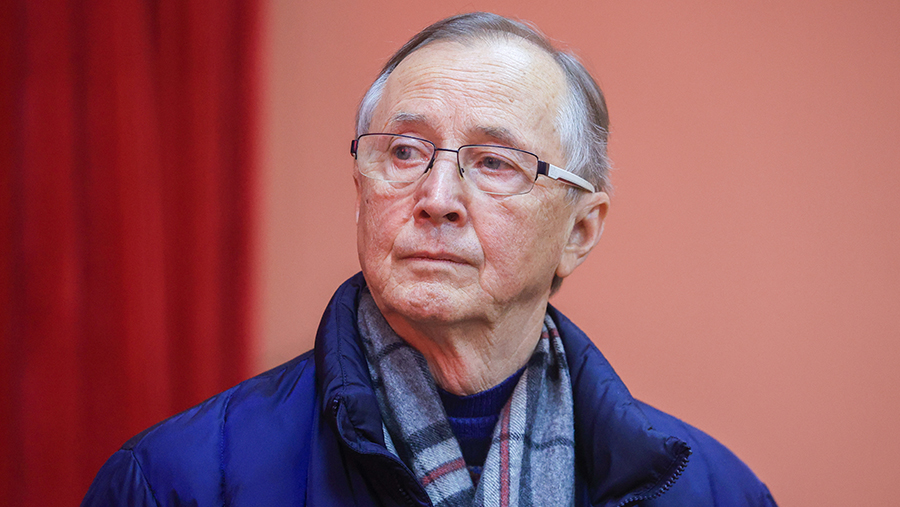
When I decided to make a documentary about Nikita, it was easy for me as a director and author. But as a producer, it's difficult. It was a year into production, and it was with great difficulty that I persuaded him to talk. I was hoping that I could ask him something that no one had asked. Succeeded. We talked about life, death, faith, and God. I also showed him a video that he didn't know existed. Here we need a preface. In our conversation, Nikita recalled how he went to serve in the army. Three years in the Navy, in the Pacific Ocean. It would seem that Sergei Mikhalkov's son could cut it off. But this is not about Nikita. And so he tells how he froze and died there when he went camping with his comrades. It's minus 52 degrees outside. He was frozen to the sledge in a dog sled, his eyes glued together in the cold. He opened them, looks at the sky, there is a Big dipper. Suddenly he saw a cake. And then he realized that this was the end, the death visions. Nikita realized that he needed to stay awake. When he saw the lights from the mountain, he began to urge the dogs on. They barely made it to the building. But he can't get in because he's frozen to the sleigh. It was only because someone came out onto the porch that they saw him and saved him. So, it was captured on that tape. Because there was an operator in the group with them. And he filmed them freezing on a camping trip. It has remained forever.
Yuri Stoyanov, artist:
Nikita has not only his own film language, but also his own method of working with artists. Sometimes he is so charming and precise in his presentation that you can catch his intonation in the characters of the film. It's like in a horror movie, and then it moves into another person. (Laughs). This speaks to the scale and strength of human, pedagogical, directorial and, of course, acting.

I came to him, on the set of the movie "12", with a very modest experience in cinema. And this is the only person who didn't tell me that I should throw away all my background and forget. He is the only director in Russia who is not afraid to combine theater and cinema in the frame. The only director whose artist exists acutely in a grotesque form. Therefore, all the characters in his paintings are memorable. Mikhalkov turns the artist out as much as possible, so much so that both the personality remains, and the actor, and rather prominent characters are obtained. I do not know how he does this, but in his unfunny scenes, there is a very funny artist. It is very interesting to follow his method and be a test subject. No wonder he says that the 12 jurors on the court are a menagerie, and he is a tamer in it.
And, of course, his movies are filled with music. He doesn't turn on the tape recorder on the set. But I understand that when he's working on a scene, the music is already playing in him. Nikita Sergeyevich always achieves harmony in the frame.
Vladimir Khotinenko, director:
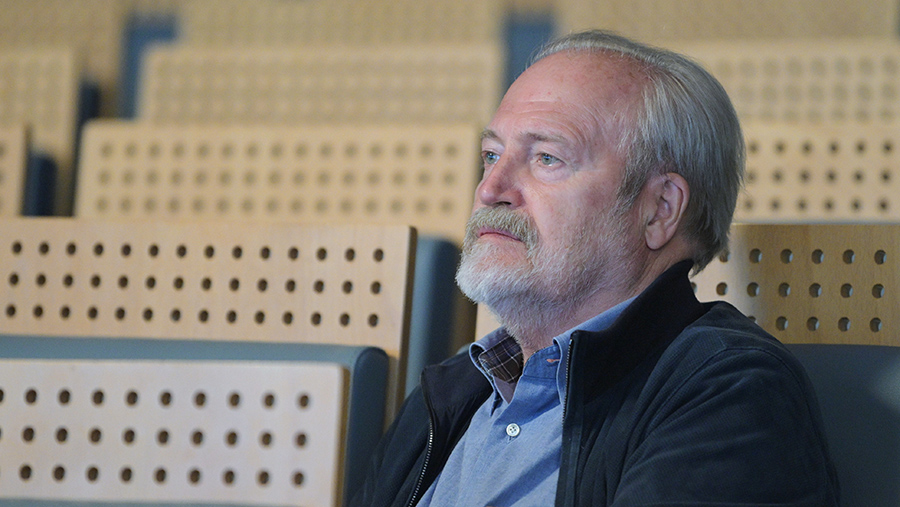
I consider Nikita Mikhalkov to be the godfather of the profession. I once got to a creative meeting with him, we talked afterwards, and he saw me as a director. But I was planning to be an architect. We must be attentive to the signs of fate. So I decided to listen. He entered VGIK, and then studied at the Higher Directing Courses in Nikita Mikhalkov's workshop. I remember one of his important lessons: "David Lynch said that our profession should be practiced in suffering. Absolutely not! We should always enjoy our work." And I came across this on the set of the movie "A few days in the Life of Oblomov." Everything was there in an atmosphere of universal participation in the process, with humor. It became a real school for me. To persuade People's Artist of the USSR Andrei Popov, who played Oblomov's servant Zakhar, to shave his head, Nikita, along with Alexander Adabashyan, the screenwriter of the film, shaved themselves. It's brilliant. There should be freedom of creativity and improvisation in our business. And you can't take that away from Nikita Mikhalkov.
Переведено сервисом «Яндекс Переводчик»
