Red Dancing: why Krasnakhorkai received the Nobel Prize


The Nobel Prize in Literature for 2025 was awarded to the Hungarian novelist Laszlo Krasnahorkai. His name has been among the possible candidates for several years, even if Haruki Murakami has been on this list for much longer. The official wording of the award is "for convincing and visionary creativity that confirms the power of art in the midst of apocalyptic horror." Especially for Izvestia, Konstantin Milchin, literary critic and editor-in-chief of Yandex Books, tells us what you should know about the Nobel laureate.
Who is Laszlo Krasnahorkai?
One of the most famous Central European writers. Perhaps even the most famous. Back in the summer of 2011, the American magazine The New Yorker published a large complimentary article about Krasnakhorkai, in which, among other things, he was promised the Nobel Prize in Literature. In 2015, today's winner received the Booker Prize, and this is not a direct path to the Nobel Prize, but nevertheless an important step towards it.
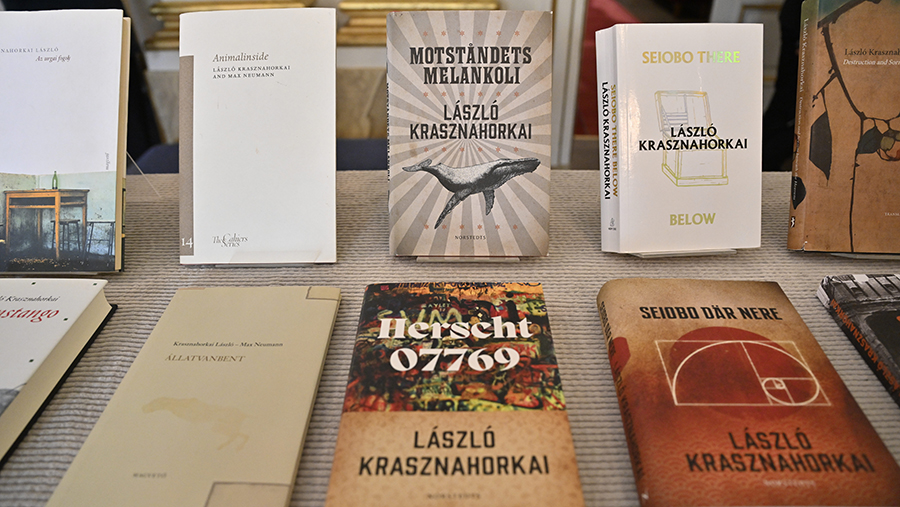
Krasnakhorkai has amassed an impressive collection of literary awards, including Hungary's main Kossuth Prize. That is, he is a well-known person both at home and around the world, even if primarily among publishers and critics. It is not surprising that Krasnakhorkai has been among the likely candidates for quite a few years.
Who was the favorite for this year's Nobel Prize
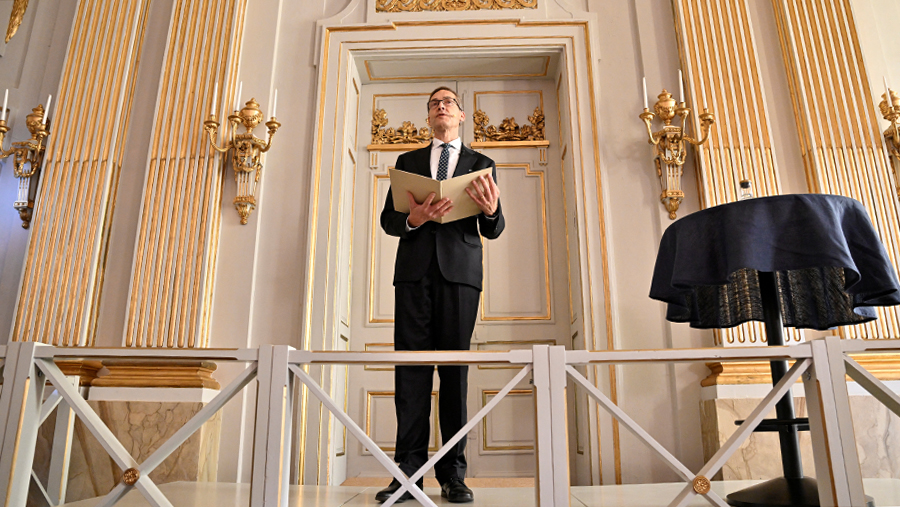
In reality, no one. We will find out exactly how the Swedish academics chose Mr. Krasnakhorkai only in 2075, when the archives for the current season will be made public. There is a procedure for nominating for the award, which is available to a fairly wide range of cultural institutions around the world, but this nomination does not mean anything in reality. There are Swedish academics who, according to their own criteria, compile their long and short lists, order literary and linguistic analysis.
The lists published by the media, which were led by Australian Gerald Murnane and Indian Amitav Ghosh, are the bookmakers' estimates and the odds on the basis of which they accept bets. Yes, Murnane was indeed in the lead there, and by understandable logic: Australia had not received a Nobel Prize for a long time. Han Gang, a Korean woman, became the winner last year, which means that this year, most likely, it is not an Asian woman. However, Japanese Haruki Murakami has been living in top positions on such lists for 20 years and has not received anything, although he is still doing well both with circulations and with confessions.
What to read from Krasnakhorkai in Russian
At least the "Satanic Tango" and the "Melancholy of Resistance." These are not the newest works, the first was written back in 1985, the second in 1989, for the second novel Krasnakhorkai just received the International Booker Prize. In "Tango" we see a panorama of an agonizing Hungarian village, where there is a lot of post-apocalyptic horror, which was mentioned by respected Swedish academics in their conclusion. A world enclosed within itself, from which everyone dreams of escaping, but it just doesn't work out. There was one who got out, but he disappeared and died a long time ago. And now the disappeared one suddenly comes to life and returns to his native apocalypse to further enhance it.
In Melancholy of the Resistance, everything begins with the arrival of an even stranger circus in a strange, dilapidated city. Seas of strong Hungarian alcohol are pouring in, everyone is constantly reminiscing about their former greatness, and everything ends predictably with a military coup, either operatic or real.
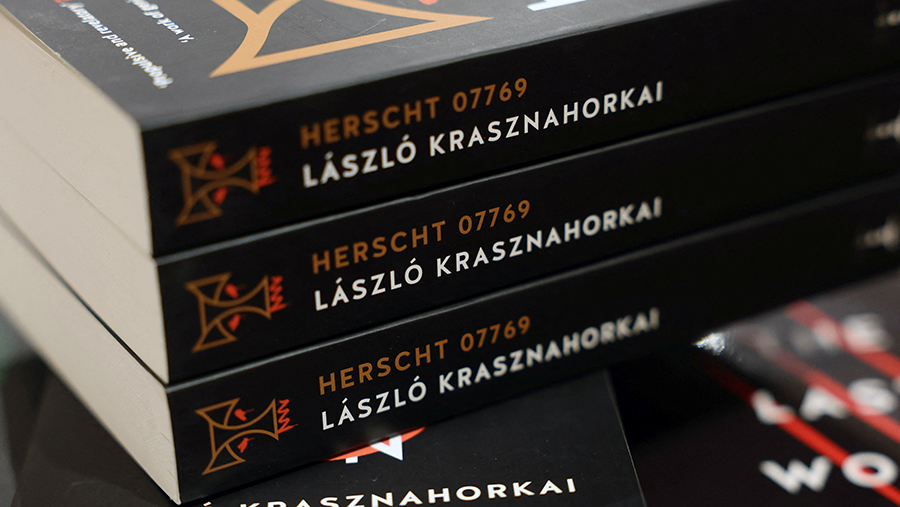
There are still a number of short stories that can be found in various paper and online magazines. It is known that next year Russia will publish a relatively recent (2016) novel by Krasnakhorkai, "The Return of Baron Wenckheim," in which an emigrant aristocrat, after losing at cards, decides to return to his hometown. His goal is to solve all his problems and meet his beloved from his distant youth. The townspeople, as in "Satanic Tango", hope that the baron will be able to help them. Eternal return and the unjustified expectations associated with it are one of the most important themes of Laszlo Krasnahorkai.
Are the academics right this time?
In principle, the Swedish Academy rarely misses, and even the strangest decisions end up being excellent reading recommendations. Almost no one in Russia had heard of Abdulrazak Gurna until 2021, and now we have quite a few of his novels out. And what can I say, this is an excellent writer, whose reading has had a soul-saving effect on many in recent years. Krasnakhorkai is a very interesting and equally complex writer, he writes in long sentences that some quite benevolent critics call endless. Metaphors can be so colorful that the plot gets lost. However, the plot is not so important, but a tragicomic theatrical action is important in the midst of Central European ashes, fragments of brilliant empires and majestic kingdoms. Krasnahorkai is witty, but this is the wit of a gallows man, the wit of a man who has lost everything. It's definitely worth reading, but it's not easy.
By the way, in an interview with Krasnakhorkai, he confessed his love for Tolstoy with Dostoevsky and said that if he translated it into any language, then, of course, into Russian. After receiving the Nobel Prize, the novels of this writer will receive special priority for publishers, and we can expect that soon they will all be available to read in Russian.
Переведено сервисом «Яндекс Переводчик»
