Russia without Russia: what is shocking about the "Chronicles of the Russian Revolution"
- Статьи
- Culture
- Russia without Russia: what is shocking about the "Chronicles of the Russian Revolution"


The most ambitious TV project of the season, Andrei Konchalovsky's long-awaited work "Chronicles of the Russian Revolution" covers two tragic decades of the last century. In the frame are Lenin, Trotsky, Nicholas II, Stolypin, Rasputin and dozens of other important figures of our history. A sarcastic, harsh, and often naturalistic view of the key events of the liberation movement is accompanied by scathing criticism of the country's leadership from 1905 to 1924. Izvestia has reviewed the available half of the series and is sharing their questions and impressions.
Why does the series look unusual
"Russians without Russia" was the name of Nikita Mikhalkov's documentary series, starring Kolchak, Denikin, Wrangel and other notable personalities of the Civil War and emigration. Twenty years later, Andrei Konchalovsky releases his program series on approximately the same topic. He only begins his story in 1905, with the first revolution, and ends in 1924, when Lenin died and when the revolution could be considered fully completed.
Konchalovsky focuses on the leaders of revolutionary, including terrorist, cells, and the tsarist secret police, senior officials, Rasputin, and personally Emperor Nikolai Alexandrovich, played by Nikita Yefremov, unrecognizable in makeup. The first episodes are mostly devoted to getting to know major underground figures: Lenin, Trotsky, Gapon, Parvus, Gorky. Then Stolypin, then, just a little bit, the First World War, the abdication of the emperor. The series is approaching the equator of the October Revolution. Only the first half of the TV show was shown to the press, let's talk about it.
The first thing that literally catches your eye already in the first episodes is that the series is defiantly non-cinematic. Apart from interruptions with the chronicle at the beginning and less often in the middle of the episodes, there's not much else to watch. The shots with the application plans (the hero approaches / drives up to the building, etc.) are quickly replaced by scenes in the interiors, and even if sometimes in nature, we will not see any visual delights there either. This is a costumed criminal-political detective story, built mostly on dialogues, and in these dialogues the characters try to talk through their creeds, personal problems, and conflicts with other characters as quickly as possible.
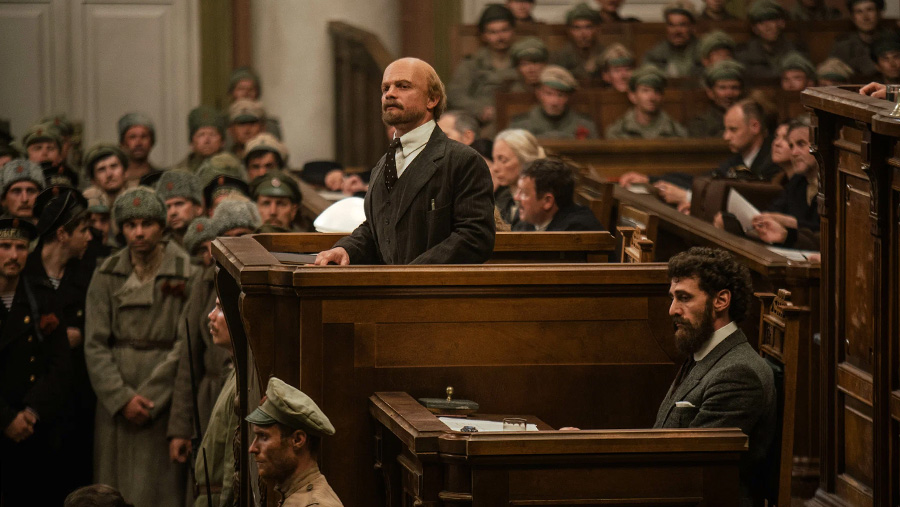
The action would lose little if transferred to the theater stage or even turned into a radio play, as neither the plans of the characters, nor the interiors, nor the costumes, nor the props often carry any visual load. Yes, there is a local John Wick who is able to deal with any opponent with a simple pencil. There is Yura Borisov, who knows how to keep silent in the frame, but here he has almost no way to do it at the level of "Anora", "Bull" or "Mom, I'm home". There is Yevgeny Tkachuk, who really got deeply into the image of Lenin, he has the most interesting character to watch. But it doesn't make the weather. The eight hours of the series are primarily conversations not of people, but of "masks" (Konchalovsky has achieved a spectacular portrait resemblance to the prototypes), large brushstrokes that you grasp without even looking at the screen.
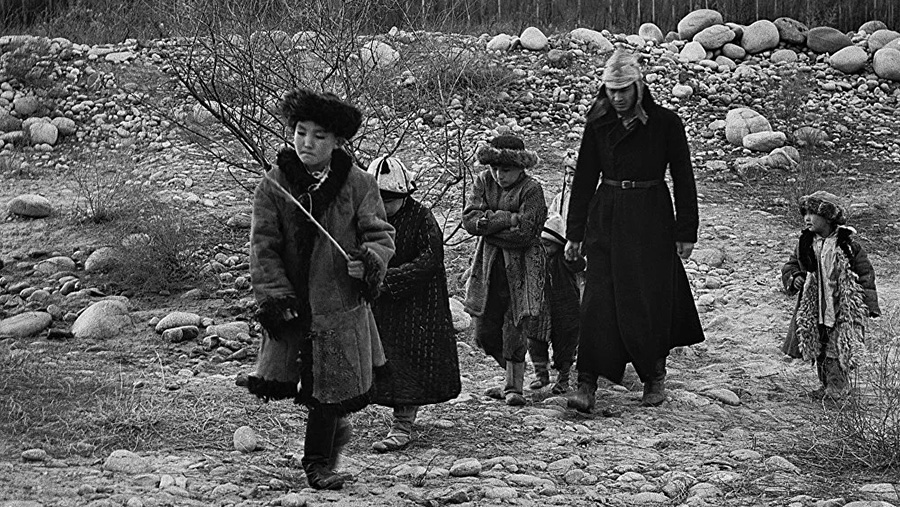
Of course, this is a deliberate move. Konchalovsky is a director of the highest visual culture. "The First Teacher", "The Story of Asi Klyachina", "Sibiriada" are filled with images that cannot be forgotten, and the latest works, "Alexey Tryapitsyn", "Paradise", "Sin", "Dear Comrades" are cinema in the truest sense of the word. The only way to explain the visual poverty of the Chronicles is that Konchalovsky does not intend to show it here, but to prove it. Not so much to reflect as to explain. Not to justify, but to accuse. And so that the viewer would not be distracted by "prettiness".
"Chronicles" is an accusation that a major Russian director and publicist voices through a television project with epic timing and time coverage. A polemical essay may not always be admired, but it can be interesting to argue with it, and here the space for this is huge and the most important questions are left unanswered.

Through the eyes of a gendarme
Andrei Konchalovsky chose an unexpected and provocative key to the history of the Russian liberation movement: We look at everything that is happening through the eyes of a fictional Lieutenant Colonel Prokhorov, a man to whom the emperor personally entrusted all anti-terrorist activities after the 1905 revolution. Prokhorov deals with cell leaders and perpetrators of terrorist attacks and sees his charges like a gendarme. For him, they are all criminals, pests, enemies of the state with which he identifies himself.
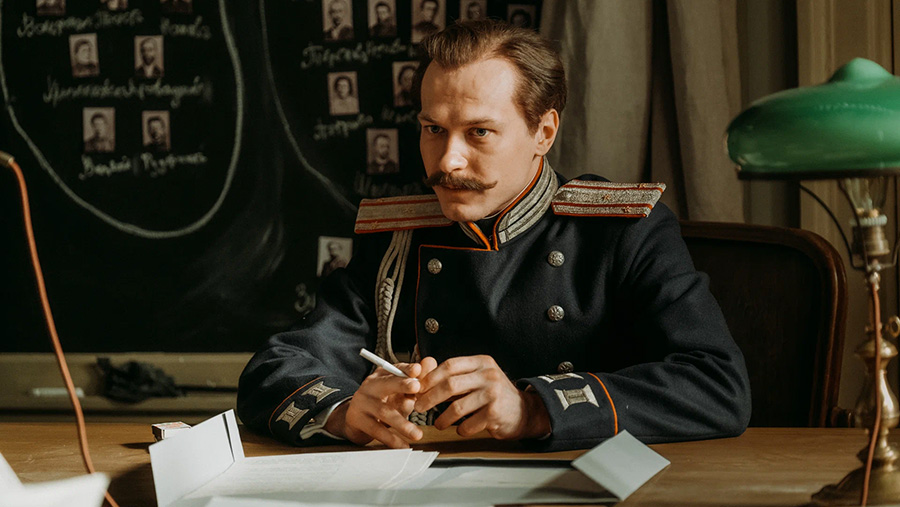
Since Prokhorov is just a bloodhound, albeit a very gifted one, he looks for motives in "objects" that are available to him. This one works for money, and one or the other buys it. This one is obsessed with a passion for a woman, most often the heroine Yulia Vysotskaya, who throughout the series acts as the main object of lust for many key characters. This one is a mentally ill fanatic, this one needs unlimited power, someone else is being blackmailed, and someone else is simply being tricked. The role of such a simpleton, by the way, is given to Maxim Gorky, who really wants to help the revolution with his huge money and is fooled by everyone he meets, because Gorky is a naive simpleton.
Prokhorov does not question whether the revolutionaries are right in any way. He sees small people in front of him, fighting with each other like rats, but they are contagious and, therefore, pose a danger to the country he serves. For him and Alexander Blok, he's just a celebrity he met in a restaurant and only found out about because he drinks a lot. Then Prokhorov is no longer interested. It's the same with the officials he works with. He divides everyone into corrupt and "honest" ones, and "honest" ones are those who do not take bribes and serve the Motherland.
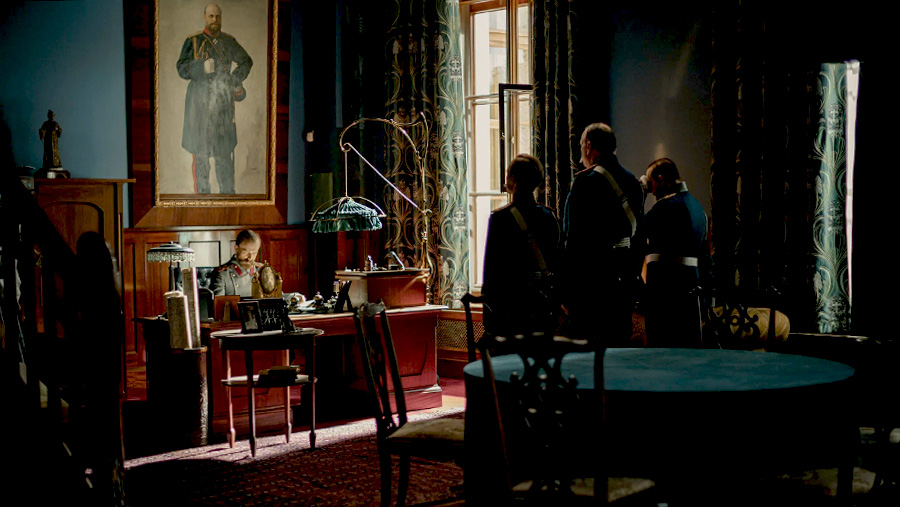
It is worth saying that the emperor does not enter this circle, because, according to Prokhorov, he knows about corruption, and covers it up, and does not allow him to fight it. One of the main messages of the series is that Nicholas is an unworthy ruler. Both the Empress and the entire imperial family do not deserve their high position either, but are high-ranking criminals. This is a bold accusation for today's times, and it is accompanied by a hint that they are, by and large, foreigners at the head of the country. The gendarmes are represented by xenophobes and anti-Semites, so this is also an argument for them. I even remember Vasily Aksenov's famous remark that Nikolai had a whole sixty-fourthof the Russian blood.
So, crime is at the bottom, crime is at the top, so it remains only to serve the Motherland, which is what Prokhorov and the few officials in whom he notices the same zeal are doing. This is a message, because Konchalovsky makes these people the only positive characters in the series.

The Russia they lost
The moral and intellectual shortsightedness and limitations of Prokhorov and Sharikov in their uniforms leave much behind the scenes, which every student, not to mention adults, has thought about more than once. For example, how it turned out that in that Russia, anyone who had a conscience at all understood that the country was in agony and needed drastic changes. No one has "bought" these people, it cannot be explained by sexual instinct or madness. It is enough to open any great Russian writer, any major publicist (Konchalovsky, for example, mentions Amfiteatrov, who became famous for his composition "Gentlemen of Deception"), diaries of raznochinets, students, read civic lyrics — such a stream of pain, suffering, injustice, lack of rights, and stupid cruelty will flow from everywhere that the motivating motives of passionaries and sympathizers immediately become clear. But the optics chosen by Konchalovsky cuts it off completely. For him, it's all here—the criminals, the witnesses, or the victims. For example, Mayakovsky and Briki are unwitting witnesses of Lenin's speech from an armored car, they are not needed for anything else here.
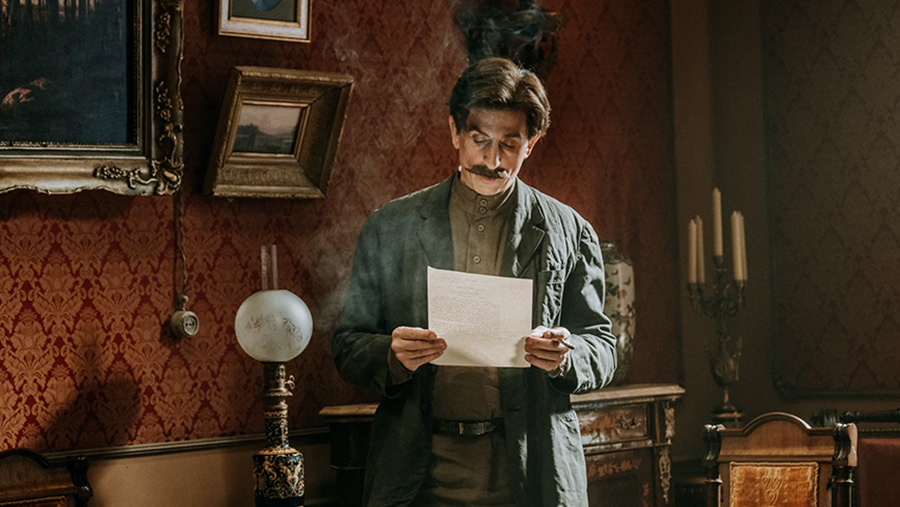
Konchalovsky, like his hero, apparently connects the disintegration of Russia with the Romanov dynasty, but does not provide any fundamental explanation for this. Just criminals, traitors— that's all. On the other hand, which Russia? What kind of Homeland? The intelligentsia is not represented in the series. The workers are extras. There are no peasants. There are no people. No one is interested in him here. "What do I need people for? The people don't understand [anything]," says the main positive character openly.
There are offices, interrogation rooms, pubs, safe houses. That's all. Nikita Mikhalkov had Russians without Russia, and here — Russia without Russia. And it's clear that Pinkerton, as Kshesinskaya teases Prokhorova, may even find it convenient: you focus only on the victims and work with them. But the film claims to be a historiosophical reflection. For several hours, we have been told in various voices in horror that they want to destroy the Russian Empire. But they don't provide any arguments why it would be worth saving. Everything we see doesn't deserve to be fought for, which means the stakes are zero. If there is no Russia, there is nothing and there is no need to save.
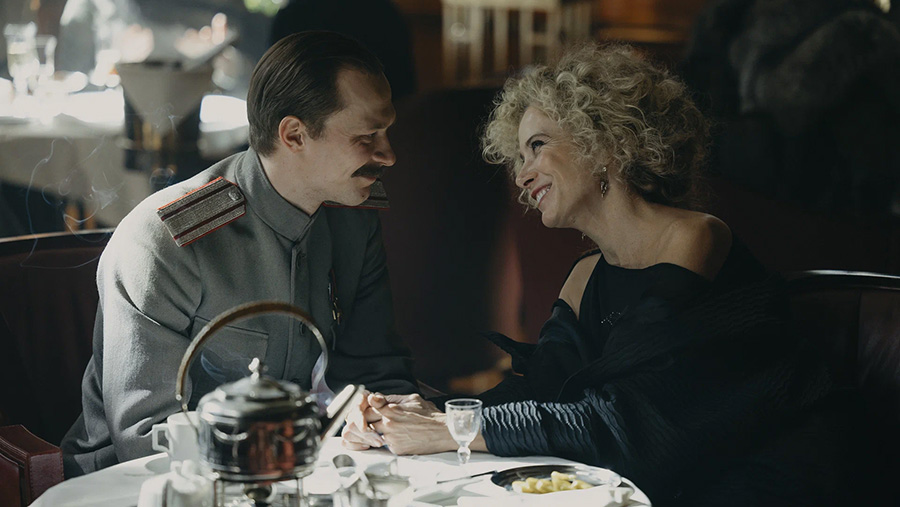
The series on the streaming service START will be released, of course, not immediately in its entirety. Perhaps Yura Borisov's Prokhorov will experience the same rebirth in the second half of the show as his captain Tolstonogov, who also served his Homeland for a while, without really thinking about what it means. Perhaps Konchalovsky is preparing a transition to the big cinema zone there, which he deliberately does not enter in the first eight episodes. The revolution, the Civil War, the red terror, the squabble among the Bolsheviks, the wave of emigration — everywhere here, it seems, there are opportunities for such a "switch", especially since already the seventh and eighth episodes feature vivid complex-staged scenes, albeit in small numbers. But incomparable in scale and drama, say, with "Dear Comrades," Konchalovsky's last major work.
This means that our questions can also be answered. Because the Chronicles of the Russian Revolution say much less about the revolution itself than, say, "Once upon a Time there was a woman" with a natural catharsis in the form of a metaphorical flood. Konchalovsky can do all this, which is why you watch his 16-episode project greedily and biasively. And you're waiting for the chronicles to turn into an odyssey.
Переведено сервисом «Яндекс Переводчик»
