Wrong light: the Army Theater told about the passion to live


The play "The Messenger" based on the early stories by Maxim Gorky was released in the Theater of the Russian Army. Olga Bogdanova's heroine, as if on a time machine, travels in a 1954 Moskvich-401 retrocar. A swimming pool, a waterfall and a wheat field with 500 poppies appeared on the Small Stage. Izvestia was among the first viewers to appreciate Anastasia Ershova's production.
Bogdanova titomirite
It's worth going to this performance just to see the People's Artist of Russia Olga Bogdanova in a rocker outfit. Her character Sula is all in black: in a leather jacket, in leather glovelettes (fingerless gloves). She appears on stage in a rusty car and immediately knocks down a young man. Maxim (Daniil Lugin) decided to take his own life and fell under the wheels. With his escapade, he almost gave Madame a heart attack. She has no choice but to give a sip of mors from a cognac bottle, shout and distract the guy from depressive thoughts. Why did he dislike this world so much in his twenties?
— It would seem that you are young, live in a good mood, have fun, be happy, what else do you need? Sula is amazed. — You are a strange people: staying in the pitch darkness forever does not frighten you. But to miraculously stay alive, without a single scratch, is not satisfactory.
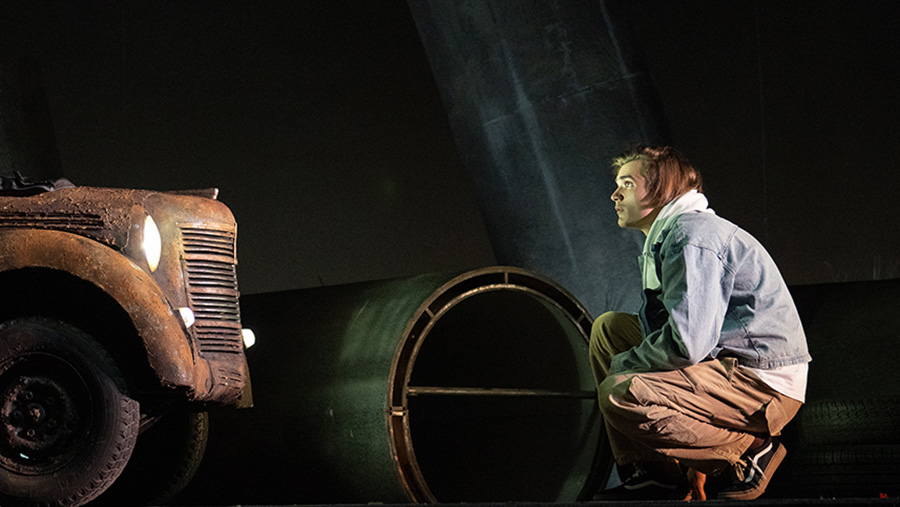
It turns out that Maxim has lost his girlfriend and wants to follow her. Wise with life experience, Sula tries to convey to him the idea that even death must be earned. And suicides are not even welcome in the next world. And to convince the guy to move on, Sula goes on a trip with him.
Back from the future
The old Moskvich 401 becomes a time machine and takes friends very far away. To the Middle East, to the harem, where Sula was happy for the first time, but then experienced the first bitterness of loss. Then Sula is transferred to Bessarabia. There, her son Larr (Roman Bogdanov) was not accepted by his fellow tribesmen. And when he killed the most beautiful girl, the gods punished him for the suffering of his parents with loneliness and immortality. This is worse than the self-will and pride that Sula's son had beyond measure.
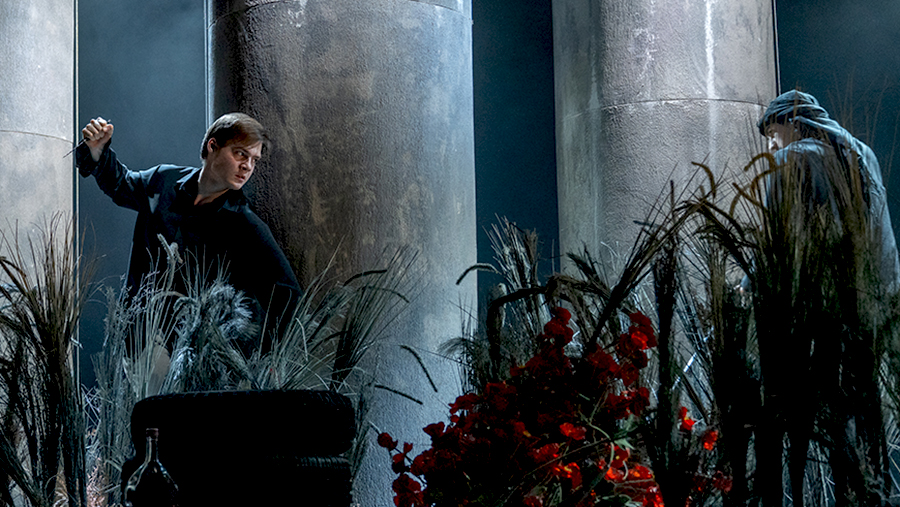
Out of longing and hopelessness, he seeks an outcome from his mother. Putting a knife in her hands, she asks: "You hit, Mommy, don't be afraid. It's not scary to die, it's scary to live alone. If you have even a drop of love, even a drop of compassion, you will do it!" But a mother does not raise her hand against her son, no matter what he may be. "I can protect you, I can feed you, but never kill you," Sula replies. — Life is given to us for something. You know, sometimes death is a reward that you may not have deserved."
It's bitter for the Muscovite
The dramatization based on the early stories of Maxim Gorky was made by playwright Elena Isaeva. She combined several of his novels with a storyline.
Actors of the Army Theater Timur Yeremeyev, Roman Radov, Artemy Seregin, Lyubov Balenko and others are involved in the production.
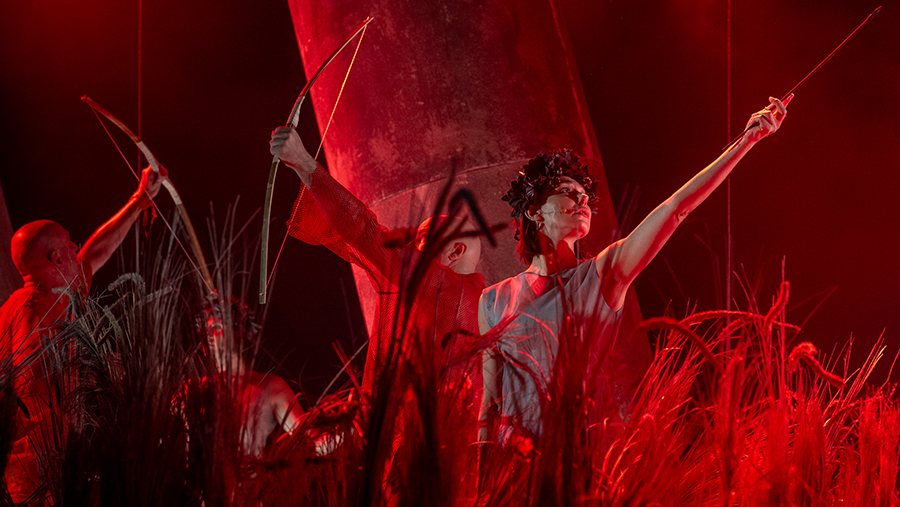
Musical director Aida Khorosheva has collected American rhythms of the 1930s, oriental melodies, and Serbian tunes here. And all the artists sing in Serbian. This diverse music rhymes due to the fact that all this is folklore, folk art.
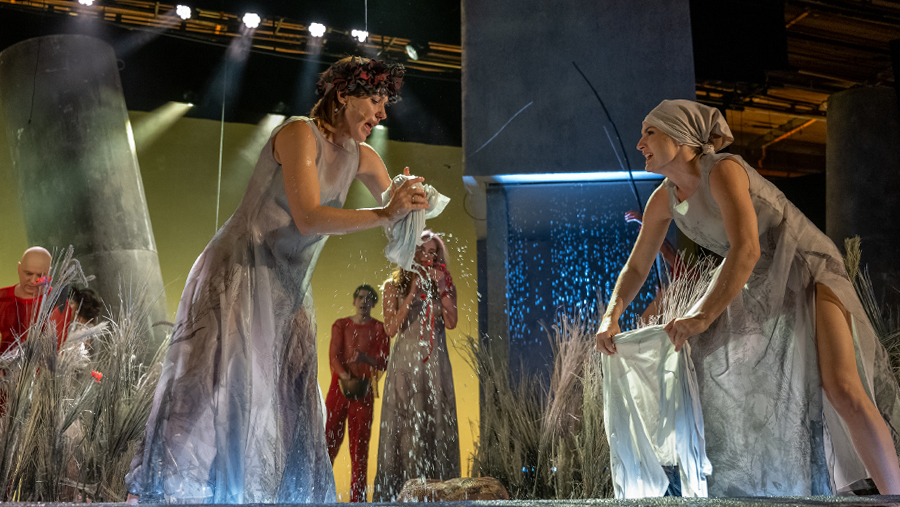
Production designer Fyodor Fedorovsky was responsible for the design of the play. He saturated the space of the Small Stage with large-scale decorations. There's a lake, a waterfall, and a wheat field with five hundred poppies. But the car became the center.
Lifting Moskvich to the sixth floor of the theater is not an easy task. It was sawn into four pieces, lifted up and reassembled. At the same time, the car is in working condition. You can use it to go on a trip around Moscow right now. A water tank was also lifted up, which was used to create a waterfall and lake. All the elements are visibly present in the play: water, fire, wind, earth.
The play ends with Danko's story, which today sounds like if the mother, wife, or widow of a fallen soldier is in the audience, she may hear the answer to many internal questions. According to the theater's management, they are already creating a repertoire, knowing that those who were on the front line will come to watch it.
"There will be a message in the latest novel for the mothers, wives, and children of those who have gone to defend our Homeland, and they will find an answer," says Milena Avimskaya, director of the theater. — It is important to understand that people give their lives for the lives of their descendants. This is a story about a man who does not understand why to live. And the search for this meaning is an urgent topic not only for young people, but also for adults.
The next performance of "The Messenger" will be played on November 25.
Переведено сервисом «Яндекс Переводчик»
