The city where they work: Moscow creates millions of square meters for the development of production and business
- Статьи
- Economy
- The city where they work: Moscow creates millions of square meters for the development of production and business


The Moscow program to stimulate job creation will attract more than 2.7 trillion rubles of investment and create over 340 thousand jobs by the end of the decade, said Deputy Mayor Maxim Liksutov. The largest developers have joined the projects: They note that neighborhoods with schools, kindergartens, hospitals, business centers and industrial parks are in demand among residents and businesses. This format reduces the traffic load, increases the comfort and loyalty of employees. How many such facilities will appear by 2030 is in the Izvestia article.
Why more and more Muscovites will work near home
A program to stimulate the creation of employment opportunities has been in effect in the capital since 2020. It helps attract investors for the construction of important social and economic facilities and to open new jobs close to home, including outside the Third Transport Ring, as well as in Troitsk and Novomoskovsk districts.
"In accordance with the order of Moscow Mayor Sergei Sobyanin, the city is actively attracting private investors to develop an integrated and balanced urban infrastructure. According to the results of the first nine months of 2025, the total amount of investments to be invested in the creation of jobs increased by more than 20% compared to the results of 2024 and exceeded 2.7 trillion rubles. More than 340 thousand new jobs will be created at future facilities," said Maxim Liksutov, Deputy Mayor of Moscow for Transport and Industry.
According to the decisions taken so far, by 2030, investors will build more than 250 facilities with an area of over 7.8 million square meters, Maxim Liksutov said.
In particular, industrial and social facilities, offices, sports and cultural institutions, hotels, shopping malls will be opened. More than a third of them will be built outside the MKAD. Currently, 12% of the approved plan has been commissioned — 40 facilities, including industrial complexes, schools, kindergartens and business centers.

Why does business invest in the development of Moscow's infrastructure
Business actively supports the program — in 2023-2024, the volume of agreed construction doubled annually and now exceeds 7.8 million square meters.
"The program pays special attention to industrial facilities. Today, it is planned to build at least 30 production complexes that will provide more than 22.3 thousand jobs. The first six enterprises have already been put into operation, with production facilities for medical equipment, veterinary pharmaceuticals, industrial and IT equipment, microelectronics, professional cosmetics and construction products. These projects have already created more than 5.1 thousand jobs," said Anatoly Garbuzov, Minister of the Moscow Government and Head of the Moscow Investment and Industrial Policy Department.
Additional incentives are provided for investors building production complexes. Since 2025, for industrial facilities, the coefficient for calculating benefits under the program has been increased to maximum values, as a result, the benefit has increased by 14%, which makes such projects even more profitable, Anatoly Garbuzov noted.
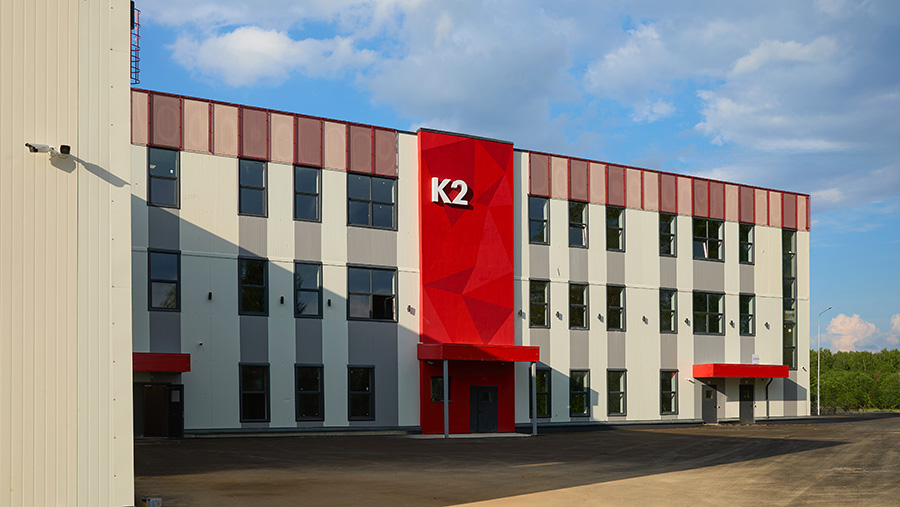
More than 50 investors participate in the program, among them the largest developers in Moscow. The main result is an increase in private investment: every ruble of benefits brings five rubles of investment to the city.
Izvestia asked developers who joined the program to talk about the advantages of such projects.
An economic incentive is also important for developers: in exchange for the creation of social or infrastructural facilities under the MPT program, the city reduces the fee for changing the type of permitted land use for the construction of residential apartment buildings. This makes it possible to create full-fledged neighborhoods where housing, workplaces, business and public spaces, kindergartens and schools are combined.
Parametr company told about their project in Butovo — it is an urban industrial park of the light industrial format, residents were found for it even before commissioning. According to Managing partner Alexander Manuin, this shows the high demand for such projects in the city — close to housing, transport and infrastructure.
The light industrial format is becoming more and more in demand — it is a new typology of industrial real estate. Such buildings combine production, office, warehouse and exhibition functions, allowing efficient placement of compact enterprises. They easily adapt to a specific technological process, are more conveniently located, and enable businesses to quickly enter the market without additional large investments.
The demand for such premises is growing rapidly. Representatives of the creative industries were the first to evaluate them, followed by furniture and textile workshops. They were followed by food-tech companies, as well as high-tech enterprises in the field of microelectronics and medicine.
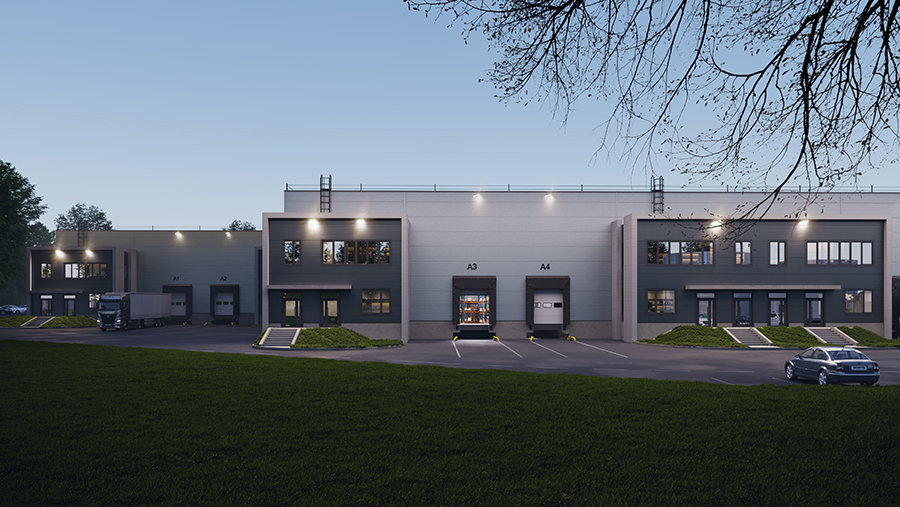
And this is not only a Moscow trend — many megacities realized that they were in a hurry to abandon the industry. Besides, the industry itself has changed: It has become more technologically advanced and requires less space thanks to modern equipment. Cities are returning to their historical role as centers of fashion, quality and technology.
The light industrial format is primarily in demand by small and medium-sized businesses, which are looking for opportunities to develop without large investments. Often, the first step is to rent space or industrial coworking. This approach allows you to grow gradually: to test the business model, establish production, attract the first customers - without buying real estate and even more so without the cost of construction with utilities and roads.
Today, developers are moving on and forming full-fledged ecosystems around the industry. The modern production facility is a multifunctional complex with offices, warehouses, showrooms, services and landscaped public spaces. The key requirements were initially taken into account here: increased electrical capacity, high ceilings, convenient entry for freight transport, round-the-clock access.
In the real estate market, light industrial is becoming one of the most promising products. It reduces costs for tenants, including logistics costs, and ensures high demand and rapid occupancy of facilities for developers.
This format is especially relevant for Moscow, as it corresponds to the business efficiency strategy and makes the city more convenient for residents. Maintaining production within the capital creates jobs, reduces pendulum migration, and supports the concept of a 15-minute city where housing, work, and services are close by. As a result, each resident saves time on the road, and the entire agglomeration receives a lower environmental and transport burden.
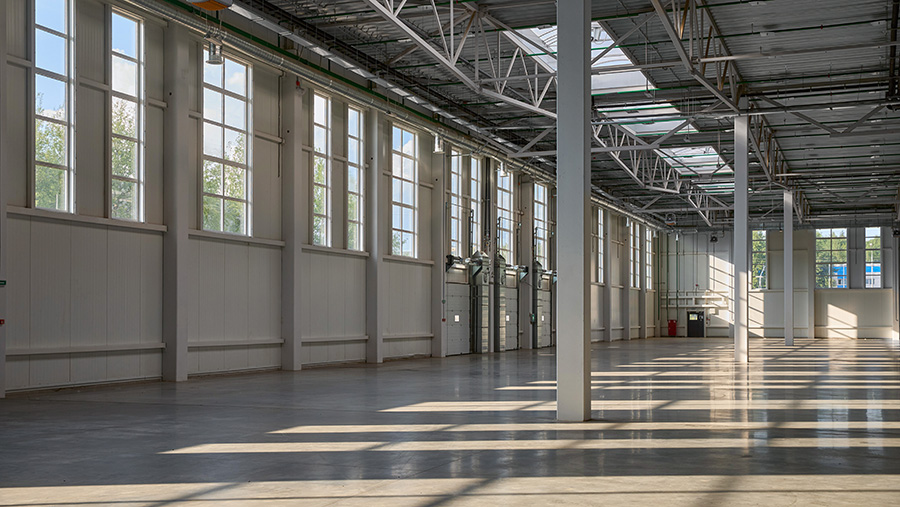
One example is the Kuvekino Industrial Park in New Moscow. In addition to the production facilities, there will be a showroom, sales and customer support offices, as well as a logistics center. Consolidation of all divisions on one site will allow the company to increase work efficiency and service quality.
According to Anatoly Garbuzov, Minister of the Moscow Government and Head of the Investment and Industrial Policy Department, the project combines modern architecture, ergonomics and advanced logistics solutions. The total area of the industrial park will be 340 thousand square meters, of which about 40 thousand will be in the first place. Three buildings of the light industrial format will appear on this territory.
— Speaking of our experience, environmentally friendly industrial facilities remain one of the most stable and promising assets for investment in Moscow. A significant part of the production areas is still concentrated in the industrial zones of the Soviet and post—Soviet periods, which are poorly suited for hosting high-tech companies," said Vladimir Galaktionov, member of the Management Board, Director of Legal Affairs at Capital Group.
The buildings of former factories usually do not meet modern requirements — they are not suitable for business scaling and do not attract qualified specialists accustomed to comfortable conditions, he noted. Therefore, the demand for new areas exceeds the supply, because the capital's industry is actively growing. For example, the Krekshino and Alabushevo industrial technology parks, built under the MPT program, are already fully occupied: more than 10 companies are preparing to launch their own production facilities, said Vladimir Galaktionov.

What will the program to create jobs near home give Moscow?
Workplaces near home are not only following the work-life balance trend, but also an important element of the city's development. This approach makes life more comfortable for Muscovites, Vladimir Galaktionov is sure.
New projects give Muscovites more employment opportunities and allow them to plan employment more freely, including in flexible formats — partially or remotely, says Ivan Alov, associate professor at the Faculty of Economics at RUDN University. According to him, this increases competition among employers, stimulates wage growth and improvement of working conditions.
— Working close to home increases staff loyalty, reduces turnover, and improves the quality of life. This approach allows us to create a convenient urban infrastructure with kindergartens, schools and workplaces nearby, which makes labor relations more flexible and the city's economy more stable," added Farida Mirzabalayeva, Associate Professor at Plekhanov Russian University of Economics.
In addition, experts note that technoparks often turn out to be more convenient neighbors for residential areas than high—rise buildings, as they create jobs, do not overload social infrastructure and fit seamlessly into urban development. Externally, such complexes look more like business centers: modern facades, well-maintained territories, well-thought-out logistics.
At the same time, the format of industrial technoparks solves a key task: it clearly segments different types of industries, excluding conflicting neighborhoods.
The proximity of businesses to residential areas is also beneficial for entrepreneurs — it is easier to develop everyday services: shops, coffee shops, catering outlets, pharmacies, private kindergartens and pick-up points, Ivan Alov emphasized.
Переведено сервисом «Яндекс Переводчик»
