Father of poets: a play about Yesenin was released at the Teresa Durova Theater


The Tereza Durova Theater celebrated the 130th anniversary of Sergei Yesenin's birth. On October 3, a musical and poetic performance about time and the poet was presented on the Small Stage. "Who is Yesenin" is a universal name for the production. It can be a statement, a question, or an exclamation. Punctuation marks are placed as the action progresses. Izvestia attended the premiere.
Devastating poems
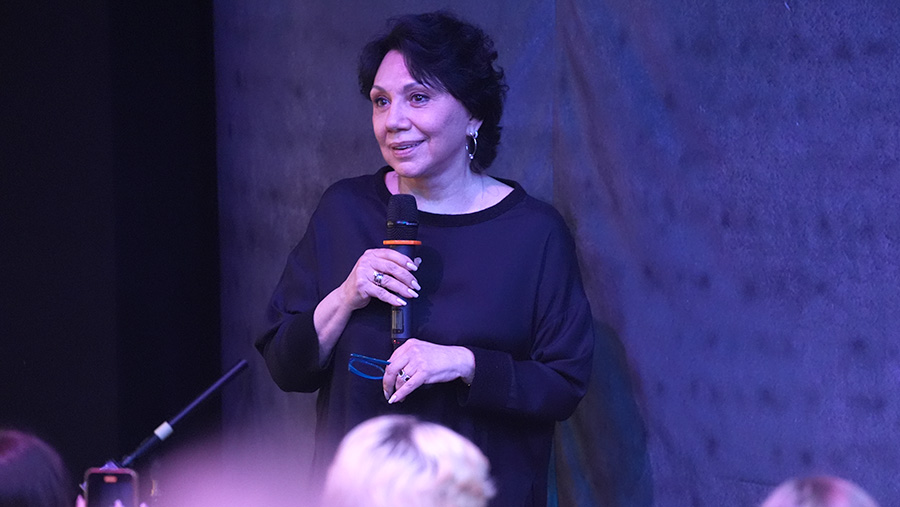
There was also a festive mood in the lobby before the performance began. The audience was anticipating not only an interesting spectacle, but also the appearance of the artistic director of the theater. Teresa Durova's birthday is on the same day as Yesenin's.
"Sergei Alexandrovich and I have a lot in common," Durova smiles. — While creating the play, we lived, immersed ourselves, and fell in love with Yesenin and his sense of our lives. The production was created by the same team that made Mayakovsky, Mozart and Salieri, production designer Maria Rybasova and costume designer Victoria Sevryukova. This is a very important premiere for us.
Whatever they called Yesenin: the last poet of the village, the bully, the Ryazan Lel, even the Iron Mirgorod. And his fans considered him the embodiment of the Russian soul. So who is he really? A provocateur who fueled interest in his work through outrageous, romantic, glorifying the beauty of Russian nature, a patriot who keenly felt the tragedy of the era?
The author of the play was Artem Abramov. Through the poet's entourage, his contemporaries and admirers, he created a collective image of Yesenin. The poet is not among the heroes of the play, but his name does not leave the lips.
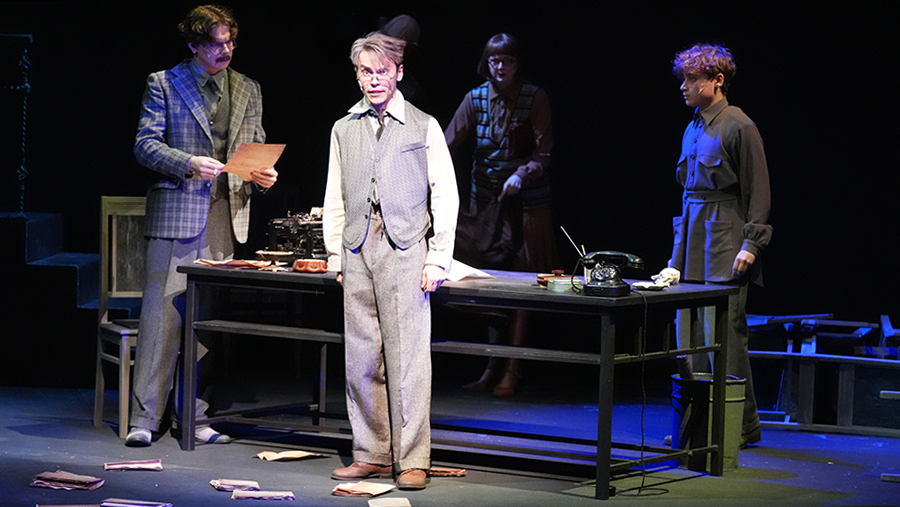
The action takes place in the basement, which is occupied by the editorial office of the newspaper Krasnoe Segodnya. The hysterical editor-in-chief (Egor Komarov) rushes around the dark hall in a fit. At night, Yesenin and Marienhof were here at the back of the printing house, they read poetry and insisted that it should be printed in every issue. Over the objections of the editor-in-chief, the company trashed the editorial office. There are manuscripts scattered on the floor, glue spilled, an ashtray with cigarette butts, and toppled furniture. And in the morning, when the editorial staff began to gather at work, there was no limit to the editor-in-chief's indignation. He raged and screamed: "Are there any writers who don't need an editor-in-chief?" And he answered it himself: "Yes! Yes! And their name is geniuses. But they will only be found out about them when they die!"
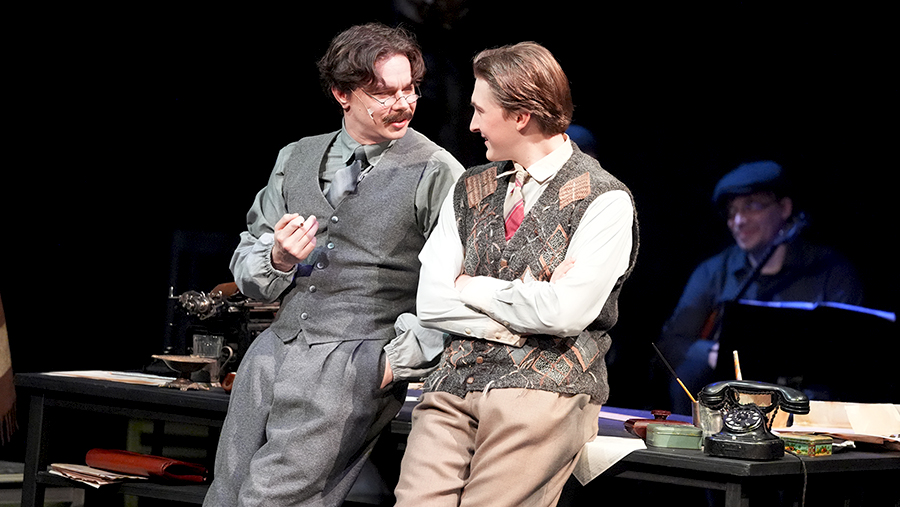
To feel omnipotent with a proofreader's pencil is the great fortune of mediocrity. And they don't hide it in the play. A diverse audience gathers in the basement of the editorial office to discuss the latest news and gossip. Yesenin is on the agenda today. The names of recognized and unrecognized writers come up in conversations — Gorky, Severyanin, Bunin, Shershenevich, Annenkov, Mayakovsky, Klyuev, Kruchenykh ... Some of them will receive honors in the future, generations will read their books, and someone's writings will be covered with dust, and the names will sink into oblivion. Yesenin will be signed to Khokhloma. And he was naughty and scandalized, in order to burn brighter.

"This is not our scandal"
His name is overgrown with rumors and myths. There is even a conspiracy theory about his death. There is still no consensus on whether the poet committed suicide in a room at the Angleterre Hotel or whether it was an organized murder. Fans believe that their idol was helped to pass away. He was too bright and bold. The creators of the play do not believe in Sergei Alexandrovich's violent temper. All this is an overblown gossip of ill-wishers, they believe. It's just more profitable to pass off outrage as an unbalanced nature, which could be the result of a tragic outcome. But the fact that the genius did not disdain "Smirnovka" and "Zubrovka" is not excluded. The times were not easy.
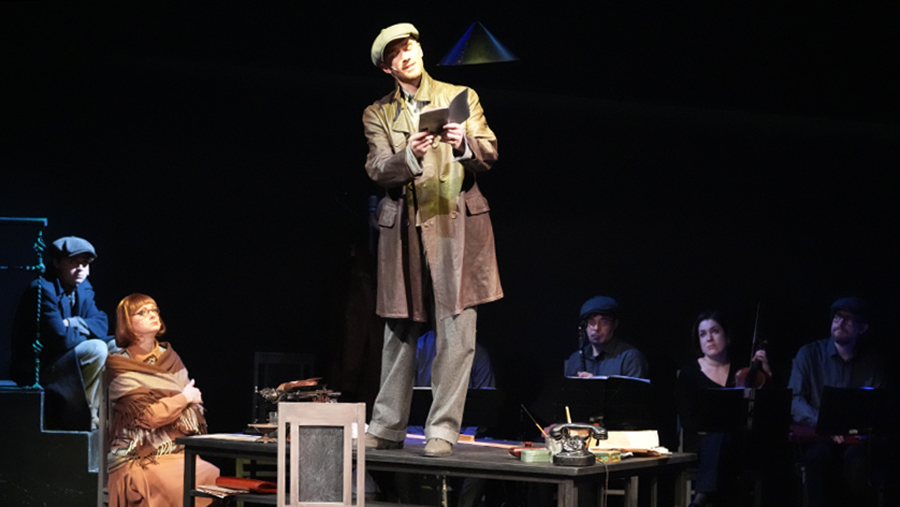
Then Yesenin's twenty lines about nature, the countryside, and cows could have gone into the basket, because the editorial staff thought: "This is not our scandal."
The play juxtaposes hypocrisy and divine providence, anachronisms and progress. "You thought Seryozha Yesenin was a harmless proofreader from a printing company, a free student at Shanyavsky University (in the fall of 1913, Sergei Yesenin entered the historical and philological department of the Moscow City National University. — Ed.), a simpleton, a naive guy, a redneck? — the editor-in-chief is indignant. — He had a nickname Set, his friends had a Horse and a Stump, they rented a room in Sokolniki, from where the detectives took them. And why? Unreliable. Silver Age poets, futurists, imagists, and symbolists were not taken seriously by many. Not the police."
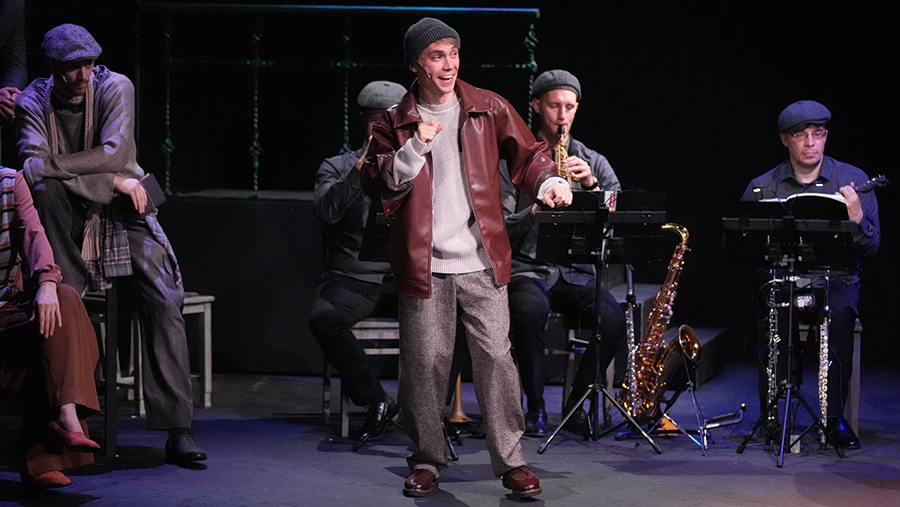
In the play, the characters, remembering the tales about Yesenin, ask themselves: why is everyone interested in who Sergei Alexandrovich fought with, how much he drank? Did they live well with Isadora Duncan, whom her friends called Tweety? Did they love each other? How much champagne did they drink? But what's the difference?
The answer to the curious is the poetry of genius. She is not only read in the play, but also sung.

We sang along to Yesenin
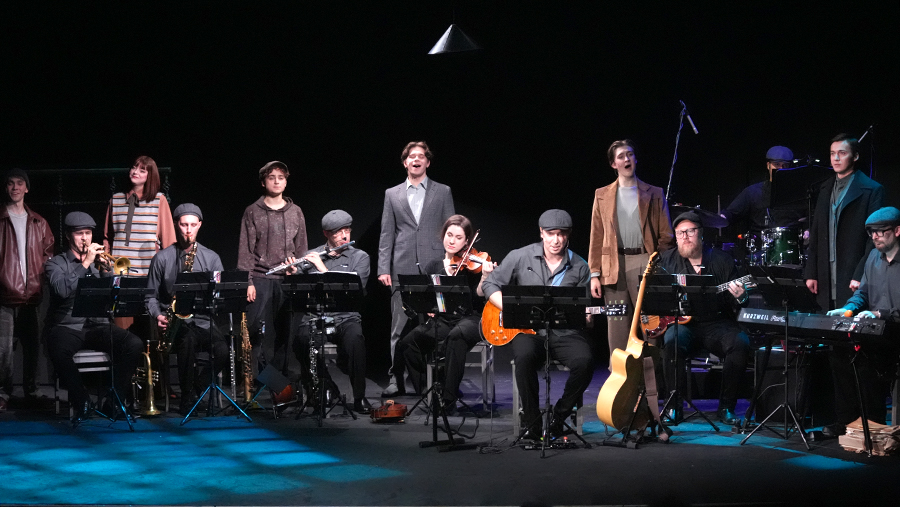
The musical component is very important in the performance. At some point, the "Orchestra of Conscious Citizens" appears on stage. The music for the production was written by Sergey Kondratiev, who is also the conductor and soloist of this band. He is called one of the best bass guitarists in Russia. Kondratyev even skillfully imitates the balalaika on his instrument. The orchestra has a strong brass group: Yuri Chevin, Konstantin Chobotok, Denis Melnikov, Grant Vartanov, Mikhail Brucheev. Violinist Sofya Vlasova adds tenderness to the design.
The performance is brutal in its composition. Only the actress Olga Nakudaeva is an absolute adornment of the men's company. She made the image of the editor-in-chief's secretary so subtly and ironically that, looking at her, you believe: on stage is a zealous, ideological and yet romantic person from the time of the young Soviet republic.
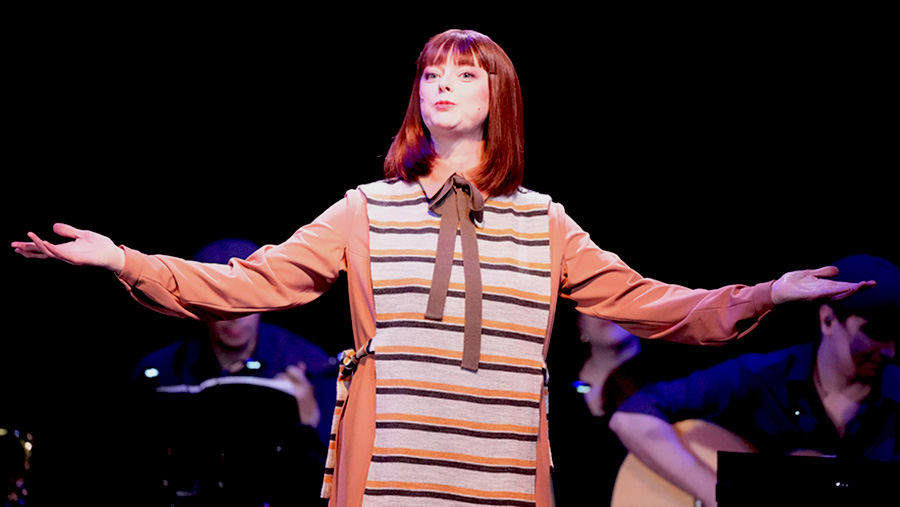
The editorial staff can guess the images of Maxim Gorky, Anatoly Marienhof, Yuri Annenkov, Igor Severyanin, Vladimir Mayakovsky. The cast includes Maxim Buber, Danila Teplov, Daniil Islamov, Vladislav Savchuk, Pavel Povalikhin, and Sergey Batov. This is how the performance turns from portraiture into social satire.
In the finale, the characters try to find the answer to the question "Who is Yesenin? The answer is found in the poet's confessions: "I am God's pipe." Sergei Yesenin is also the spiritual father of many poets of the golden age of Soviet poetry, the so—called sociomajinists. For example, Voznesensky and Yevtushenko.
By the way, the play dispels the myth of Yesenin's ban. It was published in hundreds of thousands of copies — small collections and complete works. Everyone had a volume of Yesenin's poetry on their bookshelf. It has been read, is being read, and will be read.
Next time you can see the musical and poetic declaration of love by the actors of the Teresa Durova Theater on October 30 on the Small Stage.
Переведено сервисом «Яндекс Переводчик»
