"A class of consumers of the domestic component base has matured in the country"
- Статьи
- Science and technology
- "A class of consumers of the domestic component base has matured in the country"


Russia is developing technology for laser charging of satellites and devices that allow studying living tissues with a resolution of up to nanometers. Sergey Ivanov, Director of the A.F. Ioffe Institute of Physics and Technology, Doctor of Physico-Mathematical Sciences, told Izvestia about these and other advanced developments. The meeting with him took place on the sidelines of the Microelectronics 2025 Forum.
"The Institute is developing technologies for laser recharging of small satellites in space"
— Sergey Viktorovich, what does the Microelectronics Forum mean for the country?
— This is a large-scale event, which is being held for the 11th time. More than 4,000 people from 1,100 organizations are expected to take part in the current forum. Its key role is to bring together industry representatives: scientists, entrepreneurs, corporate executives, and government departments. Such interaction creates a powerful incentive for development.
Nobel laureate Zhores Alferov said that science needs industry as a direction for applying fundamental research. Russia has gone through an era when the work of scientists was not in demand. However, now a class of consumers of the domestic component base has matured in the country. This moves science forward. The Forum was one of the factors that determined these changes. And here it is important to note the inspiring and coordinating role played by the President of the Russian Academy of Sciences, Gennady Krasnikov, a student and colleague of Zhores Alferov.
— Give examples of practical applications of Russian developments in the field of microelectronics.
— Take, for example, laser technology. These include lidars, which are the "eyes" of unmanned vehicles. They provide them with an overview and an opportunity to avoid obstacles. Such devices are a combination of light sources (lasers), its receivers (photodetectors) and energy converters of photons (light particles) into electrical signals. All these devices are part of the developments of the Ioffe Institute of Physics and Technology.
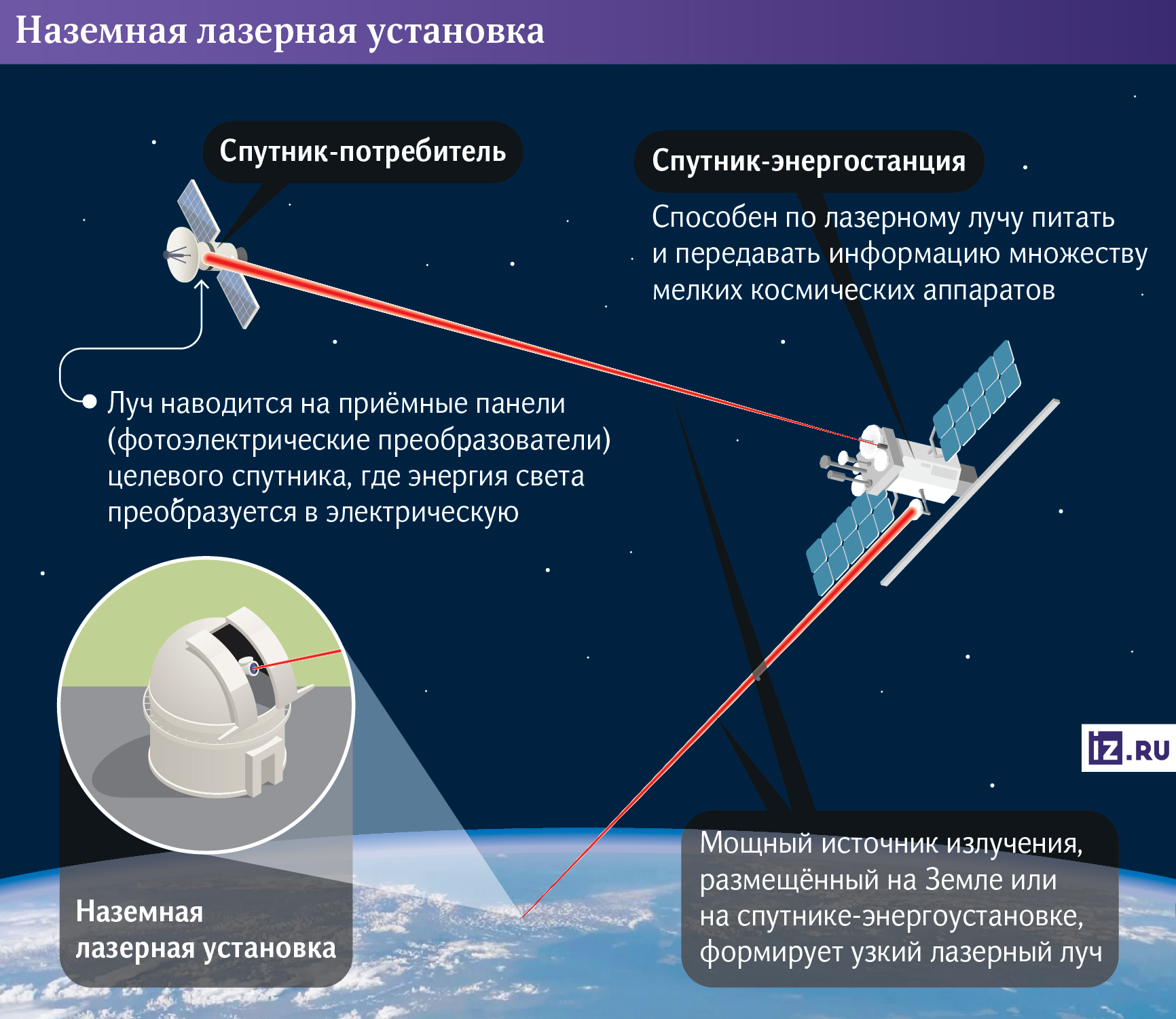
Another example. The Institute is developing technologies for laser recharging of small satellites in space. This technology works on the principle of wireless power transmission. Its essence lies in the following: a powerful radiation source located on a satellite power plant forms a narrow laser beam. This beam is aimed at the receiving panels (photovoltaic converters) of the target satellite, where the light energy is converted into electrical energy. The principle is similar to the operation of solar panels, but with higher efficiency. An information signal can be transmitted in a similar way.
— Where else are laser technologies in demand?
— They are widely used in spectroscopy, the study of substances and gases by analyzing the spectrum of absorbed electromagnetic waves. For example, by absorbing infrared rays invisible to the eye in the range of 2-5 microns, it is possible to determine the content of certain molecules of a substance in the medium through which they are passed. This requires a second component of the system, a photodetector tuned to the same wavelength as the source that captures the light. Such dual devices are called "optocouplers".
Various devices are created on their basis. For example, to determine the concentration of harmful impurities in the air. As an example, we can cite CO2 detectors developed at FTI and manufactured by IoffeLED LLC, which were used to equip artificial lung ventilation devices during the COVID-19 epidemic (manufactured by Triton Electronics LLC).
These sensors detect the level of carbon dioxide in a person's exhalation, which helps doctors fine-tune ventilators for proper gas exchange in the patient's lungs. Also, the CO2 level can signal the critical condition of the patient. Such as a drop in blood pressure, blockage of blood vessels or metabolic disorders.

"Sensitive devices have been developed for remote detection of leaks in gas pipelines"
— What other developments are being conducted in this direction?
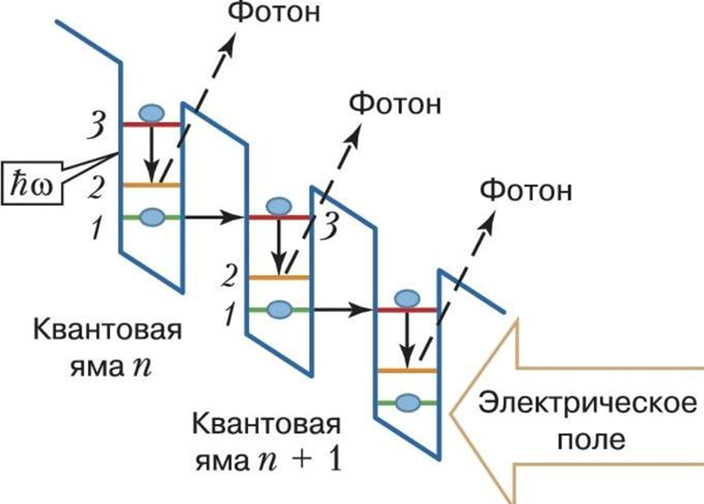
— The advanced direction is the creation of optocouplers based on quantum cascade lasers. In them, unlike conventional semiconductor directional light sources, electrons pass through many successive "steps" — quantum wells (nanometer layers of semiconductor heterostructures, where the electron energy is lower than in the surrounding layers) — and in each of them emit photons due to transitions to lower quantum levels. The result is powerful, efficient radiation sources that operate at room temperature in the mid-infrared region of the spectrum. This range is not available for conventional diode lasers.
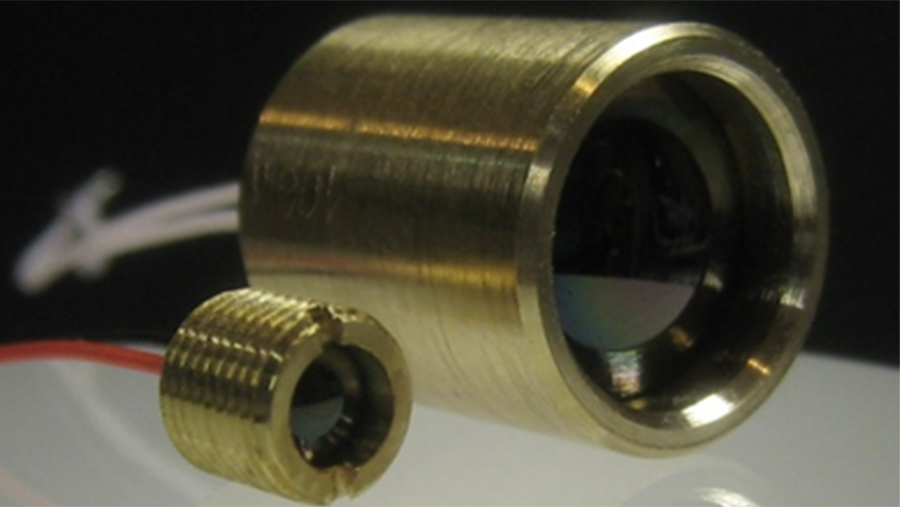
PHTI aims to develop optocouplers based on quantum cascade lasers for remote operation at wavelengths of 4-5 microns. The spectral absorption bands of most molecules of natural and man-made gases are located in this range.
Currently, important encouraging results have been obtained here. In particular, sensitive devices have been developed for remote detection of leaks in gas pipelines. They record the concentration of methane two times lower than the maximum permissible.
— How are optical detectors better than traditional chemical detectors?
— Devices based on electrochemical reactions are gradually saturated, so they require either constant heating or regular regeneration. In contrast, optical systems are more compact, do not wear out during measurements, and can operate without replacement for a long time and, as already mentioned, remotely. In addition, they carry out measurements instantly, without wasting the time required to undergo a chemical reaction. At the same time, optical devices provide high accuracy by identifying the target substance by its unique spectral fingerprint.
Optical devices are more convenient for medical purposes, as they allow analysis to be performed instantly and without damaging the tissue. For example, to determine blood glucose levels, blood samples were first taken, placed in a chemical analyzer, and tested. Now, for these purposes, it is enough to place a finger in an optocoupler device that is tuned to a wavelength of 2.1 microns.
"Spectroscopic diagnostics will make it possible to track the effect of the drug on malignant tumors at the cellular level"
— Tell us about photonic developments in the biomedical field.
— As an example, we can cite the creation at the Ioffe Institute of Physics and Technology of a breakthrough technique for studying living cells using optical spectroscopy with high spectral, spatial and temporal resolution, which were previously used only for studying solids. The technique allows you to see the slightest and instantaneous changes in the chemical composition of cells on a scale of up to several nanometers (one billionth of a meter) and several picoseconds (a trillionth of a second).
Optical high—precision tomography based on this technique will be in demand, in particular, in oncology - to study in vivo tumor cells and the effects of drugs and various radiations on them. For example, now in Russia, and in particular in St. Petersburg, a consortium of scientific research organizations is developing a "vaccine" against cancer — a biological product that is manufactured on the basis of tumor cells of a specific person. They are copied in the form of messenger RNA, which is injected into the body as an antigen to activate the immune system. Significant progress has been made in this area. In particular, there are cases of rescue of people with 3-4 stages of the disease.
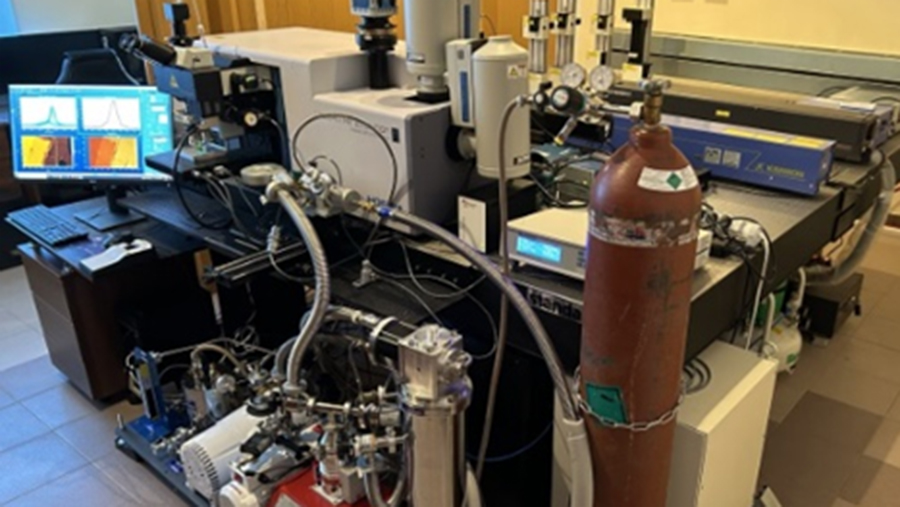
In each individual case, our proposed spectroscopic diagnosis will allow us to track the effect of the drug on malignancies at the cellular level and, if necessary, adjust treatment, as well as diagnose the disease at an extremely early stage. These developments are being carried out jointly with the Institute of Cytology of the Russian Academy of Sciences and the N.N. NMITS of Oncology. Peter the Great.
— What else are quantum cascade lasers used for?
— Since the mid-infrared range falls within the "transparency windows" of the atmosphere of 3-5 and 8-12 microns, such devices may be in demand for all-weather interference-proof laser communication between satellites and ground-based devices inside UAV swarms. In particular, by specialists of the FTI named after. Ioffe and his partners have created lasers with a pulsed power of more than 20 watts, which exceeds the current world level.
In the future, such devices will make it possible to transmit hundreds of gigabytes of information per second via laser communication. For example, satellite images in high resolution and in real time. In addition, such power improves the quality of data transmission and opens up opportunities for long-range communication, including with spacecraft in deep space. It is noteworthy that unlike the vast majority of high-power lasers operating in these spectral ranges, which require cryogenic cooling, the quantum cascade lasers being developed at FTI can operate at room temperature. KKL developments are carried out by us jointly with Connector-Optics LLC, M.F. Stelmakh Research Institute of Pol and NPP Injection.

"Quantum dots are one of the promising platforms for the development of quantum computing"
— Tell us about your work in the field of quantum technology.
— In this direction, the institute has created devices with InGaAs quantum dots (based on indium gallium arsenide), sources of single photons at a wavelength of 750-900 nanometers. These wavelengths are used in polymer optical fibers, which are used in quantum computing systems — simplified, "quantum computers".
Unlike lasers, which emit a stream of light particles, quantum dots generate exactly one photon (a quantum of light) in response to an exciting optical or current pulse. The development efficiency was over 70%. This means that when 10 pulses are applied, exactly one photon is emitted in seven cases. At the same time, these particles are identical and indistinguishable from each other.
At the same time, the intensity of generation was 1.5 times higher than commercially available imported solutions. Thus, advanced import substitution has occurred, when inaccessible analogues are replaced by more efficient domestic development. Such quantum dots are one of the promising platforms for the development of quantum computers.
— Are quantum dots also used in communication systems?
— Yes, experimental single photon sources with an efficiency of 22% have been developed in this direction, which is nevertheless twice as good as world analogues.
These quantum dots operate at wavelengths of 1.55 microns, the "transparency window" of quartz fiber used to build Internet highways. Therefore, such devices can be easily integrated into the existing fiber-optic infrastructure to create a quantum Internet and quantum communication systems.
PHTI scientists have achieved a number of technological solutions in this area that have made it possible to create single photon sources on the gallium arsenide (GaAs) platform, a cheap and well—developed technology for manufacturing microwave electronics components by domestic companies. This opens the way to the mass production of such single-photon sources.
Such devices are promising primarily in secure cryptographically secure data transmission systems. They make it possible to encode light information in a fiber—optic cable by generating complex keys - random sequences of quantum codes that are transmitted along with the encoded information. Any attempt to intercept such information will be accompanied by the loss of photons from the code sequences, indicating external interference.
The development will be in demand for the Moscow-St. Petersburg quantum optical backbone and other planned quantum communication lines.
Broadband amplitude and phase optical modulators based on lithium niobate, also developed and manufactured at our institute, are currently installed on this highway every 70 km. But so far, it uses semiconductor lasers with a strongly attenuated intensity rather than quantum dots as photon sources.

"Testing grounds will eventually help to create world-class equipment"
— What measures are being taken to ensure that scientists' developments are used in practical devices?
— Currently, the construction of the PHTI R&D center is nearing completion. The center will start operating at the end of 2026. It remains to retrofit all production facilities and clean rooms with the necessary engineering systems. The project readiness is 85-90%. Its main task is to accumulate photonic and electronic developments of Phystech. Ioffe and bring them to the level of industrial implementation.
On the basis of this structure, within the framework of the federal project "Personnel Training and the Foundation of the Electronic Industry", a Center for a modern import-substituting heterostructural electronic component Base is being created on the basis of the A.F. Ioffe Institute of Physics and Technology (Ioffe ECB Center).
The program's financing — about 6 billion rubles — will allow the purchase of modern technological and diagnostic equipment and the creation of technological production lines for small series of various electronic and photonic electronic devices localized in Russia.
— At what stage is this project?
— About 60% of the equipment has been purchased now. In total, about 80 units of equipment will be purchased. At least half of them are of domestic production or from the Union State. The ECB Ioffe Center will create modern full—cycle lines, from the growth of crystals and heterostructures to the production of ready-made packaged photonic and electronic devices. Such as heterolasers of various types, cascade solar cells, photodetectors, devices for wireless transmission of information, various sensors and detectors, and much more.
In addition, the Ministry of Industry and Trade of the Russian Federation is launching a program to create testing grounds for products of the domestic electronic industry. One of them will be created on the basis of the ECB Ioffe Center, and the other — the National Research University "MIET" in Zelenograd. Their task is to conduct independent expert testing and refinement of new domestic equipment. Such testing grounds will eventually help to create world-class equipment.
Переведено сервисом «Яндекс Переводчик»
