I want to return to the town: the commune of artists has become a museum


Igor Grabar's former workshop and kindergarten for children of painters have turned into a museum center. "Maslovka. The Town of Artists is a new institution offering to look at the Soviet art heritage from an unusual angle: through the place of creation and the circumstances of the authors' everyday life. The exhibition includes about 200 works, mostly from the collections of the creators themselves and their heirs. But the main thing is that these things are located literally in the place of their birth. Izvestia was among the first to visit art.
The Commune of the Great
The artists' town was conceived by Maxim Gorky and Igor Grabar back in the 1920s and became the embodiment of the early Soviet idea of a commune - a place where representatives of the same profession should live and work in close partnership. The first, in the early 1930s, was a six-story constructivist building (now Verkhnyaya Maslovka, 9), where Grabar himself settled, as well as Vladimir Tatlin, Pavel Radimov, Alexander Tyshler, Georgy Nissky and many others, now considered absolute classics. Their apartments were adjacent to the workshops.
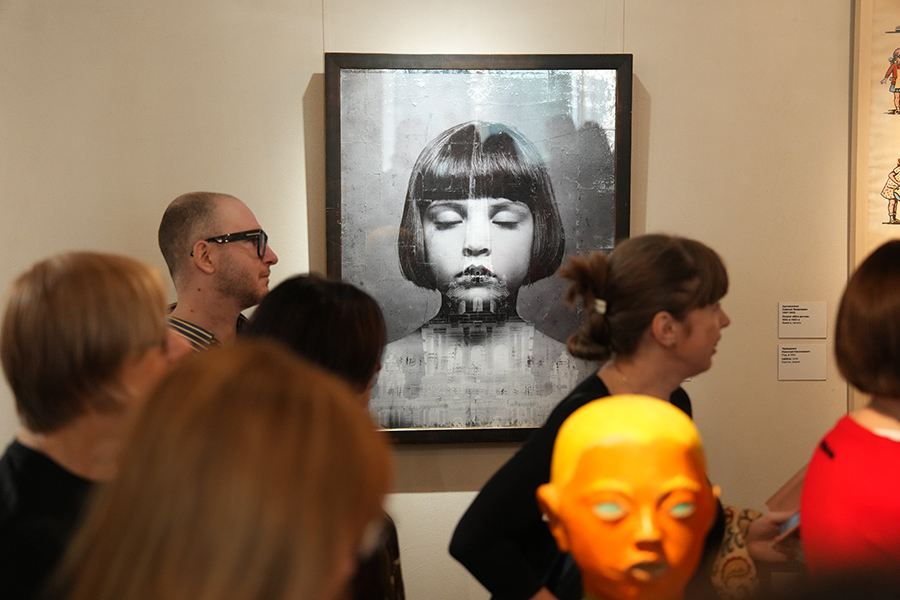
Later, several more houses grew nearby. Among them is a sample of the Stalinist style at Verkhnyaya Maslovka, 3. Geliy Korzhev and Alexey Gritsai settled in it, the same Grabar and a number of artists of the following generations worked there. There was also a kindergarten, and the wives of the painters were the teachers in it. It's almost a family story. A curious detail: there was a pub nearby, where exhibitions eventually began to be organized — regular customers liked to drink on loan and left their paintings as collateral.
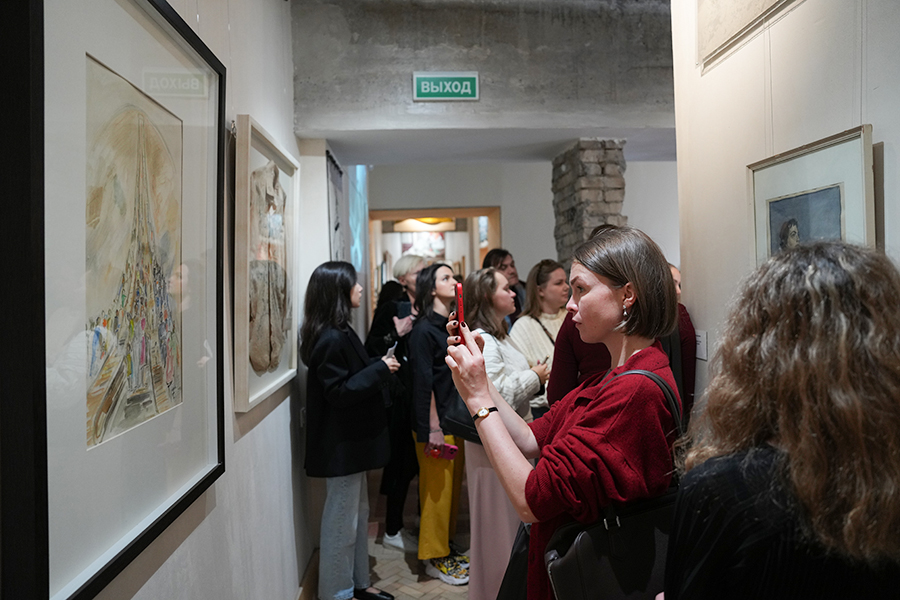
And now a museum space has been opened on Verkhnyaya Maslovka 3. Part of the exhibition is located in the hall that was Grabar's workshop, part is in the corridor, and another block is in the room of the kindergarten itself, which functioned, by the way, right up to the 2010s. The first project is called "The (Not)Visible City of Moscow," and it is a group retrospective of artists who lived and worked on Maslovka. Despite the relative closeness, there are a lot of works of art here: about 200. The decision to make a dense hanging can be criticized for being out of date, but that's the idea itself: not just to show things, but to create the feeling that you have come to visit the artists.
The virus of creativity
At the same time, this is not a memorial apartment recreating a specific moment in the life of its owner, who seemed to have left for a short time and would soon return, but a kind of collective image — a long motley story compressed into one total installation. Hence— the first thing that strikes me is the stylistic diversity and diversity of the art presented. There was a place for exemplary socialist realism (Alexei Gritsai's Portrait of a Wife and Son) and the quite avant-garde "Harvesting" of Maria Granavtseva, wife of Cubist David Shterenberg; and the Soviet impressionism of early Sergei Gerasimov and late Yuri Pimenov meets with the conceptualism of Irina Zatulovskaya and Ivan Chuikov.
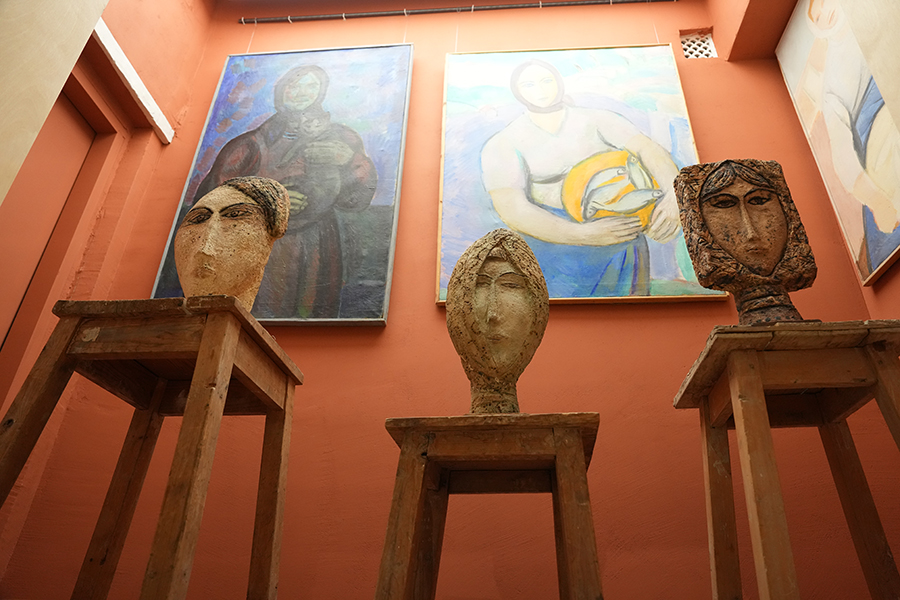
Chuikov, by the way, despite being a representative of unofficial art, has been associated with Maslovka since childhood. After all, his father is a Socialist realist, Stalin Prize winner Semyon Chuikov. His work, of course, is also being shown. As well as the works of his other son, Vasily. There are a lot of such family lines at the exhibition. Studying the exposition, at some point you start to think that everyone who was here went to the easel — wives, children, grandchildren. The virus of art was omnipresent on Maslovka.
And was it possible not to create if all the conditions were created for creativity? "Maslovka. The Town of Artists" is, of course, a story about the Soviet elite. Her characters lived and worked in completely different circumstances than the nonconformists who are so fashionable today, huddled in basements and rented village shacks. However, the juxtaposition of official and unofficial art turns out to be by no means so unambiguous when you see the works themselves created by members of creative unions and award winners. The exhibition clearly shows that not only condor's socialist realism and portraits of Lenin and Stalin came out from under their brush. And there was no less inner freedom and creative drive at Maslovka than at Malaya Gruzinskaya, where authors who were not recognized by the authorities were exhibited.
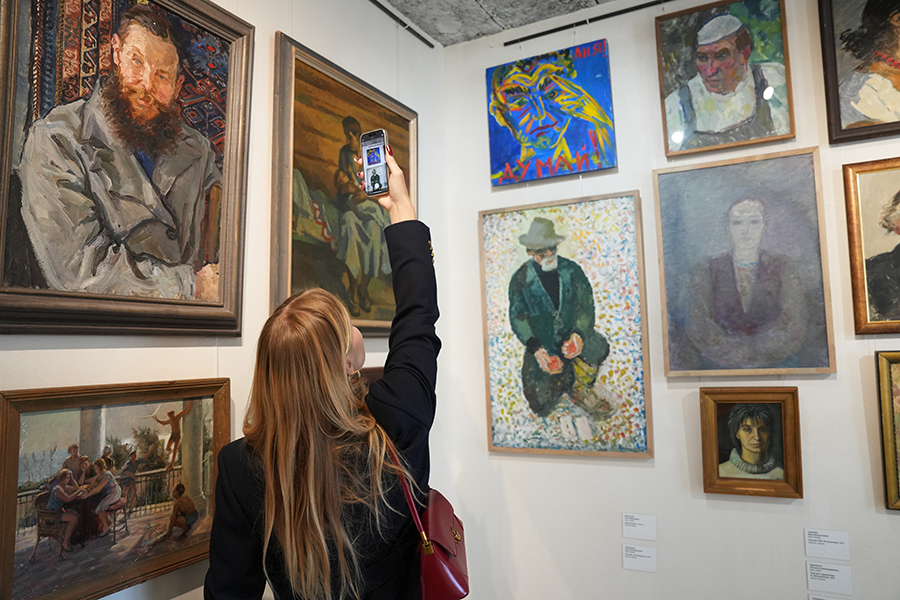
Of course, this is largely the result of the selection process carried out by Kirill Svetlyakov, who worked for many years in the Department of the Latest Trends at the Tretyakov Gallery. But the space itself has a different optics. For example, when you see dozens of portraits and self-portraits of artists who lived and worked in Maslovka in a small room, you inevitably perceive these images not only as works of art (sometimes beautiful, but sometimes very boring), but also as an opportunity to meet the owners and regulars of these places "face to face".
Take a look at the workshop
And if among the heroes there is such a colorful character as, for example, Nina Vatolina, whose appearance is known throughout the country for the poster "Don't talk!" (there is a version that she painted herself), are the artistic merits of the early picturesque self-portrait of Vatolina presented in the exhibition so important? We see a vaguely familiar female figure, we encounter her prickly gaze, which makes us remember a masterpiece of mass agitation, and it becomes clear that it was here and precisely these people who created history, not only of high "museum" art, but also of the country as a whole.
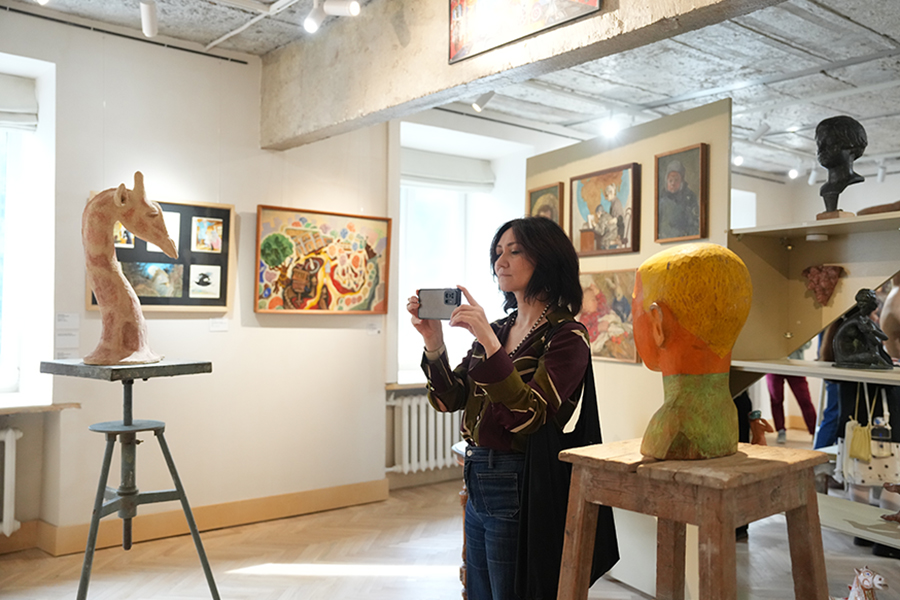
But, however, there is no pathos here. On the contrary, you get the feeling that you are on equal terms with the famous inhabitants of Maslovka. You see their way of life, their humor (for example, Korzhev depicted the same pub, and Tyshler decorated his friend's shirt in a friendly way) and even failures. In 1973, Vasily Nechitailo invited the superstar of Soviet cinema Tatyana Doronina to pose for his portrait. But the resulting sketch on canvas clearly did not inspire the diva — she did not come to Maslovka anymore. The painting could not be completed. What should I do? Use a turnover to represent a Cossack. Why should the canvas disappear!
Now this thing is suspended in such a way that both sides can be viewed. And the incompleteness of the first one only reinforces the feeling that we are in a workshop where work is still going on.
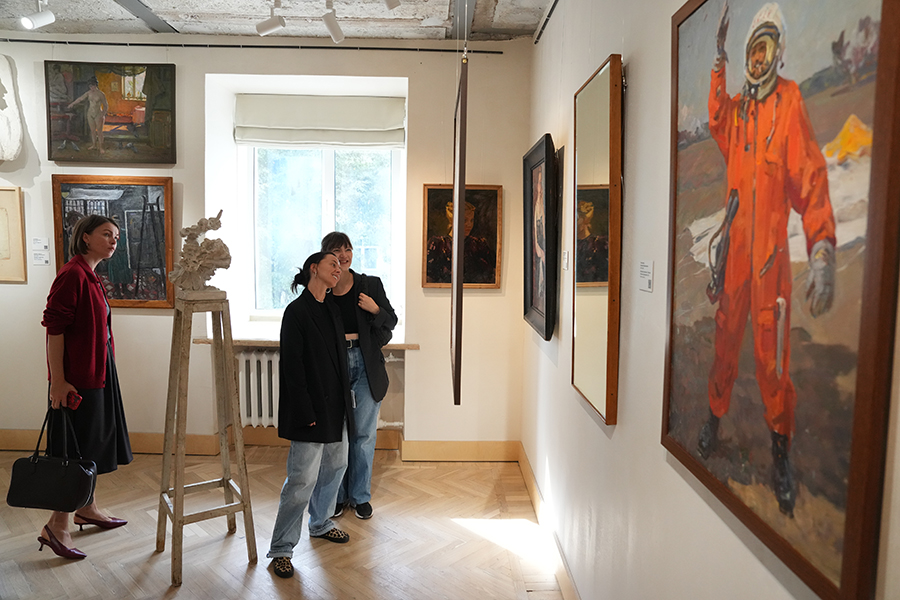
Artists still live and work in Maslovka. So, it is quite possible that after some time, art will appear in these halls, which is being born right now, while the first viewers are watching the exhibition "The (Not)visible City of M." Kirill Svetlyakov told Izvestia that the exposition will be updated: part of the current space will become a space for temporary projects, some will be more stable, but even there, a certain rotation of works is expected, since many of them are in temporary storage and will be returned to their owners. Well, that's how it should be in a real workshop. Things come and go, but the creative spirit remains.
Переведено сервисом «Яндекс Переводчик»
