
Highway to Hell: How Germany became Nazi

On September 15, 1935, the so-called racial laws were passed in Nuremberg, which went down in the history of the twentieth century as the Nuremberg laws. In the country that Adolf Hitler had led two and a half years earlier, people were divided into the highest and lowest categories. Germany legally became Nazi. Thus began one of the most shameful and repulsive pages in the history of Europe. The Nuremberg laws were in effect for a relatively short time: less than ten years. But the grim phenomenon of the Third Reich associated with them will always arouse the increased interest of posterity. Details can be found in the Izvestia article.
The Hitler Doctrine
After the successful 1930 Reichstag elections for the National Socialist Party, the SA stormtroopers felt their strength and began to organize pogroms. At that time, optimists believed that this scum was a temporary, ugly phenomenon, and that once in power, Adolf Hitler would abandon radicalism. Moreover, his relationship with the leaders of the stormtroopers was far from ideal. Indeed, in the first years of his stay in power, Hitler balanced, tried to alternate outbreaks of pogrom nationalism with some lull. In 1934, there was a strange trend: Jewish families who had emigrated in the early 1930s began to return to Germany. They believed that German life was returning to a civilized rut, and Hitler's Nazism would be something like the Mussolini regime in Italy. It was a cruel mistake.
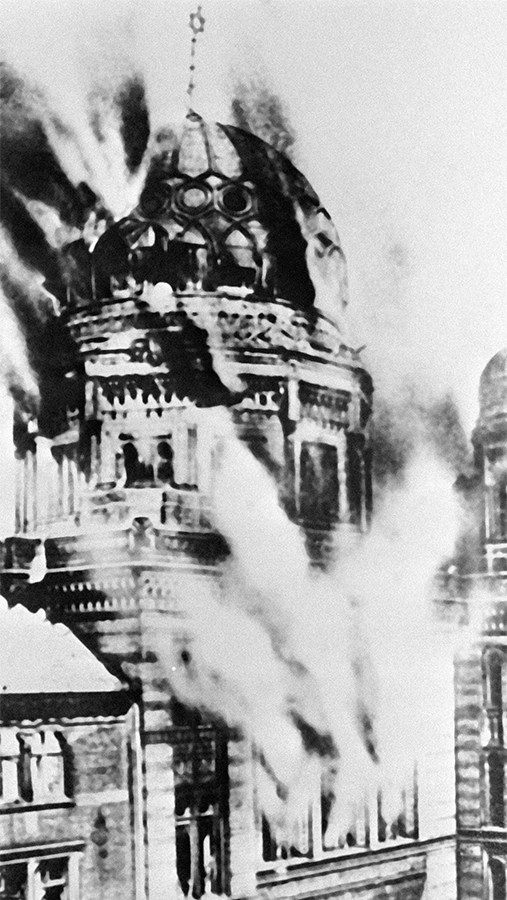
Joseph Goebbels responded to these events as follows: "Jews are trying to walk our streets again, but they must understand that they are not like us." The press shouted that non—Aryans who had nothing to do with the Nibelungen genes were second-class people. At that time, the Nazis sought not to destroy the Jews, but to force them to leave Germany. On May 21, 1935, Jews were banned from serving in the army and police, and in the summer they were no longer allowed in cafes and restaurants. "Jews are not allowed to enter" — such signs appeared in cinemas and clubs. Stormtroopers and SS men organized pickets near shops and businesses owned by Jews. These events escalated into noisy pogroms...
Hitler's conspiracy theories about history and political life were initially based on anti-Semitism. He spoke about the Jewish roots and the pro-Jewish course of British imperialism and the Soviet Communist Party. Hitler associated the restoration of order in the country primarily with the infringement of Jewish business and financial circles in favor of German capital. Few people did not imagine what bloody forms this process would take. As for his international reputation, by the mid-1930s, Hitler was viewed negatively in most countries of the world: some with caution, some with ridicule, and some with contempt. But it was only in the Soviet Union that Nazism was fought at the state level. And for Hitler, Moscow was an enemy with whom compromise was impossible. He had various reasons for this: first, he considered the Slavs to be inferior people, "untermensch." In Hitler's book "Mein Kampf" there are many discussions on this topic. Secondly, he hated the communist idea and declared a war of annihilation against it. In this confrontation, the Nazis were ready for any means: from slander to mass purges.

The anti-Jewish boycott of German Jews by the Nazis, 1933-1934
How did the Nazis charm and "buy" Germany — at least a significant part of the Germans? One of the factors can be defined as: they played on the base passions inherent in human nature. Based on the idea of violence, one's own superiority. Finally, on the idea of revenge after the bloody and unsuccessful First World War for Germany, which led to a long-term economic and moral crisis. Hitler offered a "magical" recipe for recovery — through the merciless exploitation of representatives of the "lower races." And he pointed out those responsible for all the misadventures of Germany and the Germans — first of all, the Jews. But also the British, Slavs, and French...

The Nuremberg Gathering
Since the early 1930s, the legislative consolidation of racist ideology has been one of the main goals of the Nazis striving for power. Although, as a rule, for tactical reasons, they did not advertise this installation. The Nazis were preparing a global reorganization of the world — and they began by giving their paranoia the status of law.
In September 1935, the traditional annual NSDAP congress opened in Nuremberg. It went down in history thanks to the racist laws it passed. They show most vividly how the country of Luther and Goethe fell into barbarism. Hitler had previously dubbed this gathering the "freedom congress." This meant, first of all, the liberation of Germany from the installations of the Peace of Versailles in 1919. Berlin rejected the restrictions on the development of the army and the military industry, which determined the politics and economy of Germany after the defeat in the First World War. The documentary film dedicated to the congress was called "Freedom Day. Our armed forces."

Adolf Hitler announces the Nuremberg Laws, 1935
The congress was accompanied by crowded theatrical processions, which aroused fanaticism and exaltation in society. Hitler delivered a furious speech in front of tens of thousands of people gathered in the square. His speech was broadcast on the radio throughout Germany. He talked mainly about the prospects of Germany's military strengthening. The Fuhrer's words conveyed the idea of German racial superiority, but at first there was no detailed discussion of racial laws. Hitler was wary of this reform. At that time, he was still interested in world public opinion, so the Fuhrer of the Third Reich rejected the most radical projects of legal infringement of representatives of the "lower races" — for example, the proposals of Otto Strasser, who insisted on the massacre of Jews and representatives of other nations, which the Nazis attributed to "subhumans." Hitler was preparing to shine at the Olympic Games, which were to be held in Berlin in 1936, and cared about his image in the eyes of Europe. Therefore, the Nuremberg laws turned out to be softer than the stormtroopers expected.
There has been no final decision yet. But it was in September 1935 that the Nazis opened Pandora's box, legalizing the criminal propensity for violence, which could now be justified by concern for the "purity of blood." A series of reprisals against violators of racial laws began in German cities. The Nuremberg laws legalized the street "right of the big fist." Soon, when the war began, the Germans demonstrated unprecedented inhumanity both on the battlefield, in the occupied territories, and towards the prisoners. Ethnic cleansing, the use of slave labor by representatives of conquered peoples — all this has become a tragic reality. The ideological justification for these crimes was the ideology that proclaimed Siegfried's descendants as superhumans who are allowed to do anything. And for those who were declared second—class people by the Nuremberg laws, there were two paths prepared - to a concentration camp or to the chopping block. This policy led not only to terrible consequences for everyone who was considered an opponent of Nazi Germany, but also naturally ended with the collapse of the Third Reich.
Wolf Laws
One of the developers of the "racial laws" was Goebbels. It is difficult to read these documents without physical rejection. "The Law on the citizen of the Reich", "The Law on the protection of German blood and German Honor"... An attempt to awaken the whole animal in people, stirring up inner cruelty and chauvinism. The following was specifically stipulated: "A Jew cannot be a citizen of the Reich. He has no right to vote on political issues, and he is prohibited from holding public office."
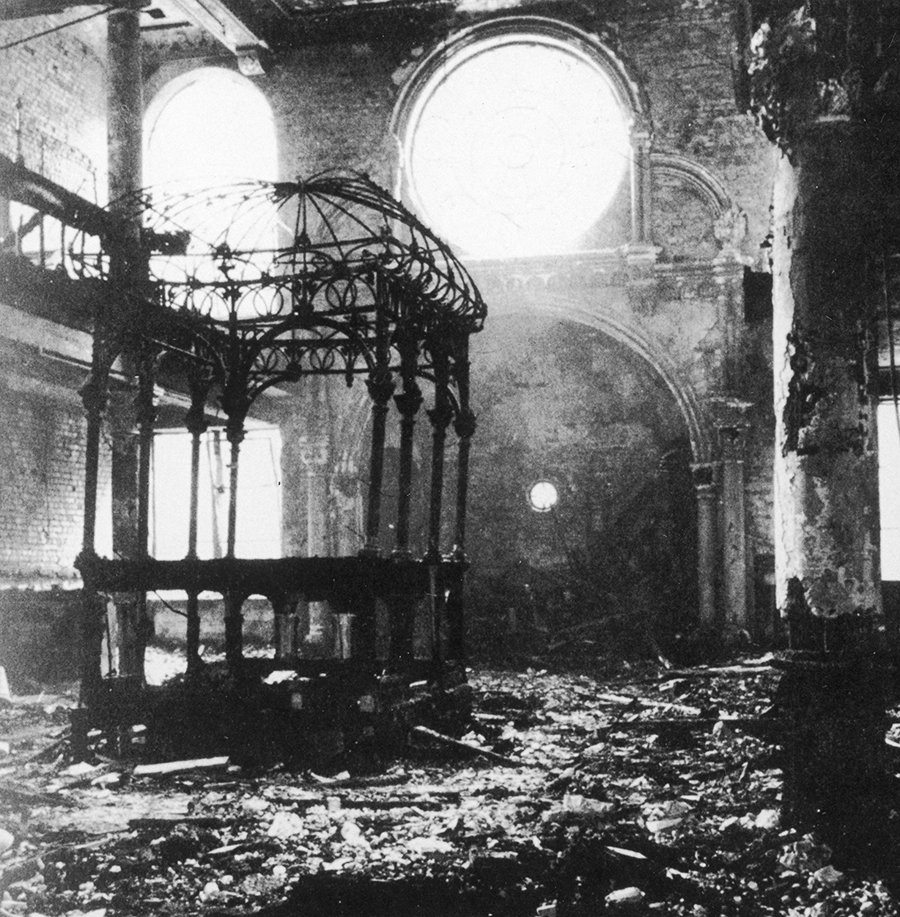
There have been outbreaks of anti-Semitism in world history more than once. But, as a rule, they were not related to racial principles, but to religious discord. Jews who converted to Christianity were not persecuted. The Nazis rejected this approach, declaring the Jews an inferior race. They attached great importance to the definition of an ethnic group. Representatives of the Jewish race were those who had three or four Jews in the second generation of their ancestors (including those who converted to Christianity). This was determined by German pedantry. By and large, the Nuremberg laws showed that such people had no place in Germany. From now on, only holders of German blood or related blood had civil rights. Moreover, they had proven their loyalty to the Reich, which meant that any political opponent of the brown government could be considered an enemy.

The Law on the Protection of German Blood and Honor prohibited marriages between Jews and German citizens. Such relationships were called racial pollution, and spouses or lovers were responsible for them. Moreover, Jews were punished more severely. There was even talk of the death penalty for associating with true Aryans. The laws proposed at the Nazi congress were approved by the manual Reichstag. The Nuremberg laws applied to both blacks and Gypsies. Time has shown that the laws of September 1935 were only the beginning of Germany's descent into darkness. The ideologists of the Third Reich continued to work on tightening these attitudes. Already in November, new provisions were added to the racial legislation.
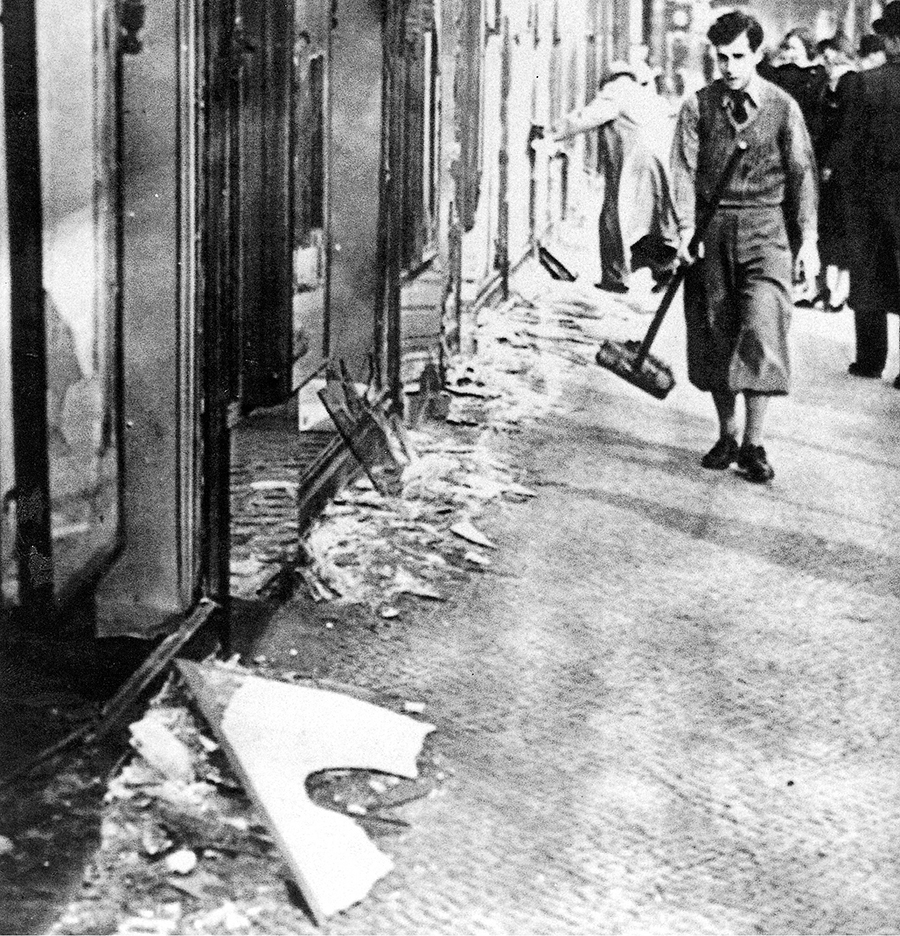
Can we assume that the Germans unanimously supported these misanthropic laws? By that time, a system of like-mindedness had developed in Germany, and all attempts to criticize the actions of the National Socialists were severely suppressed. The opponents were treated like enemies that must be destroyed, no less. But the saddest thing is that a significant part of the politically active Germans supported the initiatives of the Nazis. The country was being dragged into the vortex of Nazism.
The Nuremberg Lesson
The German events of 1935 are a hard lesson for the whole world. It turned out that not only immoral, but also self-destructive ideas can take hold of huge nations in a matter of years, causing mass euphoria. The Nazi leaders learned how to manipulate the mass consciousness to a hypnotic degree.
In liberating Europe from the Nazis, the Red Army and its allies swept away the criminal Nuremberg laws. And it was not for nothing that the trial of the Third Reich took place in Nuremberg. Germany has repeatedly repented of the crimes of the Nazis. But talking about responsibility for the past is usually hypocrisy. It is much more important to systematically create conditions under which the revival of the brown ideology is impossible. A serious understanding of this most dangerous phenomenon and the reasons that have turned racism into the ideological foundation of the largest Western European country is a task for today and for the future.
The author is the deputy editor—in-chief of the magazine "Historian"
Переведено сервисом «Яндекс Переводчик»
