The drone and the Lightning: Russian UAVs have learned how to destroy enemy large-caliber artillery
- Статьи
- Army
- The drone and the Lightning: Russian UAVs have learned how to destroy enemy large-caliber artillery


The operators of the Molniya drones began to specialize in the destruction of large-caliber enemy artillery. During the month, one of the units of the Dnepr group of forces hit more than 20 units of various military equipment and long-range guns of the enemy. The Izvestia correspondent visited the positions of a platoon of UAV operators commanded by an officer with the call sign Tourist, and saw how the drones were hunting for howitzers of the Armed Forces of Ukraine and avoiding enemy retaliatory strikes.
Hunting for a howitzer
The positions of the units of the attack drones of the 18th combined Arms army of the Dnepr group of forces are masked as carefully as possible. They are being hunted tirelessly by the enemy, and stealth is a matter of survival for them. It was not easy to find their location. But in the end, we find ourselves near the dugout of the platoon commander with the call sign Tourist.
The unit is extremely efficient. Only in the last couple of days, the Tourist's platoon has discovered and destroyed several large-caliber enemy guns.
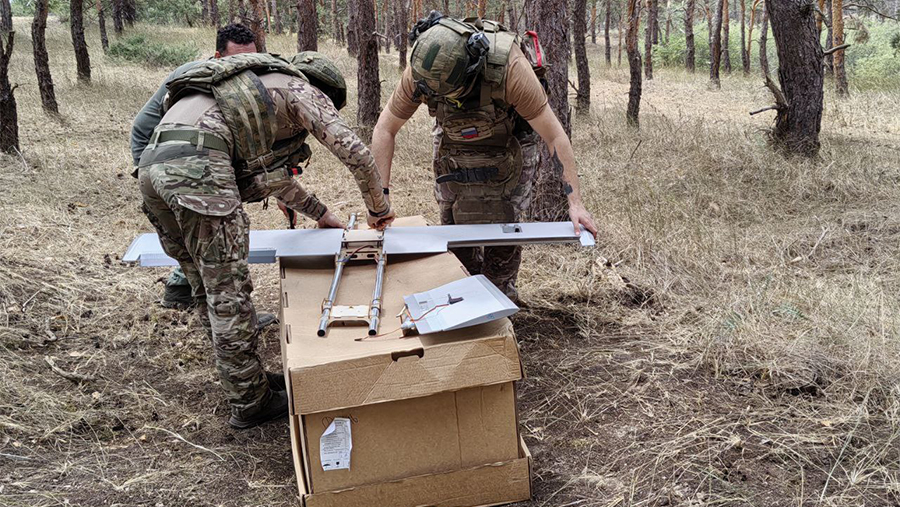
"Their howitzer was firing at our positions yesterday," he says. — We found it and immediately worked on it with Lightning. This process takes about 15 minutes. We try to ensure that the strike aircraft is always assembled and ready for operation. Yes, it happens that they just end. But this is a very rare case.
Over the past month, the Tourist's drones have destroyed about 20 copies of various enemy equipment and guns.
A well-coordinated team
There are almost 30 people in the platoon. Some of them are engaged in reconnaissance, while others operate attack drones. They are armed with FPV drones and Lightning aircraft—type attack UAVs.
— We identify all possible targets for our artillery and other weapons. Of course, we also work with Lightning ourselves," says the Tourist.
In this composition, the commander notes, the drone breeders have been fighting for more than a year and a half.
— I have sergeants who are engaged in organizing interaction and preparing the drone operator's workplace. Accordingly, they report everything to me, we discuss something, if there are comments, they are corrected. After that, combat work is underway. Such an algorithm may seem like a lengthy process. In fact, everything is done very quickly and efficiently. We have gained a lot of experience," the commander emphasizes.
The team is as disciplined and well-coordinated as possible.
— We have our own rules and procedures for communication. This is in addition to the general military principles. We follow all these rules, so we achieve good results," the Tourist notes.
Awards also speak about the effectiveness of the unit. The tourist, for example, was awarded the medal "For Bravery".
According to the Tourist, the Lightning drone is an extremely effective means of destruction.
— This is a unique design, — says the commander. — It has a payload of 6 kg. But depending on the range to the target, this weight can be increased. If the target is at a distance of up to 10 km, then the load can be increased to 10 kg. If you hang three kilograms on it, then you can fly very far. In the event that there is a strong headwind, we simply reduce the weight and work on the target anyway. The maximum range of the Lightning is impressive: specifically, we worked up to 40 km.
The enemy's tricks
— The enemy began to calculate us more often, — says the Tourist. — If earlier we could work with ten drones at a time, now we are releasing 2-3, no more, because the "response" is sure to arrive. Of course, we detect their drone launch points in the same way. But there are certain difficulties in this work.
The enemy is working on changing the signal strength.
— When launching the drone, it is small, — says the commander. — After flying a certain distance, they add it. That's when we start to see them, but we don't spot the launch sites.
He drew attention to another sneaky trick of the enemy. The APU installs so-called "jonics" on its drones.
— This is a programmable initiator for detonating the copter, — says the Tourist. — How does it work? They launch, for example, a copter with a charge embedded in it. He flies to us, for example, crashes into a wall, a tree, into a net and falls. Next, the calculation is that a person who does not know about such meanness picks up the drone, starts twisting it, twirling it. Well, the same "jonic" is set up, for example, for five coups. You turned it over four times, nothing happened. And on the fifth coup, an explosion occurs.
Enemy drones should not be picked up without their preliminary inspection by specialists, the Tourist strictly says.
"SVO is a big test"
The tourist served under contract from 2016 to 2020.
"At that moment, I decided to leave the army and try my hand at civilian life," the commander recalls. — Everything was good, I was working. But in 2022, freedom began. Several of my friends literally immediately found themselves at the front. Unfortunately, some of them died. At that moment, I decided to re-sign the contract and go on a special operation. My wife told me then: "I'm either with you or against you! I will not be against you, so let it be as you have decided." In general, she supported me.
According to him, it was hard to stay at home and pretend that nothing was happening.
— Anyway, I went to the military enlistment office and filled out the documents. After a while, the mobilization was announced, and I recovered on MY OWN," he says.
The first position is an infantry fighting vehicle gunner. Then there was the opportunity to qualify as a sniper. The tourist passed it and mastered this military specialty.
In the spring of 2023, the direction of the UAV began to develop dramatically. He was offered to test himself in this job.
"I liked it," he recalls. — I have completed a training course. Then the formation of a company of drones began, and I found myself in it.
In his opinion, one should not rush into a special operation right after school.
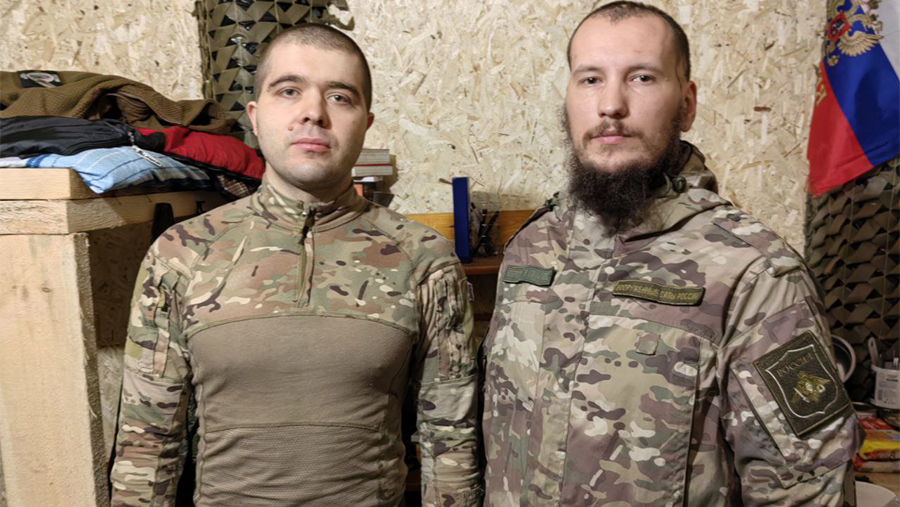
"In my opinion, a person should have a clear understanding of where they will end up," he says. — SVO is a big challenge, it's not a toy. It's going to be very difficult. A fighter should already be mentally prepared to come here and constantly improve, contribute to the overall victory. If there is such an understanding and attitude, then there are no questions. Everything will work out. If a person thinks to just earn extra money here and sit out somewhere, it will most likely end badly. It's not necessarily death. Mental health may be seriously impaired.
A copter-type platoon engineer with the call sign Photographer enters the conversation. His duties include preparing, mounting ammunition on the drone, preparing the launch position and then launching the copter.
— This whole process takes about 10 minutes. The ammunition that we mainly use is high—explosive fragmentation and cumulative," the fighter clarifies.
Answering the question of why he ended up in his homeland, he recalls his grandfather, a participant in the Great Patriotic War.
"I have no moral right to stay away," he says.
The photographer first joined the infantry, and after a while joined the drones.
"You know, there was no acute panic," he recalls his first impressions of the fighting. — It was more like curiosity. After that, when I happened to be under several enemy attacks, the picture changed somewhat. But it was more tempered than scared.
By radio, the Tourist receives a report on the discovery of a new enemy target. The drones don't have time to talk anymore, they need to do their job.
Переведено сервисом «Яндекс Переводчик»
