The expert spoke about the impact of the increase in oil production on the price of Brent and the Russian market
- Новости
- Economy
- The expert spoke about the impact of the increase in oil production on the price of Brent and the Russian market

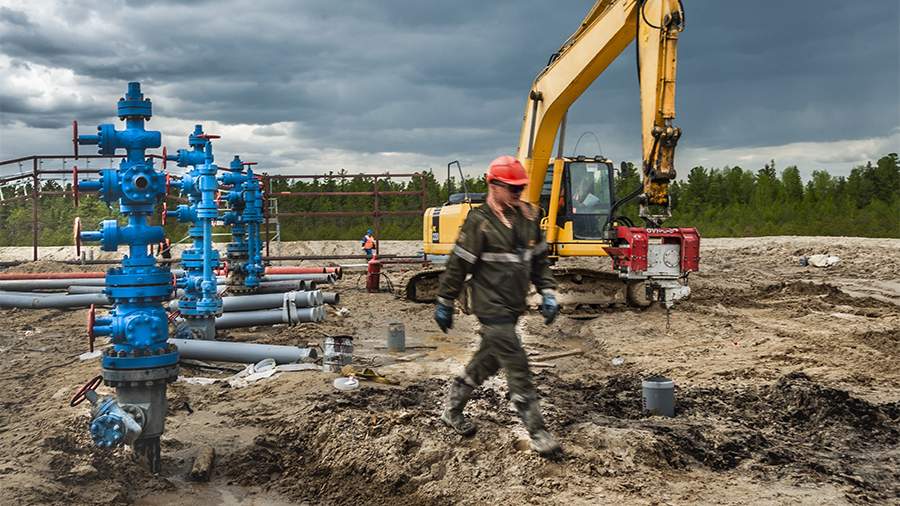
The price of Brent crude oil has fallen sharply amid expectations of an oversupply. The increase in production by OPEC+ countries and independent producers has put the market under pressure, causing prices to fall. This was announced on August 25 by Evgeny Shatov, partner of Capital Lab.
"Following OPEC+'s decision to rapidly lift voluntary restrictions and increase production by an additional 2.2 million bpd by September, the market is receiving a significant increase in supply from both the alliance countries themselves and independent producers such as the United States, Brazil, Norway, Canada and Guyana. There is no comparable growth on the demand side, so the market is shifting from a temporary shortage to a phase of inventory accumulation," the expert said.
According to Shatov, the latest short—term forecast of the EIA directly describes this shift: global inventories in the second half of 2025, according to their estimates, will grow by about 1.9 million b/d, and by 2.3 million b/d in the first quarter of 2026, which puts pressure on prices. The same estimate captures the very fact of an accelerated increase in OPEC+ production and the expected contribution to the surplus in the market, with the forecast for the Brent price at $58 in the 4th quarter of 2025 and closer to $50 in early 2026. In fact, the classic mechanism works: when supply steadily exceeds demand, the futures curve flattens, spreads narrow, and the price tends to a level at which it becomes economically feasible to store excess oil.
"Geopolitics does not disappear in such periods, but it changes its role: it turns from a trend driver into a source of volatility around a downward trajectory. The same EIA directly points out the key risks of a possible breakdown of the fragile truce between Israel and Iran, additional sanctions related to the Russian-Ukrainian conflict, as well as trade barriers that could hit demand. These factors may provide short—term support to market prices, but so far the base scenario is an excess of oil supply," Shatov said.

At the same time, participants remain sensitive to signals that OPEC+ may adjust the production plan again, but the current price background is formed by the expectation of an accelerated release of barrels to the market and subsequent accumulation of reserves. This is clearly reflected in the market comments: in August, Reuters' main narrative was the "dissonance" between the falling spot price and the forward structure against the background of projected overstocking, where any political plots are considered as "noise" if they do not escalate into a real supply disruption.
"For the Russian budget, the current dynamics are a mixture of price and fiscal pressures. Firstly, the price benchmark itself goes lower, and with it the price of Urals, which directly affects oil and gas revenues through mineral extraction taxes, export duties and damping mechanisms. According to the Ministry of Finance, oil and gas revenues were already declining in the first half of 2025 in annual terms, reflecting both the lower oil price and structural export restrictions under sanctions," Shatov explained.
In July, the decline continued, and this has already become a noticeable factor for budget parameters. At the same time, the tax structure was "adjusted" in advance — in the calculations of taxes for 2025, the Urals discount to Brent for tax purposes was reduced to $10 per barrel, which partially mitigates the impact on revenues with a falling benchmark, but does not cancel out the price effect. At the macro level, the authorities are preparing a tougher budget line and discussing additional measures to increase revenues amid a growing deficit, which once again underlines the sensitivity of the fiscal system to oil prices and the ruble exchange rate.

The bottom line for quotations in the coming months looks like this: while the supply line is in effect (accelerated lifting of restrictions in OPEC+ plus high, albeit slowing, output in the United States), the base scenario for oil is "bearish", with periodic spikes in political news. To change the trend, it takes not so much an "information" shock as an actual and significant drop in supplies or a reversal of the production plans of major players.
"Otherwise, the market will continue to win back the accumulation of reserves and "cheap oil for the sake of storage space," and this is exactly what is embedded in the current short-term forecast model. For Russia, this means tougher budget math for the rest of the year, a focus on volume and logistical stability in exports, as well as increased dependence on the domestic exchange rate and tax settings at a low price for Brent crude oil," concluded Shatov.
On August 12, Shatov said that oil prices remain close to the lowest levels in two months, despite the increase in quotations. According to the expert, the geopolitical situation is currently having a significant impact on oil prices. One of the factors that eased market concerns was the extension of the US tariff truce with China for three months.
All important news is on the Izvestia channel in the MAX messenger.
Переведено сервисом «Яндекс Переводчик»
