The garbage skewer: vortex management will protect aircraft engines from dust
- Статьи
- Science and technology
- The garbage skewer: vortex management will protect aircraft engines from dust


Russia has developed a model device to protect aircraft engines from dust and small debris. This will increase their service life and safely operate aircraft with low-lying power plants on runways and unpaved aprons. This will expand the geography of flights, accelerate the aviation development of the Russian North and the Far East, and also give advantages to domestic aircraft when exporting to countries with poorly developed airfield infrastructure.
Why do foreign particles get into aircraft engines?
Scientists from the Moscow Aviation Institute (MAI) have proposed a device that, after being integrated into the design of aircraft, will help protect engines from dust and small debris during takeoff and landing.
In particular, the developers explained, the improvement will allow regional and mainline airliners such as the Sukhoi Superjet-100, MC-21, Boeing-737 and Airbus-A320 and other aircraft of a similar class to fly to remote parts of Russia. In addition, they will be able to fly to those parts of the world where the airport infrastructure is not well developed.
— Classic modern airplanes are gliders with two turbofan engines located under the wing and three landing gear supports. This design has shown high reliability and efficiency. However, the low location of the engines makes them vulnerable to dust and small debris, especially when operating aircraft on poorly equipped unpaved sites," Ilya Ushakov, the author of the development, a graduate student at the Department of Design and Certification of Aviation Technology at MAI, told Izvestia.
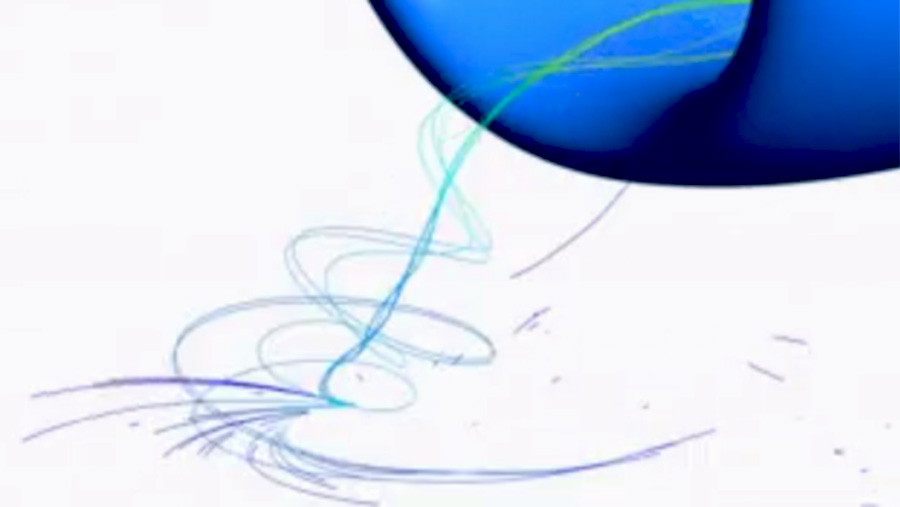
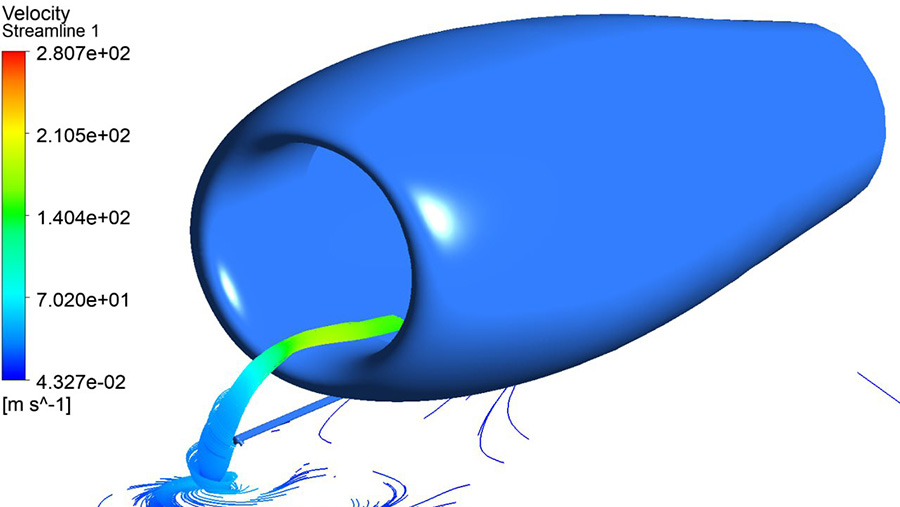
According to him, foreign objects are sucked into the power plants by eddy currents. For example, when an airplane accelerates, a turbulence zone forms in front of its air intakes, which draws in everything on the ground, from sand particles to small pebbles. Debris can also enter the engine by flying out from under the wheels of the front landing gear.
How is the air protection of power plants arranged?
A special mathematical model has been developed to understand these processes, the designer said. Then the computational models were confirmed by a series of field experiments. As a result, based on the data obtained, an active vortex suppression system was proposed. Her idea is to create air currents that destroy dangerous vortices before they have time to capture foreign objects.
— It is assumed that the air for the operation of the system will be taken directly from the engine — from the low-pressure compressor (this mechanism also ensures the operation of the air conditioning system in the aircraft). Then, through special channels, the jets are directed into the vortex formation zone. As a result, an air curtain is formed. It cuts off particles that tend to get inside the power plant," explained Ilya Ushakov.
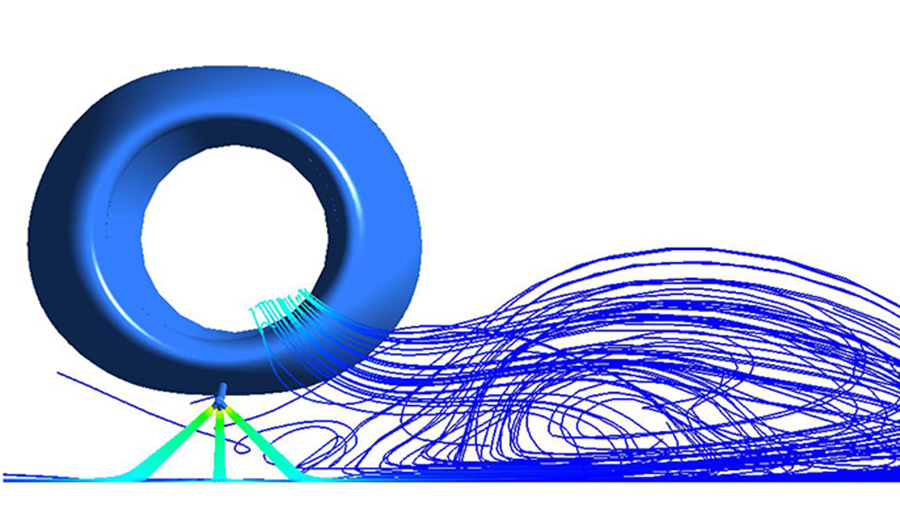
According to him, the calculated version of such a device involves the removal of grains up to 1 mm in size. Since they mainly accelerate to speeds of 200-300 m/s, they cause damage or failure of various parts and mechanisms of the power plant. In the future, the system will be designed in such a way that the intensity of such protection can be adjusted depending on the conditions of a particular airfield or flight parameters.
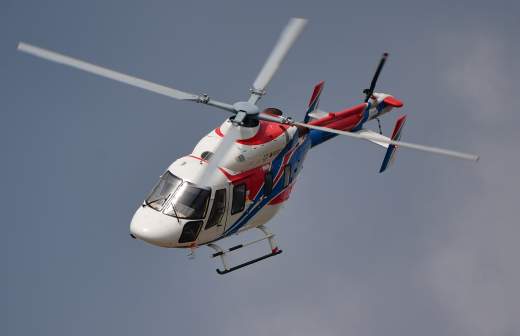
An analysis of world practice, the designer clarified, showed that the greatest effect can be achieved when upgrading aircraft that are close to the end of their life cycle. They are more often transferred to cargo routes and to the most remote destinations. With this in mind, the system is designed so that its implementation requires a minimum of improvements and changes to the aircraft design.
How to safely fly to unpaved airfields
— In aircraft designs where the engines are located under the wing, they become a kind of "vacuum cleaners" when running along the runway. Mechanical devices that protect against these threats are prone to wear, and bouncing particles behave unpredictably. In contrast, the proposed gas dynamic system can create a continuous air barrier," Roman Fedorov, Deputy Head of Research and Development Support for the operation of the Yakovlev Regional Aircraft branch, explained to Izvestia.
It is important, he noted, that the intensity of such protection can be regulated. However, it must be taken into account that air extraction from the engine compressor reduces its power. Therefore, an accurate calculation will be required for each flight.
In general, the expert suggested, the development will allow airlines to refine existing aircraft to work on unpaved airfields instead of buying boards specially adapted for these conditions. This will accelerate the aviation development of the Russian North and the Far East with Sukhoi Superjet-100 or MC-21 aircraft. It will also provide advantages when exporting them to countries where high-quality runways are a luxury.
— The main idea of engine protection is simple: you need to prevent the vortex in front of the air intake from sucking debris from the lane. Scientists have calculated that the probability of hitting particles depends on their size and weight. This is described by the Stokes number, which helps predict how particles will behave in a stream, skirting obstacles," said Ivan Amelyushkin, head of the Department of Aerophysics of Multiphase flows, rarefied gases and Plasma at TsAGI.
However, he added, it is important to confirm the calculations with field experiments. Computer modeling may give errors due to settings or features of the calculated grid. Therefore, checking models is a mandatory stage of work.
— In conditions of increased dustiness of the engine, the blades lose their original geometry, their surface is covered with microburrows. As a result, the efficiency of the power plant is reduced. By reducing this impact, it is possible to increase the inter—repair life of the engine and slow down the degradation of its parameters," commented Oleg Panteleev, Executive Director of the Aviport agency.
In the world, he stressed, the main way to solve this problem is to ensure the cleanliness of airfields and the integrity of artificial surfaces. The Russian civil aviation is following the same path today. Nevertheless, both in Russia and in other countries, there are still many unpaved runways and facilities that lack sufficient funds to maintain in a standard condition.
Therefore, the expert noted, the solution found is relevant, especially if it can be implemented without a significant increase in weight and with minimal increase in the cost of aircraft.
Переведено сервисом «Яндекс Переводчик»
