
Red flag over Port Arthur: how the Soviet army drove the Japanese out of Liushun

On August 22, 1945, the Red Army took Liushun, otherwise known as Port Arthur, liberating this old Russian naval base in China from Japanese rule. It was one of the most brilliant amphibious operations of the Second World War. Izvestia recalled how it was.
"The clouds are gloomy on the border..."
Back in the 1930s, tense relations were established between the USSR and Japan. Two armed conflicts — on Lake Hassan in 1938 and on Khalkhin Gol in 1939 — showed Japan the power of Soviet weapons. Many people remember these battles from the song "Three Tankmen", which has become a folk song since pre-war times...

Soviet tankers on camouflaged T-26 tanks during the Soviet-Japanese conflict near Lake Hassan
Khalkhin Gol was one of the good reasons that Tokyo, being an ally of Nazi Germany, still did not declare war on the Soviet Union after June 22, 1941. In 1945, at the Yalta Conference of the three powers fighting against Nazism, the Soviet Union committed itself two or three months after Germany's surrender to join the war against Japan.

Yalta Conference of the Allied Powers
Since May 1945, a large-scale transfer of troops to the Far East began. On August 8, the Government of the Soviet Union declared war on Japan. I must say that by that time serious contradictions had emerged among the allies in the anti-Hitler coalition. In the United States, on the one hand, they were interested in the Red Army fighting against the Japanese, but on the other, they sought to accept Japan's surrender without the participation of the Soviet allies. And the Red Army was faced with the task of ensuring the country's security on the Far Eastern borders for many years.

The August Storm
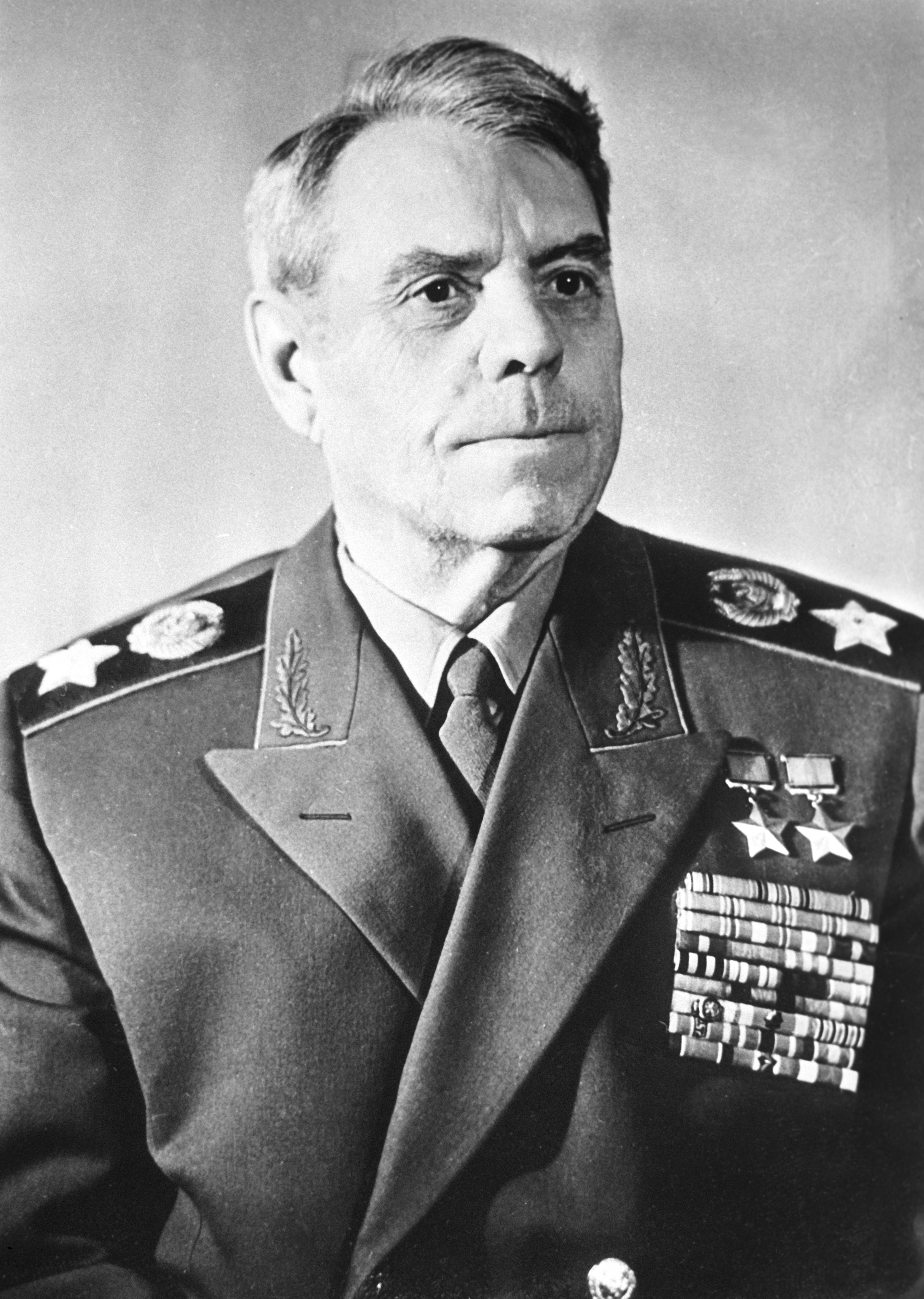
Japanese intelligence was unable to determine the areas of concentration of troops and the direction of the main attacks, although since January 1945 it was obvious that the Soviet Union would enter the war in the Far East. In the first decade of August, huge Red Army forces were concentrated on the approaches to the Samurai positions — 11 combined arms, one tank and three air armies totaling about 1.6 million people under the command of Marshal Alexander Vasilevsky.

Soviet soldiers during the storming of Japanese fortifications in the Far East
In a difficult situation, the Soviet Union's ambassador to Tokyo, Yakov Malik, conducted Moscow's course with dignity and restraint. He was an outstanding diplomat, and in the future, the USSR's permanent representative to the United Nations. He conveyed to Japanese Prime Minister Kantaro Suzuki the statement of the Soviet government, which became the beginning of the "August Storm", as Japanese historians call this operation.
The Japanese prepared to defend themselves. The commander of the Kwantung Army, General Otsuzo Yamada, relied on the powerful fortifications erected on the Soviet-Chinese border. These are 17 fortified areas in which the Japanese planned to stubbornly defend themselves, delaying the advance of the Red Army for a long time. These bastions were thoroughly constructed. And the Japanese should have had enough ammunition for a long resistance. For them, the most important task was to hold back the advance of the Red Army for several weeks in order to enable politicians to conclude an agreement with the Americans that would not take into account Moscow's interests. And most importantly, the Japanese hoped to retain some of their positions in Korea and China. The Red Army violated these plans by defeating or forcing the surrender of all combat-ready Japanese units in the Far East. Among the main outposts to be occupied, the whole country has long known the city of Russian military glory and tragedy — Port Arthur, in Chinese — Liushun. The Japanese called this fortress Ryojun.
The fortress by the Yellow Sea
Port Arthur, an ice-free naval outpost on the Yellow Sea, has always been at the epicenter of Japan's confrontation with China and Russia. Fearing expansion by Western European powers, in 1897 Beijing and St. Petersburg concluded the Russian-Chinese Convention, according to which our country was given control of the Liaodong Peninsula for 25 years to create its own naval base there. At that time, Port Arthur was called the Far Eastern Sevastopol. And not far from the port, Russian military engineers have built another strategically important city, Dalny. The Chinese dubbed it Dalian. There was a branch of the CER — the South Manchurian Railway, which was built by Russian engineers and workers.

Port Arthur
Russia's presence in China categorically did not suit Japan. In Tokyo, already at the end of the 19th century, the idea of conquering nearby peoples was maturing. The island nation lacked land... During the Russian-Japanese War, Port Arthur became the epicenter of a fierce confrontation. It was there that Japanese destroyers attacked the Russian squadron in January 1904. In April, the Japanese landed a 35,000-strong army on the outskirts of Port Arthur. In the summer, the siege of the fortress began. The assault that the Japanese army launched in August was repulsed. But the city and its garrison remained surrounded. For 159 days, the defenders of Port Arthur held the line...

Defense of Port Arthur
On December 20, 1904, the head of the Kwantung fortified region, General Anatoly Stessel, signed the act of surrender. Many believed that Port Arthur could still resist back then. But there was nowhere to look for help, and the Japanese occupied a commanding height on Mount Vysokaya, from where they could target the fortifications of Port Arthur. And most importantly, the Japanese have proved their superiority at sea. In that war, underestimating the enemy did the Russian command a disservice. It was believed that the Japanese were unable to withstand the hardships of war. But they managed to modernize, mastered modern technology and demonstrated a fighting samurai character. Japan seized the Russian base — as it turned out, for four decades.

Guards landing
Vasilevsky set the task for the airborne paratroopers to occupy Port Arthur with minimal losses with an unexpected striking strike for the enemy.
On August 22, at 3 a.m., a dozen C-47 Dakota transport aircraft took off from the Mukden airfield and headed for Port Arthur under fighter escort. The landing was led by Lieutenant General Vladimir Ivanov, Deputy Commander of the Trans-Baikal Front. The operation was developed by the Commander of the Pacific Fleet Air Force, Hero of the Soviet Union Evgeny Preobrazhensky. He is an outstanding personality, he deserves a separate conversation. At the beginning of the war, in August 1941, when the Nazis were inexorably advancing eastward, Colonel Preobrazhensky commanded the flagship crew that launched the first bombing attack on Berlin. Then there were more than fifty such flights. He thought out the raid of his seaplane squadron to Port Arthur and Dalian thoroughly.
"Each of us was deeply moved. Port Arthur! Far away! To restore the honor and glory of our weapons, our valiant soldiers of 1904! Heavy planes with paratroopers are heading for Port Arthur. They are guarded by fighter jets. Two hours flight. And that's the goal! Attention! Battle course! Fighters, go ahead, find out the situation! The fighters respond — the enemy does not open anti—aircraft fire," recalled Major Ivan Beloded. Immediately after the landing, a firefight began. The Red Army soldiers acted smoothly and promptly occupied the main heights and key infrastructure facilities.
The reports preserved information about the exploits of that day: "Amazing examples of courage, bravery and quickness were shown by machine gunners Zinchenko, Gavrilyuk, Naumenko and Demidov. Having escaped to the outskirts of the city and seeing a lot of warehouses surrounded by a high brick wall, over which a high-voltage wire is stretched in several rows, 20 sentries were skillfully and quickly removed and a huge armament depot was seized, which supplied the entire Port Arthur Japanese group."

Soldiers of the Soviet army in Port Arthur
Ivanov entered into negotiations with the head of the Japanese garrison, Vice Admiral Kobayashi. The Japanese understood the futility of resistance. The Red Army troops struck the positions of the Kwantung Army with several striking blows at once. Kobayashi did not bargain and immediately agreed to surrender and gave Ivanov his samurai sword. But the Soviet Lieutenant General knew about the Supreme Commander's order to leave cold steel to the surrendered Japanese officers. He didn't take the sword, but he accepted the surrender. In the early morning of August 23, the disarmament of the Japanese garrison began. The winners' trophies were two Japanese patrol ships, the Haifeng and the Hailong, which were soon renamed the Wind and the Calm.
At the same time, on August 23, on a sunny day, the Japanese flag was solemnly lowered in front of the Soviet soldiers and officers. Senior Lieutenant Ivan Evdokimov, Petty Officer Grigory Kharchenko and Petty Officer Sergey Batsul raised the red Victory banner above the naval headquarters in the center of Port Arthur. Russian Grave guards laid wreaths on the graves of Russian soldiers who fell during the defense of Port Arthur in 1904 on the same day. Their comrades who fell in the August 1945 battles will be buried nearby. At the same time, a military echelon with Red Army infantry and tank units arrived in Port Arthur like an ordinary passenger train. We unloaded the equipment at the station and headed to receive Port Arthur from the airborne troops.

Sailors of the Pacific Fleet plant the flag of the Soviet Navy over the Bay of Port Arthur
One of the factors of this operation is the deterrence of American allies. President Harry Truman gave his sailors a directive to occupy the port of Dalny and Port Arthur "before the Russians enter there." The Soviet command could not agree with this, and literally in front of the Americans showed who was the boss in Port Arthur and Dalny. That's how this day was remembered on both sides of the ocean.

The Echo of Port Arthur
Among the obvious consequences of the defeat of the Kwantung army is the appearance on the political map of the world of an independent and unified China, whose sovereignty was no longer threatened by external forces. There has been an increase in Soviet influence in this strategically important region. The Pacific Fleet has become the most powerful force in the Far East.
On September 2, 1945, aboard the battleship Missouri, Japanese representatives signed an unconditional surrender. Thus ended the Second World War. Having established its position in the Far East, the Soviet Union promoted the establishment of friendly political regimes in the fragments of the Japanese Empire, primarily in China and Korea.

Signing of the Act of surrender of Japan aboard the battleship Missouri
Soviet navy personnel were stationed at Port Arthur until 1955, when the Soviet government transferred the base to China for the fifth anniversary of the People's Republic of China. It is now a district of Dalian City. The remains of the fortress have been preserved there. And the Red Army soldiers who fell during the liberation of the Kwantung Peninsula, as well as Soviet military advisers who died in the Korean War, are buried there. Their graves are sacred to both Russia and China. This is the largest Russian military burial site abroad. Bronze soldiers bowed their banners in front of them.
The author is the deputy editor—in-chief of the magazine "Historian"
Переведено сервисом «Яндекс Переводчик»
