Sparks on teeth: a unique laser will quickly and safely detect diseases of the oral cavity
- Статьи
- Science and technology
- Sparks on teeth: a unique laser will quickly and safely detect diseases of the oral cavity


Scientists have created the first system in the Russian Federation for diagnosing oral diseases that uses semiconductor lasers instead of X-rays. This allows you to quickly analyze the patient's dental condition right in the dentist's chair. The technology is safe for pregnant women and young children and helps doctors to remove damaged areas more accurately and faster. In addition, the device is easy to operate, has small dimensions and weight. For more information about the technology, see the Izvestia article.
Dental laser will detect caries
Specialists of the St. Petersburg State Electrotechnical University named after V.I. Ulyanov (LETI) have created a device for safe rapid diagnosis of caries. The system, which has no analogues in the Russian Federation, uses semiconductor lasers instead of X-rays, which makes it possible to analyze the condition of a patient's teeth right in the dentist's chair.
According to scientists, caries is the most common disease of the human oral cavity, occurring, according to various estimates, in 95-99% of the population. The effectiveness of the treatment of carious lesions largely depends on the stage of development of the pathological process, which requires the development of new methods and equipment for rapid and early diagnosis. And an X-ray allows the dentist to see caries, which is not always noticeable during a routine examination, for example, between teeth or under a filling. However, diagnostic devices are not available in all classrooms.
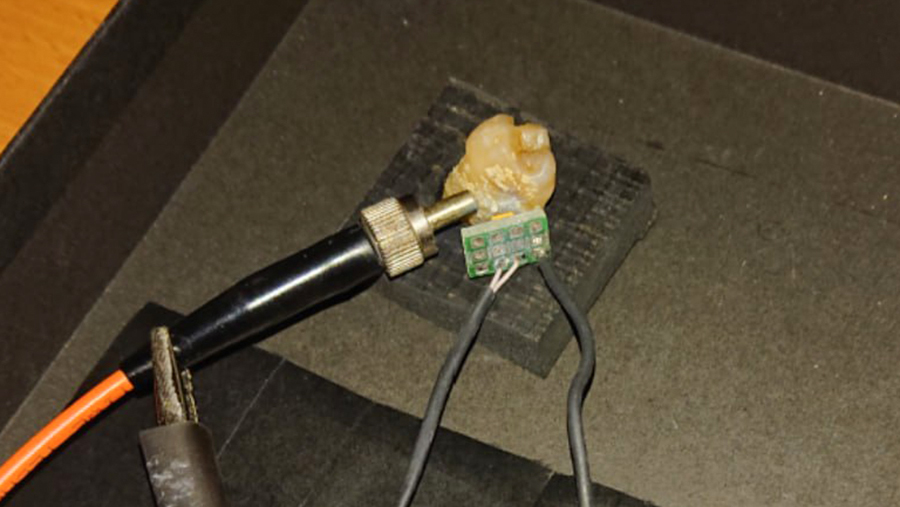
— Unlike X-ray machines designed to diagnose diseases of the maxillofacial region, this device uses semiconductor laser diodes, the radiation of which is absolutely safe and can be used in the treatment of patients of any category without any restrictions. In addition, the device is easy to operate, has small dimensions and weight," Andrey Ukhov, Professor of the Department of Electronic Devices and Devices (EPU) at St. Petersburg State Technical University, told Izvestia.
At the initial stage of the research, LETI scientists selected the parameters of laser radiation with optimal characteristics to determine the presence of caries. The samples for the experiments were surgically removed teeth with varying degrees of damage. As a result, two types of radiation were selected (with wavelengths of ~400 and ~650 nanometers). The fluorescence spectra of teeth induced by laser radiation were studied using a compact portable spectrometric system developed at LETI.
Devices for quick diagnostics
Based on the conducted experiments, scientists have assembled a prototype device for the diagnosis of caries. It consists of two semiconductor lasers (with wavelengths of 405 and 635 nanometers), and photodiodes with optical filters are used to register the signal. Information from the device can be transferred to a personal computer via USB. The interpretation of the received data is handled by special software.
— The experimental results have shown good accuracy of caries diagnosis using our device. However, additional clinical trials of the device are needed to establish clear and reliable criteria for the relationship between the recorded fluorescence intensity and dental health, including the degree of caries. We are currently looking for funding to further improve our device. The long—term goal is to enter the market and introduce it into dental centers," said Nikolai Potrakhov, Head of the Department of Electronic Devices and Devices at St. Petersburg State University of LETI.
The laser caries diagnostic system developed at LETI is a new approach that can make dental diagnostics safer and more accessible, Roman Ponomarev, market expert at NTI Technet and head of the Integrated Photonics Laboratory at PSNIU, told Izvestia.
— Unlike X-ray machines, the use of lasers is safer and does not require protecting the patient and staff from radiation. The resulting system can be used even in children, pregnant women, and people with contraindications to X—rays," the specialist said.

Moreover, due to its compactness and ease of use, the device can be inserted directly into dental chairs, as well as used in mobile clinics, field dental offices, and even in the field, for example, for military or expeditions, Roman Ponomarev noted.
In recent years, more and more new technologies have appeared in dentistry that simplify the treatment of caries and other diseases of the oral cavity, said Kirill Michurin, Deputy Chief Dentist for Dentistry at GUTA Clinic, dental surgeon, orthopedist. According to him, fluorescent radiation technologies are already known in dentistry.
— With the help of lighting, it has become much faster and more efficient to remove caries-affected tissues, while the procedure has become more gentle and comfortable for patients. Thus, it not only improves diagnosis, but also makes treatment faster, more effective and safer for patients," the expert noted.
The results of the study are published in the scientific journal Biomedical Engineering.
Переведено сервисом «Яндекс Переводчик»
