Lyme disease (tick-borne borreliosis): symptoms, treatment, and prevention

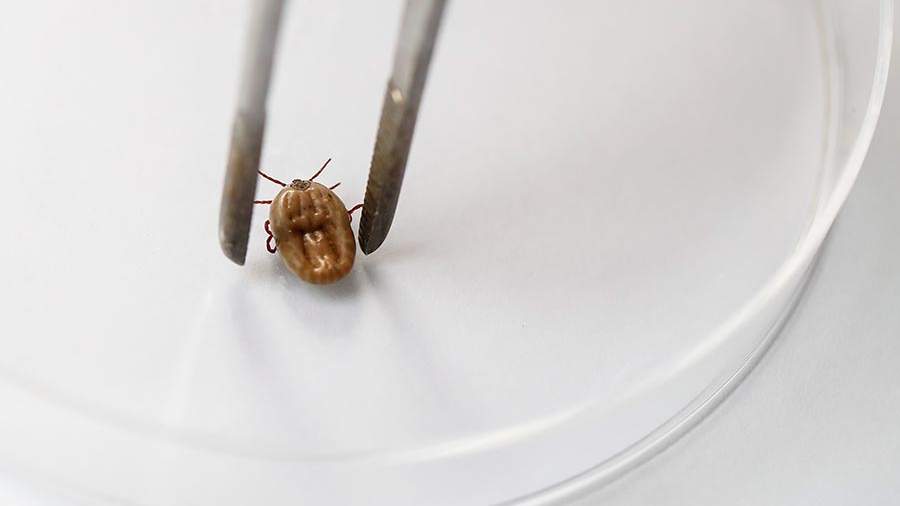
Lyme disease or tick—borne borreliosis is a dangerous infectious disease transmitted mainly through the bites of ixodes ticks. Its pathogens and vectors are common in the USA and Europe, but also occur in Russia. Izvestia talks about the symptoms of Lyme disease, its course in children and adults, as well as methods of treatment and prevention.
What is Lyme disease (tick-borne borreliosis)?
Lyme disease, also known as tick—borne borreliosis, is a disease caused by bacteria of the genus Borrelia. It is most often transmitted to humans by the bite of an infected ixodid tick. Characteristic symptoms of the disease include erythema migrans, a rash on the skin in the shape of a circle with a pronounced center.
In the early stages, borreliosis is easily treatable with antibiotics, but in the absence of adequate therapy, serious complications may develop affecting the central nervous system, cardiovascular system, bones and joints, as well as other internal organs.
Lyme disease was first identified in 1975 in the American city of Old Lyme (Connecticut), when people with joint pain and a strange rash began to come to local hospitals. In the course of research, it turned out that all the patients had recently been bitten by ticks. It was only in 1982 that biologist and bacteriologist Willy Burgdorfer was able to identify the source of the disease, the bacterium Borrelia burgdorferi.
Borrelia burgdorferi is common in the United States, but other borrelia can also cause Lyme disease. In Europe and Asia, including Russia, the main pathogens are B. afzelii and B. garini.
Methods of transmission of Lyme disease (tick-borne borreliosis)
In nature, carriers of Lyme disease are rodents, ungulates (wild and domestic), dogs, cats and birds. Most human infections occur when bitten by an ixodid tick that has previously drunk the blood of an infected animal. Borrelia enter the body through the parasite's saliva, and the longer the tick remains on the body, the higher the chance of infection.
To date, four types of borreliosis-carrying ticks are known.:
- Ixodes scapularis — distributed in the northeastern and central regions of the USA;
- I. pacificus is found mainly in the western United States.;
- I. ricinus (forest ixodid mite) — lives in the forest regions of Europe;
- I. persulcatus is found in Russia (more widespread in the Northwestern and Central regions, the Urals, Western Siberia, and the Far East), as well as in Asian countries.

You can become infected with borreliosis not only by being bitten by a tick, but also by accidentally rubbing saliva or intestinal contents of the parasite into the skin. For example, if you carelessly remove a tick (especially if it was crushed during the process) or when combing. Animal owners who do not follow safety precautions while helping their pets are at risk of contracting Lyme disease. Bacteria can enter the body through scratches or cuts on the hands, microtrauma of the skin or conjunctiva of the eye.
Other ways to get Lyme disease (tick-borne borreliosis):
- consumption of unpasteurized milk from infected goats and cows;
- transplacental transmission from an infected mother to a child during pregnancy.
Is Lyme disease (borreliosis) transmitted from person to person
Lyme disease or tick-borne borreliosis is not transmitted from person to person. Borrelia are not spread by airborne droplets and household contact, so it is impossible to get infected by kissing, using shared dishes or sexual contact. The only exception is intrauterine infection, when the disease is transmitted from a pregnant mother to a child.
Who is at risk of Lyme disease (tick-borne borreliosis)
Since ixodes ticks are the main vector of Lyme disease, people who spend a lot of time in nature are at risk. These include:
- people working outdoors: farmers, summer residents, foresters, geologists, garden workers, builders, etc.
- tourists, outdoor enthusiasts;
- children playing in parks, woodlands, vacant lots, and private homes with tall grass and an abundance of shrubs;
- pet owners: dogs, free-roaming cats, cows, goats, birds.
Symptoms of Lyme disease (tick-borne borreliosis) at different stages
The most striking symptom of tick—borne borreliosis is erythema migrans. The rash occurs at the site of a tick bite after 7-14 days (in rare cases after a month) and has the shape of a target. It often has a pronounced center with a clear outline, a lighter middle, and a bright red border around the edge. Over time, the rash may increase and also spread to other areas of the skin. In rare cases, erythematous forms of borreliosis may occur, in which the rash does not appear.
Erythema often does not cause any discomfort to a person, but some patients may experience a feeling of heat at the bite site or soreness when touching the affected area of the skin.

In addition to the rash, the patient may experience symptoms of general intoxication: fever, chills, muscle pain, headache, enlarged lymph nodes. Unlike acute respiratory viral infections or influenza, they can persist for a long time, periodically subsiding and intensifying.
Rare symptoms of Lyme disease include:
- joint inflammation accompanied by edema;
- facial nerve paralysis;
- migraine;
- arrhythmia;
- shortness of breath;
- numbness of limbs, tingling in fingers and palms;
- nausea and vomiting outside meals.
Stages of Lyme disease (tick-borne borreliosis)
Experts identify four stages of Lyme disease. Each of them has its own symptoms.
- The incubation period (7-14 days, in rare cases up to three months) is the time from the moment of the tick bite to the appearance of the first symptoms, the person is already sick, but does not feel unwell.
- The stage of local infection (from 14 days to 6 months) is the appearance of the first symptoms, including erythema migrans, complications such as meningitis, facial nerve paralysis, joint inflammation (Lyme arthritis), and problems with the cardiovascular system.
- Disseminated stage (from 6 months to a year) — occurs in the absence of treatment at earlier stages; there is a high risk of autoimmune diseases, damage to joints, skin and nervous system, which can lead to impaired cognitive functions.
- Persistence stage (chronic, 1-2 years) — all symptoms of borreliosis worsen, atrophied areas, ulcers and plaques may appear on the skin, the risk of osteoporosis increases, neurological disorders worsen.
Lyme disease can be cured at any stage, but the earlier therapy begins, the lower the likelihood of complications and long-term effects on the body.
Possible complications of Lyme disease (tick-borne borreliosis)
Without proper treatment, tick-borne borreliosis can be complicated by various conditions. Among them, the most common are the following:
- Lyme arthritis (about 60% of patients) - knee joints are most often affected, but bacteria can also infect other places of articulation of bones.;
- neurological disorders (about 20% of patients) — facial nerve paralysis, meningitis, numbness of the extremities, impaired coordination, speech, memory, insomnia, problems with concentration;
- pathologies of the cardiovascular system (about 1% of patients) - arrhythmia, dizziness, tachycardia, myocarditis, etc.
- visceral disorders (less than 1%) — hepatitis and splenomegaly (enlarged spleen);
- other complications: skin atrophy, conjunctivitis, chronic fatigue syndrome.
How to treat Lyme disease (tick-borne borreliosis)
Lyme disease or tick-borne borreliosis is treated with antibiotics. As a rule, therapy is carried out in an inpatient setting and takes from two to four weeks in the early stages. With timely access to doctors, patients completely get rid of the infection.
In case of complications, a specific treatment aimed at eliminating them is added to the course of antibiotics. These can be painkillers and anti-inflammatory drugs, vitamin complexes, drugs that stimulate the heart, etc.
How to protect yourself from Lyme disease (tick-borne borreliosis), basic rules of prevention
The likelihood of contracting Lyme disease and experiencing unpleasant consequences can be reduced if you follow simple guidelines.:
- Avoid tall grasses and shrubs during the warmer months (April to October);
- when going out into nature, wear closed clothes and shoes: high socks, long jeans or trousers, long-sleeve sweatshirts, neckerchiefs, hats;
- Use repellents;
- After a walk in the forest, park, or field, carefully examine yourself, children, and animals for ticks.;
- if a tick is found, contact the nearest emergency room or remove it yourself, and treat the bite site with an antiseptic.
Lyaman Nurieva, a general practitioner at the Olympus Clinic MARS hospital, told Izvestia that ticks are most often found in places with thin skin, such as in the groin, popliteal cavities, behind the ears or on the scalp, but you can find the parasite anywhere.
"If a tick is found, it is not recommended to touch it with unprotected hands, crush it or treat it with chemicals. This can lead to the spread of infection. The best solution is to consult a doctor, but if this is not possible, you can remove the tick with tweezers or thread, trying not to damage its body," the doctor explained.
After removing the tick, do not throw it away. It is better to put it in a tightly sealed vessel and send it for examination — this will help to make sure that there is no disease or to prevent it at the initial stage.
Earlier, Izvestia reported on the symptoms and treatment of Dengue fever.
Переведено сервисом «Яндекс Переводчик»
