
Exchange resource: how Russians feel about buying foreign currency
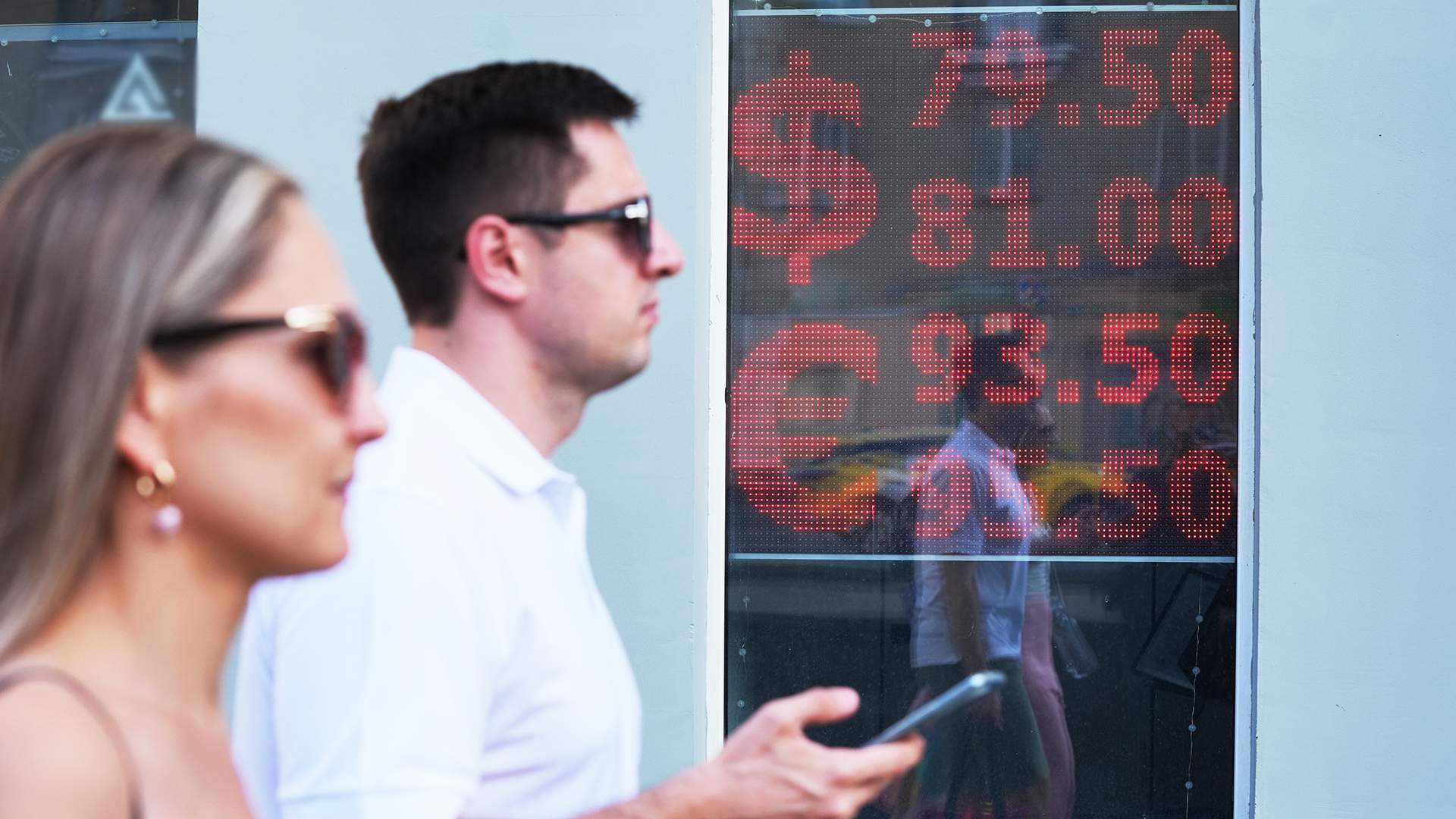
According to the survey, more than half of Russians (66%) are ready to purchase foreign currency when the exchange rate drops. However, only 9% of the respondents will definitely purchase a currency if they meet a favorable exchange rate. How the ruble exchange rate will change by the end of the year and whether it is worth expecting an increase in the volume of currency purchases by Russians — in the Izvestia article.
Influencing factors
Increased volatility is expected in the coming weeks, which may lead to fluctuations in the range of 79-85 rubles per dollar, with possible short-term jumps to 86-89 rubles, Peter Shcherbachenko, associate professor at the Financial University under the Government of the Russian Federation, told Izvestia. If there is no escalation of foreign policy scenarios and there are no new sanctions, it is likely that the exchange rate will remain in the range of 79-85 rubles. However, any negative events or statements from the United States can provoke an increase to 86-87 rubles.

The sale of foreign exchange earnings by exporters and the relatively high key rate of the Central Bank of 18%, in his opinion, will restrain the sharp rise in the dollar exchange rate above 89 rubles. At the end of the year, the dollar may exchange in the range of 87-95 rubles per dollar.

The ruble may drop to 88-92 rubles per dollar by the end of the year, Vladimir Eremkin, senior researcher at the RANEPA IPEI Structural Research Laboratory, told Izvestia. The main factors putting pressure on the Russian currency today are an increase in imports, a decrease in export revenues due to already imposed sanctions and low energy prices, a cycle of key rate cuts by the Bank of Russia and the threat of additional economic restrictions that create difficulties for Russian oil exports.
It is quite difficult to predict the dollar exchange rate until the end of 2025 today, since two significant events have occurred over the past five days that have a direct impact on the ruble exchange rate against the dollar, Evelina Gomonko, associate professor at the Faculty of Economics of the Rudn University, noted in an interview with Izvestia. First of all, we are talking about easing monetary policy and lowering the key interest rate to 18%. This decision was made by the Central Bank of the Russian Federation at its last meeting on Friday, July 25. This was followed by a slight weakening of the national currency, but it was not as significant. And if this factor remained the only one, then one could safely say that the ruble exchange rate against the dollar by the end of the year could reach 90 rubles, but not higher than that.

— The second event is the reduction of the ultimatum to 10-12 days, announced by Trump. And in the current dynamics, geopolitical conditions have already had a more noticeable impact on the dynamics of the ruble's exchange rate against the dollar. As of July 30, the ruble's exchange rate against the US dollar, set by the Central Bank of the Russian Federation, was 82.2197 rubles. This is higher than the value of the exchange rate the day before by 2.64 rubles," the expert noted.
Therefore, much, according to her, will depend on how much sanctions will be imposed on Russia and whether they will be followed at all. And since it is already clear that it will be aimed at the main trading partners (India, China), what will be the reaction to these sanctions from Russia's main trading partners? If oil exports do decrease, then, most likely, the ruble exchange rate will weaken against the background of growing demand for foreign currency.
Currency purchases
Russians in the current conditions tend to keep their savings in a "pot", because investments in foreign currency have not shown any results in recent years, Vladimir Prokhorov, a member of the general council of Delovaya Rossiya, told Izvestia. However, the influx of foreign citizens into the country makes it possible to predict an increase in purchases of foreign currency in the coming year.
— At the same time, according to statistics, the population of our country has a balanced investment strategy. Based on opinion polls, people tend to purchase foreign assets, thus differentiating the economics of each citizen's private accounting. The ruble's exchange rate against a foreign currency will correlate according to changes in global sanctions or trade policy," he believes.

Russians' primary goal for buying foreign currency is travel, which peaks during the summer holidays, but it is already over, Evelina Gomonko emphasized. There may be an increase in demand for the currency in December, again due to the New Year holidays and winter holidays. But this period is already accompanied not only by an increase in demand for the currency, but also by an increase in its sales.
— The currency is also actively used by Russians as a means of saving and protecting against inflation. And within the framework of this direction, it will be possible to observe an increase in demand for foreign currency to save and save money. It is logical that after lowering the key rate, banks have revised deposit rates," Evelina Gomonko said.

The period of validity of deposits at high rates will gradually come to an end, and deposit holders will consider options that are more profitable for saving and saving money, the expert is sure. And such an alternative to bank deposits can be investments in foreign currency.
One should not expect a significant increase in purchases of foreign currency by individuals, Vladimir Eremkin believes. On the one hand, rubles bring high returns, as deposit rates are still quite high. On the other hand, the currency is not very attractive: it is unprofitable to spend large amounts of cash, the purchase of currency is limited (the real exchange rate may differ markedly from the Central Bank rate, banks offer old banknotes, which are difficult to exchange later) and there are no clear goals for large-scale currency purchases (foreign tourism is hardly growing dynamically; open foreign currency accounts in Russia doesn't make much sense).
— It can be assumed that interest in foreign exchange purchases will be moderate. Most are ready to buy foreign currency only when the exchange rate drops, which may indicate a cautious approach to investing in foreign currency," agreed Petr Shcherbachenko.

In conditions of uncertainty, many Russians may prefer to keep their savings in rubles, including on ruble deposits, which remain popular, the expert believes. This is also due to the high key interest rate and the possibility of generating more income from deposits. For example, by placing money on a deposit in rubles, it will be possible to receive income at a rate of 14-16%, and on a deposit in dollars — from 0.5 to 1.5% maximum.
— In general, the ruble exchange rate will depend on a combination of internal and external factors. Russians will remain cautious about buying foreign currency, which may limit the growth in demand for foreign currency even with fluctuations in the exchange rate. Most of the people who are planning their trips abroad, as well as doing business with foreign partners, are interested in the dollar," Peter Shcherbachenko is sure.
Izvestia sent a request to the Central Bank, but no response had been received at the time of publication.
Переведено сервисом «Яндекс Переводчик»
