"Tsunamis are possible in the Arctic, which no one has ever prepared for"
- Статьи
- Science and technology
- "Tsunamis are possible in the Arctic, which no one has ever prepared for"

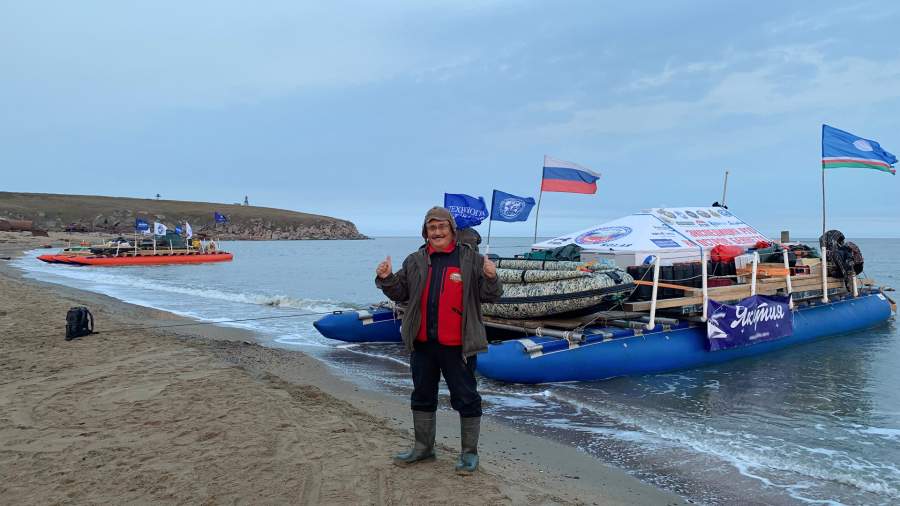
Near Bennett Island in the Arctic, underwater volcanoes and earthquakes are possible in the waters of East Siberia, which can cause tsunamis that have not been observed in this area before. Nikolai Nakhodkin, an ecologist, honorary polar explorer of the Russian Federation, chairman of the Council of the Yakut branch of the Russian Union of Rescuers, Candidate of Biological Sciences, told Izvestia about this in an interview. A similar event occurred on July 30 near the Kuril Islands, where a powerful earthquake caused a tsunami that flooded the coast of Paramushir Island. The scientist also spoke about the new changes that are taking place in connection with global warming. According to the expert, a comprehensive scientific expedition is needed to create accurate forecasts of the development of the situation in the Arctic.
"Scientific data is lagging behind real conditions"
— Nikolay Alexandrovich, to what extent do modern scientific ideas about the Arctic correspond to reality?
— Unfortunately, there are no permanent comprehensive scientific expeditions in this region now, and individual groups of scientists work sporadically. Therefore, researchers do not receive reliable information from the field, but are guided by the average data accumulated over previous periods. This information quickly becomes outdated. Therefore, there is a lag between scientific data and real conditions. Meanwhile, the changes due to climate warming are formidable and unexpected.
— What observations confirm these changes?
— For example, in August-September 2022, we made an expedition on an inflatable catamaran and trimaran under the auspices of the Russian Geographical Society to Bennett Island, one of the northernmost islands of Yakutia in the Arctic Ocean. It is located in the western part of the East Siberian Sea, about 1,000 km northeast of Tiksi.
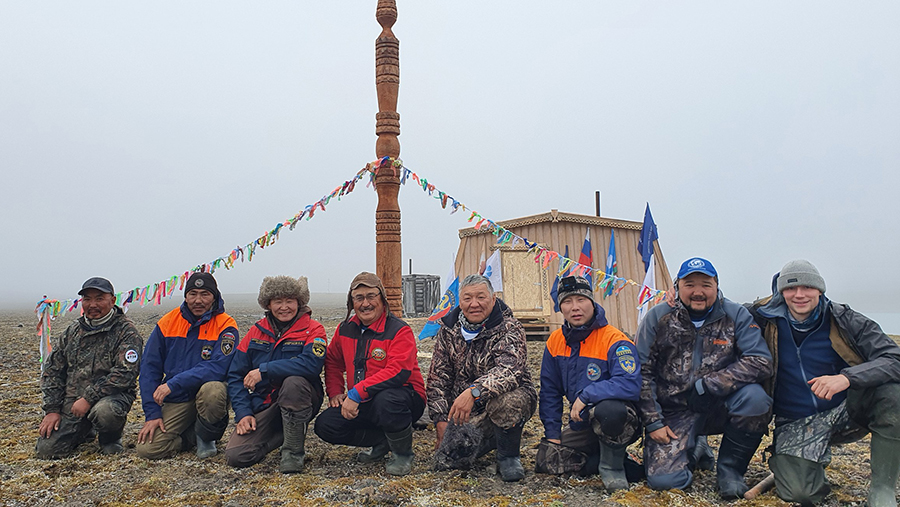
We followed the route of Alexander Kolchak to the island, who in 1903 undertook a hike in search of the missing Baron Eduard Tolya. Both expeditions reached their destination in August. However, Kolchak traveled most of the way on ice, while we rode on inflatable boats and did not encounter ice for 1,000 km. The conditions in the eastern sector of the Arctic have changed so much.

— What was the reason for the necessity of this project?
— The expedition has completed a large scientific program, including environmental observations, herbarium collection, hydrobiological samples and other research. In addition, the team built a house in the form of a booth (a traditional Yakut dwelling), which can serve as a rescue depot and a scientific base for further exploration and development of the island.
First of all, the interest in the island is due to the volcanic activity in its vicinity. In particular, plumes of smoke can be seen on satellite images. They are energetically comparable to volcanic emissions and spread over hundreds of kilometers, reaching the coasts of Canada and Alaska. Perhaps this is evidence of underwater volcanoes.
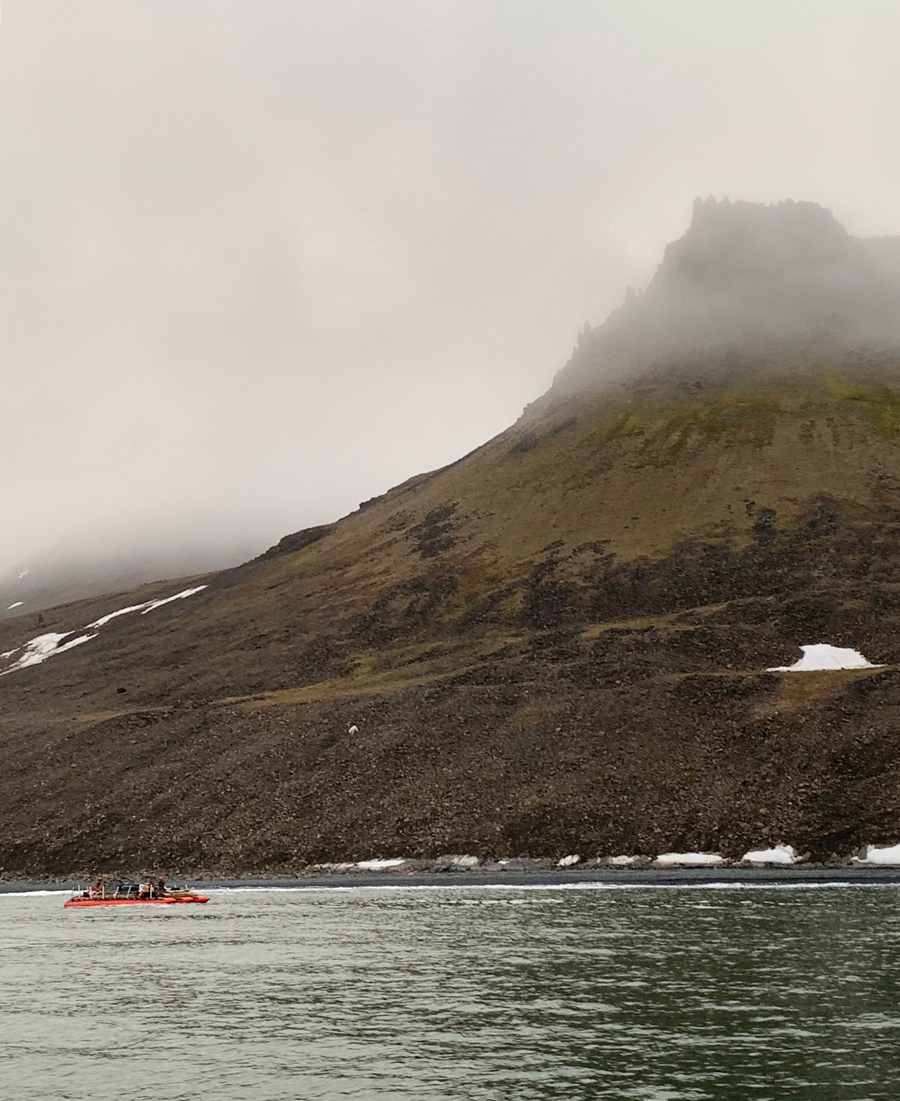
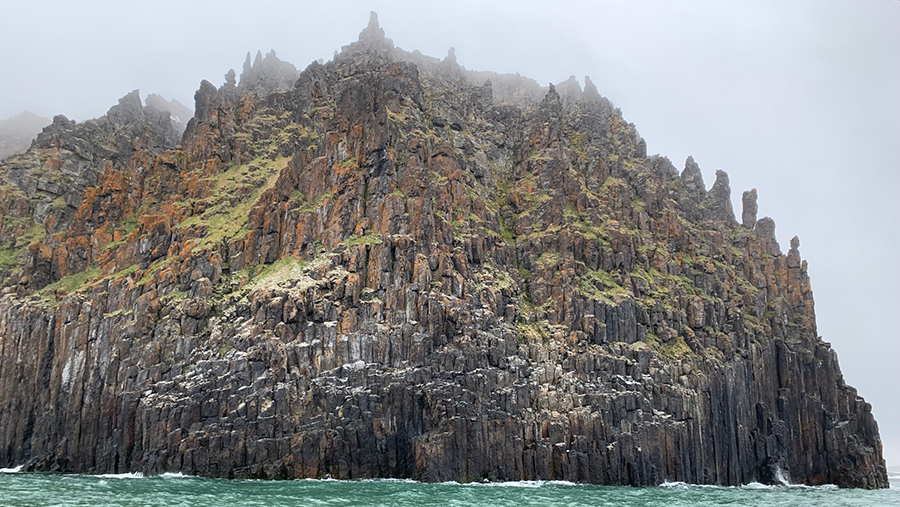
In addition, Russian scientists have discovered several bottom elevation points in one of the bays of Bennett Island — from 1 to 12 m in nine years. This also indicates the activity of the island's interior. The same thing is recalled by the mountain in its southeastern part, which looks like an extinct volcano, and the basalt prisms with columns at Cape Chernyshev, which in ancient times were formed from lava erupted to the surface.
— Have you noticed any signs of active volcanic processes?
— It is difficult to talk about it without special devices. Nevertheless, during the expedition, the conviction appeared that this was the case. For example, when we approached the island, on a clear day we saw a 426 m high rock only from a distance of 20 km, because the water was floating around. In addition, the crew even had to open their jackets, it was getting warmer all around. This means that the water may be heated by hot springs.
As a result, we came to the conclusion that underwater volcanic eruptions are possible in the area of Bennett Island. However, if they coincide with the period of open water, then tsunamis are possible in the Arctic, for which no one has ever prepared. As it happened on July 30, after the earthquake in the Kamchatka Territory, three tsunami waves hit the coast of the Kuril island of Paramushir.

It is important to study and predict such scenarios, because if a disaster occurs, coastal towns and industrial infrastructure will be at risk. In particular, they plan to produce hydrocarbons in this area, and Rosatom is building a small nuclear power plant in the lower reaches of the Yana River.
By the way, the O.Y. Schmidt Institute of Earth Physics of the Russian Academy of Sciences has now prepared sensors to study seismic activity on Bennett Island and other islands of the Novosibirsk Islands archipelago.
"It is fair to return the historical name of Sannikov Land to Bennett Island"
— What other discoveries were made during the expedition?
— In particular, during the expedition we often saw shoals of large fish on the echo sounder. Although it was previously believed that they are not in the area. However, on the islands we ate red fish caught on the way, and were surprised by the large jellyfish. Meanwhile, red fish do not enter the rivers of Yakutia en masse to spawn. Where does it come from? There is a feeling that there are commercial reserves of marine biological resources in the vicinity of the island. Perhaps this is a promising area for fishing.
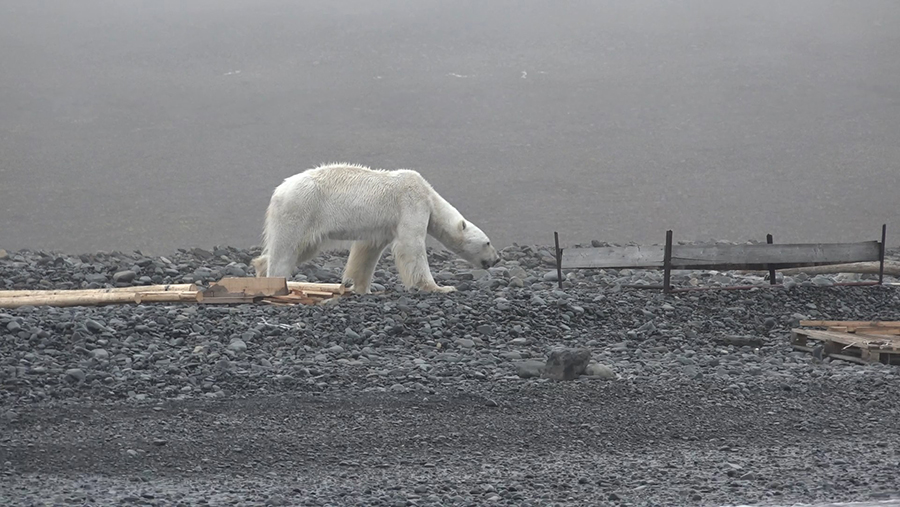
In addition, environmental issues have attracted attention. In particular, with the shortening of the ice age, many animals are isolated on islands most of the time. For example, we have observed "brutalized" polar bears, which, due to poor food, become extremely dangerous to humans.
Among other things, there is politics. In particular, according to the American doctrine, ownerless lands in the Arctic are nobody's land. We have built a scientific hospital on Bennett Island, thus emphasizing the island's unconditional belonging to Russia.
— Why should we pay attention to this problem?
— Well, for example, why do we call Bennett Island by this name, although Russian industrialist Yakov Sannikov was the first to see this land. The polar explorer Matvey Gedenstrom mentioned this in the journal Siberian Bulletin in 1822.
In fact, it was only 70 years after Sannikov that the island was accidentally discovered by the American explorer De Long and named after the sponsor of his expedition, James Bennett Jr. And this name, paradoxically, stuck. However, Bennett was not interested in the Arctic. Therefore, I consider it fair to return the historical name of Sannikov Land to Bennett Island.
There is a similar precedent in the modern history of the Arctic. The pilots saw a new island in the Arctic Ocean and named it Yaya. They didn't set foot there, but they gave me the exact coordinates. Yakov Sannikov did the same, indicating the coordinates of the island.
By the way, the United States claims a number of Russian Arctic territories. Therefore, it is necessary to strengthen positions in potentially problematic areas, securing their names for them. That's what Americans do, by the way. For example, the islands of Krusenstern and Ratmanov (near Alaska) are called in their own way — Large and Small Diomede. The Gulf of Mexico is called the American Gulf.
"A comprehensive expedition is needed to explore the Eastern sector of the Arctic"
— What measures are needed for the development of the Arctic region?
— In general, the Arctic is considered a weather kitchen, but there is almost no up-to-date data from there. Therefore, it is often unclear why certain extreme natural phenomena occur in the Northern Hemisphere. Such as flash floods, large-scale forest fires, and others. To predict them, it is necessary to comprehensively study and monitor the situation in the Arctic on an ongoing basis.
This is a challenge of the times — science needs new field research. However, it is difficult for individual organizations to find the appropriate opportunities and finances. In this regard, a comprehensive expedition is needed to explore the Eastern sector of the Arctic and the offshore shelf, involving all interested parties. This possibility was recently discussed at the Russian Academy of Sciences and received positive feedback.
At the same time, unlike most previous scientific missions in the Arctic, which are primarily focused on resource development or biodiversity conservation, it is important to direct the potential of Russian science to improve the quality and safety of people's lives in the North.
— Which areas are most relevant in this regard?
— If we compare the photos of the modern and hundred-year-old camps, it is not particularly noticeable what science has given the northern people in the north during this period. Where are the promised autonomous energy sources, Russian outboard motors, nanotechnology, and new materials?
For example, in terms of communications, the question here is not even about high—speed Internet, but simply about basic affordable radio communications. So that a person can call an ambulance if necessary. Fiber-optic can solve this problem in regional centers, but the vast territory of Yakutia, for the most part, remains without communication. That's why, by the way, we were forced to develop radio stations "Erel" ("Hope" in Yakut), which differ from the receiving and transmitting devices of the Papanin era only in that they can send text messages to mobile phones. And when will a reindeer herder hold a Russian satellite phone in his hands?
— How is the northern delivery taking place in the new conditions?
— It is still conducted according to Soviet patterns. At the same time, the climate has changed, and the operating time of winter roads (temporary roads that operate in subzero temperatures) has been reduced by 1.5–2 months. Naturally, cargo does not have time to be delivered to remote settlements, and gaps are plugged by air transportation and parachuting vegetables.
To improve the situation, other delivery schemes are needed. And transport based on modern all-terrain vehicles, which do not require spending bottomless amounts of money on building roads drowning in melting permafrost.
Переведено сервисом «Яндекс Переводчик»
