
Common orbit: the heads of Roscosmos and NASA will meet after eight years
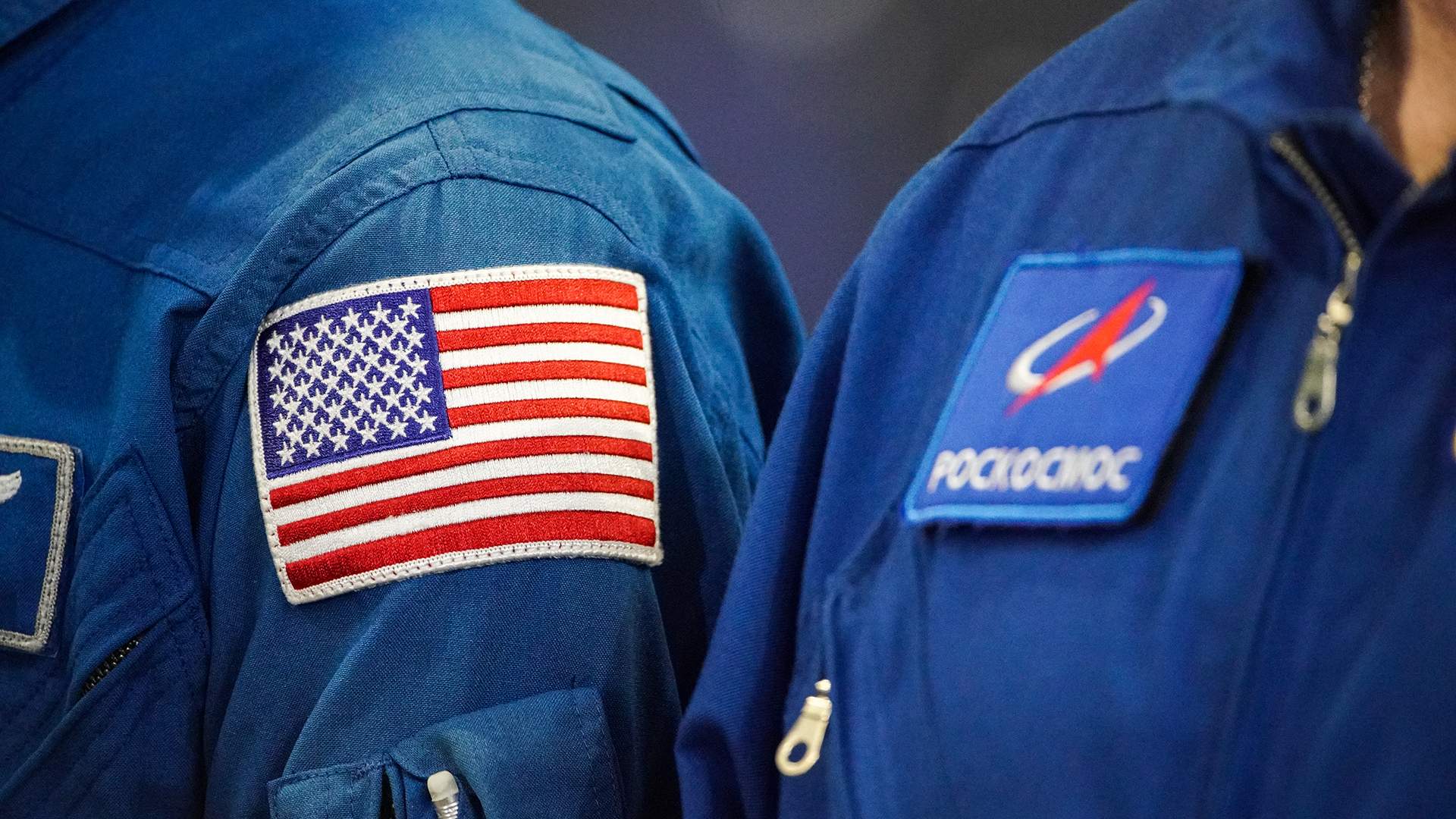
The long-awaited meeting between Roscosmos CEO Dmitry Bakanov and NASA CEO Sean Duffy will take place before the crew of the Crew-11 mission is sent to the International Space Station. Why this is important for the Russian space industry and what, according to experts, it can gain as a result of this cooperation is in the Izvestia article.
Interaction against the background of sanctions
Dmitry Bakanov, who was recently appointed head of Roscosmos, began a visit to the United States. Two meetings are planned as part of the trip: with the crew of the Crew-11 mission, which will include Russian cosmonaut Oleg Platonov, who will make the first space flight of his career, as well as with the head of NASA, Sean Duffy.
"This is the first face—to-face meeting between the heads of the space agencies of Russia and the United States in eight years," Roscosmos State Corporation said on its official Telegram channel.
The central topic of Bakanov and Duffy's meeting was the discussion of the cross—flight program and the future of the ISS. The US interest in this is confirmed by the Agreement on cross-flights to the ISS, concluded in July 2022.

Bakanov's visit program also includes a visit to the Johnson Space Center and an inspection of Boeing's production facilities, where the CST-100 Starliner spacecraft is being developed.
The head of Roscosmos announced that the meeting would take place on the sidelines of SPIEF 2025 during the session "Space Technologies - the future of the service economy", where he described how work with foreign partners is being carried out and what areas are already developing.
"Despite all the sanctions pressure, restrictions and restrictions, we have very close cooperation with many countries. Moreover, it is also going on with the United States," Dmitry Bakanov said at the time.

To each according to his needs
Political consultant and political scientist Marat Khamidullin believes that the main trigger that pushed the United States to unfreeze relations was Russia's rapprochement with China.
— The American elites hoped that the sanctions imposed under the pretext of condemning the fighting in Ukraine would lead to the collapse of the space industry in Russia. However, relations with China and its support did not allow this scenario to materialize, he argues. — Moreover, we see an ongoing technology exchange between our countries.

The conflict between American President Donald Trump and billionaire Elon Musk also played a role here, the expert believes.
— We remember Musk's public threats that he was going to take back his Dragon ships. But this would be a serious problem for NASA, since now only Dragon and Roscosmos deliver American astronauts to the orbit of the International Space Station," explains Khamidullin.
Traditional values
Historically, even during periods of extreme international tension, there have been formats for cooperation, said Nicholas Oxman, an expert in the field of astronautics and author of the Cosmodiver Telegram channel. For example, the Soyuz –Apollo program of 1975, which became the first ever joint manned mission of the USSR and the USA. It was implemented at the peak of the Cold War, when political contradictions reached their maximum.
Saeed Khan, a professor at Wayne State University in Detroit, also sees some scope for cooperation between the United States and Russia in the space sector.
"This includes working together to maintain the operation of the International Space Station for several more years, as well as a cross—flight agreement. "Any dialogue between Russia and the United States should be considered a positive event, given the rather cool relations that have developed in connection with the Ukrainian conflict and the uneven and sometimes caustic rhetoric of President Trump," he said in a conversation with Izvestia.

The dialogue on cooperation in space is promising because it "goes beyond the areas where conflicts determine the degree of interaction," said Khan is convinced.
The first visit of the head of Roscosmos, Dmitry Bakanov, to the United States in eight years underlines the continued cooperation in manned programs, despite political differences, Oxman believes.
— At the same time, Bakanov's possible meeting with Elon Musk is of interest to observers. This is especially important given the leading role of SpaceX (which received a $1.5 billion contract from NASA) in the ISS de—orbiting operation," he notes.
In the near future, we will find out whether, against the background of political restrictions, a private American company will be able to effectively interact with a Russian government agency, the expert is convinced.
Roman Belousov, a science journalist and author of the Space Chronicon Telegram channel, also believes that the head of Roscosmos may focus on issues of interaction with SpaceX, since it is its cargo ships that will ensure the flooding of the International Space Station (ISS). In addition, Bakanov and Elon Musk may discuss scenarios in which the Starship spacecraft will be able to act as part of the infrastructure of the planned Russian Orbital Station (ROS).

Verification for the global community
Roman Belousov also notes that in the light of the negotiations, the prospects for cooperation around national orbital stations, the construction of which is planned to replace the ISS, are coming to the fore.
— The central topic will be the coordination of the timing and procedure for the flooding of the ISS. They need to be harmonized with the plans for the commissioning of modules of the Russian national ROS station," the expert believes.
According to him, the parties can also discuss the formats of joint use of ROS. In particular, the United States still has modules developed for the ISS in storage, and they can potentially be integrated into the configuration of the Russian orbital station as scientific platforms without autonomous infrastructure. This option may resemble the ISS-2 or Mir-3 and compensate for the time and resource costs of the parties.

In addition, during the visit to the United States, possible options for the orbit on which the ROS will be operated may be discussed — polar or moderate (63-72 °), the expert believes. This will determine the composition of the crews, the type of launch vehicles, and the ability of the United States to participate in the project. A solution must be found now.
The level of integration and complexity of current tasks in bringing the ISS together is higher, notes Nicholas Oxman. More countries and private corporations are involved, different standards are combined, the scale of operations is much larger, and the potential risks of environmental and material consequences are higher. As a result, the successful deorbitation of the station will test the ability of the international community to coordinate complex technical projects, and for Russia it will be a chance to confirm its leading position ahead of the launch of its own orbital station.
Space diplomacy
Despite the fact that Russia has never been against events that could bring countries closer together, and has always advocated close cooperation in the space industry, the main problem of such interaction is the attempt to militarize outer space, Marat Khamidullin noted.
— Back in the early 1980s, the United States developed one of the first strategic defense initiatives. The Soviet Union could not stand aside either. The integration of the Russian Air Force with the Military Space Forces in 2015 gave the Americans a reason to accuse Russia of attempts to militarize outer space. In 2018, the United States declared in its National Defense Strategy that space is a theater of military operations," Hamidullin recalls.

The prospects and possible agreements between Russia and the United States should be assessed with caution, he believes. According to him, while the latter see space as a theater of military operations, rather than opportunities for the development of both countries, there is no need to talk about their success and effectiveness. At the same time, in his opinion, space diplomacy often turns out to be much more effective than terrestrial diplomacy.
—The ISS project proved this by the fact that for more than 20 years, despite economic difficulties, disagreements, conflicts and sanctions, leading experts from many countries, including those unfriendly to each other, jointly implemented this project, shared their experience and overcame difficulties," the expert recalls.

The visit of the head of Roscosmos can be a positive sign and can lay the foundation for broader trade and diplomatic exchanges, American political analyst Jeremy Kuzmarov told Izvestia.
"However, I would not be too optimistic, since the Trump administration intends to establish US hegemony in space, and therefore cooperation with any geopolitical rival will be limited," he said.
Kuzmarov recalled that in May, Trump announced his intention to create a multi-level missile defense system, the Golden Dome, thus reviving the unrealized Reagan administration space missile shield project.
"In fact, it is designed to repel any potential nuclear attack from Russia and may allow the United States to take more aggressive military action against Russia without fear of retaliation," the expert noted.
Переведено сервисом «Яндекс Переводчик»
