
The global burden: The Palestine Conference divided the West
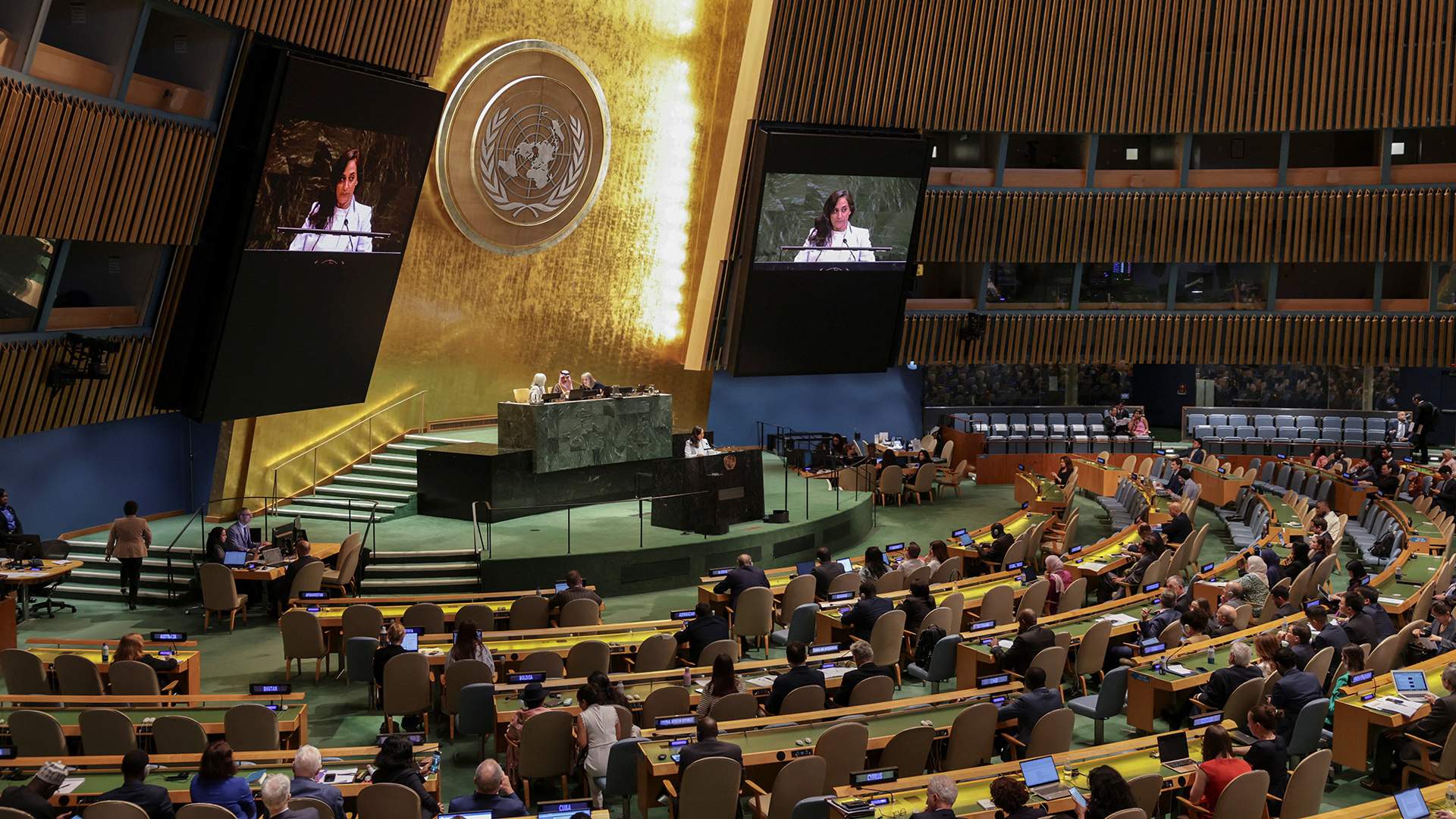
The conference on the establishment of a Palestinian state, which opened at the UN headquarters with the participation of Saudi Arabia and France, has become the largest international initiative aimed at a Middle East settlement in recent years. Despite the boycott by the United States and Israel, representatives of dozens of countries arrived in New York, expressing support for the two-state solution. The forum reflected the growing split within the West itself over Palestine. Paris announced its readiness to recognize it in September, and pressure is increasing on the government in London to follow suit. Washington called the conference "useless and premature," but Europe and the Arab world believe that the Palestinian issue cannot be postponed any longer. Russia is represented at the conference by Russian Deputy Foreign Minister Sergei Vershinin.
International Conference on Palestine at the United Nations
An international conference on the establishment of a Palestinian state has started at the UN headquarters. Despite pressure from Washington, which called the meeting "useless and untimely," the participants expressed their determination to advance a "just settlement" of the Palestinian issue and stop the humanitarian catastrophe in Gaza.
The conference, co-chaired by Riyadh and Paris, brought together high-level representatives from Europe, Asia, Africa and Latin America. Israel and the United States pointedly refused to participate. According to Washington, holding such a forum only undermines real efforts to establish peace and encourages the actions of Hamas.
Nevertheless, the UN has other assessments. In his welcoming speech, Secretary General Antonio Guterres stressed that the meeting was a "turning point" in efforts to end the Israeli occupation and implement the two-State solution. Saudi Foreign Minister Faisal bin Farhan said: the security and prosperity of the Middle East is impossible without the restoration of the rights of the Palestinian people and the establishment of a state within the 1967 borders with East Jerusalem as its capital.
Eight working groups were organized within the framework of the conference, each of which dealt with separate aspects: from security and peace building to mechanisms for the reconstruction of Gaza and sanctions measures against Israel. The working groups were led by representatives from 17 countries. Representatives of the League of Arab States and the European Union also made presentations.
Recognition of Palestine by France
The statement by French President Emmanuel Macron attracted particular attention. On the eve of the forum, he confirmed that Paris is ready to officially recognize the State of Palestine during the September session of the UN General Assembly. If this happens, France will become the first country from the G7 group to take such a step. Macron's idea has already been supported in the Arab world.
Palestinian security expert Mohammed Al-Masri, in an interview with Izvestia, stressed the importance of French recognition of Palestine, but pointed out that it was limited without practical steps: "Recognizing France is an important step, but making it a reality requires international partnerships and real pressure on Israel." According to him, Paris has significant international weight as a member of the UN Security Council and an important player in Europe and the West, but without concrete actions on the ground to create a Palestinian state, this step will remain largely incomplete.
Britain, according to media reports, is also considering the possibility of recognizing Palestine. Pressure on Prime Minister Keir Starmer is increasing from members of the Labour Party, the Government and the Foreign Ministry. According to Politico, a third of parliamentarians, including cabinet members, have signed a letter calling for official recognition. However, Starmer himself is afraid to take this step, fearing complications in relations with the United States and accusations of anti-Semitism.
Against the background of new statements about the recognition of Palestine, the internal division in the Western community is rapidly intensifying. According to Jamal Wakim, a professor at the Lebanese University, for the first time in decades, the issue of Palestine has become a line of demarcation not only between the countries of the West and the Global South, but also "within the West itself."
"Some states, primarily in Southern Europe and Scandinavia, are striving to revise their previous policies and adopt a more humane position, while others, including Germany and the United States, remain firmly committed to their allied obligations to Israel," the expert told Izvestia.
Spain, Ireland, Norway and Slovenia have already declared recognition of a Palestinian State in 2024. Sweden and Iceland had previously taken similar steps. Today, more than 140 countries officially recognize Palestine, including Russia, China and India.
Netanyahu called Paris's actions "Hamas' reward for terror"
Israel's reaction to Macron's initiative was harsh. Prime Minister Benjamin Netanyahu called Paris' actions "Hamas's reward for terror," and Foreign Minister Yisrael Katz said the recognition was "an insult to the memory of the victims of October 7."
The latest survey among Israelis also attracts attention. According to a study conducted by the Pew Research Center in May 2025, only 21% of citizens consider peaceful coexistence with a Palestinian state possible. This is a historical minimum. At the same time, there is a growing gap between the Jewish and Arab populations within Israel itself in relation to the prospects for the creation of Palestine.
The UN conference demonstrates that despite fierce resistance from Washington and Tel Aviv, support for the idea of a Palestinian state in the international community continues to grow. At the same time, pressure is also increasing within Western democracies, primarily in Europe, where fewer and fewer politicians are willing to turn a blind eye to the humanitarian catastrophe in Gaza.
Russia is also taking part in the conference: Deputy Foreign Minister Sergei Vershinin has arrived in New York.
Moscow consistently supports the implementation of the 1947 United Nations two-State solution. On July 29, at the Sixth World Conference of Parliamentary Speakers in Geneva, Federation Council Chairman Valentina Matvienko held a meeting with Chairman of the Palestinian National Council Ruhi Fattouh.
"We deeply feel the tragedy of the Palestinian people and now we see the main task in working to stop the bloodshed as soon as possible," she said.
On July 28, a rare recent telephone conversation took place between Russian President Vladimir Putin and Israeli Prime Minister Benjamin Netanyahu. According to the Kremlin's press service, the leaders discussed tensions in the Middle East, while the Russian side reaffirmed its commitment to an exclusively peaceful settlement.
Переведено сервисом «Яндекс Переводчик»
