
Tell us about shopping: Russians have started spending more in stores
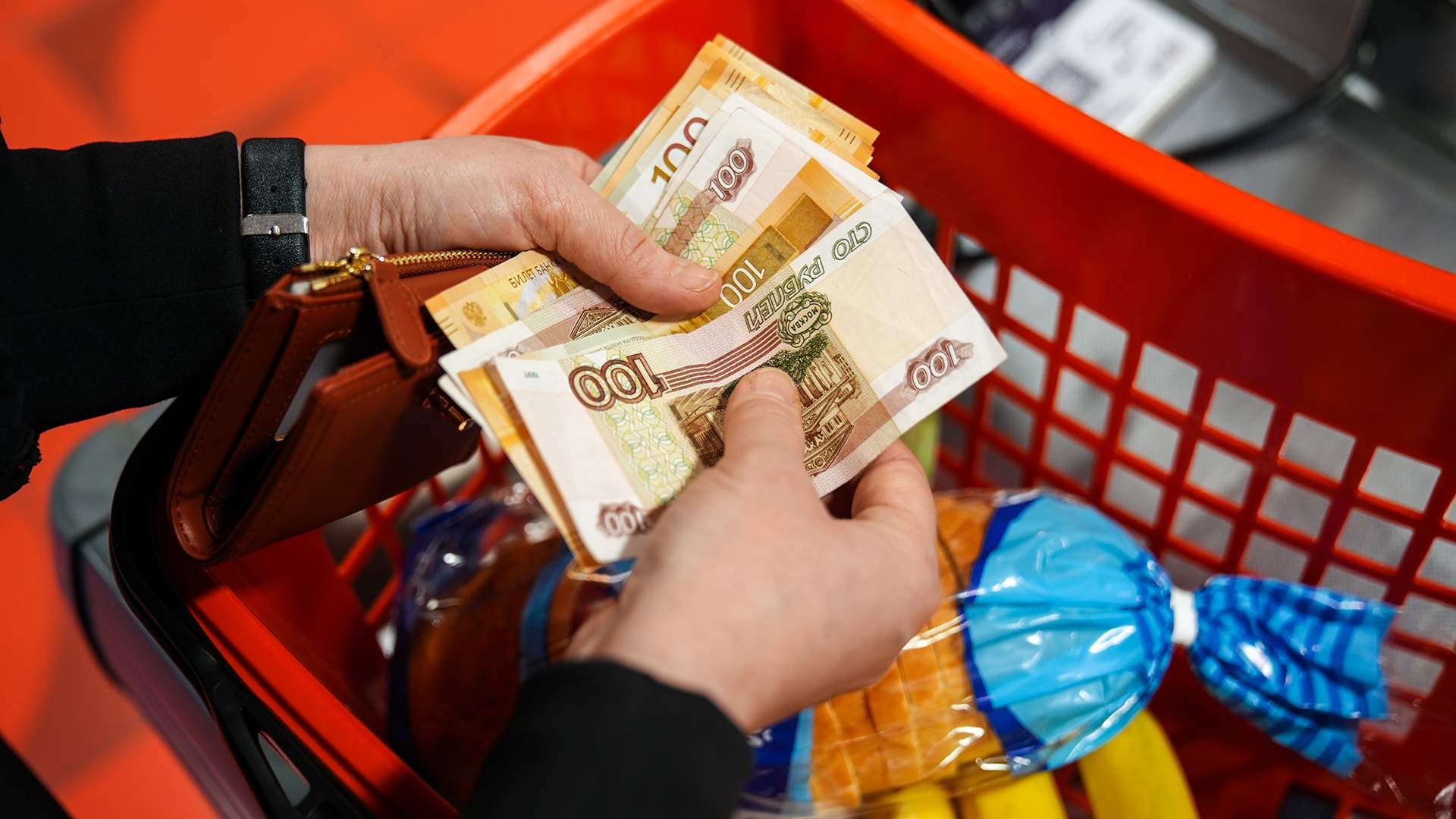
A new study by SberAnalytics, conducted in the first half of this year, notes an increase in both the number and amount of purchases made by Russians. Moreover, we are talking about hypermarkets and electronic platforms. Experts note that discounters have made a major contribution to this dynamic. Read about the structure of purchases and the factors influencing prices in the Izvestia article.
More shopping and spending
According to a study conducted on a sample of 111 million customers, during the first half of the year, the average check in Russia increased by 10% compared to the same period last year. The number of purchases also increased by 4%, which is explained by the revival of demand.
The report notes an average growth of 9.5% in offline trading (the average receipt is 556 rubles). Russians leave an average of 1,474 rubles in hypermarkets (+7.5%), 807 rubles in supermarkets (+9%), and 666 rubles in hard discounters (+9.4%).

Online sales also saw an 8% increase in receipts, to 1,150 rubles.
The most significant increase in the average bill was recorded in the Volga, Far Eastern and Siberian Federal districts — by 13% (976 rubles), 12.5% (1219 rubles) and 12% (960 rubles), respectively. The most expensive receipt is in Moscow (1,315 rubles).

We buy in a different way
We are talking about an average bill, not total spending on retail goods," Alexander Lebedev, senior lecturer at the Marketing Department of the Higher School of Business at the National Research University Higher School of Economics, draws attention.
"About half of Russian retail sales are in the food sector, which has seen a fundamental shift in consumer behavior in recent years," he says.

According to the expert, stock purchases are increasingly giving way to situational consumption on request.
"If earlier customers preferred large packages and rare purchases in hypermarkets for a large amount, now, with the development of the density of the network of modern convenience stores, as well as the increase in the value of time and the expansion of online delivery, the frequency of purchases has increased with a decrease in the average receipt per purchase," he said in an interview with Izvestia.

The expert called the change in the socio-demographic characteristics of the population an additional incentive, in particular, an increase in the proportion of households of 1-2 people. The consequence of this, according to Lebedev, was a decrease in the frequency of purchases with an increase in the average amount of each of them.

Why are prices rising?
According to ACRA, food inflation in the second quarter of 2025 was about 12.4% (compared to 11.8% in the first quarter of 2025), and the growth of the average receipt in food retail follows this indicator — the growth of the food market in physical terms did not exceed 3%.
Anton Geise, director of the ACRA Corporate ratings group, told the publication that the decrease in food inflation in the second quarter was much less pronounced, which reflects the continued double-digit growth in the average receipt in food retail.
"Against the background of a shortage of labor in Russia, both nominal and real wages continue to grow on average, which continues to contribute to double—digit growth in the average bill and food inflation," the expert said.

Alexander Schneiderman, Head of Alfa-Forex's Sales and Customer Support Department, described the findings of the study as consistent with the norm.
— Yes, growth has occurred in all online and offline trading positions, but at a level that corresponds to annual inflation, — he commented.

According to the analyst, against the background of rising gasoline prices and wages, logistical costs are increasing.
— We explain the moderate dynamics primarily by optimizing processes, including through the introduction of high-tech software and equipment in warehouses and retail outlets, including for personnel management. Large chains have more such opportunities, which, coupled with wholesale purchases in large quantities from manufacturers, is more profitable compared to convenience store formats, where the purchase price is initially higher," the expert noted.
What are the prices going down for
At the end of July, the Central Bank recorded deflation, that is, a real decrease in the value of the consumer basket. Alexander Lebedev points to seasonal factors of lower prices. However, he notes that tight monetary policy and the strengthened ruble also played a role.
The least pronounced price spikes are observed in non-food retail, especially in terms of imported goods. For example, compared to the second half of 2024, household appliances and electronics have fallen significantly — by 10-20%. This is primarily due to the strengthening of the Russian currency.

There has been no decrease in prices in the clothing segment so far. The respondents of the publication explain this phenomenon by the main principle of seasonal purchases, "prepare the sleigh in the summer."
— The range of summer clothes was ordered and sewn at a price of 100 rubles per dollar and above. We will feel the current strengthening of the ruble in the prices of autumn-winter clothing and shoes," Ekaterina Kosareva, managing partner of the VMT Consult analytical agency, is confident.
Emphasis on saving
According to Anton Geise, the inflation rate observed by consumers in July was 15%, so Russians have not yet felt a strong slowdown or even a general decline in prices. And in this context, the expert notes, it is natural that less affluent segments of the population, whose nominal income growth lags behind inflation, increasingly prefer hard discounters with low margins and prices, despite the limited range.

According to Nielsen, Russians are increasingly visiting hard discounters in 2025 — up to five times a month. These are retail outlets with a very simple layout of goods (usually on pallets), unpretentious renovation of premises, and a relatively low product range.
By the end of 2024, the total share of hard discounters was 5.61% and, according to Infoline forecasts, will increase to 5.9% by the end of the year.

Discounters continue to actively gain popularity in Russia. The reason is simple — savings are important for a significant part of customers, and discounters can reduce costs due to the simplicity of stores, a limited assortment and an emphasis on the most necessary goods, says Magomed Magomedov, an analyst at Finam.
—The demand for hard discounters well reflects the growth of Chizhik's operational metrics ahead of Perekrestok and Pyaterochka in the latest X5 Retail Group report," he said.

Other experts explain the growing popularity of discounters by dozens of outlets opening per year for each brand. Elena Kosareva notes that previously such outlets were opened in industrial zones where rent is cheap, now small formats of federal retailers are increasingly found within walking distance from home or near shopping malls and markets.
— Thanks to these points of sale, discounters are no longer perceived as stores for the poor. That is, the growth of interest in discounters is not necessarily associated with a drop in real incomes, as one might assume, — Ekaterina Kosareva believes.
Alexander Lebedev adds that in recent years, the discounter's format has been moving away from the image of a chain with the cheapest goods towards offering its own brand products. Although the average discount receipt is lower than in a supermarket, the growth rate of traffic predicts that retail chains will continue to develop this format.

Straight to the table
By the end of 2025, according to Data Insight forecasts, the average grocery delivery receipt (e-grocery) will be about 1,535 rubles (which is 2% higher than in 2024). This field is young and fast-growing. By the end of 2025, the number of deliveries is expected to grow to 1.1 billion, and in monetary terms to 1.6 trillion rubles (+33 and +36%, respectively).

The highest popularity of delivery is recorded in Moscow and St. Petersburg, as well as in cities with a population of millions, where population density and income levels are higher. According to Finam analysts, the average delivery receipt usually exceeds offline purchases and ranges around 1,700 rubles in both capitals. It is 10-20% lower in the regions.
The growth in the e-grocery sector will be supported by several key factors, Ekaterina Kosareva believes.
— Firstly, the scaling of technological solutions inland, to the regions: more and more stores will offer online delivery. Secondly, retailers will increase their positions in the Ready—to-Eat section upon request - there is a demand for this, especially in cities with millions of residents. Thirdly, the behavioral factor: having tried at least once and appreciated the advantages of grocery delivery at home, ordering it becomes a habit," the expert notes.

She calls marketing and balance management another factor. Retail outlets are already offering discounted delivery on perishable goods (fresh confectionery, bread products) if the order is placed at night (for example, from 22 to 2 o'clock) in the morning. Customers have a sporting interest in ordering their favorite dishes cheaper, and retailers allocate resources more efficiently throughout the day.
Переведено сервисом «Яндекс Переводчик»
