How fires in Turkey affect the economy and tourism. Analysis

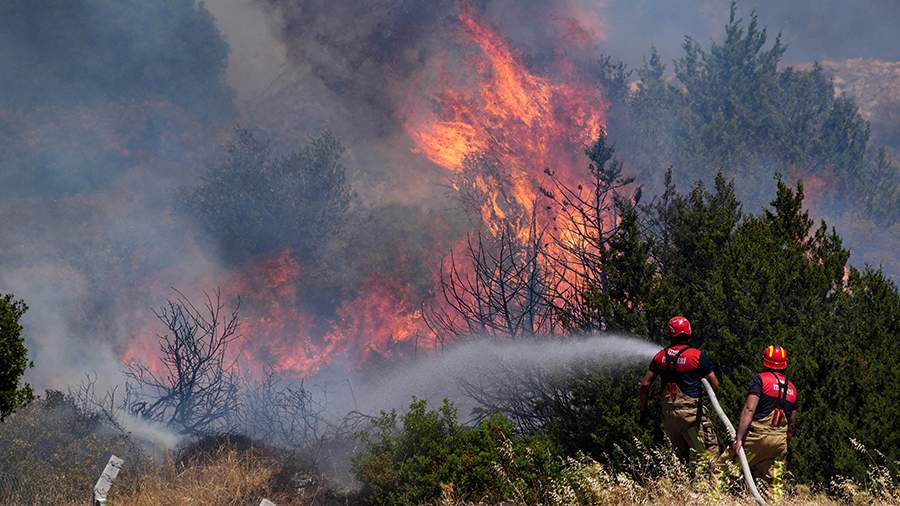
Wildfires have been raging in Turkey for several days. In particular, the flames spread to the eastern territories of Antalya province and reached residential areas in the city of Bursa. At the same time, the country suffers from natural disasters every summer against the background of extremely high temperatures, and not only forests, but also settlements, and tourist infrastructure, including hotels, suffer. How exactly the annual natural disasters affect the Turkish economy is analyzed by Izvestia.
Preparing for fires
• In several eastern regions of Turkey, the thermometer has almost reached 50 degrees. In the city of Silopi, a record value for the entire time of meteorological observations was recorded — 50.5 degrees. According to the forecast of the General Directorate of Meteorology, extreme heat exceeding the climatic norm by 7-12 degrees will remain in the country at least until August 2. Against this background, forest fires began, which raged in the country for several days. The fire engulfed several provinces, including Ankara and tourist Antalya.
Every year, the Turkish authorities are accused of insufficient emergency preparedness and poor response to natural disasters. The criticism was particularly fierce in the summer of 2021, when 137 forest fires simultaneously broke out in various regions of the country, affecting 30 provinces. Then Turkish President Recep Erdogan and his cabinet of ministers found themselves in the center of public discontent after it became known that the state did not have serviceable aircraft suitable for extinguishing fire from the air. This has intensified accusations of inefficiency and organizational unpreparedness for large-scale natural disasters.
• After the crisis of 2021, when aviation resources were overloaded, the government significantly increased funding for this area by concluding lease agreements for additional aircraft and expanding its own fleet. However, one of the main problems remains the uneven distribution of technical resources across regions. Despite the presence of a significant number of fire fighting equipment and aircraft, they are often concentrated in certain areas, while remote or hard-to-reach areas do not have sufficient equipment.
• An equally important problem remains the poor preparation of the local population for fire operations. In many cases, people do not know how to evacuate properly and what to take with them. This exacerbates the panic and slows down the movement of special equipment. At least 10 people have died in the past few days. It is becoming obvious that it is necessary to increase the preparation of the local population for possible spontaneous forest fires.

• During forest fires, tourists at risk should prepare in advance. Since such emergencies often develop rapidly, it is important to be able to navigate unfamiliar terrain and know how to behave in conditions of smoke and possible evacuation. Before traveling to a region where fires are possible in the summer months, you should find out the emergency services' contacts in advance. You should always have a small light bag ready with the most important things that may be needed during the evacuation, in particular, copies or originals of documents, chargers, water and a small snack. You should also specify possible evacuation routes and phone numbers of local emergency services in advance. For example, in Russia it is 112.
The impact of fires
• Forest fires affect the Turkish economy every year. Although the scale of the emergency may vary, the total damage remains consistently high. Fires require the mobilization of huge resources — aircraft, ground equipment, work crews, as well as high costs for logistics and public safety. Ankara has to spend millions of dollars on extinguishing fires and subsequent restoration of forest ecosystems. The budget is also spent on preventive measures and the development of an early detection system for fires.
• However, the direct financial burden is only part of the problem. A significant part of the damage is caused by indirect losses, which are manifested in a decrease in income from tourism, loss of agricultural potential, destruction of infrastructure and reduction of natural resources. Tourist regions such as Antalya, Izmir and Marmaris are suffering the most, as the fire often approaches hotel complexes, historical sites and coastal areas. As a result, Turkey is losing millions of dollars.
• With a high level of tourist flow, especially during the summer season, evacuations, smoke, cancellation of bookings and stoppage cause significant damage to local economies and the country's budget. Tourism in Turkey is an important revenue component of the budget, and even a short-term decrease in the number of tourists arriving due to fires can lead to large losses.
• Agriculture is also under serious pressure. Many forest fires occur near farms and greenhouse complexes. Fires destroy crops, orchards, bee hives, livestock and equipment. This causes not only short-term losses, but also disrupts the sustainability of the food chain in certain regions. The loss of arable and farmland affects farmers' productivity and incomes, as well as provokes an increase in food prices on a local and national scale.
• Another long-term consequence of fires is the loss of forest resources. Forests provide timber, medicinal plants, support biodiversity, regulate climate, and promote water retention in soils, reducing the risk of flooding and erosion. The restoration of burnt forests can take decades, and all the while the economy is feeling the effects of a shrinking resource base.
• In addition, fires increase the burden on municipal and regional budgets. Local governments are forced to spend resources on evacuation, protection of residential areas, provision of medical care and temporary accommodation for evacuated residents. The authorities will also need to restore power lines, water supply and road infrastructure, as well as pay material compensation to affected residents and businesses.
When writing the material, Izvestia interviewed:
the economist Maxim Chirkov.
Переведено сервисом «Яндекс Переводчик»
