"You can't make a body horror movie without being inspired by Cronenberg"

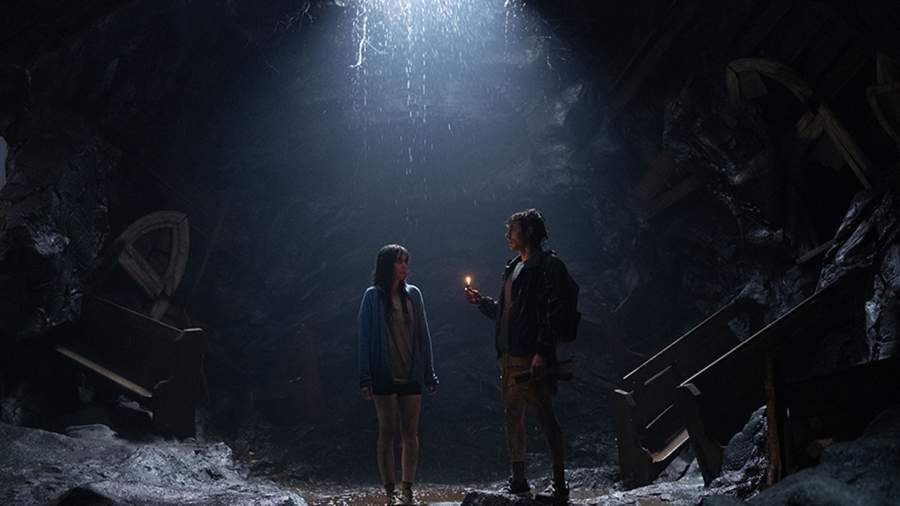
The Sundance hit and one of the most intriguing horror films of the year, "One Whole," aka "Together," will be officially released in Russia this week. At the center of the story is a story about a man and a woman who, after ten years of living together, suddenly became suspiciously attracted to each other. Literally — and quite creepy. On the eve of the premiere, Izvestia talked with the filmmakers and realized how important it is to read Plato carefully, listen to the Spice Girls and have a sense of humor.
"It was a completely crazy and original text"
— Let's start with a simple question.: How do you feel about the Spice Girls? Their old hit plays a big role in the movie.
Dave Franco and Alison Brie (chorus): We love the Spice Girls!
JF: We even have a T-shirt with them on it.

EB: I've been fascinated by them since school. Ginger Spice has always been my favorite, and I used to dress up in her for Halloween. And, you know, we moved mountains to make their song sound in the movie! We were bombarded with letters from their assistants, managers, agents, we sent them pictures of me in a Spice Girls T-shirt, and begged them to give us the rights to use the song. And they finally allowed it!
— So you chose this song?
EB: No, the song was in the script from the very beginning, and it really made sense. But until a certain point, everything turned out in such a way that we no longer believed that we would get the rights. They even started looking for a replacement, but nothing seemed to fit at all. We were just lucky in the end.

— You know, I can't understand how you managed to play a couple who are clearly not destined to be together. This is acting chemistry, the point of which is to show that there is no chemistry between these people. At the same time, you are just behind the scenes, in ordinary life, just like a couple with a lot of "seniority".
JF: Our characters' relationships are not at all like ours in real life. The relationship is on the verge of disintegration, they clearly lack love, although it seems to be present anyway. If you've been living with someone for ten years, it doesn't matter what's going on between you, your feeling is still alive somewhere deep down. And it was very important for us to give the viewer this feeling, this hope, so that the viewer could relate to the characters, connect and believe in them even when the characters are not at all nice to each other.
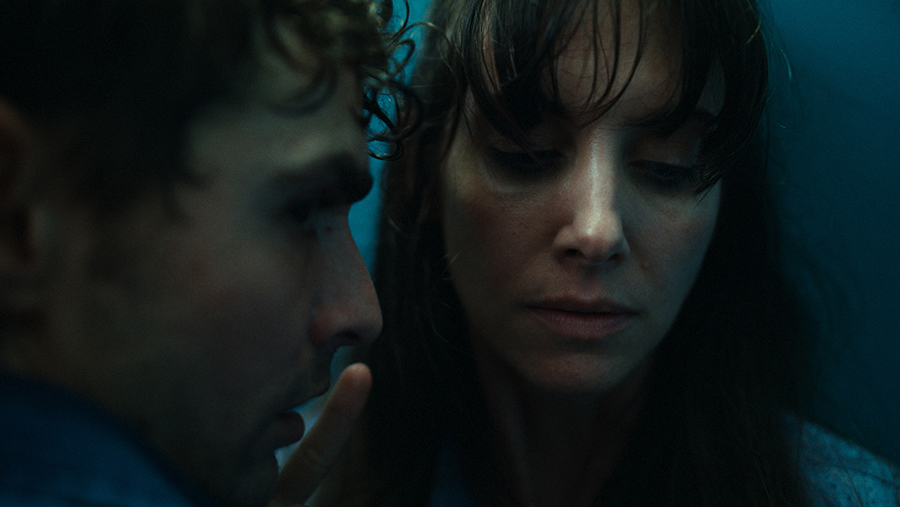
E.B.: We hoped that our natural chemistry, which has been between us for a long time, and the fact that we also like working together, would help us create our images on the screen. I think everything worked out.
— I really liked that the film has a funny dialogue about what to call someone who is not your husband, but the word "boyfriend" somehow does not fit. Do you think such definitions are even necessary and important? In real life, not in the movie?
EB: And here's a funny thing. When we got married, all our unmarried friends started torturing us: well, what has changed? Is marriage different or not? And we knew that yes. Someone even told me why I keep saying, "husband," "my husband." I suddenly realized that even though it's funny, I don't like all sorts of titles and labels, but I like that I have a husband. It's like being on the same wavelength.
— In Russia, they often say that getting married and signing are different things. Is there a difference for you too?
E.B.: We didn't get married.
JF: We didn't want such a big, beautiful wedding at all, with a church and a crowd of people. We wanted everything to be quiet, calm. We got married right at home, on the back porch, with only our families there. Then we rented a pizzeria and invited no more than 60 of our closest friends there.
EB: In my opinion, everyone decides for themselves here. It depends on your faith, your family, and many other factors. To each his own.

— I spent the whole first half of the movie thinking about androgynes and couldn't figure out if it was just me or if it was in the movie. And then there was a dialogue about androgynes, and suddenly this topic became the main one. Do you care about it too?
EB: In the sense of halves? Kindred spirits? Personally, I believe that a person can have quite a few such soulmates. I don't really agree with Plato, who says that a person is split, so then he is doomed to look for his other half. Life is rich enough to have a place for romantic relationships and wonderful friendships. Sometimes a person needs a lot and a lot of things to feel whole.
— In every review of the film, there is a mention of David Cronenberg. Do you love him? And did they try to play the characters in the spirit of Cronenberg on purpose?
JF: The author and director of the film, Michael Shanks, was inspired by Cronenberg. We also love his films very much.
EB: Yes, a brilliant director!
D.F.: We watched all his films in one gulp during the pandemic. And the fact that they write everywhere about his influence on the film, I personally consider it the best praise.
EB: You can't make a body horror movie without being inspired by Cronenberg. And this is despite the fact that he has tried himself in many other genres and has been successful everywhere.
— You didn't show him the movie?
D.F.: We haven't met with him yet, but if he wants to see the painting, we'll arrange a special screening for him!
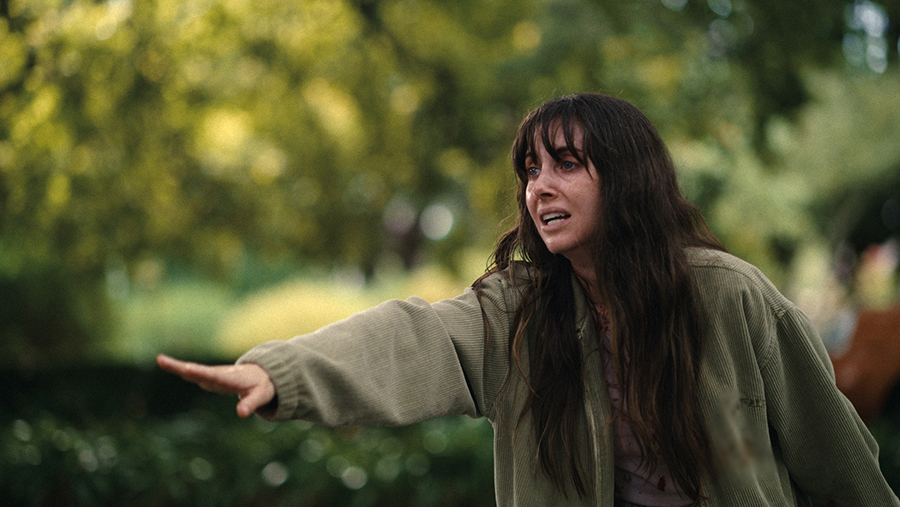
E.B.: In general, we'll do whatever he wants!
— How did you meet Michael at all? Did he just send you the script and did you like it?
JF: To be honest, we got to know each other because he offered me a different scenario. Moreover, I understood that this character was clearly not mine, I would not play. But I also liked the way Michael writes, so I decided to get to know him personally. We started talking, and the conversation turned to horror. It turned out that we both adore them.
EB: Yes, and Michael really liked Dave's directorial debut "Who Didn't Hide".
D.F.: And so he says to me: listen, I have a horror script, I've been working on it for quite a long time, will you take a look? And he sent me this script, "One Whole." I sat down to read, and I was just sucked in, carried away, it was a completely crazy and original text.
EB: Dave immediately sent me the script, and I immediately realized that we needed to make this movie. Because we were also a couple who had been together for ten years, we transferred a lot of our relationship to the characters. And I also really liked the script, of course.
— Isn't it scary to play such a pair? There's a certain risk, isn't there?
D.F.: We were most afraid that the audience would come to watch and say: yes, there is no chemistry between these guys at all, they don't need to be together.
EB: That would be a disaster. And we would start looking at each other and wondering: hey, is there really chemistry between us? But that's how we used to play together, for example, in the movie "Small Hours". We had romantic scenes there, even though Dave had them with other actresses there. So, I forgot what I was getting at.…
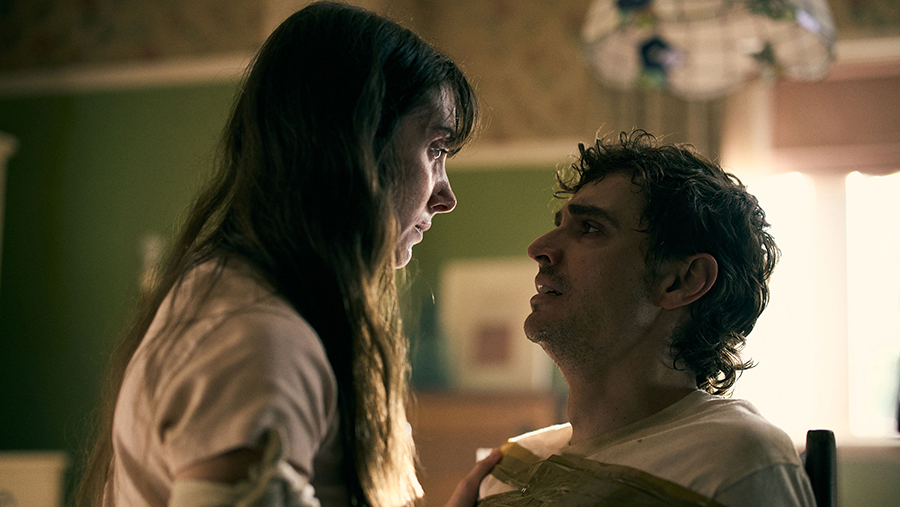
D.F.: Yes, tell me, what are you all about!
EB: In short, it was a challenge, it was a risk, but still we were more or less calm about it, because we had done it before.
JF: The only thing is that in some scenes we felt very vulnerable. For example, when they were filmed without clothes. It's always very difficult, it's exhausting — the physicality. Hopefully, everything worked out.
EB: In addition, we had a lot of different tricks, special effects, makeup in the film, but we could feel it all, see how it looked. But there are also visual effects that are applied later, after installation. We knew this on set, and we tried to play with our prosthetics in such a way that it would somehow fit into computer graphics. And that was really scary, because it might not work out.

"Plato's dialogue "Feast" was like it was written for my film"
— Michael, did you really have to work on the script for a long time? How did the idea come about?
— I guess I was inspired by the fact that I had been in a relationship for more than 16 years and suddenly thought about what it really means to share life with someone else. Can there be such an interpenetration here that it will turn into a concept? Show it so literally that it turns out to be a horror based on the fear that if you are already strongly connected by souls, then the flesh would not turn into the same strong bond. And then I sat down to write the script.
It was as if I was resisting the idea of ceasing to be a person and becoming a part of something eternally whole, bigger. And I've felt it in my life. And it all started with the fact that I suddenly noticed that we both have common friends, we eat the same thing, we breathe the same air. I've already lost track of where I end and she begins. That's what I started making movies about.
— We have already talked with the artists about the dialogue about how it is very difficult to find a name for the person you live with. This name problem is a philosophical topic, quite serious.
— This dialogue also had a backstory. We started talking about it long before the wedding. I mean, we've been living together for a long time, but we're not married. And it's kind of weird, if you're over 30, to say "my boyfriend," "my girlfriend." There's something infantile about it. It's like you're teenagers. But at the same time, we are not husband and wife.
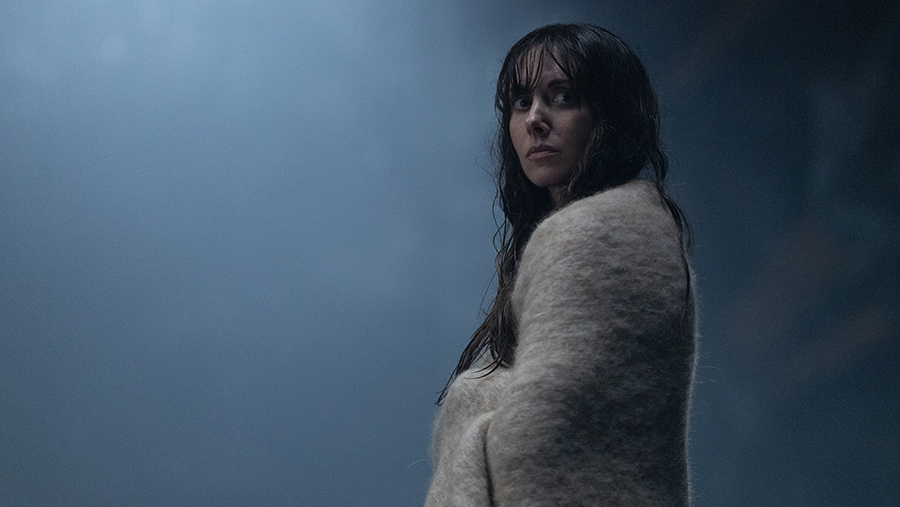
Look at the variety of relationships between people, so many different types, and everyone somehow gets along in our world today, but we still use old-fashioned values, although often the same words describe completely different relationships.
— We have a saying in Russia that "whatever you name a yacht, it will sail." And I just wanted to move on to the word "androgynous," to Plato, to mythology. How did they arise in the script?
— From Plato's dialogue "Feast", of course. I had to introduce the idea of androgyny somehow, and the character had to somehow explain this idea to another character so that he would perceive what was happening from a philosophical perspective.
To be honest, I didn't know about the "Feast" before that. I was just Googling some myths and philosophical concepts on this topic. And as a result, I came across the "Feast", I was delighted. It's like this dialogue was written for my movie! I was also struck by how differently people tried to portray what Plato described. Some of this turned into sketches for the film. But at the same time, the idea is not new, it has been played out more than once in romantic comedies, we just looked at it a little differently.

— Did you know right away how you would show this "interaction" of the characters?
— It was clear that some things would have to be solved with makeup, some with graphics. But my team and I immediately discussed the need to distance ourselves from the body horror of the 80s, classics of the genre. Everything was so slippery, sticky, and disgusting. I wanted to slightly "dry out" what was happening in order to make the viewer more uncomfortable.
— It seems to me that the idea that there is something creepy about being close to each other, there is a lot of Freudianism, the film is generally saturated with Freudianism. And it works because you somehow saturate it with humor, sometimes it's just a romcom.
— Thank you very much, it's very nice to hear that. It's just that I started with comedies, I understand this genre, so I wanted it to be fun here too. That is, when I was writing the script, I wanted it to be creepy and dramatic, but the longer I wrote, the more I understood the absurdity and delirium of the concept. And then I decided that I would not fight it, but just show the whole comedy openly.
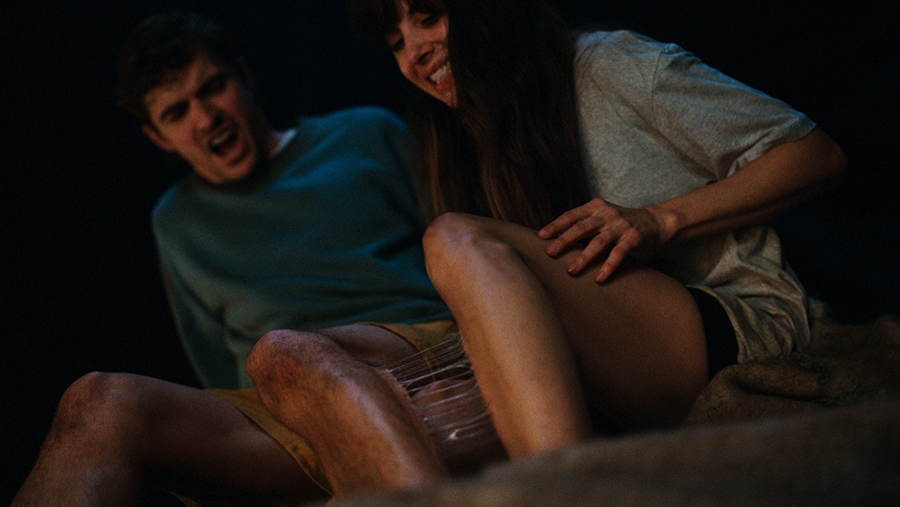
I've been thinking about the future viewer all the time. So somewhere I have a serious and scary horror, and somewhere I let the audience relax, joke with them, why not? I'm not driving it to the point of absurdity, so that the viewer starts to perceive it as some kind of joke. He just has to tremble and smile. I specially watched this film in the auditorium, I saw that everything works and that thanks to this, the viewer spends the third act, which is made in a special register, already fully connected.
— It is known that the film is a co—production of Australia and the USA, but could you tell us specifically for the Russian audience what is specifically Australian and what is American in the film?
— I think it's a completely Australian film. Only the money, the main actors, and a few producers were American. The whole band was Australian, and the preparation, filming, and post-production were also in Australia. It's just that it's sometimes presented as American, but it's just easier to promote it, get funding, markets, get to Sundance, which, of course, is just a dream.
— Now there's actually a whole wave of body horror, a new breath, there's not just "Substance". Why is everything suddenly so lively?
— Body horror is an evergreen horror subgenre. Because everyone has bodies, and people have strange relationships with those bodies. What could be clearer and simpler than imagining that your body isn't listening to you, that it's changing, and there's nothing you can do about it.
Personally, I'm a terrible hypochondriac. I keep imagining that I'm dying of something. Therefore, the nature of fear in the film is that the threat is not from the outside. You cannot escape or hide, you cannot destroy, because there is something inside you and it will stay with you forever. Anyone has ever felt that their body is betraying them, that it is degrading. And you can refer to this, it's easier for people to understand this.
Переведено сервисом «Яндекс Переводчик»
