- Статьи
- Economy
- Takeaway business: the Federation Council proposed to ban the operation of warehouses and storage facilities in residential buildings

Takeaway business: the Federation Council proposed to ban the operation of warehouses and storage facilities in residential buildings
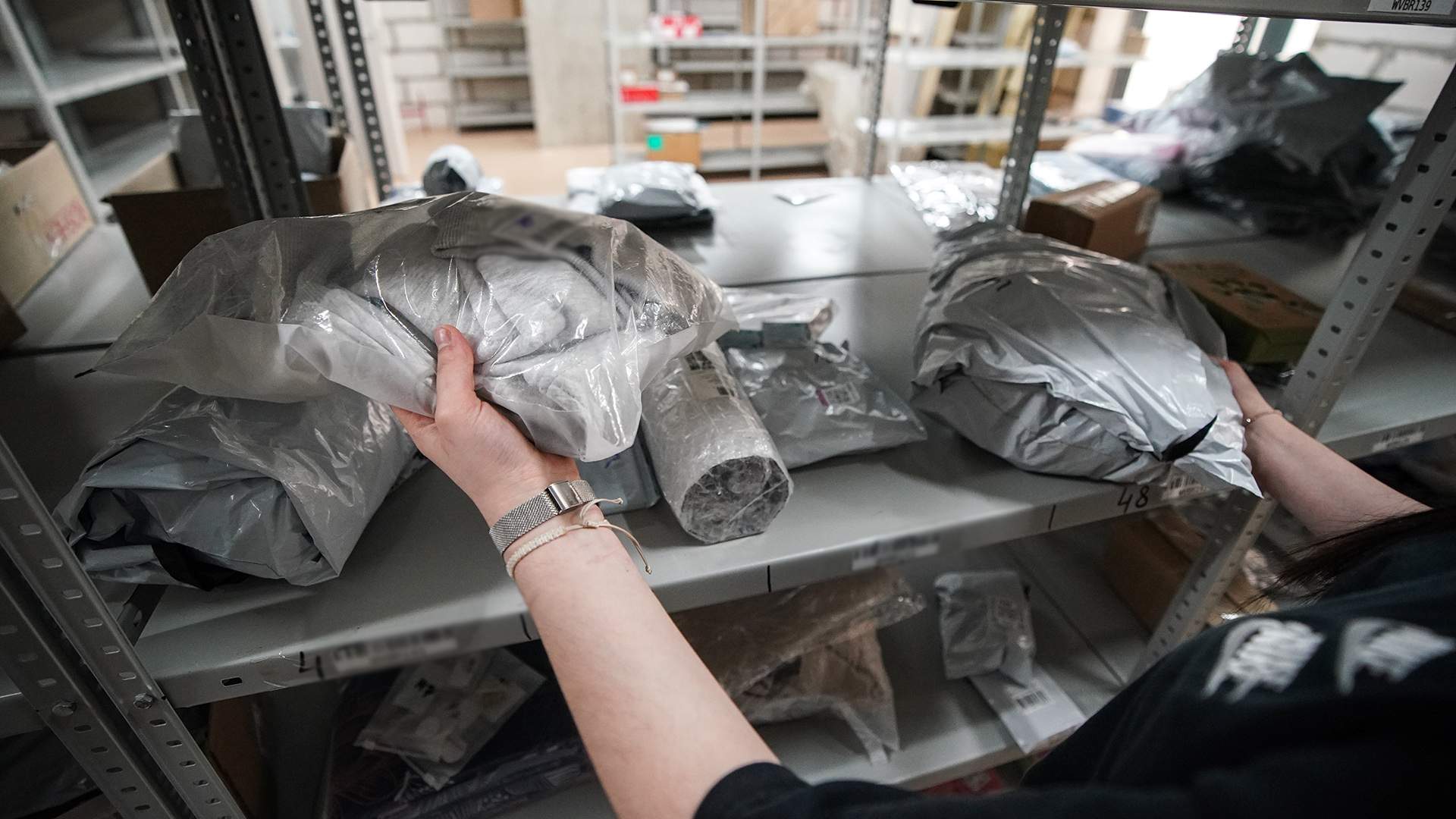
Warehouses for processing and fast delivery of online orders (darkstores), as well as order pick-up points (PVZ), are under threat — the authorities may prohibit them from opening on the first floors of residential buildings. The reason was numerous complaints from residents who were hampered by loading and unloading operations and the presence of couriers. However, a radical ban can lead to negative consequences for small and medium-sized businesses, experts warn, and therefore a balanced approach to the implementation of the initiative is required. What awaits warehouses and PVZ is in the Izvestia material.
The legal vacuum
In Russia, it may be forbidden to open darkstores and pick-up points on the first floors of residential buildings. This initiative was made by Senator Oleg Golov. He has already sent a notification about the preparation of the relevant bill to the head of Rospotrebnadzor, Anna Popova (the letter is available to Izvestia).
According to the senator, the legal vacuum caused by the lack of a legal definition of the concept of "darkstor" makes it possible to circumvent existing restrictions. And this is becoming a serious problem, since the activities of such facilities lead to a systemic violation of citizens' rights to favorable living conditions, posing a threat to the health and safety of residents.

Among such problems, the representative of the Federation Council highlights the violation of transport safety and the ecology of courtyard areas. Up to 15 trucks are in the immediate vicinity of residential premises every day. This, as Golov points out, often leads to damage to residents' personal vehicles and building facade elements, as well as creates obstacles to the free movement of pedestrians, especially children and people with limited mobility. In addition, the entrances to residential buildings are blocked by trucks, which, among other things, makes it difficult for emergency services to access them.

Another problem is related to the violation of sanitary and epidemiological standards, the senator emphasizes. In particular, the silence regime at night is systematically violated, as well as the daytime rest period due to noise from loading and unloading operations. An additional danger is the pollution of courtyards with fuels and lubricants and air pollution due to running engines.

The lack of a clear legislative framework leads to the fact that all these problems remain unresolved, despite numerous complaints from citizens to regulatory and supervisory authorities, the senator draws attention to. In this regard, he proposes to consolidate the legal concept of the definition of "darkstore" by prohibiting the placement of such facilities in apartment buildings, making changes to the Housing Code of the Russian Federation and the federal law "On Sanitary and Epidemiological Welfare of the population."
In this case, the government will have to develop special requirements for the placement of remote trade facilities, providing for their distance from residential and sanitary-protected areas.
At the same time, it is important, according to the Head, to strengthen administrative responsibility for violating the peace and quiet of citizens and non-compliance with the rules of loading and unloading operations.

The adoption of the initiative will restore the balance between the development of modern trade formats and ensuring the constitutional rights of citizens to a favorable environment and health protection, the senator is convinced.

An abundance of alternatives
In an interview with Izvestia, Oleg Golov notes that the problem with the organization of warehouses and storage facilities in residential buildings is extremely relevant today. The number of such facilities has increased many times due to the rapid development of online commerce, largely provoked by the COVID-19 pandemic.
"The problem is becoming especially acute in old residential areas with dense buildings, where courtyard areas are not initially designed for heavy freight traffic," the senator clarifies.
At the same time, he acknowledges that the ban on the placement of warehouses and PVZ in residential buildings will require sellers to adapt business models. Among the short-term consequences, Golov highlights the need to find alternative premises, a temporary increase in logistics costs and a revision of the delivery schemes for goods.

However, in the medium and long term, the new restriction, according to the Izvestia interlocutor, will lead to the formation of transparent and understandable rules for the placement of remote trading facilities and create equal conditions for all market participants. It will also contribute to the development of specialized infrastructure for e-commerce, increase the efficiency of logistics processes, reduce conflicts with local residents, and improve the reputation of companies.
There are already a number of alternative places that can be effective from a business point of view, the senator adds. These include specialized logistics hubs on the outskirts of cities, which benefit from lower rents compared to central areas, non—residential premises in commercial buildings and unused industrial facilities. Another alternative is modular structures in designated areas, such as transport hubs.
"It is important that when developing the regulatory framework, the interests of all parties are taken into account and a transition period is provided that will allow businesses to adapt to new requirements without significant losses," Golov emphasizes.
Important infrastructure
There is indeed a trend in Russia today towards the active placement of darkstores and pick-up points on the ground floors of residential buildings, says Nikita Kozinets, associate professor at Moscow State Pedagogical University and head of the Digital and Consumer Law educational program. Warehouses are especially actively opening in Moscow, St. Petersburg and other major cities. Such facilities are located in densely populated areas and provide delivery in 15-30 minutes. According to Yandex Maps, 185 thousand order pick-up points were operating in Russia at the beginning of March 2025, the expert cites statistics. This is 42% more than a year earlier.

The share of darkstory facilities in the "last mile" structure in Moscow and St. Petersburg has grown above a quarter of all delivery points, says Alexei Govyrin, a member of the State Duma Committee on Small and Medium-sized Enterprises. There are about half a thousand such warehouses in the capital alone.
Increasingly, residents of houses where darkstores and PVZ are located complain about noise under the windows, unloading trucks at night and the constant movement of couriers in the entrances, the parliamentarian draws attention. The proposal to finally fix the concept of "darkstore" in legislation and prohibit the placement of such premises on the first floors of residential buildings is important, because formally the organization of warehouses in such places is now prohibited, he is sure.
— But while the law does not call the darkstore a warehouse, companies design the premises as shops, which means they can safely accept goods, sort orders and ship them to couriers directly from the courtyard of the house, — explains Govyrin.

However, it is important not to forget that the term "darkstore" stands for the living infrastructure of modern trade, without which the usual rhythm of delivery will be impossible, the deputy clarifies. For small and medium-sized businesses, the organization of warehouses and storage facilities in residential buildings is often a way to survive, he adds. Trading through marketplaces has become the main sales channel for thousands of entrepreneurs, and fast order fulfillment often depends on physical proximity to the customer. At the same time, renting a room in an apartment building is cheaper than in a shopping mall, and transport logistics is easier.
Buyers also benefit from the proximity of darkstores and PVZ to residential buildings, Govrin believes. The delivery time is less than an hour, and the ability to pick up an order on the way home is becoming standard. Polls show that up to 78% of Russians are willing to pay for express delivery, Kozinets points out. And darkstores in residential buildings play a key role in this process.

The initiative proposed by Oleg Golov is aimed at solving an important problem — providing a comfortable living environment for citizens, believes Alexey Nezhivoy, head of the operational headquarters of the independent trade union Novy Trud. However, it is necessary to carefully analyze the potential consequences of its implementation for the economy and consumers, he is convinced.
— It is important to take into account that pick-up points and warehouses in residential buildings largely ensure the availability of goods and services, especially for residents of remote areas and low-mobility groups of the population. Moving these facilities outside residential areas can complicate the process of receiving orders and reduce the attractiveness of online commerce, the expert warns.
Business risks
In other words, the measure proposed by the senator, although logical, still carries considerable risks, Alexey Govyrin emphasizes. First of all, a sharp ban may hit small sellers.
— More than 75% of sellers on large marketplaces are individual entrepreneurs and self—employed. They do not have the resources to rent premises in detached buildings," the deputy recalls.

A strict ban will significantly affect the development of small businesses, aggregators and marketplaces, confirms Nikita Kozinets. Regional and local sellers who use compact storage and delivery formats will be particularly affected, the expert predicts.
At the same time, the transition to a new model will require money and time, says Govyrin. It will take the adaptation of logistics, the conclusion of new contracts, the search for areas for postamates or microfilling centers (small warehouse hubs near consumers). The costs will primarily fall on the major players — marketplaces and their representatives. However, they will inevitably shift part of the costs to their partners, increasing commissions and service fees, the parliamentarian admits.
— For ordinary sellers, especially the self-employed and small businesses, this will be a serious blow. The ban will trigger higher costs, lower margins and, in some cases, the need to withdraw from platforms or raise prices for end customers, he warns.

In turn, increased shipping costs and rising prices for consumers may lead to a slowdown in the development of e-commerce in the country, Alexey Nezhivoy does not exclude.
— It is also important to take into account that supermarkets and other stores with their own storage facilities are already operating in residential buildings. Banning PVZ and darkstores may create unequal competition conditions and put online platforms at a disadvantage compared to traditional retail chains, warns Izvestia's interlocutor.
A reasonable solution
Alexey Govyrin sees a more reasonable step not a sharp ban, but a phased restriction with the introduction of a transition period and support for the rental of commercial premises for small businesses. At the same time, it makes sense to make exceptions for PVZS operating in the order delivery mode without storage and sorting, since they really do not differ in any way from a regular convenience store.
"It is necessary to maintain a balance between the interests of residents and the needs of small businesses, without destroying the ecosystem of electronic commerce, which, as of 2025, already covers over 65% of the Russian population and continues to show steady growth due to regional penetration and the expansion of the share of marketplaces in the daily purchase of goods," the parliamentarian is convinced.

In addition, instead of a ban, according to Alexey Nezhivy, it makes sense to consider the possibility of introducing clear rules on the activities of darkstores in residential buildings, which will minimize the negative impact on residents. In particular, as an alternative to the ban, it is possible to establish accounting for sanitary requirements, restrictions on working hours, noise levels and the number of deliveries per hour, Nikita Kozinets lists. Increased monitoring of warehouses and storage facilities by Rospotrebnadzor and the Ministry of Emergency Situations will be required.
— For the development of the modern economy, it is important not to completely ban darkstores and PVZ in residential areas, but to legislate and control their activities. This will ensure an optimal balance between sellers, delivery services and the residents themselves," the Izvestia interlocutor is confident.
If the decision to ban it is nevertheless made, it is necessary to provide compensation mechanisms for entrepreneurs who will have to move their business to other premises, Nezhivoy emphasizes. This will help mitigate the negative impacts on SMEs and support the development of e-commerce.
The final decision should be made on the basis of a thorough analysis, taking into account the opinions of all interested parties, the expert concludes.
Переведено сервисом «Яндекс Переводчик»
