
Overcome the invisible: how has medicine progressed in the treatment of phantom pain
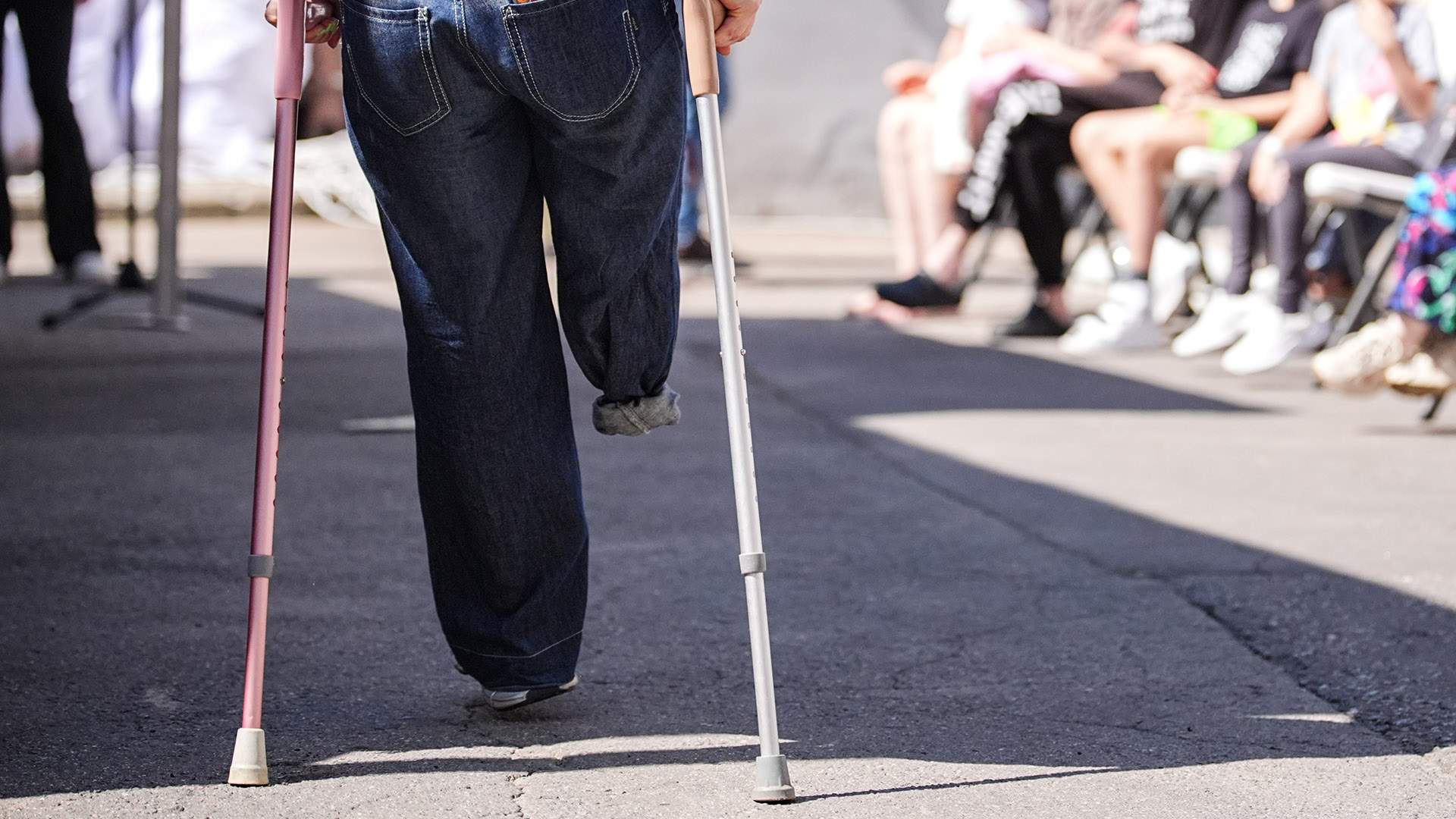
The chat of the "infinite ones" — as those who have lost a leg or arm ironically call themselves — is divided into several sections. Phantom pain, sometimes excruciating, and sometimes not manifesting itself, has a separate place there, and special attention is paid to it, but always careful. Izvestia spoke with those who have faced this problem and discussed with experts how they are helping to fight the invisible and silent pursuer today.
The Coming Phantom
Phantom pain as a clinical diagnosis is found among adult amputees in 80% of cases, according to general statistics. Only those who have lost a limb at an early age or were born without it are less likely to suffer from it.
Phantom pain was first reported back in 1551, when the famous French military surgeon Ambroise Pare noted that patients, even long after amputation, say they still feel pain in the severed limb.

And in 1871, the American neurologist Silas Weir Mitchell proposed the term "phantom limb." He described the feeling as follows: "Thousands of spiritual limbs chased many good soldiers, tormenting them from time to time."
— The first two months of "phantom" after injury are terrible. It feels much worse than "disgusting." Imagine you're lying down, and they're cutting your toes with blunt scissors, which you don't have. At this point, you're thinking, "How? But what should I do?" It's like you're constantly being electrocuted, like you have a motor that won't stop. You don't move for half an hour, you twitch a little bit, and it starts all over again. Over time, you get used to it and come to the fact that once or twice a day is quite normal. I think this is due to the weather or external factors," said Maxim K., a former serviceman who lost his leg during a combat mission in the special operation zone.
The medical point of view has not yet agreed on the specific causes that cause phantom pain. One opinion indicates that poorly amputated nerves that have turned into neuromas or neurinomas can provoke it. The innervated nerve bundles send false signals to the brain, and the person feels that the limb that has been missing for a long time is hurting.

Neuromas are another problem that often occurs in those who have lost a limb. As soon as a painful "bump" appears on the stump, which consists of an inflamed nerve, this is a sure harbinger that a re-amputation is coming.
Some researchers attribute the phantom to the nuances of the human nervous system, which is confronted with changes after amputation. To date, scientists have come up with several options — hyperexcitability of the spinal cord, provoking the interpretation of pain where it had not previously been read, and cortical re-imaging, the restructuring of the brain to receive signals from nearby areas of the cortex instead of the lost limb.
Fighting the Ghost
— Of course, they manifest themselves in different ways for everyone. Personally, I had strong sensations in the foot area. She could feel the heat, sometimes it was like an electric shock, sometimes just tingling in her fingers, heel, but the feeling of the foot, it always [is]. One hundred percent of the time, I feel it, I feel it," said Danil K., a soldier who was wounded in the special operation zone.

In the hospital, Danil K. underwent physical therapy — in his case, the result was precisely the absence of unpleasant sensations, but not the feeling of the foot itself. According to him, magnetic therapy was not used because of the fragments, but self-massage helped when the pain was unbearable. He was kneading his stump with his fingers.
— I've been injured for almost a year, the sensations persist, but the most important thing is that they don't distract from life, they don't interfere with sleep. I don't take any pills. Maybe exercises with a stump help to maintain tone, maybe the body has rebuilt itself. I'm already undergoing prosthetics, and they may or may not occur there until no one knows," he said.
To date, the fight against phantom pain is carried out in a wide variety of ways, including acupuncture, which is considered the most successful method, as well as elements of adaptive physical education and yoga therapy. The role of such practices is huge, Nadezhda Veselova, a yoga therapist and specialist in adaptive physical education, explained to Izvestia.

According to her, adaptive physical education is the restoration of lost functions both in the cult and throughout the body, as well as the improvement of strength, endurance, and coordination, since the cardiovascular and respiratory systems are involved in an adequate form. In addition, due to properly selected exercises, it is possible to achieve relief of muscle spasm and improve blood circulation, which prevents contractures, muscle atrophy and is the prevention of blood clots.
Adaptive physical education also works in another direction — to increase functional activity. Veselova said that adapting to new skills, the ability to quickly adjust to a prosthesis, and social adaptation are key pieces of the overall puzzle. The inability to be active increases both anxiety and depression, which provokes phantom pains.
— The problem is mainly social. These people need emotional help. They need psychological guidance and techniques to relieve anxiety and depression after amputation. I think there is little talk about this. Special group and individual classes are needed to train people to relieve high pain from phantom pain — they can be conducted in sports and leisure centers or even in an online format," Veselova said.
The human mirror
— There were pains in the postoperative period, and then they passed. I took pills for a while, an anticonvulsant and an antidepressant. There may still be — it's God's will," another patient named Stanislav told Izvestia.

In search of a method that would help amputees, Nadezhda Veselova conducted a scientific study on the topic "Treatment of phantom pain in an amputated limb using mirror therapy."
— Phantom pain was treated in my study with a combination of resonance breathing and mirror therapy. Parasympathetic breathing, which has a good effect on the heart rate, makes it possible to relieve anxiety, tension and calm down. Then the person plunged into the "looking glass" and saw his lost limb with the help of a mirror. We tricked the brain and nervous system, telling them that everything was fine.

According to Veselova, during the study, all participants noticed the absence of any manifestations of phantom pains while working with the mirror.
— After the mirror therapy, the relaxation part began. The participants lay down in a comfortable position and, under my voice, relaxed a healthy part of the body using proprioceptive neuromuscular facilitation. This technique makes it possible to relieve tension throughout the body. After that, the patients visualized their lost limb, imagined how they strained and relaxed its muscles. This made it possible to rebuild the cortical system of the brain. In all these ways, we tried to tell the nervous system and the brain that there was nothing left to hurt," Veselova said.

Phantom pain syndrome is not just a job for psychologists. This is a problem at the intersection of neurology and psychiatry, which further complicates care.
—We do not have a clear understanding of the etiology and pathogenesis of this phenomenon, there are only a few hypotheses and studies that confirm the presence of neurophysiological processes in addition to the psycho—emotional component," a specialist who wished to remain anonymous told Izvestia.
He also stressed that within the framework of post-traumatic stress disorder, phantom limb syndrome is comorbid (that is, co-existing with another disorder), therefore they are considered separately. However, technically, a clinical psychologist can deal with this problem, but only in conjunction with the attending physician, who will prescribe pharmacological therapy, physiotherapy and psychosocial intervention to the amputee.
Переведено сервисом «Яндекс Переводчик»
