
The parent of evil: The Supreme Court will consider a claim to ban Satanism
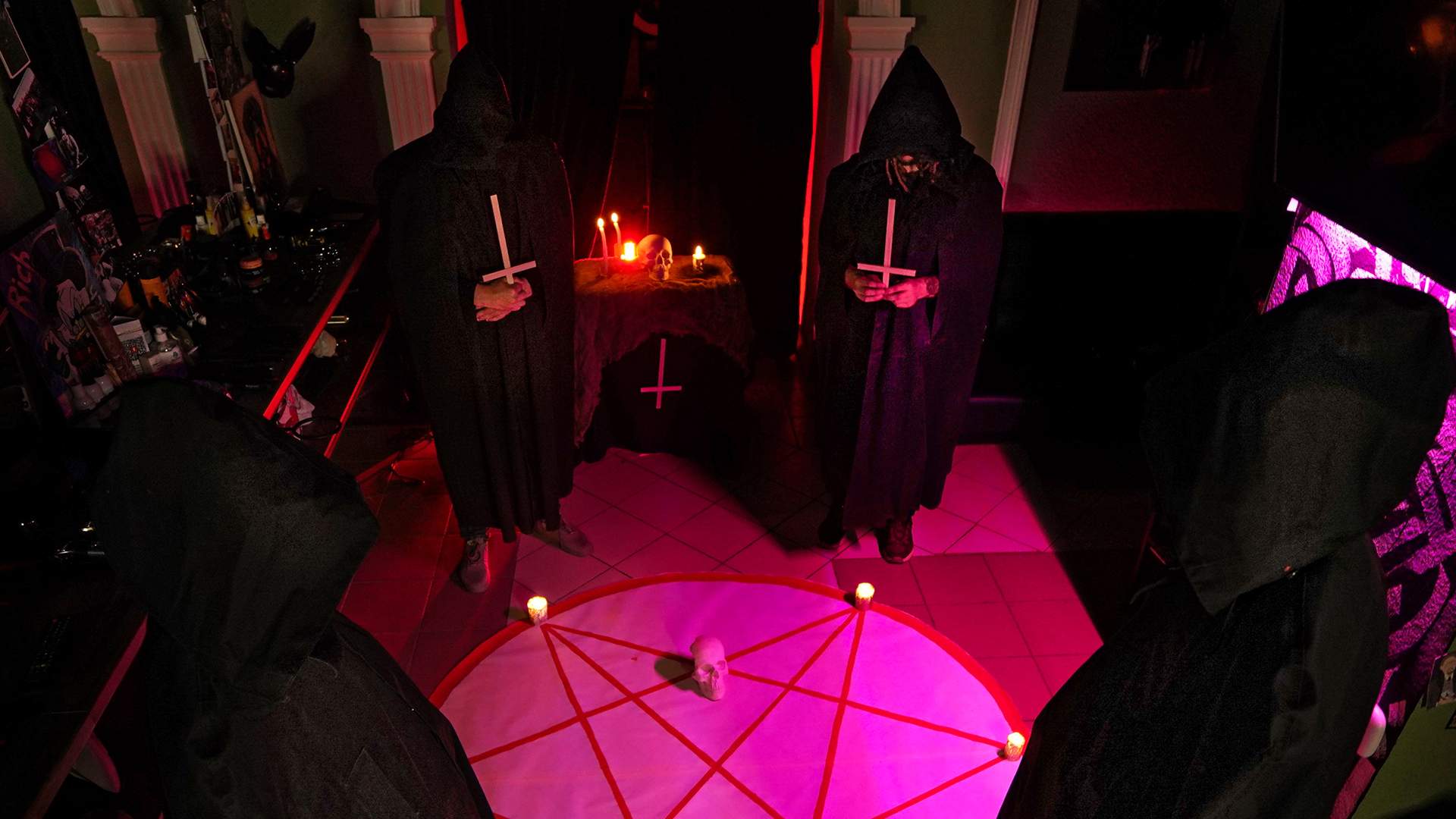
On July 22, the Supreme Court will consider the claim of the Prosecutor General's Office for recognizing the "international Satanism movement" as extremist and banning it in Russia. Earlier, a similar demand was made by some State Duma deputies, public figures and priests. However, the vagueness of the term and the absence of a single legal entity may make it difficult to apply the ban in practice, and representatives of other "borderline" subcultures may be criminalized "for Satanism," the lawyers warned. About what can be meant by the term "Satanism" and who can be held responsible for participating in this "international movement" — in the Izvestia article.
Psychics, childfree, and Quadrobers
Satanism may be recognized as an extremist movement and banned in Russia on Tuesday, July 22. The Supreme Court will consider the relevant claim of the Prosecutor General's Office and the Ministry of Justice of Russia. Parliamentary hearings on this topic were held in April 2025 in the State Duma.
Then the deputy from the "Fair Russia" actor Nikolai Burlyaev said that the State Duma receives appeals from citizens who are concerned about destructive phenomena in books, films, anime, as well as reports of "Satanic sex orgies" in Moscow and other cities. And the head of the defense committee, Andrei Kartapolov, added that Satanism should be considered an immediate threat to statehood on a par with the LGBT movement (recognized as extremist and banned in Russia).

— Satanism is no better, it is worse — more pernicious, aggressive, more misanthropic, — said the deputy.
He also called Satanism a form of informational and ideological struggle waged against Russia by the united West.
A similar point of view was shared by the chairman of the Patriarchal commission on family, protection of motherhood and childhood, Priest Fyodor Lukyanov. He presented the table to the audience — it contained signs that the priest considers common to LGBT and Satanism. These include, for example, signs of "subculturalism, the popularization of sodomy, sexual debauchery, hedonism, and family hatred."
"Such an identity of signs proves the need for a legal ban on the Satanic movement in Russia by analogy with the ban on the LGBT movement,— Lukyanov said. — There is a clear connection between him and the Satanic movement.
Those present at the meeting saw signs of Satanism in other phenomena — "school shooting", "death groups", quadrobing, magicians and psychics, as well as childfree.

Another event on the topic was held in the State Duma in July 2024. The round table "On Countering the spread of Satanism and other destructive phenomena in the Russian Media and Cultural space" was headed by Olga Timofeeva, Head of the Committee for the Development of Civil Society, Public and Religious Associations. She called on the audience to fight "fascists, Satanists and Nazis who rely on the forces of evil."
Then DEPUTY Tatiana Butskaya stated that "Satanism mimics the subcultures of quadrobing, furry and therians." After listening to the speeches of priests and other figures, the participants agreed that Satanism should be recognized as an extremist movement and banned.
What is considered Satanism?
Satanism is a destructive ideology based on the exaltation of evil and the denial of good, Alexander Dvorkin, a professor at St. Tikhon's Orthodox University for the Humanities, explained to Izvestia.
— For this reason, Satanism is aggressive by definition, and in this part attempts to ban it are understandable and justified, — said the expert. — However, there is no single Satanic movement in the world, there are various "self-made" groups that can call themselves Satanists. Even the followers of the occultists Aleister Crowley and Anton Sandor La Vey, who are considered to be the ideologists of the trend, are divided among themselves. Referring to the "teacher," they come up with their own rituals.

No one knows for sure how many Satanists there are in the world and in Russia. Adherents of these "interfaith" movements do not give truthful information about themselves and tend to exaggerate the number of their followers, says Alexander Dvorkin.
The law should clearly define what the legislator considers Satanism. Calling any destructive phenomena — social, cultural or religious - with this word is terminologically incorrect and fraught with consequences, he stressed.
— It's like calling all of them cancer in the classification of diseases, — the expert drew an analogy. — There are many deadly diseases, but they have different pathogens and different methods of treatment and prevention. There is an ideology that makes Satanism a fashionable trend and even a way of life among young people, so it is necessary to limit it. But how this will work in practice is still unclear.
In its extreme expression, Satanism can lead to human casualties, Alexander Dvorkin recalled. Two such cases occurred in 2016, when a pair of Satanists from Moscow, Andrei Tregubenko and Olga Bolshakova, killed (sacrificed) Platon Stepanov, a 27-year-old from St. Petersburg, and Vika Zaitseva, a Muscovite of the same age, Izvestia previously reported.

For more than four years, Vika and Platon were considered missing, and their former friends remained at large all this time. And only in 2021, when Bolshakova and Tregubenko were caught on drugs, during the interrogation they confessed to a double ritual murder, and also showed the investigators the burial sites.
In 2024, the Moscow Regional Court sentenced Tregubenko to life imprisonment, Bolshakov to 14 years in prison. Two more of their accomplices received 13 and 15 years in prison.
In Russia, such criminal manifestations of Satanism are rarely recorded by law enforcement officers, since most of these murders are not recognized as committed on ritual grounds, and are framed as "everyday life," Alexander Dvorkin believes.
"Ritual murders can also be committed by people with mental disabilities who do not belong to any sect," the expert noted. — But often these sick people, inspired by another TV show about Satanism or, conversely, about possessed people, begin to put what they see into practice.
What can be banned due to Satanic propaganda
Satanism does not have only ideological unity in the world, but also a centralized legal structure, Ekaterina Kosareva, managing partner of the VMT Consult analytical agency, told Izvestia. Therefore, his ban may raise serious questions from the point of view of law, logic and applicability, the lawyer believes.

"In order to recognize an organization as extremist, it is necessary to prove the existence of a structure, management system, financing, as well as signs of extremist activity: calls for violence, incitement to hatred, and undermining the constitutional order," the lawyer said. — In the case of the alleged "Satanic movement", the ban will not apply to a legal entity, but to a very vague ideological trend that does not have an organizational form.
Nevertheless, the recognition of a prohibited "amorphous" structure will entail a very specific ban on symbols, publications, texts or music that may be considered "satanic," the lawyer pointed out. Widespread arbitrariness in interpretation may threaten to restrict freedom of expression and freedom of conscience, guaranteed by the Constitution, she added.
— In practice, any anticlerical or simply provocative gesture can be brought under a new ban, — Ekaterina Kosareva said.
There is not a single registered organization with the name "Satanism" in the Unified State Register of Legal Entities, while the movement itself may exist unregistered, Natalia Golosnova, CEO of the Razio Group, lawyer, reminded Izvestia. His recognition as extremist will affect many areas of life, primarily offline stores selling special ritual paraphernalia and similar sites on electronic platforms, the expert believes.

— Of course, the court's decision will affect the entire subculture with the transmission of specific symbols: audio and video productions of rock musicians will have to disappear from the venues, — Natalia Golosnova said.
Various shows on federal channels related to rituals that may be considered Satanic will also come under questions of legality. The catering industry, the lawyer added, which uses appropriate symbols in its marketing promotion, will also need to review its design.
— As for literature and the film industry, the ban may have different effects, - said the lawyer. — If such a subculture is described as part of the plot, but it is not promoted, then such works will not be withdrawn from sale.
The lawyers interviewed by Izvestia agreed that the likelihood of satisfaction of the claim by the Supreme Court is high. Previously, the LGBT movement and the AUE criminal subculture were recognized and banned in Russia according to the same scheme.

Both subcultures are not institutionalized, but this did not prevent their injunction. The court banned LGBT in November 2023, and AUE in August 2020.
In December 2024, the law banning childfree propaganda came into force. From this moment on, a fine of up to 5 million rubles can be imposed for presenting a "refusal to procreate" in a positive way.
What is the penalty for Satanism?
Lawyers differed in their assessment of the legal consequences of the Supreme Court's decision. Some believe that the decision will be more declarative, while others believe that a specific person will be able to be held accountable.
Citizens may face both administrative and criminal liability for paraphernalia, jewelry, or costume jewelry depicting Satanic symbols. All these subjects can now be equated with extremist ones.

For the "production, storage and mass distribution of extremist materials", the fine for citizens is from 1 thousand to 3 thousand rubles or administrative arrest for up to 15 days. For officials — from 2 thousand to 5 thousand, for legal entities — from 100 thousand to 1 million rubles, or administrative suspension of activities for up to 90 days.
But public calls to carry out extremist activities (for example, to participate in rituals), the organization of extremist activities and their financing are already prosecuted under criminal law with up to 12 years in prison.
The line between all these compounds is very thin, so both citizens and organizations will need to check their resources very carefully in order not to become violators of the law, the lawyers warned.
Переведено сервисом «Яндекс Переводчик»
