- Статьи
- Culture
- The most beautiful court in the world: how people of the Middle Ages imagined the end of the world

The most beautiful court in the world: how people of the Middle Ages imagined the end of the world
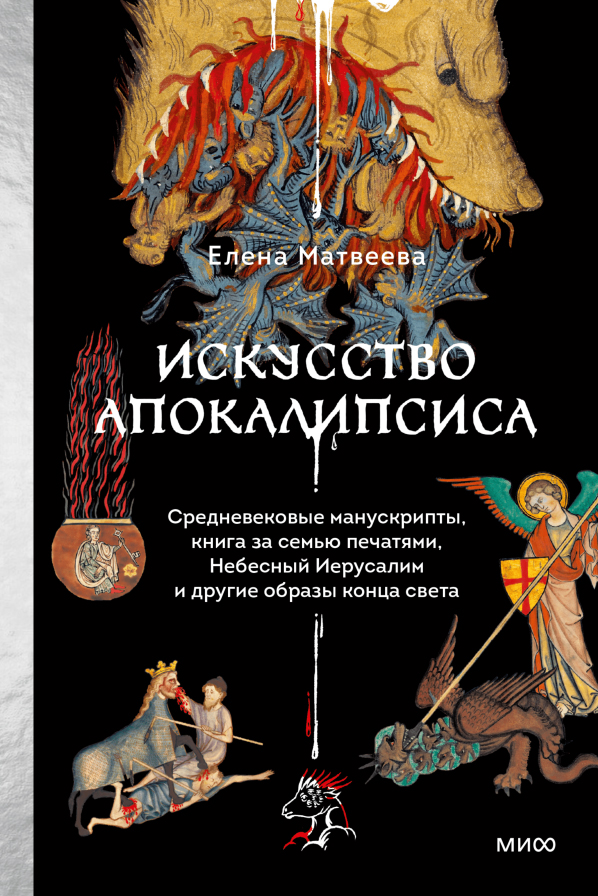
In "The Art of the Apocalypse," Elena Matveeva examines the Revelation of John the Theologian, the most famous prediction of the imminent end of the world, made around the end of the 1st century A.D., and the most illustrated book of Holy Scripture, as a truly bottomless source of inspiration for artists in Western Europe and Russia. Critic Lidia Maslova presents the book of the week specifically for Izvestia.
Elena Matveeva
"The Art of the Apocalypse"
Moscow: MIF, 2025. 368 p.
Matveeva begins her visual guide to the images of the Apocalypse with the birth of Christianity, which introduced eschatological motifs into the earliest depictions of Christ, dating back to Old Testament visions. It ends with the twentieth century, when the father of Russian abstractionism, Wassily Kandinsky, modernized the iconography of Holy Scripture, replacing the fourth horseman of the Apocalypse, that is, Death on a pale horse, with a more hopeful Blue Horseman.
Most of the artists and architects represented in the book did not take such liberties, although over the 2000 years of the Apocalypse's existence in the cultural space, many concepts and meanings embedded by the author of Revelation were transformed and desacralized. Matveeva discusses this in the first chapter.: "As society and culture became more secular, the Christian meaning of the text of Revelation was gradually forgotten, while the images — unusually vivid and memorable — found widespread use. "Alpha and Omega, the sealed Book, the Bowls of Wrath, the Whore of Babylon, and many other concepts are so firmly embedded in our language that sometimes we forget about their original meaning." The examples of illustrations of Revelation in temple paintings, medieval manuscripts, and paintings given in the book, as well as extensive quotations from the original literary source, allow us to resurrect and refresh this original meaning of John the Evangelist's visions of the second coming of Christ, the Last Judgment, and the final battle between good and evil.
In addition to its rich artistic content, Matveeva's book also has a curious philosophical and psychological aspect, tracing the evolution of human attitudes towards the end of the world, which was not always perceived as something threatening, but at first was expected almost with impatience: "From a promised and joyful event, promising retribution to the righteous, as seen by early Christians who expected the imminent second Over time, the Apocalypse gradually turned into something dark and creepy, as if the more earthly wealth humanity accumulated and the better life became, the scarier and more terrible the end seemed to him." Matveeva's guided tour of the images of the Apocalypse partially allows us to return to that healthy, normal early Christian attitude towards the end of the world and the Last Judgment, in which, in general, there is nothing terrible - for those who have behaved well throughout their allotted life span and can expect the advent of the eternal Kingdom of God, which relieves earthly suffering. with restrained optimism.

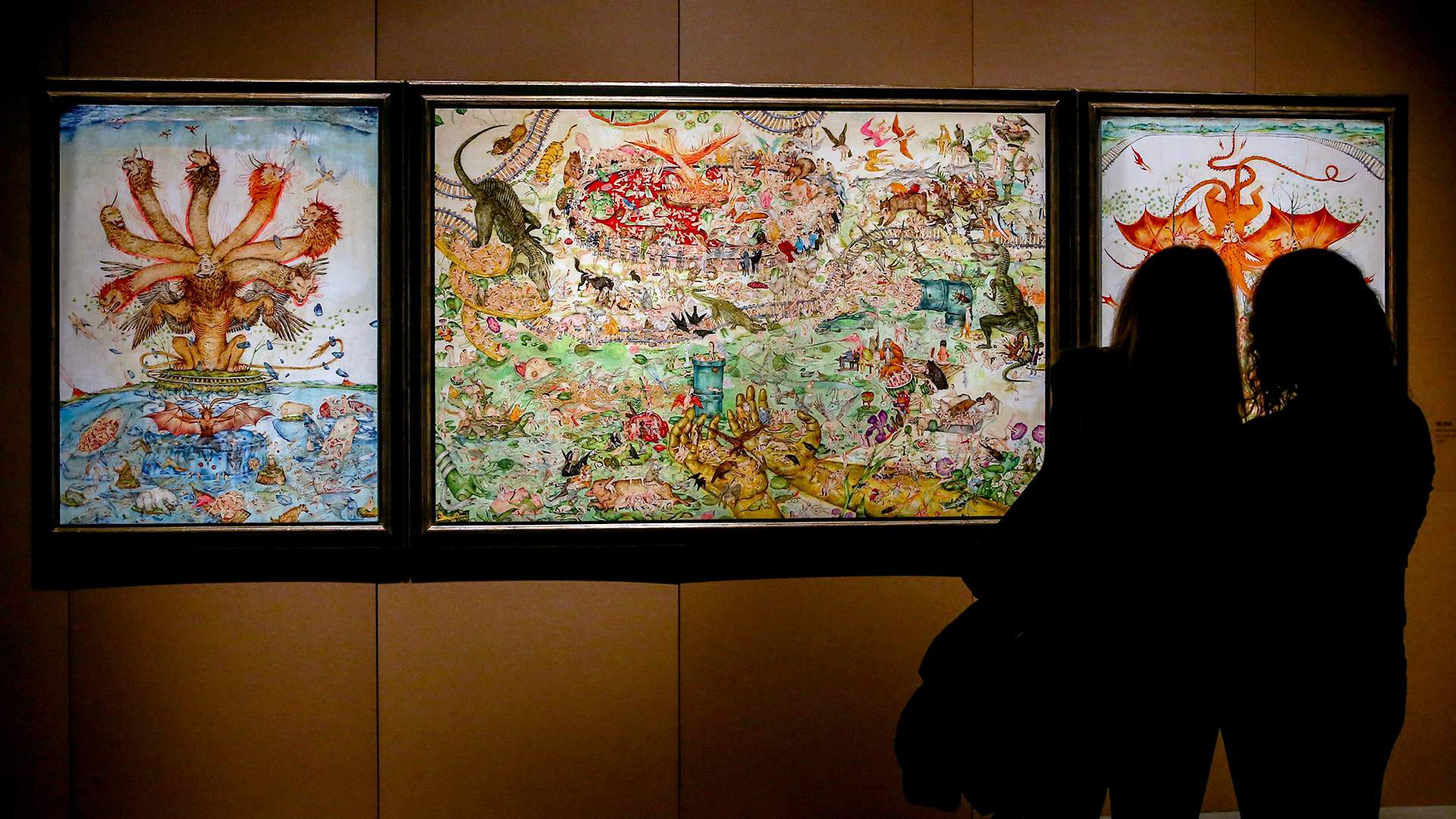
The final division of humanity into "sheep and goats", into righteous and sinners, is one of the most important eschatological motifs found in apocalyptic works of fine art. He gives the viewer, who reverently examines the frescoes of the temple, at least some hope of being able to avoid the torments of hell if he tries hard enough. The only hero of the book who takes away even a slim chance of salvation from humanity is the pessimist Hieronymus Bosch, whose infernal visions are discussed in the fifth chapter on the Renaissance. However, as Matveeva notes, Bosch, who was born at the height of the Renaissance, paradoxically managed to remain an absolutely medieval artist in spirit: "Bosch paints a pessimistic picture of the future of people — there is no place for the Heavenly Jerusalem, the righteous; rather, Bosch has very few of them, there is no salvation, there is only an endless hell that awaits humanity, absorbed in its own sins."

Painting "Garden of Earthly Delights" by Dutch artist Hieronymus Bosch
But, fortunately, most of the artists who relied on the Apocalypse still tried not to intimidate the viewer, like Bosch, but, on the contrary, to encourage and motivate moral self-improvement, especially when it came to the design of architectural structures such as baptisteries for baptism. In the second chapter, "Inspired by the Apocalypse," Matveeva focuses on the well–preserved baptisteries and early Christian basilicas of Ravenna, in particular, the Neonian Baptistery, built at the turn of the fourth and fifth centuries, and richly decorated with mosaics commissioned by Bishop Neon in the middle of the fifth century. The painting clearly shows the idea that only through baptism can a person join the Kingdom of Heaven and "avoid a painful death when the end of the created, material world comes."
From a Christian point of view, one can also find a positive charge in an unsurpassed masterpiece of apocalyptic art — Michelangelo's fresco in the Sistine Chapel, which acts as a benchmark that artists desperately want to look up to, even if it is a priori an unattainable bar. "It's interesting how the Sistine Chapel has become something of a household name," says Matveeva. — So, the cave of Altamira is called the Sistine Chapel of Primitive Art, and the Chapel degli Scrovegni, painted by Giotto, is the Sistine Chapel of the Proto—Renaissance." Michelangelo Matveev calls the Last Judgment a picturesque requiem and suggests an inspiring quote from the Gospel of John: "For God did not send His Son into the world to judge the world, but that the world might be saved through Him." It is the redemption of humanity that is the main idea of the story told on the ceiling and walls of the Sistine Chapel.
Like many analyzed works, Matveeva places Michelangelo's fresco in a historical context. In her opinion, the appearance in the Sistine Chapel of the Adam and Eve fall, which is rare for the Italian Renaissance, can be attributed to the sack of Rome by the troops of Charles V in 1527 (which was as shocking to contemporaries as the destruction of Jerusalem), as well as to the Reformation, which made it especially relevant to recall the atoning sacrifice of Christ as a guarantee of individual salvation. "All his attention is focused on the whirlpool of the human masses, on the struggle of humanity for its salvation," explains the art critic Michelangelo's concept, who excluded the physical suffering of sinners from iconography and unexpectedly filled the medieval theme of the Last Judgment with Renaissance ideas: "Michelangelo's nature of Christ is twofold: he presents Him as both punishing and merciful. Michelangelo's Last Judgment, for all its striking monumentality, is not a Dies Irae, not a Day of Wrath, but a hope for salvation."

Michelangelo's frescoes in the Sistine Chapel
Russian Russian art was very popular with the theme of the Last Judgment, which was included in a separate, final seventh chapter, "The Apocalypse in Russia," because, as Matveeva admits, "it is not possible to squeeze Russian art into the framework of the periodization accepted for Western European art, which is already a rather conventional thing in itself."
In Ancient Russia, which inherited Byzantine traditions, eschatological themes were for a long time limited to compositions of the Last Judgment, which were assigned the western wall in Orthodox churches. In the Russian translation, the image of the Last Judgment was focused on the idea of retribution to the righteous and sinners according to their deeds, and the iconography was based more on the text of the Gospel than the Revelation of John (where very few lines are devoted to the Last Judgment itself).
However, our artists sometimes found a place on the icons of the Last Judgment for other apocalyptic images: horsemen and the army of Christ, trumpeting angels, the mystical Lamb, the earth giving up the dead. But the main thing is that the Russian expectation of the end of the world, unlike the more panicked Western European one, was not limited to a premonition of a universal catastrophe: "Orthodox eschatology was of a more exalted and enlightened nature, and the theme of salvation and heavenly bliss of the righteous ran through it."
Переведено сервисом «Яндекс Переводчик»
